Loading ...

GLINDA OF OZ

LIST OF CHAPTERS

1 The Call of Duty
2 Ozma and Dorothy
3 The Mist Maidens
4 The Magic Tent
5 The Magic Stairway
6 Flathead Mountain
7 The Magic Isle
8 Queen Coo-ee-oh
9 Lady Aurex
10 Under Water
11 The Conquest of the Skeezers
12 The Diamond Swan
13 The Alarm Bell
14 Ozma’s Counsellors
15 The Great Sorceress
16 The Enchanted Fishes
17 Under the Great Dome
18 The Cleverness of Ervic
19 Red Reera, the Yookoohoo
20 A Puzzling Problem
21 The Three Adepts
22 The Sunken Island
23 The Magic Words
24 Glinda’s Triumph

CHAPTER 1

The Call to Duty

Glinda, the good Sorceress of Oz, sat in the grand court of her palace, surrounded by her maids of honor—a hundred of the most beautiful girls of the Fairyland of Oz. The palace court was built of rare marbles, exquisitely polished. Fountains tinkled musically here and there; the vast colonnade, open to the south, allowed the maidens, as they raised their heads from their embroideries, to gaze upon a vista of rose-hued fields and groves of trees bearing fruits or laden with sweet-scented flowers. At times one of the girls would start a song, the others joining in the chorus, or one would rise and dance, gracefully swaying to the music of a harp played by a companion. And then Glinda smiled, glad to see her maids mixing play with work.

Presently among the fields an object was seen moving, threading the broad path that led to the castle gate. Some of the girls looked upon this object enviously; the Sorceress merely gave it a glance and nodded her stately head as if pleased, for it meant the coming of her friend and mistress—the only one in all the land that Glinda bowed to.

Then up the path trotted a wooden animal attached to a red wagon, and as the quaint steed halted at the gate there descended from the wagon two young girls, Ozma, Ruler of Oz, and her companion, Princess Dorothy. Both were dressed in simple white muslin gowns, and as they ran up the marble steps of the palace they laughed and chatted as gaily as if they were not the most important persons in the world’s loveliest fairyland.

The maids of honor had risen and stood with bowed heads to greet the royal Ozma, while Glinda came forward with outstretched arms to greet her guests.

“We’ve just come on a visit, you know,” said Ozma. “Both Dorothy and I were wondering how we should pass the day when we happened to think we’d not been to your Quadling Country for weeks, so we took the Sawhorse and rode straight here.”

“And we came so fast,” added Dorothy, “that our hair is blown all fuzzy, for the Sawhorse makes a wind of his own. Usually it’s a day’s journey from the Em’rald City, but I don’t s’pose we were two hours on the way.”

“You are most welcome,” said Glinda the Sorceress, and led them through the court to her magnificent reception hall. Ozma took the arm of her hostess, but Dorothy lagged behind, kissing some of the maids she knew best, talking with others, and making them all feel that she was their friend. When at last she joined Glinda and Ozma in the reception hall, she found them talking earnestly about the condition of the people, and how to make them more happy and contented—although they were already the happiest and most contented folks in all the world.

This interested Ozma, of course, but it didn’t interest Dorothy very much, so the little girl ran over to a big table on which was lying open Glinda’s Great Book of Records.

This Book is one of the greatest treasures in Oz, and the Sorceress prizes it more highly than any of her magical possessions. That is the reason it is firmly attached to the big marble table by means of golden chains, and whenever Glinda leaves home she locks the Great Book together with five jeweled padlocks, and carries the keys safely hidden in her bosom.

I do not suppose there is any magical thing in any fairyland to compare with the Record Book, on the pages of which are constantly being printed a record of every event that happens in any part of the world, at exactly the moment it happens. And the records are always truthful, although sometimes they do not give as many details as one could wish. But then, lots of things happen, and so the records have to be brief or even Glinda’s Great Book could not hold them all.

Glinda looked at the records several times each day, and Dorothy, whenever she visited the Sorceress, loved to look in the Book and see what was happening everywhere. Not much was recorded about the Land of Oz, which is usually peaceful and uneventful, but today Dorothy found something which interested her. Indeed, the printed letters were appearing on the page even while she looked.

“This is funny!” she exclaimed. “Did you know, Ozma, that there were people in your Land of Oz called Skeezers?”

“Yes,” replied Ozma, coming to her side, “I know that on Professor Wogglebug’s Map of the Land of Oz there is a place marked ‘Skeezer,’ but what the Skeezers are like I do not know. No one I know has ever seen them or heard of them. The Skeezer Country is ‘way at the upper edge of the Gillikin Country, with the sandy, impassable desert on one side and the mountains of Oogaboo on another side. That is a part of the Land of Oz of which I know very little.”

“I guess no one else knows much about it either, unless it’s the Skeezers themselves,” remarked Dorothy. “But the Book says: ‘The Skeezers of Oz have declared war on the Flatheads of Oz, and there is likely to be fighting and much trouble as the result.'”

“Is that all the Book says?” asked Ozma.

“Every word,” said Dorothy, and Ozma and Glinda both looked at the Record and seemed surprised and perplexed.

“Tell me, Glinda,” said Ozma, “who are the Flatheads?”

“I cannot, your Majesty,” confessed the Sorceress. “Until now I never have heard of them, nor have I ever heard the Skeezers mentioned. In the faraway corners of Oz are hidden many curious tribes of people, and those who never leave their own countries and never are visited by those from our favored part of Oz, naturally are unknown to me. However, if you so desire, I can learn through my arts of sorcery something of the Skeezers and the Flatheads.”

“I wish you would,” answered Ozma seriously. “You see, Glinda, if these are Oz people they are my subjects and I cannot allow any wars or troubles in the Land I rule, if I can possibly help it.”

“Very well, your Majesty,” said the Sorceress, “I will try to get some information to guide you. Please excuse me for a time, while I retire to my Room of Magic and Sorcery.”

“May I go with you?” asked Dorothy, eagerly.

“No, Princess,” was the reply. “It would spoil the charm to have anyone present.”

So Glinda locked herself in her own Room of Magic and Dorothy and Ozma waited patiently for her to come out again.

In about an hour Glinda appeared, looking grave and thoughtful.

“Your Majesty,” she said to Ozma, “the Skeezers live on a Magic Isle in a great lake. For that reason—because the Skeezers deal in magic—I can learn little about them.”

“Why, I didn’t know there was a lake in that part of Oz,” exclaimed Ozma. “The map shows a river running through the Skeezer Country, but no lake.”

“That is because the person who made the map never had visited that part of the country,” explained the Sorceress. “The lake surely is there, and in the lake is an island—a Magic Isle—and on that island live the people called the Skeezers.”

“What are they like?” inquired the Ruler of Oz.

“My magic cannot tell me that,” confessed Glinda, “for the magic of the Skeezers prevents anyone outside of their domain knowing anything about them.”

“The Flatheads must know, if they’re going to fight the Skeezers,” suggested Dorothy.

“Perhaps so,” Glinda replied, “but I can get little information concerning the Flatheads, either. They are people who inhabit a mountain just south of the Lake of the Skeezers. The mountain has steep sides and a broad, hollow top, like a basin, and in this basin the Flatheads have their dwellings. They also are magic-workers and usually keep to themselves and allow no one from outside to visit them. I have learned that the Flatheads number about one hundred people—men, women and children—while the Skeezers number just one hundred and one.”

“What did they quarrel about, and why do they wish to fight one another?” was Ozma’s next question.

“I cannot tell your Majesty that,” said Glinda.

“But see here!” cried Dorothy, “it’s against the law for anyone but Glinda and the Wizard to work magic in the Land of Oz, so if these two strange people are magic-makers they are breaking the law and ought to be punished!”

Ozma smiled upon her little friend.

“Those who do not know me or my laws,” she said, “cannot be expected to obey my laws. If we know nothing of the Skeezers or the Flatheads, it is likely that they know nothing of us.”

“But they ought to know, Ozma, and we ought to know. Who’s going to tell them, and how are we going to make them behave?”

“That,” returned Ozma, “is what I am now considering. What would you advise, Glinda?”

The Sorceress took a little time to consider this question, before she made reply. Then she said:

“Had you not learned of the existence of the Flatheads and the Skeezers, through my Book of Records, you would never have worried about them or their quarrels. So, if you pay no attention to these peoples, you may never hear of them again.”

“But that wouldn’t be right,” declared Ozma. “I am Ruler of all the Land of Oz, which includes the Gillikin Country, the Quadling Country, the Winkie Country and the Munchkin Country, as well as the Emerald City, and being the Princess of this fairyland it is my duty to make all my people—wherever they may be—happy and content and to settle their disputes and keep them from quarreling. So, while the Skeezers and Flatheads may not know me or that I am their lawful Ruler, I now know that they inhabit my kingdom and are my subjects, so I would not be doing my duty if I kept away from them and allowed them to fight.”

“That’s a fact, Ozma,” commented Dorothy. “You’ve got to go up to the Gillikin Country and make these people behave themselves and make up their quarrels. But how are you going to do it?”

“That is what is puzzling me also, your Majesty,” said the Sorceress. “It may be dangerous for you to go into those strange countries, where the people are possibly fierce and warlike.”

“I am not afraid,” said Ozma, with a smile.

“‘Tisn’t a question of being ‘fraid,” argued Dorothy. “Of course we know you’re a fairy, and can’t be killed or hurt, and we know you’ve a lot of magic of your own to help you. But, Ozma dear, in spite of all this you’ve been in trouble before, on account of wicked enemies, and it isn’t right for the Ruler of all Oz to put herself in danger.”

“Perhaps I shall be in no danger at all,” returned Ozma, with a little laugh. “You mustn’t imagine danger, Dorothy, for one should only imagine nice things, and we do not know that the Skeezers and Flatheads are wicked people or my enemies. Perhaps they would be good and listen to reason.”

“Dorothy is right, your Majesty,” asserted the Sorceress. “It is true we know nothing of these faraway subjects, except that they intend to fight one another, and have a certain amount of magic power at their command. Such folks do not like to submit to interference and they are more likely to resent your coming among them than to receive you kindly and graciously, as is your due.”

“If you had an army to take with you,” added Dorothy, “it wouldn’t be so bad; but there isn’t such a thing as an army in all Oz.”

“I have one soldier,” said Ozma.

“Yes, the soldier with the green whiskers; but he’s dreadful ‘fraid of his gun and never loads it. I’m sure he’d run rather than fight. And one soldier, even if he were brave, couldn’t do much against two hundred and one Flatheads and Skeezers.”

“What then, my friends, would you suggest?” inquired Ozma.

“I advise you to send the Wizard of Oz to them, and let him inform them that it is against the laws of Oz to fight, and that you command them to settle their differences and become friends,” proposed Glinda. “Let the Wizard tell them they will be punished if they refuse to obey the commands of the Princess of all the Land of Oz.”

Ozma shook her head, to indicate that the advice was not to her satisfaction.

“If they refuse, what then?” she asked. “I should be obliged to carry out my threat and punish them, and that would be an unpleasant and difficult thing to do. I am sure it would be better for me to go peacefully, without an army and armed only with my authority as Ruler, and plead with them to obey me. Then, if they prove obstinate I could resort to other means to win their obedience.”

“It’s a ticklish thing, anyhow you look at it,” sighed Dorothy. “I’m sorry now that I noticed the Record in the Great Book.”

“But can’t you realize, my dear, that I must do my duty, now that I am aware of this trouble?” asked Ozma. “I am fully determined to go at once to the Magic Isle of the Skeezers and to the enchanted mountain of the Flatheads, and prevent war and strife between their inhabitants. The only question to decide is whether it is better for me to go alone, or to assemble a party of my friends and loyal supporters to accompany me.”

“If you go I want to go, too,” declared Dorothy. “Whatever happens it’s going to be fun—’cause all excitement is fun—and I wouldn’t miss it for the world!”

Neither Ozma nor Glinda paid any attention to this statement, for they were gravely considering the serious aspect of this proposed adventure.

“There are plenty of friends who would like to go with you,” said the Sorceress, “but none of them would afford your Majesty any protection in case you were in danger. You are yourself the most powerful fairy in Oz, although both I and the Wizard have more varied arts of magic at our command. However, you have one art that no other in all the world can equal—the art of winning hearts and making people love to bow to your gracious presence. For that reason I believe you can accomplish more good alone than with a large number of subjects in your train.”

“I believe that also,” agreed the Princess. “I shall be quite able to take care of myself, you know, but might not be able to protect others so well. I do not look for opposition, however. I shall speak to these people in kindly words and settle their dispute—whatever it may be—in a just manner.”

“Aren’t you going to take me?” pleaded Dorothy. “You’ll need some companion, Ozma.”

The Princess smiled upon her little friend.

“I see no reason why you should not accompany me,” was her reply. “Two girls are not very warlike and they will not suspect us of being on any errand but a kindly and peaceful one. But, in order to prevent war and strife between these angry peoples, we must go to them at once. Let us return immediately to the Emerald City and prepare to start on our journey early tomorrow morning.”

Glinda was not quite satisfied with this plan, but could not think of any better way to meet the problem. She knew that Ozma, with all her gentleness and sweet disposition, was accustomed to abide by any decision she had made and could not easily be turned from her purpose. Moreover she could see no great danger to the fairy Ruler of Oz in the undertaking, even though the unknown people she was to visit proved obstinate. But Dorothy was not a fairy; she was a little girl who had come from Kansas to live in the Land of Oz. Dorothy might encounter dangers that to Ozma would be as nothing but to an “Earth child” would be very serious.

The very fact that Dorothy lived in Oz, and had been made a Princess by her friend Ozma, prevented her from being killed or suffering any great bodily pain as long as she lived in that fairyland. She could not grow big, either, and would always remain the same little girl who had come to Oz, unless in some way she left that fairyland or was spirited away from it. But Dorothy was a mortal, nevertheless, and might possibly be destroyed, or hidden where none of her friends could ever find her. She could, for instance, be cut into pieces, and the pieces, while still alive and free from pain, could be widely scattered; or she might be buried deep underground, or “destroyed” in other ways by evil magicians, were she not properly protected. These facts Glinda was considering while she paced with stately tread her marble hall.

Finally the good Sorceress paused and drew a ring from her finger, handing it to Dorothy.

“Wear this ring constantly until your return,” she said to the girl. “If serious danger threatens you, turn the ring around on your finger once to the right and another turn to the left. That will ring the alarm bell in my palace and I will at once come to your rescue. But do not use the ring unless you are actually in danger of destruction. While you remain with Princess Ozma I believe she will be able to protect you from all lesser ills.”

“Thank you, Glinda,” responded Dorothy gratefully, as she placed the ring on her finger. “I’m going to wear my Magic Belt which I took from the Nome King, too, so I guess I’ll be safe from anything the Skeezers and Flatheads try to do to me.”

Ozma had many arrangements to make before she could leave her throne and her palace in the Emerald City, even for a trip of a few days, so she bade good-bye to Glinda and with Dorothy climbed into the Red Wagon. A word to the wooden Sawhorse started that astonishing creature on the return journey, and so swiftly did he run that Dorothy was unable to talk or do anything but hold tight to her seat all the way back to the Emerald City.


CHAPTER 2

Ozma and Dorothy


Residing in Ozma’s palace at this time was a live Scarecrow, a most remarkable and intelligent creature who had once ruled the Land of Oz for a brief period and was much loved and respected by all the people. Once a Munchkin farmer had stuffed an old suit of clothes with straw and put stuffed boots on the feet and used a pair of stuffed cotton gloves for hands. The head of the Scarecrow was a stuffed sack fastened to the body, with eyes, nose, mouth and ears painted on the sack. When a hat had been put on the head, the thing was a good imitation of a man. The farmer placed the Scarecrow on a pole in his cornfield and it came to life in a curious manner. Dorothy, who was passing by the field, was hailed by the live Scarecrow and lifted him off his pole. He then went with her to the Emerald City, where the Wizard of Oz gave him some excellent brains, and the Scarecrow soon became an important personage.

Ozma considered the Scarecrow one of her best friends and most loyal subjects, so the morning after her visit to Glinda she asked him to take her place as Ruler of the Land of Oz while she was absent on a journey, and the Scarecrow at once consented without asking any questions.

Ozma had warned Dorothy to keep their journey a secret and say nothing to anyone about the Skeezers and Flatheads until their return, and Dorothy promised to obey. She longed to tell her girl friends, tiny Trot and Betsy Bobbin, of the adventure they were undertaking, but refrained from saying a word on the subject although both these girls lived with her in Ozma’s palace.

Indeed, only Glinda the Sorceress knew they were going, until after they had gone, and even the Sorceress didn’t know what their errand might be.

Princess Ozma took the Sawhorse and the Red Wagon, although she was not sure there was a wagon road all the way to the Lake of the Skeezers. The Land of Oz is a pretty big place, surrounded on all sides by a Deadly Desert which it is impossible to cross, and the Skeezer Country, according to the map, was in the farthest northwestern part of Oz, bordering on the north desert. As the Emerald City was exactly in the center of Oz, it was no small journey from there to the Skeezers.

Around the Emerald City the country is thickly settled in every direction, but the farther away you get from the city the fewer people there are, until those parts that border on the desert have small populations. Also those faraway sections are little known to the Oz people, except in the south, where Glinda lives and where Dorothy has often wandered on trips of exploration.

The least known of all is the Gillikin Country, which harbors many strange bands of people among its mountains and valleys and forests and streams, and Ozma was now bound for the most distant part of the Gillikin Country.

“I am really sorry,” said Ozma to Dorothy, as they rode away in the Red Wagon, “not to know more about the wonderful Land I rule. It is my duty to be acquainted with every tribe of people and every strange and hidden country in all Oz, but I am kept so busy at my palace making laws and planning for the comforts of those who live near the Emerald City, that I do not often find time to make long journeys.”

“Well,” replied Dorothy, “we’ll prob’bly find out a lot on this trip, and we’ll learn all about the Skeezers and Flatheads, anyhow. Time doesn’t make much diff’rence in the Land of Oz, ’cause we don’t grow up, or get old, or become sick and die, as they do other places; so, if we explore one place at a time, we’ll by-an’-by know all about every nook and corner in Oz.”

Dorothy wore around her waist the Nome King’s Magic Belt, which protected her from harm, and the Magic Ring which Glinda had given her was on her finger. Ozma had merely slipped a small silver wand into the bosom of her gown, for fairies do not use chemicals and herbs and the tools of wizards and sorcerers to perform their magic. The Silver Wand was Ozma’s one weapon of offense and defense and by its use she could accomplish many things.

They had left the Emerald City just at sunrise and the Sawhorse traveled very swiftly over the roads towards the north, but in a few hours the wooden animal had to slacken his pace because the farm houses had become few and far between and often there were no paths at all in the direction they wished to follow. At such times they crossed the fields, avoiding groups of trees and fording the streams and rivulets whenever they came to them. But finally they reached a broad hillside closely covered with scrubby brush, through which the wagon could not pass.

“It will be difficult even for you and me to get through without tearing our dresses,” said Ozma, “so we must leave the Sawhorse and the Wagon here until our return.”

“That’s all right,” Dorothy replied, “I’m tired riding, anyhow. Do you s’pose, Ozma, we’re anywhere near the Skeezer Country?”

“I cannot tell, Dorothy dear, but I know we’ve been going in the right direction, so we are sure to find it in time.”

The scrubby brush was almost like a grove of small trees, for it reached as high as the heads of the two girls, neither of whom was very tall. They were obliged to thread their way in and out, until Dorothy was afraid they would get lost, and finally they were halted by a curious thing that barred their further progress. It was a huge web—as if woven by gigantic spiders—and the delicate, lacy film was fastened stoutly to the branches of the bushes and continued to the right and left in the form of a half circle. The threads of this web were of a brilliant purple color and woven into numerous artistic patterns, but it reached from the ground to branches above the heads of the girls and formed a sort of fence that hedged them in.

“It doesn’t look very strong, though,” said Dorothy. “I wonder if we couldn’t break through.” She tried but found the web stronger than it seemed. All her efforts could not break a single thread.

“We must go back, I think, and try to get around this peculiar web,” Ozma decided.

So they turned to the right and, following the web, found that it seemed to spread in a regular circle. On and on they went until finally Ozma said they had returned to the exact spot from which they had started. “Here is a handkerchief you dropped when we were here before,” she said to Dorothy.

“In that case, they must have built the web behind us, after we walked into the trap,” exclaimed the little girl.

“True,” agreed Ozma, “an enemy has tried to imprison us.”

“And they did it, too,” said Dorothy. “I wonder who it was.”

“It’s a spider-web, I’m quite sure,” returned Ozma, “but it must be the work of enormous spiders.”

“Quite right!” cried a voice behind them. Turning quickly around they beheld a huge purple spider sitting not two yards away and regarding them with its small bright eyes.

Then there crawled from the bushes a dozen more great purple spiders, which saluted the first one and said:

“The web is finished, O King, and the strangers are our prisoners.”

Dorothy did not like the looks of these spiders at all. They had big heads, sharp claws, small eyes and fuzzy hair all over their purple bodies.

“They look wicked,” she whispered to Ozma. “What shall we do?”

Ozma gazed upon the spiders with a serious face.

“What is your object in making us prisoners?” she inquired.

“We need someone to keep house for us,” answered the Spider King. “There is sweeping and dusting to be done, and polishing and washing of dishes, and that is work my people dislike to do. So we decided that if any strangers came our way we would capture them and make them our servants.”

“I am Princess Ozma, Ruler of all Oz,” said the girl with dignity.

“Well, I am King of all Spiders,” was the reply, “and that makes me your master. Come with me to my palace and I will instruct you in your work.”

“I won’t,” said Dorothy indignantly. “We won’t have anything to do with you.”

“We’ll see about that,” returned the Spider in a severe tone, and the next instant he made a dive straight at Dorothy, opening the claws in his legs as if to grab and pinch her with the sharp points. But the girl was wearing her Magic Belt and was not harmed. The Spider King could not even touch her.

He turned swiftly and made a dash at Ozma, but she held her Magic Wand over his head and the monster recoiled as if it had been struck.

“You’d better let us go,” Dorothy advised him, “for you see you can’t hurt us.”

“So I see,” returned the Spider King angrily. “Your magic is greater than mine. But I’ll not help you to escape. If you can break the magic web my people have woven you may go; if not you must stay here and starve.” With that the Spider King uttered a peculiar whistle and all the spiders disappeared.

“There is more magic in my fairyland than I dreamed of,” remarked the beautiful Ozma, with a sigh of regret. “It seems that my laws have not been obeyed, for even these monstrous spiders defy me by means of magic.”

“Never mind that now,” said Dorothy; “let’s see what we can do to get out of this trap.”

They now examined the web with great care and were amazed at its strength. Although finer than the finest silken hairs, it resisted all their efforts to work through, even though both girls threw all their weight against it.

“We must find some instrument which will cut the threads of the web,” said Ozma, finally. “Let us look about for such a tool.”

So they wandered among the bushes and finally came to a shallow pool of water, formed by a small bubbling spring. Dorothy stooped to get a drink and discovered in the water a green crab, about as big as her hand. The crab had two big, sharp claws, and as soon as Dorothy saw them she had an idea that those claws could save them.

“Come out of the water,” she called to the crab; “I want to talk to you.”

Rather lazily the crab rose to the surface and caught hold of a bit of rock. With his head above the water he said in a cross voice:

“What do you want?”

“We want you to cut the web of the purple spiders with your claws, so we can get through it,” answered Dorothy. “You can do that, can’t you?”

“I suppose so,” replied the crab. “But if I do what will you give me?”

“What do you wish?” Ozma inquired.

“I wish to be white, instead of green,” said the crab. “Green crabs are very common, and white ones are rare; besides the purple spiders, which infest this hillside, are afraid of white crabs. Could you make me white if I should agree to cut the web for you?”

“Yes,” said Ozma, “I can do that easily. And, so you may know I am speaking the truth, I will change your color now.”

She waved her silver wand over the pool and the crab instantly became snow-white—all except his eyes, which remained black. The creature saw his reflection in the water and was so delighted that he at once climbed out of the pool and began moving slowly toward the web, by backing away from the pool. He moved so very slowly that Dorothy cried out impatiently: “Dear me, this will never do!” Catching the crab in her hands she ran with him to the web.

She had to hold him up even then, so he could reach with his claws strand after strand of the filmy purple web, which he was able to sever with one nip.

When enough of the web had been cut to allow them to pass, Dorothy ran back to the pool and placed the white crab in the water, after which she rejoined Ozma. They were just in time to escape through the web, for several of the purple spiders now appeared, having discovered that their web had been cut, and had the girls not rushed through the opening the spiders would have quickly repaired the cuts and again imprisoned them.

Ozma and Dorothy ran as fast as they could and although the angry spiders threw a number of strands of web after them, hoping to lasso them or entangle them in the coils, they managed to escape and clamber to the top of the hill.


CHAPTER 3

The Mist Maidens

From the top of the hill Ozma and Dorothy looked down into the valley beyond and were surprised to find it filled with a floating mist that was as dense as smoke. Nothing in the valley was visible except these rolling waves of mist, but beyond, on the other side, rose a grassy hill that appeared quite beautiful.

“Well,” said Dorothy, “what are we to do, Ozma? Walk down into that thick fog, an’ prob’bly get lost in it, or wait till it clears away?”

“I’m not sure it will clear away, however long we wait,” replied Ozma, doubtfully. “If we wish to get on, I think we must venture into the mist.”

“But we can’t see where we’re going, or what we’re stepping on,” protested Dorothy. “There may be dreadful things mixed up in that fog, an’ I’m scared just to think of wading into it.”

Even Ozma seemed to hesitate. She was silent and thoughtful for a little while, looking at the rolling drifts that were so gray and forbidding. Finally she said:

“I believe this is a Mist Valley, where these moist clouds always remain, for even the sunshine above does not drive them away. Therefore the Mist Maids must live here, and they are fairies and should answer my call.”

She placed her two hands before her mouth, forming a hollow with them, and uttered a clear, thrilling, bird-like cry. It floated far out over the mist waves and presently was answered by a similar sound, as of a far-off echo.

Dorothy was much impressed. She had seen many strange things since coming to this fairy country, but here was a new experience. At ordinary times Ozma was just like any little girl one might chance to meet—simple, merry, lovable as could be—yet with a certain reserve that lent her dignity in her most joyous moods. There were times, however, when seated on her throne and commanding her subjects, or when her fairy powers were called into use, when Dorothy and all others about her stood in awe of their lovely girl Ruler and realized her superiority.

Ozma waited. Presently out from the billows rose beautiful forms, clothed in fleecy, trailing garments of gray that could scarcely be distinguished from the mist. Their hair was mist-color, too; only their gleaming arms and sweet, pallid faces proved they were living, intelligent creatures answering the call of a sister fairy.

Like sea nymphs they rested on the bosom of the clouds, their eyes turned questioningly upon the two girls who stood upon the bank. One came quite near and to her Ozma said:

“Will you please take us to the opposite hillside? We are afraid to venture into the mist. I am Princess Ozma of Oz, and this is my friend Dorothy, a Princess of Oz.”

The Mist Maids came nearer, holding out their arms. Without hesitation Ozma advanced and allowed them to embrace her and Dorothy plucked up courage to follow. Very gently the Mist Maids held them. Dorothy thought the arms were cold and misty—they didn’t seem real at all—yet they supported the two girls above the surface of the billows and floated with them so swiftly to the green hillside opposite that the girls were astonished to find themselves set upon the grass before they realized they had fairly started.

“Thank you!” said Ozma gratefully, and Dorothy also added her thanks for the service.

The Mist Maids made no answer, but they smiled and waved their hands in good-bye as again they floated out into the mist and disappeared from view.


CHAPTER 4

The Magic Tent

“Well,” said Dorothy with a laugh, “that was easier than I expected. It’s worth while, sometimes, to be a real fairy. But I wouldn’t like to be that kind, and live in a dreadful fog all the time.”

They now climbed the bank and found before them a delightful plain that spread for miles in all directions. Fragrant wild flowers were scattered throughout the grass; there were bushes bearing lovely blossoms and luscious fruits; now and then a group of stately trees added to the beauty of the landscape. But there were no dwellings or signs of life.

The farther side of the plain was bordered by a row of palms, and just in front of the palms rose a queerly shaped hill that towered above the plain like a mountain. The sides of this hill were straight up and down; it was oblong in shape and the top seemed flat and level.

“Oh, ho!” cried Dorothy; “I’ll bet that’s the mountain Glinda told us of, where the Flatheads live.”

“If it is,” replied Ozma, “the Lake of the Skeezers must be just beyond the line of palm trees. Can you walk that far, Dorothy?”

“Of course, in time,” was the prompt answer. “I’m sorry we had to leave the Sawhorse and the Red Wagon behind us, for they’d come in handy just now; but with the end of our journey in sight a tramp across these pretty green fields won’t tire us a bit.”

It was a longer tramp than they suspected, however, and night overtook them before they could reach the flat mountain. So Ozma proposed they camp for the night and Dorothy was quite ready to approve. She didn’t like to admit to her friend she was tired, but she told herself that her legs “had prickers in ’em,” meaning they had begun to ache.

Usually when Dorothy started on a journey of exploration or adventure, she carried with her a basket of food, and other things that a traveler in a strange country might require, but to go away with Ozma was quite a different thing, as experience had taught her. The fairy Ruler of Oz only needed her silver wand—tipped at one end with a great sparkling emerald—to provide through its magic all that they might need. Therefore Ozma, having halted with her companion and selected a smooth, grassy spot on the plain, waved her wand in graceful curves and chanted some mystic words in her sweet voice, and in an instant a handsome tent appeared before them. The canvas was striped purple and white, and from the center pole fluttered the royal banner of Oz.

“Come, dear,” said Ozma, taking Dorothy’s hand, “I am hungry and I’m sure you must be also; so let us go in and have our feast.”

On entering the tent they found a table set for two, with snowy linen, bright silver and sparkling glassware, a vase of roses in the center and many dishes of delicious food, some smoking hot, waiting to satisfy their hunger. Also, on either side of the tent were beds, with satin sheets, warm blankets and pillows filled with swansdown. There were chairs, too, and tall lamps that lighted the interior of the tent with a soft, rosy glow.

Dorothy, resting herself at her fairy friend’s command, and eating her dinner with unusual enjoyment, thought of the wonders of magic. If one were a fairy and knew the secret laws of nature and the mystic words and ceremonies that commanded those laws, then a simple wave of a silver wand would produce instantly all that men work hard and anxiously for through weary years. And Dorothy wished in her kindly, innocent heart, that all men and women could be fairies with silver wands, and satisfy all their needs without so much work and worry, for then, she imagined, they would have all their working hours to be happy in. But Ozma, looking into her friend’s face and reading those thoughts, gave a laugh and said:

“No, no, Dorothy, that wouldn’t do at all. Instead of happiness your plan would bring weariness to the world. If every one could wave a wand and have his wants fulfilled there would be little to wish for. There would be no eager striving to obtain the difficult, for nothing would then be difficult, and the pleasure of earning something longed for, and only to be secured by hard work and careful thought, would be utterly lost. There would be nothing to do, you see, and no interest in life and in our fellow creatures. That is all that makes life worth our while—to do good deeds and to help those less fortunate than ourselves.”

“Well, you’re a fairy, Ozma. Aren’t you happy?” asked Dorothy.

“Yes, dear, because I can use my fairy powers to make others happy. Had I no kingdom to rule, and no subjects to look after, I would be miserable. Also, you must realize that while I am a more powerful fairy than any other inhabitant of Oz, I am not as powerful as Glinda the Sorceress, who has studied many arts of magic that I know nothing of. Even the little Wizard of Oz can do some things I am unable to accomplish, while I can accomplish things unknown to the Wizard. This is to explain that I am not all-powerful, by any means. My magic is simply fairy magic, and not sorcery or wizardry.”

“All the same,” said Dorothy, “I’m mighty glad you could make this tent appear, with our dinners and beds all ready for us.”

Ozma smiled.

“Yes, it is indeed wonderful,” she agreed. “Not all fairies know that sort of magic, but some fairies can do magic that fills me with astonishment. I think that is what makes us modest and unassuming—the fact that our magic arts are divided, some being given each of us. I’m glad I don’t know everything, Dorothy, and that there still are things in both nature and in wit for me to marvel at.”

Dorothy couldn’t quite understand this, so she said nothing more on the subject and presently had a new reason to marvel. For when they had quite finished their meal table and contents disappeared in a flash.

“No dishes to wash, Ozma!” she said with a laugh. “I guess you’d make a lot of folks happy if you could teach ’em just that one trick.”

For an hour Ozma told stories, and talked with Dorothy about various people in whom they were interested. And then it was bedtime, and they undressed and crept into their soft beds and fell asleep almost as soon as their heads touched their pillows.


CHAPTER 5

The Magic Stairway


The flat mountain looked much nearer in the clear light of the morning sun, but Dorothy and Ozma knew there was a long tramp before them, even yet. They finished dressing only to find a warm, delicious breakfast awaiting them, and having eaten they left the tent and started toward the mountain which was their first goal. After going a little way Dorothy looked back and found that the fairy tent had entirely disappeared. She was not surprised, for she knew this would happen.

“Can’t your magic give us a horse an’ wagon, or an automobile?” inquired Dorothy.

“No, dear; I’m sorry that such magic is beyond my power,” confessed her fairy friend.

“Perhaps Glinda could,” said Dorothy thoughtfully.

“Glinda has a stork chariot that carries her through the air,” said Ozma, “but even our great Sorceress cannot conjure up other modes of travel. Don’t forget what I told you last night, that no one is powerful enough to do everything.”

“Well, I s’pose I ought to know that, having lived so long in the Land of Oz,” replied Dorothy; “but I can’t do any magic at all, an’ so I can’t figure out e’zactly how you an’ Glinda an’ the Wizard do it.”

“Don’t try,” laughed Ozma. “But you have at least one magical art, Dorothy: you know the trick of winning all hearts.”

“No, I don’t,” said Dorothy earnestly. “If I really can do it, Ozma, I am sure I don’t know how I do it.”

It took them a good two hours to reach the foot of the round, flat mountain, and then they found the sides so steep that they were like the wall of a house.

“Even my purple kitten couldn’t climb ’em,” remarked Dorothy, gazing upward.

“But there is some way for the Flatheads to get down and up again,” declared Ozma; “otherwise they couldn’t make war with the Skeezers, or even meet them and quarrel with them.”

“That’s so, Ozma. Let’s walk around a ways; perhaps we’ll find a ladder or something.”

They walked quite a distance, for it was a big mountain, and as they circled around it and came to the side that faced the palm trees, they suddenly discovered an entrance way cut out of the rock wall. This entrance was arched overhead and not very deep because it merely led to a short flight of stone stairs.

“Oh, we’ve found a way to the top at last,” announced Ozma, and the two girls turned and walked straight toward the entrance. Suddenly they bumped against something and stood still, unable to proceed farther.

“Dear me!” exclaimed Dorothy, rubbing her nose, which had struck something hard, although she could not see what it was; “this isn’t as easy as it looks. What has stopped us, Ozma? Is it magic of some sort?”

Ozma was feeling around, her hands outstretched before her.

“Yes, dear, it is magic,” she replied. “The Flatheads had to have a way from their mountain top from the plain below, but to prevent enemies from rushing up the stairs to conquer them, they have built, at a small distance before the entrance a wall of solid stone, the stones being held in place by cement, and then they made the wall invisible.”

“I wonder why they did that?” mused Dorothy. “A wall would keep folks out anyhow, whether it could be seen or not, so there wasn’t any use making it invisible. Seems to me it would have been better to have left it solid, for then no one would have seen the entrance behind it. Now anybody can see the entrance, as we did. And prob’bly anybody that tries to go up the stairs gets bumped, as we did.”

Ozma made no reply at once. Her face was grave and thoughtful.

“I think I know the reason for making the wall invisible,” she said after a while. “The Flatheads use the stairs for coming down and going up. If there was a solid stone wall to keep them from reaching the plain they would themselves be imprisoned by the wall. So they had to leave some place to get around the wall, and, if the wall was visible, all strangers or enemies would find the place to go around it and then the wall would be useless. So the Flatheads cunningly made their wall invisible, believing that everyone who saw the entrance to the mountain would walk straight toward it, as we did, and find it impossible to go any farther. I suppose the wall is really high and thick, and can’t be broken through, so those who find it in their way are obliged to go away again.”

“Well,” said Dorothy, “if there’s a way around the wall, where is it?”

“We must find it,” returned Ozma, and began feeling her way along the wall. Dorothy followed and began to get discouraged when Ozma had walked nearly a quarter of a mile away from the entrance. But now the invisible wall curved in toward the side of the mountain and suddenly ended, leaving just space enough between the wall and the mountain for an ordinary person to pass through.

The girls went in, single file, and Ozma explained that they were now behind the barrier and could go back to the entrance. They met no further obstructions.

“Most people, Ozma, wouldn’t have figured this thing out the way you did,” remarked Dorothy. “If I’d been alone the invisible wall surely would have stumped me.”

Reaching the entrance they began to mount the stone stairs. They went up ten stairs and then down five stairs, following a passage cut from the rock. The stairs were just wide enough for the two girls to walk abreast, arm in arm. At the bottom of the five stairs the passage turned to the right, and they ascended ten more stairs, only to find at the top of the flight five stairs leading straight down again. Again the passage turned abruptly, this time to the left, and ten more stairs led upward.

The passage was now quite dark, for they were in the heart of the mountain and all daylight had been shut out by the turns of the passage. However, Ozma drew her silver wand from her bosom and the great jewel at its end gave out a lustrous, green-tinted light which lighted the place well enough for them to see their way plainly.

Ten steps up, five steps down, and a turn, this way or that. That was the program, and Dorothy figured that they were only gaining five stairs upward each trip that they made.

“Those Flatheads must be funny people,” she said to Ozma. “They don’t seem to do anything in a bold, straightforward manner. In making this passage they forced everyone to walk three times as far as is necessary. And of course this trip is just as tiresome to the Flatheads as it is to other folks.”

“That is true,” answered Ozma; “yet it is a clever arrangement to prevent their being surprised by intruders. Every time we reach the tenth step of a flight, the pressure of our feet on the stone makes a bell ring on top of the mountain, to warn the Flatheads of our coming.”

“How do you know that?” demanded Dorothy, astonished.

“I’ve heard the bell ever since we started,” Ozma told her. “You could not hear it, I know, but when I am holding my wand in my hand I can hear sounds a great distance off.”

“Do you hear anything on top of the mountain ‘cept the bell?” inquired Dorothy.

“Yes. The people are calling to one another in alarm and many footsteps are approaching the place where we will reach the flat top of the mountain.”

This made Dorothy feel somewhat anxious.

“I’d thought we were going to visit just common, ordinary people,” she remarked, “but they’re pretty clever, it seems, and they know some kinds of magic, too. They may be dangerous, Ozma. P’raps we’d better stayed at home.”

Finally the upstairs-and-downstairs passage seemed coming to an end, for daylight again appeared ahead of the two girls and Ozma replaced her wand in the bosom of her gown. The last ten steps brought them to the surface, where they found themselves surrounded by such a throng of queer people that for a time they halted, speechless, and stared into the faces that confronted them.

Dorothy knew at once why these mountain people were called Flatheads. Their heads were really flat on top, as if they had been cut off just above the eyes and ears. Also the heads were bald, with no hair on top at all, and the ears were big and stuck straight out, and the noses were small and stubby, while the mouths of the Flatheads were well shaped and not unusual. Their eyes were perhaps their best feature, being large and bright and a deep violet in color.

The costumes of the Flatheads were all made of metals dug from their mountain. Small gold, silver, tin and iron discs, about the size of pennies, and very thin, were cleverly wired together and made to form knee trousers and jackets for the men and skirts and waists for the women. The colored metals were skillfully mixed to form stripes and checks of various sorts, so that the costumes were quite gorgeous and reminded Dorothy of pictures she had seen of Knights of old clothed in armor.

Aside from their flat heads, these people were not really bad looking. The men were armed with bows and arrows and had small axes of steel stuck in their metal belts. They wore no hats nor ornaments.


CHAPTER 6

Flathead Mountain

When they saw that the intruders on their mountain were only two little girls, the Flatheads grunted with satisfaction and drew back, permitting them to see what the mountain top looked like. It was shaped like a saucer, so that the houses and other buildings—all made of rocks—could not be seen over the edge by anyone standing in the plain below.

But now a big fat Flathead stood before the girls and in a gruff voice demanded:

“What are you doing here? Have the Skeezers sent you to spy upon us?”

“I am Princess Ozma, Ruler of all the Land of Oz.”

“Well, I’ve never heard of the Land of Oz, so you may be what you claim,” returned the Flathead.

“This is the Land of Oz—part of it, anyway,” exclaimed Dorothy. “So Princess Ozma rules you Flathead people, as well as all the other people in Oz.”

The man laughed, and all the others who stood around laughed, too. Some one in the crowd called:

“She’d better not tell the Supreme Dictator about ruling the Flatheads. Eh, friends?”

“No, indeed!” they all answered in positive tones.

“Who is your Supreme Dictator?” answered Ozma.

“I think I’ll let him tell you that himself,” answered the man who had first spoken. “You have broken our laws by coming here; and whoever you are the Supreme Dictator must fix your punishment. Come along with me.”

He started down a path and Ozma and Dorothy followed him without protest, as they wanted to see the most important person in this queer country. The houses they passed seemed pleasant enough and each had a little yard in which were flowers and vegetables. Walls of rock separated the dwellings, and all the paths were paved with smooth slabs of rock. This seemed their only building material and they utilized it cleverly for every purpose.

Directly in the center of the great saucer stood a larger building which the Flathead informed the girls was the palace of the Supreme Dictator. He led them through an entrance hall into a big reception room, where they sat upon stone benches and awaited the coming of the Dictator. Pretty soon he entered from another room—a rather lean and rather old Flathead, dressed much like the others of this strange race, and only distinguished from them by the sly and cunning expression of his face. He kept his eyes half closed and looked through the slits of them at Ozma and Dorothy, who rose to receive him.

“Are you the Supreme Dictator of the Flatheads?” inquired Ozma.

“Yes, that’s me,” he said, rubbing his hands slowly together. “My word is law. I’m the head of the Flatheads on this flat headland.”

“I am Princess Ozma of Oz, and I have come from the Emerald City to——”

“Stop a minute,” interrupted the Dictator, and turned to the man who had brought the girls there. “Go away, Dictator Felo Flathead!” he commanded. “Return to your duty and guard the Stairway. I will look after these strangers.” The man bowed and departed, and Dorothy asked wonderingly:

“Is he a Dictator, too?”

“Of course,” was the answer. “Everybody here is a dictator of something or other. They’re all office holders. That’s what keeps them contented. But I’m the Supreme Dictator of all, and I’m elected once a year. This is a democracy, you know, where the people are allowed to vote for their rulers. A good many others would like to be Supreme Dictator, but as I made a law that I am always to count the votes myself, I am always elected.”

“What is your name?” asked Ozma.

“I am called the Su-dic, which is short for Supreme Dictator. I sent that man away because the moment you mentioned Ozma of Oz, and the Emerald City, I knew who you are. I suppose I’m the only Flathead that ever heard of you, but that’s because I have more brains than the rest.”

Dorothy was staring hard at the Su-dic.

“I don’t see how you can have any brains at all,” she remarked, “because the part of your head is gone where brains are kept.”

“I don’t blame you for thinking that,” he said. “Once the Flatheads had no brains because, as you say, there is no upper part to their heads, to hold brains. But long, long ago a band of fairies flew over this country and made it all a fairyland, and when they came to the Flatheads the fairies were sorry to find them all very stupid and quite unable to think. So, as there was no good place in their bodies in which to put brains the Fairy Queen gave each one of us a nice can of brains to carry in his pocket and that made us just as intelligent as other people. See,” he continued, “here is one of the cans of brains the fairies gave us.” He took from a pocket a bright tin can having a pretty red label on it which said: “Flathead Concentrated Brains, Extra Quality.”

“And does every Flathead have the same kind of brains?” asked Dorothy.

“Yes, they’re all alike. Here’s another can.” From another pocket he produced a second can of brains.

“Did the fairies give you a double supply?” inquired Dorothy.

“No, but one of the Flatheads thought he wanted to be the Su-dic and tried to get my people to rebel against me, so I punished him by taking away his brains. One day my wife scolded me severely, so I took away her can of brains. She didn’t like that and went out and robbed several women of their brains. Then I made a law that if anyone stole another’s brains, or even tried to borrow them, he would forfeit his own brains to the Su-dic. So each one is content with his own canned brains and my wife and I are the only ones on the mountain with more than one can. I have three cans and that makes me very clever—so clever that I’m a good Sorcerer, if I do say it myself. My poor wife had four cans of brains and became a remarkable witch, but alas! that was before those terrible enemies, the Skeezers, transformed her into a Golden Pig.”

“Good gracious!” cried Dorothy; “is your wife really a Golden Pig?”

“She is. The Skeezers did it and so I have declared war on them. In revenge for making my wife a Pig I intend to ruin their Magic Island and make the Skeezers the slaves of the Flatheads!”

The Su-dic was very angry now; his eyes flashed and his face took on a wicked and fierce expression. But Ozma said to him, very sweetly and in a friendly voice:

“I am sorry to hear this. Will you please tell me more about your troubles with the Skeezers? Then perhaps I can help you.”

She was only a girl, but there was dignity in her pose and speech which impressed the Su-dic.

“If you are really Princess Ozma of Oz,” the Flathead said, “you are one of that band of fairies who, under Queen Lurline, made all Oz a Fairyland. I have heard that Lurline left one of her own fairies to rule Oz, and gave the fairy the name of Ozma.”

“If you knew this why did you not come to me at the Emerald City and tender me your loyalty and obedience?” asked the Ruler of Oz.

“Well, I only learned the fact lately, and I’ve been too busy to leave home,” he explained, looking at the floor instead of into Ozma’s eyes. She knew he had spoken a falsehood, but only said:

“Why did you quarrel with the Skeezers?”

“It was this way,” began the Su-dic, glad to change the subject. “We Flatheads love fish, and as we have no fish on this mountain we would sometimes go to the Lake of the Skeezers to catch fish. This made the Skeezers angry, for they declared the fish in their lake belonged to them and were under their protection and they forbade us to catch them. That was very mean and unfriendly in the Skeezers, you must admit, and when we paid no attention to their orders they set a guard on the shore of the lake to prevent our fishing.

“Now, my wife, Rora Flathead, having four cans of brains, had become a wonderful witch, and fish being brain food, she loved to eat fish better than any one of us. So she vowed she would destroy every fish in the lake, unless the Skeezers let us catch what we wanted. They defied us, so Rora prepared a kettleful of magic poison and went down to the lake one night to dump it all in the water and poison the fish. It was a clever idea, quite worthy of my dear wife, but the Skeezer Queen—a young lady named Coo-ee-oh—hid on the bank of the lake and taking Rora unawares, transformed her into a Golden Pig. The poison was spilled on the ground and wicked Queen Coo-ee-oh, not content with her cruel transformation, even took away my wife’s four cans of brains, so she is now a common grunting pig without even brains enough to know her own name.”

“Then,” said Ozma thoughtfully, “the Queen of the Skeezers must be a Sorceress.”

“Yes,” said the Su-dic, “but she doesn’t know much magic, after all. She is not as powerful as Rora Flathead was, nor half as powerful as I am now, as Queen Coo-ee-oh will discover when we fight our great battle and destroy her.”

“The Golden Pig can’t be a witch any more, of course,” observed Dorothy.

“No; even had Queen Coo-ee-oh left her the four cans of brains, poor Rora, in a pig’s shape, couldn’t do any witchcraft. A witch has to use her fingers, and a pig has only cloven hoofs.”

“It seems a sad story,” was Ozma’s comment, “and all the trouble arose because the Flatheads wanted fish that did not belong to them.”

“As for that,” said the Su-dic, again angry, “I made a law that any of my people could catch fish in the Lake of the Skeezers, whenever they wanted to. So the trouble was through the Skeezers defying my law.”

“You can only make laws to govern your own people,” asserted Ozma sternly. “I, alone, am empowered to make laws that must be obeyed by all the peoples of Oz.”

“Pooh!” cried the Su-dic scornfully. “You can’t make me obey your laws, I assure you. I know the extent of your powers, Princess Ozma of Oz, and I know that I am more powerful than you are. To prove it I shall keep you and your companion prisoners in this mountain until after we have fought and conquered the Skeezers. Then, if you promise to be good, I may let you go home again.”

Dorothy was amazed by this effrontery and defiance of the beautiful girl Ruler of Oz, whom all until now had obeyed without question. But Ozma, still unruffled and dignified, looked at the Su-dic and said:

“You did not mean that. You are angry and speak unwisely, without reflection. I came here from my palace in the Emerald City to prevent war and to make peace between you and the Skeezers. I do not approve of Queen Coo-ee-oh’s action in transforming your wife Rora into a pig, nor do I approve of Rora’s cruel attempt to poison the fishes in the lake. No one has the right to work magic in my dominions without my consent, so the Flatheads and the Skeezers have both broken my laws—which must be obeyed.”

“If you want to make peace,” said the Su-dic, “make the Skeezers restore my wife to her proper form and give back her four cans of brains. Also make them agree to allow us to catch fish in their lake.”

“No,” returned Ozma, “I will not do that, for it would be unjust. I will have the Golden Pig again transformed into your wife Rora, and give her one can of brains, but the other three cans must be restored to those she robbed. Neither may you catch fish in the Lake of the Skeezers, for it is their lake and the fish belong to them. This arrangement is just and honorable, and you must agree to it.”

“Never!” cried the Su-dic. Just then a pig came running into the room, uttering dismal grunts. It was made of solid gold, with joints at the bends of the legs and in the neck and jaws. The Golden Pig’s eyes were rubies, and its teeth were polished ivory.

“There!” said the Su-dic, “gaze on the evil work of Queen Coo-ee-oh, and then say if you can prevent my making war on the Skeezers. That grunting beast was once my wife—the most beautiful Flathead on our mountain and a skillful witch. Now look at her!”

“Fight the Skeezers, fight the Skeezers, fight the Skeezers!” grunted the Golden Pig.

“I will fight the Skeezers,” exclaimed the Flathead chief, “and if a dozen Ozmas of Oz forbade me I would fight just the same.”

“Not if I can prevent it!” asserted Ozma.

“You can’t prevent it. But since you threaten me, I’ll have you confined in the bronze prison until the war is over,” said the Su-dic. He whistled and four stout Flatheads, armed with axes and spears, entered the room and saluted him. Turning to the men he said: “Take these two girls, bind them with wire ropes and cast them into the bronze prison.”.

The four men bowed low and one of them asked:

“Where are the two girls, most noble Su-dic?”

The Su-dic turned to where Ozma and Dorothy had stood but they had vanished!


CHAPTER 7

The Magic Isle


Ozma, seeing it was useless to argue with the Supreme Dictator of the Flatheads, had been considering how best to escape from his power. She realized that his sorcery might be difficult to overcome, and when he threatened to cast Dorothy and her into a bronze prison she slipped her hand into her bosom and grasped her silver wand. With the other hand she grasped the hand of Dorothy, but these motions were so natural that the Su-dic did not notice them. Then when he turned to meet his four soldiers, Ozma instantly rendered both herself and Dorothy invisible and swiftly led her companion around the group of Flatheads and out of the room. As they reached the entry and descended the stone steps, Ozma whispered:

“Let us run, dear! We are invisible, so no one will see us.”

Dorothy understood and she was a good runner. Ozma had marked the place where the grand stairway that led to the plain was located, so they made directly for it. Some people were in the paths but these they dodged around. One or two Flatheads heard the pattering of footsteps of the girls on the stone pavement and stopped with bewildered looks to gaze around them, but no one interfered with the invisible fugitives.

The Su-dic had lost no time in starting the chase. He and his men ran so fast that they might have overtaken the girls before they reached the stairway had not the Golden Pig suddenly run across their path. The Su-dic tripped over the pig and fell flat, and his four men tripped over him and tumbled in a heap. Before they could scramble up and reach the mouth of the passage it was too late to stop the two girls.

There was a guard on each side of the stairway, but of course they did not see Ozma and Dorothy as they sped past and descended the steps. Then they had to go up five steps and down another ten, and so on, in the same manner in which they had climbed to the top of the mountain. Ozma lighted their way with her wand and they kept on without relaxing their speed until they reached the bottom. Then they ran to the right and turned the corner of the invisible wall just as the Su-dic and his followers rushed out of the arched entrance and looked around in an attempt to discover the fugitives.

Ozma now knew they were safe, so she told Dorothy to stop and both of them sat down on the grass until they could breathe freely and become rested from their mad flight.

As for the Su-dic, he realized he was foiled and soon turned and climbed his stairs again. He was very angry—angry with Ozma and angry with himself—because, now that he took time to think, he remembered that he knew very well the art of making people invisible, and visible again, and if he had only thought of it in time he could have used his magic knowledge to make the girls visible and so have captured them easily. However, it was now too late for regrets and he determined to make preparations at once to march all his forces against the Skeezers.

“What shall we do next?” asked Dorothy, when they were rested.

“Let us find the Lake of the Skeezers,” replied Ozma. “From what that dreadful Su-dic said I imagine the Skeezers are good people and worthy of our friendship, and if we go to them we may help them to defeat the Flatheads.”

“I s’pose we can’t stop the war now,” remarked Dorothy reflectively, as they walked toward the row of palm trees.

“No; the Su-dic is determined to fight the Skeezers, so all we can do is to warn them of their danger and help them as much as possible.”

“Of course you’ll punish the Flatheads,” said Dorothy.

“Well, I do not think the Flathead people are as much to blame as their Supreme Dictator,” was the answer. “If he is removed from power and his unlawful magic taken from him, the people will probably be good and respect the laws of the Land of Oz, and live at peace with all their neighbors in the future.”

“I hope so,” said Dorothy with a sigh of doubt.

The palms were not far from the mountain and the girls reached them after a brisk walk. The huge trees were set close together, in three rows, and had been planted so as to keep people from passing them, but the Flatheads had cut a passage through this barrier and Ozma found the path and led Dorothy to the other side.

Beyond the palms they discovered a very beautiful scene. Bordered by a green lawn was a great lake fully a mile from shore to shore, the waters of which were exquisitely blue and sparkling, with little wavelets breaking its smooth surface where the breezes touched it. In the center of this lake appeared a lovely island, not of great extent but almost entirely covered by a huge round building with glass walls and a high glass dome which glittered brilliantly in the sunshine. Between the glass building and the edge of the island was no grass, flowers or shrubbery, but only an expanse of highly polished white marble. There were no boats on either shore and no signs of life could be seen anywhere on the island.

“Well,” said Dorothy, gazing wistfully at the island, “we’ve found the Lake of the Skeezers and their Magic Isle. I guess the Skeezers are in that big glass palace, but we can’t get at ’em.”


CHAPTER 8

Queen Coo-ee-oh

Princess Ozma considered the situation gravely. Then she tied her handkerchief to her wand and, standing at the water’s edge, waved the handkerchief like a flag, as a signal. For a time they could observe no response.

“I don’t see what good that will do,” said Dorothy. “Even if the Skeezers are on that island and see us, and know we’re friends, they haven’t any boats to come and get us.”

But the Skeezers didn’t need boats, as the girls soon discovered. For on a sudden an opening appeared at the base of the palace and from the opening came a slender shaft of steel, reaching out slowly but steadily across the water in the direction of the place where they stood. To the girls this steel arrangement looked like a triangle, with the base nearest the water. It came toward them in the form of an arch, stretching out from the palace wall until its end reached the bank and rested there, while the other end still remained on the island.

Then they saw that it was a bridge, consisting of a steel footway just broad enough to walk on, and two slender guide rails, one on either side, which were connected with the footway by steel bars. The bridge looked rather frail and Dorothy feared it would not bear their weight, but Ozma at once called, “Come on!” and started to walk across, holding fast to the rail on either side. So Dorothy summoned her courage and followed after. Before Ozma had taken three steps she halted and so forced Dorothy to halt, for the bridge was again moving and returning to the island.

“We need not walk after all,” said Ozma. So they stood still in their places and let the steel bridge draw them onward. Indeed, the bridge drew them well into the glass-domed building which covered the island, and soon they found themselves standing in a marble room where two handsomely dressed young men stood on a platform to receive them.

Ozma at once stepped from the end of the bridge to the marble platform, followed by Dorothy, and then the bridge disappeared with a slight clang of steel and a marble slab covered the opening from which it had emerged.

The two young men bowed profoundly to Ozma, and one of them said:

“Queen Coo-ee-oh bids you welcome, O Strangers. Her Majesty is waiting to receive you in her palace.”

“Lead on,” replied Ozma with dignity.

But instead of “leading on,” the platform of marble began to rise, carrying them upward through a square hole above which just fitted it. A moment later they found themselves within the great glass dome that covered almost all of the island.

Within this dome was a little village, with houses, streets, gardens and parks. The houses were of colored marbles, prettily designed, with many stained-glass windows, and the streets and gardens seemed well cared for. Exactly under the center of the lofty dome was a small park filled with brilliant flowers, with an elaborate fountain, and facing this park stood a building larger and more imposing than the others. Toward this building the young men escorted Ozma and Dorothy.

On the streets and in the doorways or open windows of the houses were men, women and children, all richly dressed. These were much like other people in different parts of the Land of Oz, except that instead of seeming merry and contented they all wore expressions of much solemnity or of nervous irritation. They had beautiful homes, splendid clothes, and ample food, but Dorothy at once decided something was wrong with their lives and that they were not happy. She said nothing, however, but looked curiously at the Skeezers.

At the entrance of the palace Ozma and Dorothy were met by two other young men, in uniform and armed with queer weapons that seemed about halfway between pistols and guns, but were like neither. Their conductors bowed and left them, and the two in uniforms led the girls into the palace.

In a beautiful throne room, surrounded by a dozen or more young men and women, sat the Queen of the Skeezers, Coo-ee-oh. She was a girl who looked older than Ozma or Dorothy—fifteen or sixteen, at least—and although she was elaborately dressed as if she were going to a ball she was too thin and plain of feature to be pretty. But evidently Queen Coo-ee-oh did not realize this fact, for her air and manner betrayed her as proud and haughty and with a high 
regard for her own importance. Dorothy at once decided she was “snippy” and that she would not like Queen Coo-ee-oh as a companion.

The Queen’s hair was as black as her skin was white and her eyes were black, too. The eyes, as she calmly examined Ozma and Dorothy, had a suspicious and unfriendly look in them, but she said quietly:

“I know who you are, for I have consulted my Magic Oracle, which told me that one calls herself Princess Ozma, the Ruler of all the Land of Oz, and the other is Princess Dorothy of Oz, who came from a country called Kansas. I know nothing of the Land of Oz, and I know nothing of Kansas.”

“Why, this is the Land of Oz!” cried Dorothy. “It’s a part of the Land of Oz, anyhow, whether you know it or not.”

“Oh, in-deed!” answered Queen Coo-ee-oh, scornfully. “I suppose you will claim next that this Princess Ozma, ruling the Land of Oz, rules me!”

“Of course,” returned Dorothy. “There’s no doubt of it.”

The Queen turned to Ozma.

“Do you dare make such a claim?” she asked.

By this time Ozma had made up her mind as to the character of this haughty and disdainful creature, whose self-pride evidently led her to believe herself superior to all others.

“I did not come here to quarrel with your Majesty,” said the girl Ruler of Oz, quietly. “What and who I am is well established, and my authority comes from the Fairy Queen Lurline, of whose band I was a member when Lurline made all Oz a Fairyland. There are several countries and several different peoples in this broad land, each of which has its separate rulers, Kings, Emperors and Queens. But all these render obedience to my laws and acknowledge me as the supreme Ruler.”

“If other Kings and Queens are fools that does not interest me in the least,” replied Coo-ee-oh, disdainfully. “In the Land of the Skeezers I alone am supreme. You are impudent to think I would defer to you—or to anyone else.”

“Let us not speak of this now, please,” answered Ozma. “Your island is in danger, for a powerful foe is preparing to destroy it.”

“Pah! The Flatheads. I do not fear them.”

“Their Supreme Dictator is a Sorcerer.”

“My magic is greater than his. Let the Flatheads come! They will never return to their barren mountain-top. I will see to that.”

Ozma did not like this attitude, for it meant that the Skeezers were eager to fight the Flatheads, and Ozma’s object in coming here was to prevent fighting and induce the two quarrelsome neighbors to make peace. She was also greatly disappointed in Coo-ee-oh, for the reports of Su-dic had led her to imagine the Queen more just and honorable than were the Flatheads. Indeed Ozma reflected that the girl might be better at heart than her self-pride and overbearing manner indicated, and in any event it would be wise not to antagonize her but to try to win her friendship.

“I do not like wars, your Majesty,” said Ozma. “In the Emerald City, where I rule thousands of people, and in the countries near to the Emerald City, where thousands more acknowledge my rule, there is no army at all, because there is no quarreling and no need to fight. If differences arise between my people, they come to me and I judge the cases and award justice to all. So, when I learned there might be war between two faraway people of Oz, I came here to settle the dispute and adjust the quarrel.”

“No one asked you to come,” declared Queen Coo-ee-oh. “It is my business to settle this dispute, not yours. You say my island is a part of the Land of Oz, which you rule, but that is all nonsense, for I’ve never heard of the Land of Oz, nor of you. You say you are a fairy, and that fairies gave you command over me. I don’t believe it! What I do believe is that you are an impostor and have come here to stir up trouble among my people, who are already becoming difficult to manage. You two girls may even be spies of the vile Flatheads, for all I know, and may be trying to trick me. But understand this,” she added, proudly rising from her jeweled throne to confront them, “I have magic powers greater than any fairy possesses, and greater than any Flathead possesses. I am a Krumbic Witch—the only Krumbic Witch in the world—and I fear the magic of no other creature that exists! You say you rule thousands. I rule one hundred and one Skeezers. But every one of them trembles at my word. Now that Ozma of Oz and Princess Dorothy are here, I shall rule one hundred and three subjects, for you also shall bow before my power. More than that, in ruling you I also rule the thousands you say you rule.”

Dorothy was very indignant at this speech.

“I’ve got a pink kitten that sometimes talks like that,” she said, “but after I give her a good whipping she doesn’t think she’s so high and mighty after all. If you only knew who Ozma is you’d be scared to death to talk to her like that!”

Queen Coo-ee-oh gave the girl a supercilious look. Then she turned again to Ozma.

“I happen to know,” said she, “that the Flatheads intend to attack us tomorrow, but we are ready for them. Until the battle is over, I shall keep you two strangers prisoners on my island, from which there is no chance for you to escape.”

She turned and looked around the band of courtiers who stood silently around her throne.

“Lady Aurex,” she continued, singling out one of the young women, “take these children to your house and care for them, giving them food and lodging. You may allow them to wander anywhere under the Great Dome, for they are harmless. After I have attended to the Flatheads I will consider what next to do with these foolish girls.”

She resumed her seat and the Lady Aurex bowed low and said in a humble manner:

“I obey your Majesty’s commands.” Then to Ozma and Dorothy she added, “Follow me,” and turned to leave the throne room.

Dorothy looked to see what Ozma would do. To her surprise and a little to her disappointment Ozma turned and followed Lady Aurex. So Dorothy trailed after them, but not without giving a parting, haughty look toward Queen Coo-ee-oh, who had her face turned the other way and did not see the disapproving look.


CHAPTER 9

Lady Aurex

Lady Aurex led Ozma and Dorothy along a street to a pretty marble house near to one edge of the great glass dome that covered the village. She did not speak to the girls until she had ushered them into a pleasant room, comfortably furnished, nor did any of the solemn people they met on the street venture to speak.

When they were seated Lady Aurex asked if they were hungry, and finding they were summoned a maid and ordered food to be brought.

This Lady Aurex looked to be about twenty years old, although in the Land of Oz where people have never changed in appearance since the fairies made it a fairyland—where no one grows old or dies—it is always difficult to say how many years anyone has lived. She had a pleasant, attractive face, even though it was solemn and sad as the faces of all Skeezers seemed to be, and her costume was rich and elaborate, as became a lady in waiting upon the Queen.

Ozma had observed Lady Aurex closely and now asked her in a gentle tone:

“Do you, also, believe me to be an impostor?”

“I dare not say,” replied Lady Aurex in a low tone.

“Why are you afraid to speak freely?” inquired Ozma.

“The Queen punishes us if we make remarks that she does not like.”

“Are we not alone then, in this house?”

“The Queen can hear everything that is spoken on this island—even the slightest whisper,” declared Lady Aurex. “She is a wonderful witch, as she has told you, and it is folly to criticise her or disobey her commands.”

Ozma looked into her eyes and saw that she would like to say more if she dared. So she drew from her bosom her silver wand, and having muttered a magic phrase in a strange tongue, she left the room and walked slowly around the outside of the house, making a complete circle and waving her wand in mystic curves as she walked. Lady Aurex watched her curiously and, when Ozma had again entered the room and seated herself, she asked:

“What have you done?”

“I’ve enchanted this house in such a manner that Queen Coo-ee-oh, with all her witchcraft, cannot hear one word we speak within the magic circle I have made,” replied Ozma. “We may now speak freely and as loudly as we wish, without fear of the Queen’s anger.”

Lady Aurex brightened at this.

“Can I trust you?” she asked.

“Ev’rybody trusts Ozma,” exclaimed Dorothy. “She is true and honest, and your wicked Queen will be sorry she insulted the powerful Ruler of all the Land of Oz.”

“The Queen does not know me yet,” said Ozma, “but I want you to know me, Lady Aurex, and I want you to tell me why you, and all the Skeezers, are unhappy. Do not fear Coo-ee-oh’s anger, for she cannot hear a word we say, I assure you.”

Lady Aurex was thoughtful a moment; then she said: “I shall trust you, Princess Ozma, for I believe you are what you say you are—our supreme Ruler. If you knew the dreadful punishments our Queen inflicts upon us, you would not wonder we are so unhappy. The Skeezers are not bad people; they do not care to quarrel and fight, even with their enemies the Flatheads; but they are so cowed and fearful of Coo-ee-oh that they obey her slightest word, rather than suffer her anger.”

“Hasn’t she any heart, then?” asked Dorothy.

“She never displays mercy. She loves no one but herself,” asserted Lady Aurex, but she trembled as she said it, as if afraid even yet of her terrible Queen.

“That’s pretty bad,” said Dorothy, shaking her head gravely. “I see you’ve a lot to do here, Ozma, in this forsaken corner of the Land of Oz. First place, you’ve got to take the magic away from Queen Coo-ee-oh, and from that awful Su-dic, too. My idea is that neither of them is fit to rule anybody, ’cause they’re cruel and hateful. So you’ll have to give the Skeezers and Flatheads new rulers and teach all their people that they’re part of the Land of Oz and must obey, above all, the lawful Ruler, Ozma of Oz. Then, when you’ve done that, we can go back home again.”

Ozma smiled at her little friend’s earnest counsel, but Lady Aurex said in an anxious tone:

“I am surprised that you suggest these reforms while you are yet prisoners on this island and in Coo-ee-oh’s power. That these things should be done, there is no doubt, but just now a dreadful war is likely to break out, and frightful things may happen to us all. Our Queen has such conceit that she thinks she can overcome the Su-dic and his people, but it is said Su-dic’s magic is very powerful, although not as great as that possessed by his wife Rora, before Coo-ee-oh transformed her into a Golden Pig.”

“I don’t blame her very much for doing that,” remarked Dorothy, “for the Flatheads were wicked to try to catch your beautiful fish and the Witch Rora wanted to poison all the fishes in the lake.”

“Do you know the reason?” asked the Lady Aurex.

“I don’t s’pose there was any reason, ‘cept just wickedness,” replied Dorothy.

“Tell us the reason,” said Ozma earnestly.

“Well, your Majesty, once—a long time ago—the Flatheads and the Skeezers were friendly. They visited our island and we visited their mountain, and everything was pleasant between the two peoples. At that time the Flatheads were ruled by three Adepts in Sorcery, beautiful girls who were not Flatheads, but had wandered to the Flat Mountain and made their home there. These three Adepts used their magic only for good, and the mountain people gladly made them their rulers. They taught the Flatheads how to use their canned brains and how to work metals into clothing that would never wear out, and many other things that added to their happiness and content.

“Coo-ee-oh was our Queen then, as now, but she knew no magic and so had nothing to be proud of. But the three Adepts were very kind to Coo-ee-oh. They built for us this wonderful dome of glass and our houses of marble and taught us to make beautiful clothing and many other things. Coo-ee-oh pretended to be very grateful for these favors, but it seems that all the time she was jealous of the three Adepts and secretly tried to discover their arts of magic. In this she was more clever than anyone suspected. She invited the three Adepts to a banquet one day, and while they were feasting Coo-ee-oh stole their charms and magical instruments and transformed them into three fishes—a gold fish, a silver fish and a bronze fish. While the poor fishes were gasping and flopping helplessly on the floor of the banquet room one of them said reproachfully: ‘You will be punished for this, Coo-ee-oh, for if one of us dies or is destroyed, you will become shrivelled and helpless, and all your stolen magic will depart from you.’ Frightened by this threat, Coo-ee-oh at once caught up the three fish and ran with them to the shore of the lake, where she cast them into the water. This revived the three Adepts and they swam away and disappeared.

“I, myself, witnessed this shocking scene,” continued Lady Aurex, “and so did many other Skeezers. The news was carried to the Flatheads, who then turned from friends to enemies. The Su-dic and his wife Rora were the only ones on the mountain who were glad the three Adepts had been lost to them, and they at once became Rulers of the Flatheads and stole their canned brains from others to make themselves the more powerful. Some of the Adepts’ magic tools had been left on the mountain, and these Rora seized and by the use of them she became a witch.

“The result of Coo-ee-oh’s treachery was to make both the Skeezers and the Flatheads miserable instead of happy. Not only were the Su-dic and his wife cruel to their people, but our Queen at once became proud and arrogant and treated us very unkindly. All the Skeezers knew she had stolen her magic powers and so she hated us and made us humble ourselves before her and obey her slightest word. If we disobeyed, or did not please her, or if we talked about her when we were in our own homes she would have us dragged to the whipping post in her palace and lashed with knotted cords. That is why we fear her so greatly.”

This story filled Ozma’s heart with sorrow and Dorothy’s heart with indignation.

“I now understand,” said Ozma, “why the fishes in the lake have brought about war between the Skeezers and the Flatheads.”

“Yes,” Lady Aurex answered, “now that you know the story it is easy to understand. The Su-dic and his wife came to our lake hoping to catch the silver fish, or gold fish, or bronze fish—any one of them would do—and by destroying it deprive Coo-ee-oh of her magic. Then they could easily conquer her. Also they had another reason for wanting to catch the fish—they feared that in some way the three Adepts might regain their proper forms and then they would be sure to return to the mountain and punish Rora and the Su-dic. That was why Rora finally tried to poison all the fishes in the lake, at the time Coo-ee-oh transformed her into a Golden Pig. Of course this attempt to destroy the fishes frightened the Queen, for her safety lies in keeping the three fishes alive.”

“I s’pose Coo-ee-oh will fight the Flatheads with all her might,” observed Dorothy.

“And with all her magic,” added Ozma, thoughtfully.

“I do not see how the Flatheads can get to this island to hurt us,” said Lady Aurex.

“They have bows and arrows, and I guess they mean to shoot the arrows at your big dome, and break all the glass in it,” suggested Dorothy.

But Lady Aurex shook her head with a smile.

“They cannot do that,” she replied.

“Why not?”

“I dare not tell you why, but if the Flatheads come to-morrow morning you will yourselves see the reason.”

“I do not think they will attempt to harm the island,” Ozma declared. “I believe they will first 
attempt to destroy the fishes, by poison or some other means. If they succeed in that, the conquest of the island will not be difficult.”

“They have no boats,” said Lady Aurex, “and Coo-ee-oh, who has long expected this war, has been preparing for it in many astonishing ways. I almost wish the Flatheads would conquer us, for then we would be free from our dreadful Queen; but I do not wish to see the three transformed fishes destroyed, for in them lies our only hope of future happiness.”

“Ozma will take care of you, whatever happens,” Dorothy assured her. But the Lady Aurex, not knowing the extent of Ozma’s power—which was, in fact, not so great as Dorothy imagined—could not take much comfort in this promise.

It was evident there would be exciting times on the morrow, if the Flatheads really attacked the Skeezers of the Magic Isle.


CHAPTER 10

Under Water


When night fell all the interior of the Great Dome, streets and houses, became lighted with brilliant incandescent lamps, which rendered it bright as day. Dorothy thought the island must look beautiful by night from the outer shore of the lake. There was revelry and feasting in the Queen’s palace, and the music of the royal band could be plainly heard in Lady Aurex’s house, where Ozma and Dorothy remained with their hostess and keeper. They were prisoners, but treated with much consideration.

Lady Aurex gave them a nice supper and when they wished to retire showed them to a pretty room with comfortable beds and wished them a good night and pleasant dreams.

“What do you think of all this, Ozma?” Dorothy anxiously inquired when they were alone.

“I am glad we came,” was the reply, “for although there may be mischief done to-morrow, it was necessary I should know about these people, whose leaders are wild and lawless and oppress their subjects with injustice and cruelties. My task, therefore, is to liberate the Skeezers and the Flatheads and secure for them freedom and happiness. I have no doubt I can accomplish this in time.”

“Just now, though, we’re in a bad fix,” asserted Dorothy. “If Queen Coo-ee-oh conquers to-morrow, she won’t be nice to us, and if the Su-dic conquers, he’ll be worse.”

“Do not worry, dear,” said Ozma, “I do not think we are in danger, whatever happens, and the result of our adventure is sure to be good.”

Dorothy was not worrying, especially. She had confidence in her friend, the fairy Princess of Oz, and she enjoyed the excitement of the events in which she was taking part. So she crept into bed and fell asleep as easily as if she had been in her own cosy room in Ozma’s palace.

A sort of grating, grinding sound awakened her. The whole island seemed to tremble and sway, as it might do in an earthquake. Dorothy sat up in bed, rubbing her eyes to get the sleep out of them, and then found it was daybreak.

Ozma was hurriedly dressing herself.

“What is it?” asked Dorothy, jumping out of bed.

“I’m not sure,” answered Ozma “but it feels as if the island is sinking.”

As soon as possible they finished dressing, while the creaking and swaying continued. Then they rushed into the living room of the house and found Lady Aurex, fully dressed, awaiting them.

“Do not be alarmed,” said their hostess. “Coo-ee-oh has decided to submerge the island, that is all. But it proves the Flatheads are coming to attack us.”

“What do you mean by sub-sub-merging the island?” asked Dorothy.

“Come here and see,” was the reply.

Lady Aurex led them to a window which faced the side of the great dome which covered all the village, and they could see that the island was indeed sinking, for the water of the lake was already half way up the side of the dome. Through the glass could be seen swimming fishes, and tall stalks of swaying seaweeds, for the water was clear as crystal and through it they could distinguish even the farther shore of the lake.

“The Flatheads are not here yet,” said Lady Aurex. “They will come soon, but not until all of this dome is under the surface of the water.”

“Won’t the dome leak?” Dorothy inquired anxiously.

“No, indeed.”

“Was the island ever sub-sub-sunk before?”

“Oh, yes; on several occasions. But Coo-ee-oh doesn’t care to do that often, for it requires a lot of hard work to operate the machinery. The dome was built so that the island could disappear. I think,” she continued, “that our Queen fears the Flatheads will attack the island and try to break the glass of the dome.”

“Well, if we’re under water, they can’t fight us, and we can’t fight them,” asserted Dorothy.

“They could kill the fishes, however,” said Ozma gravely.

“We have ways to fight, also, even though our island is under water,” claimed Lady Aurex. “I cannot tell you all our secrets, but this island is full of surprises. Also our Queen’s magic is astonishing.”

“Did she steal it all from the three Adepts in Sorcery that are now fishes?”

“She stole the knowledge and the magic tools, but she has used them as the three Adepts never would have done.”

By this time the top of the dome was quite under water and suddenly the island stopped sinking and became stationary.

“See!” cried Lady Aurex, pointing to the shore. “The Flatheads have come.”

On the bank, which was now far above their heads, a crowd of dark figures could be seen.

“Now let us see what Coo-ee-oh will do to oppose them,” continued Lady Aurex, in a voice that betrayed her excitement.


The Flatheads, pushing their way through the line of palm trees, had reached the shore of the lake just as the top of the island’s dome disappeared beneath the surface. The water now flowed from shore to shore, but through the clear water the dome was still visible and the houses of the Skeezers could be dimly seen through the panes of glass.

“Good!” exclaimed the Su-dic, who had armed all his followers and had brought with him two copper vessels, which he carefully set down upon the ground beside him. “If Coo-ee-oh wants to hide instead of fighting our job will be easy, for in one of these copper vessels I have enough poison to kill every fish in the lake.”

“Kill them, then, while we have time, and then we can go home again,” advised one of the chief officers.

“Not yet,” objected the Su-dic. “The Queen of the Skeezers has defied me, and I want to get her into my power, as well as to destroy her magic. She transformed my poor wife into a Golden Pig, and I must have revenge for that, whatever else we do.”

“Look out!” suddenly exclaimed the officers, pointing into the lake; “something’s going to happen.”

From the submerged dome a door opened and something black shot swiftly out into the water. The door instantly closed behind it and the dark object cleaved its way through the water, without rising to the surface, directly toward the place where the Flatheads were standing.


“What is that?” Dorothy asked the Lady Aurex.

“That is one of the Queen’s submarines,” was the reply. “It is all enclosed, and can move under water. Coo-ee-oh has several of these boats which are kept in little rooms in the basement under our village. When the island is submerged, the Queen uses these boats to reach the shore, and I believe she now intends to fight the Flatheads with them.”

The Su-dic and his people knew nothing of Coo-ee-oh’s submarines, so they watched with surprise as the under-water boat approached them. When it was quite near the shore it rose to the surface and the top parted and fell back, disclosing a boat full of armed Skeezers. At the head was the Queen, standing up in the bow and holding in one hand a coil of magic rope that gleamed like silver.

The boat halted and Coo-ee-oh drew back her arm to throw the silver rope toward the Su-dic, who was now but a few feet from her. But the wily Flathead leader quickly realized his danger and before the Queen could throw the rope he caught up one of the copper vessels and dashed its contents full in her face!


CHAPTER 11

The Conquest of the Skeezers


Queen Coo-ee-oh dropped the rope, tottered and fell headlong into the water, sinking beneath the surface, while the Skeezers in the submarine were too bewildered to assist her and only stared at the ripples in the water where she had disappeared. A moment later there arose to the surface a beautiful White Swan. This Swan was of large size, very gracefully formed, and scattered all over its white feathers were tiny diamonds, so thickly placed that as the rays of the morning sun fell upon them the entire body of the Swan glistened like one brilliant diamond. The head of the Diamond Swan had a bill of polished gold and its eyes were two sparkling amethysts.

“Hooray!” cried the Su-dic, dancing up and down with wicked glee. “My poor wife, Rora, is avenged at last. You made her a Golden Pig, Coo-ee-oh, and now I have made you a Diamond Swan. Float on your lake forever, if you like, for your web feet can do no more magic and you are as powerless as the Pig you made of my wife!”

“Villain! Scoundrel!” croaked the Diamond Swan. “You will be punished for this. Oh, what a fool I was to let you enchant me!”

“A fool you were, and a fool you are!” laughed the Su-dic, dancing madly in his delight. And then he carelessly tipped over the other copper vessel with his heel and its contents spilled on the sands and were lost to the last drop.

The Su-dic stopped short and looked at the overturned vessel with a rueful countenance.

“That’s too bad—too bad!” he exclaimed sorrowfully. “I’ve lost all the poison I had to kill the fishes with, and I can’t make any more because only my wife knew the secret of it, and she is now a foolish Pig and has forgotten all her magic.”

“Very well,” said the Diamond Swan scornfully, as she floated upon the water and swam gracefully here and there. “I’m glad to see you are foiled. Your punishment is just beginning, for although you have enchanted me and taken away my powers of sorcery you have still the three magic fishes to deal with, and they’ll destroy you in time, mark my words.”

The Su-dic stared at the Swan a moment. Then he yelled to his men:

“Shoot her! Shoot the saucy bird!”

They let fly some arrows at the Diamond Swan, but she dove under the water and the missiles fell harmless. When Coo-ee-oh rose to the surface she was far from the shore and she swiftly swam across the lake to where no arrows or spears could reach her.

The Su-dic rubbed his chin and thought what to do next. Near by floated the submarine in which the Queen had come, but the Skeezers who were in it were puzzled what to do with themselves. Perhaps they were not sorry their cruel mistress had been transformed into a Diamond Swan, but the transformation had left them quite helpless. The under-water boat was not operated by machinery, but by certain mystic words uttered by Coo-ee-oh. They didn’t know how to submerge it, or how to make the water-tight shield cover them again, or how to make the boat go back to the castle, or make it enter the little basement room where it was usually kept. As a matter of fact, they were now shut out of their village under the Great Dome and could not get back again. So one of the men called to the Supreme Dictator of the Flatheads, saying:

“Please make us prisoners and take us to your mountain, and feed and keep us, for we have nowhere to go.”

Then the Su-dic laughed and answered:

“Not so. I can’t be bothered by caring for a lot of stupid Skeezers. Stay where you are, or go wherever you please, so long as you keep away from our mountain.” He turned to his men and added: “We have conquered Queen Coo-ee-oh and made her a helpless swan. The Skeezers are under water and may stay there. So, having won the war, let us go home again and make merry and feast, having after many years proved the Flatheads to be greater and more powerful than the Skeezers.”

So the Flatheads marched away and passed through the row of palms and went back to their mountain, where the Su-dic and a few of his officers feasted and all the others were forced to wait on them.

“I’m sorry we couldn’t have roast pig,” said the Su-dic, “but as the only pig we have is made of gold, we can’t eat her. Also the Golden Pig happens to be my wife, and even were she not gold I am sure she would be too tough to eat.”


CHAPTER 12

The Diamond Swan

When the Flatheads had gone away the Diamond Swan swam back to the boat and one of the young Skeezers named Ervic said to her eagerly:

“How can we get back to the island, your Majesty?”

“Am I not beautiful?” asked Coo-ee-oh, arching her neck gracefully and spreading her diamond-sprinkled wings. “I can see my reflection in the water, and I’m sure there is no bird nor beast, nor human as magnificent as I am!”

“How shall we get back to the island, your Majesty?” pleaded Ervic.

“When my fame spreads throughout the land, people will travel from all parts of this lake to look upon my loveliness,” said Coo-ee-oh, shaking her feathers to make the diamonds glitter more brilliantly.

“But, your Majesty, we must go home and we do not know how to get there,” Ervic persisted.

“My eyes,” remarked the Diamond Swan, “are wonderfully blue and bright and will charm all beholders.”

“Tell us how to make the boat go—how to get back into the island,” begged Ervic and the others cried just as earnestly: “Tell us, Coo-ee-oh; tell us!”

“I don’t know,” replied the Queen in a careless tone.

“You are a magic-worker, a sorceress, a witch!”

“I was, of course, when I was a girl,” she said, bending her head over the clear water to catch her reflection in it; “but now I’ve forgotten all such foolish things as magic. Swans are lovelier than girls, especially when they’re sprinkled with diamonds. Don’t you think so?” And she gracefully swam away, without seeming to care whether they answered or not.

Ervic and his companions were in despair. They saw plainly that Coo-ee-oh could not or would not help them. The former Queen had no further thought for her island, her people, or her wonderful magic; she was only intent on admiring her own beauty.

“Truly,” said Ervic, in a gloomy voice, “the Flatheads have conquered us!”


Some of these events had been witnessed by Ozma and Dorothy and Lady Aurex, who had left the house and gone close to the glass of the dome, in order to see what was going on. Many of the Skeezers had also crowded against the dome, wondering what would happen next. Although their vision was to an extent blurred by the water and the necessity of looking upward at an angle, they had observed the main points of the drama enacted above. They saw Queen Coo-ee-oh’s submarine come to the surface and open; they saw the Queen standing erect to throw her magic rope; they saw her sudden transformation into a Diamond Swan, and a cry of amazement went up from the Skeezers inside the dome.

“Good!” exclaimed Dorothy. “I hate that old Su-dic, but I’m glad Coo-ee-oh is punished.”

“This is a dreadful misfortune!” cried Lady Aurex, pressing her hands upon her heart.

“Yes,” agreed Ozma, nodding her head thoughtfully; “Coo-ee-oh’s misfortune will prove a terrible blow to her people.”

“What do you mean by that?” asked Dorothy in surprise. “Seems to me the Skeezers are in luck to lose their cruel Queen.”

“If that were all you would be right,” responded Lady Aurex; “and if the island were above water it would not be so serious. But here we all are, at the bottom of the lake, and fast prisoners in this dome.”

“Can’t you raise the island?” inquired Dorothy.

“No. Only Coo-ee-oh knew how to do that,” was the answer.

“We can try,” insisted Dorothy. “If it can be made to go down, it can be made to come up. The machinery is still here, I suppose.

“Yes; but the machinery works by magic, and Coo-ee-oh would never share her secret power with any one of us.”

Dorothy’s face grew grave; but she was thinking.

“Ozma knows a lot of magic,” she said.

“But not that kind of magic,” Ozma replied.

“Can’t you learn how, by looking at the machinery?”

“I’m afraid not, my dear. It isn’t fairy magic at all; it is witchcraft.”

“Well,” said Dorothy, turning to Lady Aurex, “you say there are other sub-sub-sinking boats. We can get in one of those, and shoot out to the top of the water, like Coo-ee-oh did, and so escape. And then we can help to rescue all the Skeezers down here.”

“No one knows how to work the under-water boats but the Queen,” declared Lady Aurex.

“Isn’t there any door or window in this dome that we could open?”

“No; and, if there were, the water would rush in to flood the dome, and we could not get out.”

“The Skeezers,” said Ozma, “could not drown; they only get wet and soggy and in that condition they would be very uncomfortable and unhappy. But you are a mortal girl, Dorothy, and if your Magic Belt protected you from death you would have to lie forever at the bottom of the lake.”

“No, I’d rather die quickly,” asserted the little girl. “But there are doors in the basement that open—to let out the bridges and the boats—and that would not flood the dome, you know.”

“Those doors open by a magic word, and only Coo-ee-oh knows the word that must be uttered,” said Lady Aurex.

“Dear me!” exclaimed Dorothy, “that dreadful Queen’s witchcraft upsets all my plans to escape. I guess I’ll give it up, Ozma, and let you save us.”

Ozma smiled, but her smile was not so cheerful as usual. The Princess of Oz found herself confronted with a serious problem, and although she had no thought of despairing she realized that the Skeezers and their island, as well as Dorothy and herself, were in grave trouble and that unless she could find a means to save them they would be lost to the Land of Oz for all future time.

“In such a dilemma,” said she, musingly, “nothing is gained by haste. Careful thought may aid us, and so may the course of events. The unexpected is always likely to happen, and cheerful patience is better than reckless action.”

“All right,” returned Dorothy; “take your time, Ozma; there’s no hurry. How about some breakfast, Lady Aurex?”

Their hostess led them back to the house, where she ordered her trembling servants to prepare and serve breakfast. All the Skeezers were frightened and anxious over the transformation of their Queen into a swan. Coo-ee-oh was feared and hated, but they had depended on her magic to conquer the Flatheads and she was the only one who could raise their island to the surface of the lake again.

Before breakfast was over several of the leading Skeezers came to Aurex to ask her advice and to question Princess Ozma, of whom they knew nothing except that she claimed to be a fairy and the Ruler of all the land, including the Lake of the Skeezers.

“If what you told Queen Coo-ee-oh was the truth,” they said to her, “you are our lawful mistress, and we may depend on you to get us out of our difficulties.”

“I will try to do that,” Ozma graciously assured them, “but you must remember that the powers of fairies are granted them to bring comfort and happiness to all who appeal to them. On the contrary, such magic as Coo-ee-oh knew and practiced is unlawful witchcraft and her arts are such as no fairy would condescend to use. However, it is sometimes necessary to consider evil in order to accomplish good, and perhaps by studying Coo-ee-oh’s tools and charms of witchcraft I may be able to save us. Do you promise to accept me as your Ruler and to obey my commands?”

They promised willingly.

“Then,” continued Ozma, “I will go to Coo-ee-oh’s palace and take possession of it. Perhaps what I find there will be of use to me. In the meantime tell all the Skeezers to fear nothing, but have patience. Let them return to their homes and perform their daily tasks as usual. Coo-ee-oh’s loss may not prove a misfortune, but rather a blessing.”

This speech cheered the Skeezers amazingly. Really, they had no one now to depend upon but Ozma, and in spite of their dangerous position their hearts were lightened by the transformation and absence of their cruel Queen.

They got out their brass band and a grand procession escorted Ozma and Dorothy to the palace, where all of Coo-ee-oh’s former servants were eager to wait upon them. Ozma invited Lady Aurex to stay at the palace also, for she knew all about the Skeezers and their island and had also been a favorite of the former Queen, so her advice and information were sure to prove valuable.

Ozma was somewhat disappointed in what she found in the palace. One room of Coo-ee-oh’s private suite was entirely devoted to the practice of witchcraft, and here were countless queer instruments and jars of ointments and bottles of potions labeled with queer names, and strange machines that Ozma could not guess the use of, and pickled toads and snails and lizards, and a shelf of books that were written in blood, but in a language which the Ruler of Oz did not know.

“I do not see,” said Ozma to Dorothy, who accompanied her in her search, “how Coo-ee-oh knew the use of the magic tools she stole from the three Adept Witches. Moreover, from all reports these Adepts practiced only good witchcraft, such as would be helpful to their people, while Coo-ee-oh performed only evil.”

“Perhaps she turned the good things to evil uses?” suggested Dorothy.

“Yes, and with the knowledge she gained Coo-ee-oh doubtless invented many evil things quite unknown to the good Adepts, who are now fishes,” added Ozma. “It is unfortunate for us that the Queen kept her secrets so closely guarded, for no one but herself could use any of these strange things gathered in this room.”

“Couldn’t we capture the Diamond Swan and make her tell the secrets?” asked Dorothy.

“No; even were we able to capture her, Coo-ee-oh now has forgotten all the magic she ever knew. But until we ourselves escape from this dome we could not capture the Swan, and were we to escape we would have no use for Coo-ee-oh’s magic.”

“That’s a fact,” admitted Dorothy. “But—say, Ozma, here’s a good idea! Couldn’t we capture the three fishes—the gold and silver and bronze ones, and couldn’t you transform ’em back to their own shapes, and then couldn’t the three Adepts get us out of here?”

“You are not very practical, Dorothy dear. It would be as hard for us to capture the three fishes, from among all the other fishes in the lake, as to capture the Swan.”

“But if we could, it would be more help to us,” persisted the little girl.

“That is true,” answered Ozma, smiling at her friend’s eagerness. “You find a way to catch the fish, and I’ll promise when they are caught to restore them to their proper forms.”

“I know you think I can’t do it,” replied Dorothy, “but I’m going to try.”

She left the palace and went to a place where she could look through a clear pane of the glass dome into the surrounding water. Immediately she became interested in the queer sights that met her view.

The Lake of the Skeezers was inhabited by fishes of many kinds and many sizes. The water was so transparent that the girl could see for a long distance and the fishes came so close to the glass of the dome that sometimes they actually touched it. On the white sands at the bottom of the lake were star-fish, lobsters, crabs and many shell fish of strange shapes and with shells of gorgeous hues. The water foliage was of brilliant colors and to Dorothy it resembled a splendid garden.

But the fishes were the most interesting of all. Some were big and lazy, floating slowly along or lying at rest with just their fins waving. Many with big round eyes looked full at the girl as she watched them and Dorothy wondered if they could hear her through the glass if she spoke to them. In Oz, where all the animals and birds can talk, many fishes are able to talk also, but usually they are more stupid than birds and animals because they think slowly and haven’t much to talk about.

In the Lake of the Skeezers the fish of smaller size were more active than the big ones and darted quickly in and out among the swaying weeds, as if they had important business and were in a hurry. It was among the smaller varieties that Dorothy hoped to spy the gold and silver and bronze fishes. She had an idea the three would keep together, being companions now as they were in their natural forms, but such a multitude of fishes constantly passed, the scene shifting every moment, that she was not sure she would notice them even if they appeared in view. Her eyes couldn’t look in all directions and the fishes she sought might be on the other side of the dome, or far away in the lake.

“P’raps, because they were afraid of Coo-ee-oh, they’ve hid themselves somewhere, and don’t know their enemy has been transformed,” she reflected.

She watched the fishes for a long time, until she became hungry and went back to the palace for lunch. But she was not discouraged.

“Anything new, Ozma?” she asked.

“No, dear. Did you discover the three fishes?”

“Not yet. But there isn’t anything better for me to do, Ozma, so I guess I’ll go back and watch again.”


CHAPTER 13

The Alarm Bell

Glinda, the Good, in her palace in the Quadling Country, had many things to occupy her mind, for not only did she look after the weaving and embroidery of her bevy of maids, and assist all those who came to her to implore her help—beasts and birds as well as people—but she was a close student of the arts of sorcery and spent much time in her Magical Laboratory, where she strove to find a remedy for every evil and to perfect her skill in magic.

Nevertheless, she did not forget to look in the Great Book of Records each day to see if any mention was made of the visit of Ozma and Dorothy to the Enchanted Mountain of the Flatheads and the Magic Isle of the Skeezers. The Records told her that Ozma had arrived at the mountain, that she had escaped, with her companion, and gone to the island of the Skeezers, and that Queen Coo-ee-oh had submerged the island so that it was entirely under water. Then came the statement that the Flatheads had come to the lake to poison the fishes and that their Supreme Dictator had transformed Queen Coo-ee-oh into a swan.

No other details were given in the Great Book and so Glinda did not know that since Coo-ee-oh had forgotten her magic none of the Skeezers knew how to raise the island to the surface again. So Glinda was not worried about Ozma and Dorothy until one morning, while she sat with her maids, there came a sudden clang of the great alarm bell. This was so unusual that every maid gave a start and even the Sorceress for a moment could not think what the alarm meant.

Then she remembered the ring she had given Dorothy when she left the palace to start on her venture. In giving the ring Glinda had warned the little girl not to use its magic powers unless she and Ozma were in real danger, but then she was to turn it on her finger once to the right and once to the left and Glinda’s alarm bell would ring.

So the Sorceress now knew that danger threatened her beloved Ruler and Princess Dorothy, and she hurried to her magic room to seek information as to what sort of danger it was. The answer to her question was not very satisfactory, for it was only: “Ozma and Dorothy are prisoners in the great Dome of the Isle of the Skeezers, and the Dome is under the water of the lake.”

“Hasn’t Ozma the power to raise the island to the surface?” inquired Glinda.

“No,” was the reply, and the Record refused to say more except that Queen Coo-ee-oh, who alone could command the island to rise, had been transformed by the Flathead Su-dic into a Diamond Swan.

Then Glinda consulted the past records of the Skeezers in the Great Book. After diligent search she discovered that Coo-ee-oh was a powerful sorceress, who had gained most of her power by treacherously transforming the Adepts of Magic, who were visiting her, into three fishes—gold, silver and bronze—after which she had them cast into the lake.

Glinda reflected earnestly on this information and decided that someone must go to Ozma’s assistance. While there was no great need of haste, because Ozma and Dorothy could live in a submerged dome a long time, it was evident they could not get out until someone was able to raise the island.

The Sorceress looked through all her recipes and books of sorcery, but could find no magic that would raise a sunken island. Such a thing had never before been required in sorcery. Then Glinda made a little island, covered by a glass dome, and sunk it in a pond near her castle, and experimented in magical ways to bring it to the surface. She made several such experiments, but all were failures. It seemed a simple thing to do, yet she could not do it.

Nevertheless, the wise Sorceress did not despair of finding a way to liberate her friends. Finally she concluded that the best thing to do was to go to the Skeezer country and examine the lake. While there she was more likely to discover a solution to the problem that bothered her, and to work out a plan for the rescue of Ozma and Dorothy.

So Glinda summoned her storks and her aerial chariot, and telling her maids she was going on a journey and might not soon return, she entered the chariot and was carried swiftly to the Emerald City.

In Princess Ozma’s palace the Scarecrow was now acting as Ruler of the Land of Oz. There wasn’t much for him to do, because all the affairs of state moved so smoothly, but he was there in case anything unforeseen should happen.

Glinda found the Scarecrow playing croquet with Trot and Betsy Bobbin, two little girls who lived at the palace under Ozma’s protection and were great friends of Dorothy and much loved by all the Oz people.

“Something’s happened!” cried Trot, as the chariot of the Sorceress descended near them. “Glinda never comes here ‘cept something’s gone wrong.”

“I hope no harm has come to Ozma, or Dorothy,” said Betsy anxiously, as the lovely Sorceress stepped down from her chariot.

Glinda approached the Scarecrow and told him of the dilemma of Ozma and Dorothy and she added: “We must save them, somehow, Scarecrow.”

“Of course,” replied the Scarecrow, stumbling over a wicket and falling flat on his painted face.

The girls picked him up and patted his straw stuffing into shape, and he continued, as if nothing had occurred: “But you’ll have to tell me what to do, for I never have raised a sunken island in all my life.”

“We must have a Council of State as soon as possible,” proposed the Sorceress. “Please send messengers to summon all of Ozma’s counsellors to this palace. Then we can decide what is best to be done.”

The Scarecrow lost no time in doing this. Fortunately most of the royal counsellors were in the Emerald City or near to it, so they all met in the throne room of the palace that same evening.


CHAPTER 14

Ozma’s Counsellors

No Ruler ever had such a queer assortment of advisers as the Princess Ozma had gathered about her throne. Indeed, in no other country could such amazing people exist. But Ozma loved them for their peculiarities and could trust every one of them.

First there was the Tin Woodman. Every bit of him was tin, brightly polished. All his joints were kept well oiled and moved smoothly. He carried a gleaming axe to prove he was a woodman, but seldom had cause to use it because he lived in a magnificent tin castle in the Winkie Country of Oz and was the Emperor of all the Winkies. The Tin Woodman’s name was Nick Chopper. He had a very good mind, but his heart was not of much account, so he was very careful to do nothing unkind or to hurt anyone’s feelings.

Another counsellor was Scraps, the Patchwork Girl of Oz, who was made of a gaudy patchwork quilt, cut into shape and stuffed with cotton. This Patchwork Girl was very intelligent, but so full of fun and mad pranks that a lot of more stupid folks thought she must be crazy. Scraps was jolly under all conditions, however grave they might be, but her laughter and good spirits were of value in cheering others and in her seemingly careless remarks much wisdom could often be found.

Then there was the Shaggy Man—shaggy from head to foot, hair and whiskers, clothes and shoes—but very kind and gentle and one of Ozma’s most loyal supporters.

Tik-Tok was there, a copper man with machinery inside him, so cleverly constructed that he moved, spoke and thought by three separate clock-works. Tik-Tok was very reliable because he always did exactly what he was wound up to do, but his machinery was liable to run down at times and then he was quite helpless until wound up again.

A different sort of person was Jack Pumpkinhead, one of Ozma’s oldest friends and her companion on many adventures. Jack’s body was very crude and awkward, being formed of limbs of trees of different sizes, jointed with wooden pegs. But it was a substantial body and not likely to break or wear out, and when it was dressed the clothes covered much of its roughness. The head of Jack Pumpkinhead was, as you have guessed, a ripe pumpkin, with the eyes, nose and mouth carved upon one side. The pumpkin was stuck on Jack’s wooden neck and was liable to get turned sidewise or backward and then he would have to straighten it with his wooden hands.

The worst thing about this sort of a head was that it did not keep well and was sure to spoil sooner or later. So Jack’s main business was to grow a field of fine pumpkins each year, and always before his old head spoiled he would select a fresh pumpkin from the field and carve the features on it very neatly, and have it ready to replace the old head whenever it became necessary. He didn’t always carve it the same way, so his friends never knew exactly what sort of an expression they would find on his face. But there was no mistaking him, because he was the only pumpkin-headed man alive in the Land of Oz.

A one-legged sailor-man was a member of Ozma’s council. His name was Cap’n Bill and he had come to the Land of Oz with Trot, and had been made welcome on account of his cleverness, honesty and good-nature. He wore a wooden leg to replace the one he had lost and was a great friend of all the children in Oz because he could whittle all sorts of toys out of wood with his big jack-knife.

Professor H. M. Wogglebug, T. E., was another member of the council. The “H. M.” meant Highly Magnified, for the Professor was once a little bug, who became magnified to the size of a man and always remained so. The “T. E.” meant that he was Thoroughly Educated. He was at the head of Princess Ozma’s Royal Athletic College, and so that the students would not have to study and so lose much time that could be devoted to athletic sports, such as football, baseball and the like, Professor Wogglebug had invented the famous Educational Pills. If one of the college students took a Geography Pill after breakfast, he knew his geography lesson in an instant; if he took a Spelling Pill he at once knew his spelling lesson, and an Arithmetic Pill enabled the student to do any kind of sum without having to think about it.

These useful pills made the college very popular and taught the boys and girls of Oz their lessons in the easiest possible way. In spite of this, Professor Wogglebug was not a favorite outside his college, for he was very conceited and admired himself so much and displayed his cleverness and learning so constantly, that no one cared to associate with him. Ozma found him of value in her councils, nevertheless.

Perhaps the most splendidly dressed of all those present was a great frog as large as a man, called the Frogman, who was noted for his wise sayings. He had come to the Emerald City from the Yip Country of Oz and was a guest of honor. His long-tailed coat was of velvet, his vest of satin and his trousers of finest silk. There were diamond buckles on his shoes and he carried a gold-headed cane and a high silk hat. All of the bright colors were represented in his rich attire, so it tired one’s eyes to look at him for long, until one became used to his splendor.

The best farmer in all Oz was Uncle Henry, who was Dorothy’s own uncle, and who now lived near the Emerald City with his wife Aunt Em. Uncle Henry taught the Oz people how to grow the finest vegetables and fruits and grains and was of much use to Ozma in keeping the Royal Storehouses well filled. He, too, was a counsellor.

The reason I mention the little Wizard of Oz last is because he was the most important man in the Land of Oz. He wasn’t a big man in size, but he was a big man in power and intelligence and second only to Glinda the Good in all the mystic arts of magic. Glinda had taught him, and the Wizard and the Sorceress were the only ones in Oz permitted by law to practice wizardry and sorcery, which they applied only to good uses and for the benefit of the people.

The Wizard wasn’t exactly handsome but he was pleasant to look at. His bald head was as shiny as if it had been varnished; there was always a merry twinkle in his eyes and he was as spry as a schoolboy. Dorothy says the reason the Wizard is not as powerful as Glinda is because Glinda didn’t teach him all she knows, but what the Wizard knows he knows very well and so he performs some very remarkable magic.

The ten I have mentioned assembled, with the Scarecrow and Glinda, in Ozma’s throne room, right after dinner that evening, and the Sorceress told them all she knew of the plight of Ozma and Dorothy.

“Of course we must rescue them,” she continued, “and the sooner they are rescued the better pleased they will be; but what we must now determine is how they can be saved. That is why I have called you together in council.”

“The easiest way,” remarked the Shaggy Man, “is to raise the sunken island of the Skeezers to the top of the water again.”

“Tell me how?” said Glinda.

“I don’t know how, your Highness, for I have never raised a sunken island.”

“We might all get under it and lift,” suggested Professor Wogglebug.

“How can we get under it when it rests on the bottom of the lake?” asked the Sorceress.

“Couldn’t we throw a rope around it and pull it ashore?” inquired Jack Pumpkinhead.

“Why not pump the water out of the lake?” suggested the Patchwork Girl with a laugh.

“Do be sensible!” pleaded Glinda. “This is a serious matter, and we must give it serious thought.”

“How big is the lake and how big is the island?” was the Frogman’s question.

“None of us can tell, for we have not been there.”

“In that case,” said the Scarecrow, “it appears to me we ought to go to the Skeezer country and examine it carefully.”

“Quite right,” agreed the Tin Woodman.

“We-will-have-to-go-there-any-how,” remarked Tik-Tok in his jerky machine voice.

“The question is which of us shall go, and how many of us?” said the Wizard.

“I shall go of course,” declared the Scarecrow.

“And I,” said Scraps.

“It is my duty to Ozma to go,” asserted the Tin Woodman.

“I could not stay away, knowing our loved Princess is in danger,” said the Wizard.

“We all feel like that,” Uncle Henry said.

Finally one and all present decided to go to the Skeezer country, with Glinda and the little Wizard to lead them. Magic must meet magic in order to conquer it, so these two skillful magic-workers were necessary to insure the success of the expedition.

They were all ready to start at a moment’s notice, for none had any affairs of importance to attend to. Jack was wearing a newly made Pumpkin-head and the Scarecrow had recently been stuffed with fresh straw. Tik-Tok’s machinery was in good running order and the Tin Woodman always was well oiled. “It is quite a long journey,” said Glinda, “and while I might travel quickly to the Skeezer country by means of my stork chariot the rest of you will be obliged to walk. So, as we must keep together, I will send my chariot back to my castle and we will plan to leave the Emerald City at sunrise to-morrow.”


CHAPTER 15

The Great Sorceress

Betsy and Trot, when they heard of the rescue expedition, begged the Wizard to permit them to join it and he consented. The Glass Cat, overhearing the conversation, wanted to go also and to this the Wizard made no objection.

This Glass Cat was one of the real curiosities of Oz. It had been made and brought to life by a clever magician named Dr. Pipt, who was not now permitted to work magic and was an ordinary citizen of the Emerald City. The cat was of transparent glass, through which one could plainly see its ruby heart beating and its pink brains whirling around in the top of the head.

The Glass Cat’s eyes were emeralds; its fluffy tail was of spun glass and very beautiful. The ruby heart, while pretty to look at, was hard and cold and the Glass Cat’s disposition was not pleasant at all times. It scorned to catch mice, did not eat, and was extremely lazy. If you complimented the remarkable cat on her beauty, she would be very friendly, for she loved admiration above everything. The pink brains were always working and their owner was indeed more intelligent than most common cats.

Three other additions to the rescue party were made the next morning, just as they were setting out upon their journey. The first was a little boy called Button Bright, because he had no other name that anyone could remember. He was a fine, manly little fellow, well mannered and good humored, who had only one bad fault. He was continually getting lost. To be sure, Button Bright got found as often as he got lost, but when he was missing his friends could not help being anxious about him.

“Some day,” predicted the Patchwork Girl, “he won’t be found, and that will be the last of him.” But that didn’t worry Button Bright, who was so careless that he did not seem to be able to break the habit of getting lost.

The second addition to the party was a Munchkin boy of about Button Bright’s age, named Ojo. He was often called “Ojo the Lucky,” because good fortune followed him wherever he went. He and Button Bright were close friends, although of such different natures, and Trot and Betsy were fond of both.

The third and last to join the expedition was an enormous lion, one of Ozma’s regular guardians and the most important and intelligent beast in all Oz. He called himself the Cowardly Lion, saying that every little danger scared him so badly that his heart thumped against his ribs, but all who knew him knew that the Cowardly Lion’s fears were coupled with bravery and that however much he might be frightened he summoned courage to meet every danger he encountered. Often he had saved Dorothy and Ozma in times of peril, but afterward he moaned and trembled and wept because he had been so scared.

“If Ozma needs help, I’m going to help her,” said the great beast. “Also, I suspect the rest of you may need me on the journey—especially Trot and Betsy—for you may pass through a dangerous part of the country. I know that wild Gillikin country pretty well. Its forests harbor many ferocious beasts.”

They were glad the Cowardly Lion was to join them, and in good spirits the entire party formed a procession and marched out of the Emerald City amid the shouts of the people, who wished them success and a safe return with their beloved Ruler.

They followed a different route from that taken by Ozma and Dorothy, for they went through the Winkie Country and up north toward Oogaboo. But before they got there they swerved to the left and entered the Great Gillikin Forest, the nearest thing to a wilderness in all Oz. Even the Cowardly Lion had to admit that certain parts of this forest were unknown to him, although he had often wandered among the trees, and the Scarecrow and Tin Woodman, who were great travelers, never had been there at all.

The forest was only reached after a tedious tramp, for some of the Rescue Expedition were quite awkward on their feet. The Patchwork Girl was as light as a feather and very spry; the Tin Woodman covered the ground as easily as Uncle Henry and the Wizard; but Tik-Tok moved slowly and the slightest obstruction in the road would halt him until the others cleared it away. Then, too, Tik-Tok’s machinery kept running down, so Betsy and Trot took turns in winding it up.

The Scarecrow was more clumsy but less bother, for although he often stumbled and fell he could scramble up again and a little patting of his straw-stuffed body would put him in good shape again.

Another awkward one was Jack Pumpkinhead, for walking would jar his head around on his neck and then he would be likely to go in the wrong direction. But the Frogman took Jack’s arm and then he followed the path more easily.

Cap’n Bill’s wooden leg didn’t prevent him from keeping up with the others and the old sailor could walk as far as any of them.

When they entered the forest the Cowardly lion took the lead. There was no path here for men, but many beasts had made paths of their own which only the eyes of the lion, practiced in woodcraft, could discern. So he stalked ahead and wound his way in and out, the others following in single file, Glinda being next to the Lion.

There are dangers in the forest, of course, but as the huge Lion headed the party he kept the wild denizens of the wilderness from bothering the travelers. Once, to be sure, an enormous leopard sprang upon the Glass Cat and caught her in his powerful jaws, but he broke several of his teeth and with howls of pain and dismay dropped his prey and vanished among the trees.

“Are you hurt?” Trot anxiously inquired of the Glass Cat.

“How silly!” exclaimed the creature in an irritated tone of voice; “nothing can hurt glass, and I’m too solid to break easily. But I’m annoyed at that leopard’s impudence. He has no respect for beauty or intelligence. If he had noticed my pink brains work, I’m sure he would have realized I’m too important to be grabbed in a wild beast’s jaws.”

“Never mind,” said Trot consolingly; “I’m sure he won’t do it again.”

They were almost in the center of the forest when Ojo, the Munchkin boy, suddenly said: “Why, where’s Button Bright?”

They halted and looked around them. Button Bright was not with the party.

“Dear me,” remarked Betsy, “I expect he’s lost again!”

“When did you see him last, Ojo?” inquired Glinda.

“It was some time ago,” replied Ojo. “He was trailing along at the end and throwing twigs at the squirrels in the trees. Then I went to talk to Betsy and Trot, and just now I noticed he was gone.”

“This is too bad,” declared the Wizard, “for it is sure to delay our journey. We must find Button Bright before we go any farther, for this forest is full of ferocious beasts that would not hesitate to tear the boy to pieces.”

“But what shall we do?” asked the Scarecrow. “If any of us leaves the party to search for Button Bright he or she might fall a victim to the beasts, and if the Lion leaves us we will have no protector.

“The Glass Cat could go,” suggested the Frogman. “The beasts can do her no harm, as we have discovered.”

The Wizard turned to Glinda.

“Cannot your sorcery discover where Button Bright is?” he asked.

“I think so,” replied the Sorceress.

She called to Uncle Henry, who had been carrying her wicker box, to bring it to her, and when he obeyed she opened it and drew out a small round mirror. On the surface of the glass she dusted a white powder and then wiped it away with her handkerchief and looked in the mirror. It reflected a part of the forest, and there, beneath a wide-spreading tree, Button Bright was lying asleep. On one side of him crouched a tiger, ready to spring; on the other side was a big gray wolf, its bared fangs glistening in a wicked way.

“Goodness me!” cried Trot, looking over Glinda’s shoulder. “They’ll catch and kill him sure.”

Everyone crowded around for a glimpse at the magic mirror.

“Pretty bad—pretty bad!” said the Scarecrow sorrowfully.

“Comes of getting lost!” said Cap’n Bill, sighing.

“Guess he’s a goner!” said the Frogman, wiping his eyes on his purple silk handkerchief.

“But where is he? Can’t we save him?” asked Ojo the Lucky.

“If we knew where he is we could probably save him,” replied the little Wizard, “but that tree looks so much like all the other trees, that we can’t tell whether it’s far away or near by.”

“Look at Glinda!” exclaimed Betsy.

Glinda, having handed the mirror to the Wizard, had stepped aside and was making strange passes with her outstretched arms and reciting in low, sweet tones a mystical incantation. Most of them watched the Sorceress with anxious eyes, despair giving way to the hope that she might be able to save their friend. The Wizard, however, watched the scene in the mirror, while over his shoulders peered Trot, the Scarecrow and the Shaggy Man.

What they saw was more strange than Glinda’s actions. The tiger started to spring on the sleeping boy, but suddenly lost its power to move and lay flat upon the ground. The gray wolf seemed unable to lift its feet from the ground. It pulled first at one leg and then at another, and finding itself strangely confined to the spot began to bark and snarl angrily. They couldn’t hear the barkings and snarls, but they could see the creature’s mouth open and its thick lips move. Button Bright, however, being but a few feet away from the wolf, heard its cries of rage, which wakened him from his untroubled sleep.

The boy sat up and looked first at the tiger and then at the wolf. His face showed that for a moment he was quite frightened, but he soon saw that the beasts were unable to approach him and so he got upon his feet and examined them curiously, with a mischievous smile upon his face. Then he deliberately kicked the tiger’s head with his foot and catching up a fallen branch of a tree he went to the wolf and gave it a good whacking. Both the beasts were furious at such treatment but could not resent it.

Button Bright now threw down the stick and with his hands in his pockets wandered carelessly away.

“Now,” said Glinda, “let the Glass Cat run and find him. He is in that direction,” pointing the way, “but how far off I do not know. Make haste and lead him back to us as quickly as you can.”

The Glass Cat did not obey everyone’s orders, but she really feared the great Sorceress, so as soon as the words were spoken the crystal animal darted away and was quickly lost to sight.

The Wizard handed the mirror back to Glinda, for the woodland scene had now faded from the glass. Then those who cared to rest sat down to await Button Bright’s coming. It was not long before he appeared through the trees and as he rejoined his friends he said in a peevish tone:

“Don’t ever send that Glass Cat to find me again. She was very impolite and, if we didn’t all know that she had no manners, I’d say she insulted me.”

Glinda turned upon the boy sternly.

“You have caused all of us much anxiety and annoyance,” said she. “Only my magic saved you from destruction. I forbid you to get lost again.”

“Of course,” he answered. “It won’t be my fault if I get lost again; but it wasn’t my fault this time.”


CHAPTER 16

The Enchanted Fishes

I must now tell you what happened to Ervic and the three other Skeezers who were left floating in the iron boat after Queen Coo-ee-oh had been transformed into a Diamond Swan by the magic of the Flathead Su-dic.

The four Skeezers were all young men and their leader was Ervic. Coo-ee-oh had taken them with her in the boat to assist her if she captured the Flathead chief, as she hoped to do by means of her silver rope. They knew nothing about the witchcraft that moved the submarine and so, when left floating upon the lake, were at a loss what to do. The submarine could not be submerged by them or made to return to the sunken island. There were neither oars nor sails in the boat, which was not anchored but drifted quietly upon the surface of the lake.

The Diamond Swan had no further thought or care for her people. She had sailed over to the other side of the lake and all the calls and pleadings of Ervic and his companions were unheeded by the vain bird. As there was nothing else for them to do, they sat quietly in their boat and waited as patiently as they could for someone to come to their aid.

The Flatheads had refused to help them and had gone back to their mountain. All the Skeezers were imprisoned in the Great Dome and could not help even themselves. When evening came, they saw the Diamond Swan, still keeping to the opposite shore of the lake, walk out of the water to the sands, shake her diamond-sprinkled feathers, and then disappear among the bushes to seek a resting place for the night.

“I’m hungry,” said Ervic.

“I’m cold,” said another Skeezer.

“I’m tired,” said a third.

“I’m afraid,” said the last one of them.

But it did them no good to complain. Night fell and the moon rose and cast a silvery sheen over the surface of the water.

“Go to sleep,” said Ervic to his companions. “I’ll stay awake and watch, for we may be rescued in some unexpected way.”

So the other three laid themselves down in the bottom of the boat and were soon fast asleep.

Ervic watched. He rested himself by leaning over the bow of the boat, his face near to the moonlit water, and thought dreamily of the day’s surprising events and wondered what would happen to the prisoners in the Great Dome.

Suddenly a tiny goldfish popped its head above the surface of the lake, not more than a foot from his eyes. A silverfish then raised its head beside that of the goldfish, and a moment later a bronzefish lifted its head beside the others. The three fish, all in a row, looked earnestly with their round, bright eyes into the astonished eyes of Ervic the Skeezer.

“We are the three Adepts whom Queen Coo-ee-oh betrayed and wickedly transformed,” said the goldfish, its voice low and soft but distinctly heard in the stillness of the night.

“I know of our Queen’s treacherous deed,” replied Ervic, “and I am sorry for your misfortune. Have you been in the lake ever since?”

“Yes,” was the reply.

“I—I hope you are well—and comfortable,” stammered Ervic, not knowing what else to say.

“We knew that some day Coo-ee-oh would meet with the fate she so richly deserves,” declared the bronzefish. “We have waited and watched for this time. Now if you will promise to help us and will be faithful and true, you can aid us in regaining our natural forms, and save yourself and all your people from the dangers that now threaten you.”

“Well,” said Ervic, “you can depend on my doing the best I can. But I’m no witch, nor magician, you must know.”

“All we ask is that you obey our instructions,” returned the silverfish. “We know that you are honest and that you served Coo-ee-oh only because you were obliged to in order to escape her anger. Do as we command and all will be well.”

“I promise!” exclaimed the young man. “Tell me what I am to do first.”

“You will find in the bottom of your boat the silver cord which dropped from Coo-ee-oh’s hand when she was transformed,” said the goldfish. “Tie one end of that cord to the bow of your boat and drop the other end to us in the water. Together we will pull your boat to the shore.”

Ervic much doubted that the three small fishes could move so heavy a boat, but he did as he was told and the fishes all seized their end of the silver cord in their mouths and headed toward the nearest shore, which was the very place where the Flatheads had stood when they conquered Queen Coo-ee-oh.

At first the boat did not move at all, although the fishes pulled with all their strength. But presently the strain began to tell. Very slowly the boat crept toward the shore, gaining more speed at every moment. A couple of yards away from the sandy beach the fishes dropped the cord from their mouths and swam to one side, while the iron boat, being now under way, continued to move until its prow grated upon the sands.

Ervic leaned over the side and said to the fishes: “What next?”

“You will find upon the sand,” said the silverfish, “a copper kettle, which the Su-dic forgot when he went away. Cleanse it thoroughly in the water of the lake, for it has had poison in it. When it is cleaned, fill it with fresh water and hold it over the side of the boat, so that we three may swim into the kettle. We will then instruct you further.”

“Do you wish me to catch you, then?” asked Ervic in surprise.

“Yes,” was the reply.

So Ervic jumped out of the boat and found the copper kettle. Carrying it a little way down the beach, he washed it well, scrubbing away every drop of the poison it had contained with sand from the shore.

Then he went back to the boat.

Ervic’s comrades were still sound asleep and knew nothing of the three fishes or what strange happenings were taking place about them. Ervic dipped the kettle in the lake, holding fast to the handle until it was under water. The gold and silver and bronze fishes promptly swam into the kettle. The young Skeezer then lifted it, poured out a little of the water so it would not spill over the edge, and said to the fishes: “What next?”

“Carry the kettle to the shore. Take one hundred steps to the east, along the edge of the lake, and then you will see a path leading through the meadows, up hill and down dale. Follow the path until you come to a cottage which is painted a purple color with white trimmings. When you stop at the gate of this cottage we will tell you what to do next. Be careful, above all, not to stumble and spill the water from the kettle, or you would destroy us and all you have done would be in vain.”

The goldfish issued these commands and Ervic promised to be careful and started to obey. He left his sleeping comrades in the boat, stepping cautiously over their bodies, and on reaching the shore took exactly one hundred steps to the east. Then he looked for the path and the moonlight was so bright that he easily discovered it, although it was hidden from view by tall weeds until one came full upon it. This path was very narrow and did not seem to be much used, but it was quite distinct and Ervic had no difficulty in following it. He walked through a broad meadow, covered with tall grass and weeds, up a hill and down into a valley and then up another hill and down again.

It seemed to Ervic that he had walked miles and miles. Indeed the moon sank low and day was beginning to dawn when finally he discovered by the roadside a pretty little cottage, painted purple with white trimmings. It was a lonely place—no other buildings were anywhere about and the ground was not tilled at all. No farmer lived here, that was certain. Who would care to dwell in such an isolated place?

But Ervic did not bother his head long with such questions. He went up to the gate that led to the cottage, set the copper kettle carefully down and bending over it asked:

“What next?”


CHAPTER 17

Under the Great Dome

When Glinda the Good and her followers of the Rescue Expedition came in sight of the Enchanted Mountain of the Flatheads, it was away to the left of them, for the route they had taken through the Great Forest was some distance from that followed by Ozma and Dorothy.

They halted awhile to decide whether they should call upon the Supreme Dictator first, or go on to the Lake of the Skeezers.

“If we go to the mountain,” said the Wizard, “we may get into trouble with that wicked Su-dic, and then we would be delayed in rescuing Ozma and Dorothy. So I think our best plan will be to go to the Skeezer Country, raise the sunken island and save our friends and the imprisoned Skeezers. Afterward we can visit the mountain and punish the cruel magician of the Flatheads.”

“That is sensible,” approved the Shaggy Man. “I quite agree with you.”

The others, too, seemed to think the Wizard’s plan the best, and Glinda herself commended it, so on they marched toward the line of palm trees that hid the Skeezers’ lake from view.

Pretty soon they came to the palms. These were set closely together, the branches, which came quite to the ground, being so tightly interlaced that even the Glass Cat could scarcely find a place to squeeze through. The path which the Flatheads used was some distance away.

“Here’s a job for the Tin Woodman,” said the Scarecrow.

So the Tin Woodman, who was always glad to be of use, set to work with his sharp, gleaming axe, which he always carried, and in a surprisingly short time had chopped away enough branches to permit them all to pass easily through the trees.

Now the clear waters of the beautiful lake were before them and by looking closely they could see the outlines of the Great Dome of the sunken island, far from shore and directly in the center of the lake.

Of course every eye was at first fixed upon this dome, where Ozma and Dorothy and the Skeezers were still fast prisoners. But soon their attention was caught by a more brilliant sight, for here was the Diamond Swan swimming just before them, its long neck arched proudly, the amethyst eyes gleaming and all the diamond-sprinkled feathers glistening splendidly under the rays of the sun.

“That,” said Glinda, “is the transformation of Queen Coo-ee-oh, the haughty and wicked witch who betrayed the three Adepts at Magic and treated her people like slaves.”

“She’s wonderfully beautiful now,” remarked the Frogman.

“It doesn’t seem like much of a punishment,” said Trot. “The Flathead Su-dic ought to have made her a toad.”

“I am sure Coo-ee-oh is punished,” said Glinda, “for she has lost all her magic power and her grand palace and can no longer misrule the poor Skeezers.”

“Let us call to her, and hear what she has to say,” proposed the Wizard.

So Glinda beckoned the Diamond Swan, which swam gracefully to a position near them. Before anyone could speak Coo-ee-oh called to them in a rasping voice—for the voice of a swan is always harsh and unpleasant—and said with much pride:

“Admire me, Strangers! Admire the lovely Coo-ee-oh, the handsomest creature in all Oz. Admire me!”

“Handsome is as handsome does,” replied the Scarecrow. “Are your deeds lovely, Coo-ee-oh?”

“Deeds? What deeds can a swan do but swim around and give pleasure to all beholders?” said the sparkling bird.

“Have you forgotten your former life? Have you forgotten your magic and witchcraft?” inquired the Wizard.

“Magic—witchcraft? Pshaw, who cares for such silly things?” retorted Coo-ee-oh. “As for my past life, it seems like an unpleasant dream. I wouldn’t go back to it if I could. Don’t you admire my beauty, Strangers?”

“Tell us, Coo-ee-oh,” said Glinda earnestly, “if you can recall enough of your witchcraft to enable us to raise the sunken island to the surface of the lake. Tell us that and I’ll give you a string of pearls to wear around your neck and add to your beauty.”

“Nothing can add to my beauty, for I’m the most beautiful creature anywhere in the whole world.”

“But how can we raise the island?”

“I don’t know and I don’t care. If ever I knew I’ve forgotten, and I’m glad of it,” was the response. “Just watch me circle around and see me glitter!”

“It’s no use,” said Button Bright; “the old Swan is too much in love with herself to think of anything else.”

“That’s a fact,” agreed Betsy with a sigh; “but we’ve got to get Ozma and Dorothy out of that lake, somehow or other.”

“And we must do it in our own way,” added the Scarecrow.

“But how?” asked Uncle Henry in a grave voice, for he could not bear to think of his dear niece Dorothy being out there under water; “how shall we do it?”

“Leave that to Glinda,” advised the Wizard, realizing he was helpless to do it himself.

“If it were just an ordinary sunken island,” said the powerful Sorceress, “there would be several ways by which I might bring it to the surface again. But this is a Magic Isle, and by some curious art of witchcraft, unknown to any but Queen Coo-ee-oh, it obeys certain commands of magic and will not respond to any other. I do not despair in the least, but it will require some deep study to solve this difficult problem. If the Swan could only remember the witchcraft that she invented and knew as a woman, I could force her to tell me the secret, but all her former knowledge is now forgotten.”

“It seems to me,” said the Wizard after a brief silence had followed Glinda’s speech, “that there are three fishes in this lake that used to be Adepts at Magic and from whom Coo-ee-oh stole much of her knowledge. If we could find those fishes and return them to their former shapes, they could doubtless tell us what to do to bring the sunken island to the surface.”

“I have thought of those fishes,” replied Glinda, “but among so many fishes as this lake contains how are we to single them out?”

You will understand, of course, that had Glinda been at home in her castle, where the Great Book of Records was, she would have known that Ervic the Skeezer already had taken the gold and silver and bronze fishes from the lake. But that act had been recorded in the Book after Glinda had set out on this journey, so it was all unknown to her.

“I think I see a boat yonder on the shore,” said Ojo the Munchkin boy, pointing to a place around the edge of the lake. “If we could get that boat and row all over the lake, calling to the magic fishes, we might be able to find them.”

“Let us go to the boat,” said the Wizard.

They walked around the lake to where the boat was stranded upon the beach, but found it empty. It was a mere shell of blackened steel, with a collapsible roof that, when in position, made the submarine water-tight, but at present the roof rested in slots on either side of the magic craft. There were no oars or sails, no machinery to make the boat go, and although Glinda promptly realized it was meant to be operated by witchcraft, she was not acquainted with that sort of magic.

“However,” said she, “the boat is merely a boat, and I believe I can make it obey a command of sorcery, as well as it did the command of witchcraft. After I have given a little thought to the matter, the boat will take us wherever we desire to go.”

“Not all of us,” returned the Wizard, “for it won’t hold so many. But, most noble Sorceress, provided you can make the boat go, of what use will it be to us?”

“Can’t we use it to catch the three fishes?” asked Button Bright.

“It will not be necessary to use the boat for that purpose,” replied Glinda. “Wherever in the lake the enchanted fishes may be, they will answer to my call. What I am trying to discover is how the boat came to be on this shore, while the island on which it belongs is under water yonder. Did Coo-ee-oh come here in the boat to meet the Flatheads before the island was sunk, or afterward?”

No one could answer that question, of course; but while they pondered the matter three young men advanced from the line of trees, and rather timidly bowed to the strangers.

“Who are you, and where did you come from!” inquired the Wizard.

“We are Skeezers,” answered one of them, “and our home is on the Magic Isle of the Lake. We ran away when we saw you coming, and hid behind the trees, but as you are Strangers and seem to be friendly we decided to meet you, for we are in great trouble and need assistance.”

“If you belong on the island, why are you here?” demanded Glinda.

So they told her all the story: How the Queen had defied the Flatheads and submerged the whole island so that her enemies could not get to it or destroy it; how, when the Flatheads came to the shore, Coo-ee-oh had commanded them, together with their friend Ervic, to go with her in the submarine to conquer the Su-dic, and how the boat had shot out from the basement of the sunken isle, obeying a magic word, and risen to the surface, where it opened and floated upon the water.

Then followed the account of how the Su-dic had transformed Coo-ee-oh into a swan, after which she had forgotten all the witchcraft she ever knew. The young men told how in the night when they were asleep, their comrade Ervic had mysteriously disappeared, while the boat in some strange manner had floated to the shore and stranded upon the beach.

That was all they knew. They had searched in vain for three days for Ervic. As their island was under water and they could not get back to it, the three Skeezers had no place to go, and so had waited patiently beside their boat for something to happen.

Being questioned by Glinda and the Wizard, they told all they knew about Ozma and Dorothy and declared the two girls were still in the village under the Great Dome. They were quite safe and would be well cared for by Lady Aurex, now that the Queen who opposed them was out of the way.

When they had gleaned all the information they could from these Skeezers, the Wizard said to Glinda:

“If you find you can make this boat obey your sorcery, you could have it return to the island, submerge itself, and enter the door in the basement from which it came. But I cannot see that our going to the sunken island would enable our friends to escape. We would only join them as prisoners.”

“Not so, friend Wizard,” replied Glinda. “If the boat would obey my commands to enter the basement door, it would also obey my commands to come out again, and I could bring Ozma and Dorothy back with me.”

“And leave all of our people still imprisoned?” asked one of the Skeezers reproachfully.

“By making several trips in the boat, Glinda could fetch all your people to the shore,” replied the Wizard.

“But what could they do then?” inquired another Skeezer. “They would have no homes and no place to go, and would be at the mercy of their enemies, the Flatheads.”

“That is true,” said Glinda the Good. “And as these people are Ozma’s subjects, I think she would refuse to escape with Dorothy and leave the others behind, or to abandon the island which is the lawful home of the Skeezers. I believe the best plan will be to summon the three fishes and learn from them how to raise the island.”

The little Wizard seemed to think that this was rather a forlorn hope.

“How will you summon them,” he asked the lovely Sorceress, “and how can they hear you?”

“That is something we must consider carefully,” responded stately Glinda, with a serene smile. “I think I can find a way.”

All of Ozma’s counsellors applauded this sentiment, for they knew well the powers of the Sorceress.

“Very well,” agreed the Wizard. “Summon them, most noble Glinda.”


CHAPTER 18

The Cleverness of Ervic

We must now return to Ervic the Skeezer, who, when he had set down the copper kettle containing the three fishes at the gate of the lonely cottage, had asked, “What next?”

The goldfish stuck its head above the water in the kettle and said in its small but distinct voice:

“You are to lift the latch, open the door, and walk boldly into the cottage. Do not be afraid of anything you see, for however you seem to be threatened with dangers, nothing can harm you. The cottage is the home of a powerful Yookoohoo, named Reera the Red, who assumes all sorts of forms, sometimes changing her form several times in a day, according to her fancy. What her real form may be we do not know. This strange creature cannot be bribed with treasure, or coaxed through friendship, or won by pity. She has never assisted anyone, or done wrong to anyone, that we know of. All her wonderful powers are used for her own selfish amusement. She will order you out of the house but you must refuse to go. Remain and watch Reera closely and try to see what she uses to accomplish her transformations. If you can discover the secret whisper it to us and we will then tell you what to do next.”

“That sounds easy,” returned Ervic, who had listened carefully. “But are you sure she will not hurt me, or try to transform me?”

“She may change your form,” replied the goldfish, “but do not worry if that happens, for we can break that enchantment easily. You may be sure that nothing will harm you, so you must not be frightened at anything you see or hear.”

Now Ervic was as brave as any ordinary young man, and he knew the fishes who spoke to him were truthful and to be relied upon, nevertheless he experienced a strange sinking of the heart as he picked up the kettle and approached the door of the cottage. His hand trembled as he raised the latch, but he was resolved to obey his instructions. He pushed the door open, took three strides into the middle of the one room the cottage contained, and then stood still and looked around him.

The sights that met his gaze were enough to frighten anyone who had not been properly warned. On the floor just before Ervic lay a great crocodile, its red eyes gleaming wickedly and its wide open mouth displaying rows of sharp teeth. Horned toads hopped about; each of the four upper corners of the room was festooned with a thick cobweb, in the center of which sat a spider as big around as a washbasin, and armed with pincher-like claws; a red-and-green lizard was stretched at full length on the window-sill and black rats darted in and out of the holes they had gnawed in the floor of the cottage.

But the most startling thing was a huge gray ape which sat upon a bench and knitted. It wore a lace cap, such as old ladies wear, and a little apron of lace, but no other clothing. Its eyes were bright and looked as if coals were burning in them. The ape moved as naturally as an ordinary person might, and on Ervic’s entrance stopped knitting and raised its head to look at him.

“Get out!” cried a sharp voice, seeming to come from the ape’s mouth.

Ervic saw another bench, empty, just beyond him, so he stepped over the crocodile, sat down upon the bench and carefully placed the kettle beside him.

“Get out!” again cried the voice.

Ervic shook his head.

“No,” said he, “I’m going to stay.”

The spiders left their four corners, dropped to the floor and made a rush toward the young Skeezer, circling around his legs with their pinchers extended. Ervic paid no attention to them. An enormous black rat ran up Ervic’s body, passed around his shoulders and uttered piercing squeals in his ears, but he did not wince. The green-and-red lizard, coming from the window-sill, approached Ervic and began spitting a flaming fluid at him, but Ervic merely stared at the creature and its flame did not touch him.

The crocodile raised its tail and, swinging around, swept Ervic off the bench with a powerful blow. But the Skeezer managed to save the kettle from upsetting and he got up, shook off the horned toads that were crawling over him and resumed his seat on the bench.

All the creatures, after this first attack, remained motionless, as if awaiting orders. The old gray ape knitted on, not looking toward Ervic now, and the young Skeezer stolidly kept his seat. He expected something else to happen, but nothing did. A full hour passed and Ervic was growing nervous.

“What do you want?” the ape asked at last.

“Nothing,” said Ervic.

“You may have that!” retorted the ape, and at this all the strange creatures in the room broke into a chorus of cackling laughter.

Another long wait.

“Do you know who I am?” questioned the ape.

“You must be Reera the Red—the Yookoohoo,” Ervic answered.

“Knowing so much, you must also know that I do not like strangers. Your presence here in my home annoys me. Do you not fear my anger?”

“No,” said the young man.

“Do you intend to obey me, and leave this house?”

“No,” replied Ervic, just as quietly as the Yookoohoo had spoken.

The ape knitted for a long time before resuming the conversation.

“Curiosity,” it said, “has led to many a man’s undoing. I suppose in some way you have learned that I do tricks of magic, and so through curiosity you have come here. You may have been told that I do not injure anyone, so you are bold enough to disobey my commands to go away. You imagine that you may witness some of the rites of witchcraft, and that they may amuse you. Have I spoken truly?”

“Well,” remarked Ervic, who had been pondering on the strange circumstances of his coming here, “you are right in some ways, but not in others. I am told that you work magic only for your own amusement. That seems to me very selfish. Few people understand magic. I’m told that you are the only real Yookoohoo in all Oz. Why don’t you amuse others as well as yourself?”

“What right have you to question my actions?”

“None at all.”

“And you say you are not here to demand any favors of me?”

“For myself I want nothing from you.”

“You are wise in that. I never grant favors.”

“That doesn’t worry me,” declared Ervic.

“But you are curious? You hope to witness some of my magic transformations?”

“If you wish to perform any magic, go ahead,” said Ervic. “It may interest me and it may not. If you’d rather go on with your knitting, it’s all the same to me. I am in no hurry at all.”

This may have puzzled Red Reera, but the face beneath the lace cap could show no expression, being covered with hair. Perhaps in all her career the Yookoohoo had never been visited by anyone who, like this young man, asked for nothing, expected nothing, and had no reason for coming except curiosity. This attitude practically disarmed the witch and she began to regard the Skeezer in a more friendly way. She knitted for some time, seemingly in deep thought, and then she arose and walked to a big cupboard that stood against the wall of the room. When the cupboard door was opened Ervic could see a lot of drawers inside, and into one of these drawers—the second from the bottom—Reera thrust a hairy hand.

Until now Ervic could see over the bent form of the ape, but suddenly the form, with its back to him, 
seemed to straighten up and blot out the cupboard of drawers. The ape had changed to the form of a woman, dressed in the pretty Gillikin costume, and when she turned around he saw that it was a young woman, whose face was quite attractive.

“Do you like me better this way?” Reera inquired with a smile.

“You look better,” he said calmly, “but I’m not sure I like you any better.”

She laughed, saying: “During the heat of the day I like to be an ape, for an ape doesn’t wear any clothes to speak of. But if one has gentlemen callers it is proper to dress up.”

Ervic noticed her right hand was closed, as if she held something in it. She shut the cupboard door, bent over the crocodile and in a moment the creature had changed to a red wolf. It was not pretty even now, and the wolf crouched beside its mistress as a dog might have done. Its teeth looked as dangerous as had those of the crocodile.

Next the Yookoohoo went about touching all the lizards and toads, and at her touch they became kittens. The rats she changed into chipmunks. Now the only horrid creatures remaining were the four great spiders, which hid themselves behind their thick webs.

“There!” Reera cried, “now my cottage presents a more comfortable appearance. I love the toads and lizards and rats, because most people hate them, but I would tire of them if they always remained the same. Sometimes I change their forms a dozen times a day.”

“You are clever,” said Ervic. “I did not hear you utter any incantations or magic words. All you did was to touch the creatures.”

“Oh, do you think so?” she replied. “Well, touch them yourself, if you like, and see if you can change their forms.”

“No,” said the Skeezer, “I don’t understand magic and if I did I would not try to imitate your skill. You are a wonderful Yookoohoo, while I am only a common Skeezer.”

This confession seemed to please Reera, who liked to have her witchcraft appreciated.

“Will you go away now?” she asked. “I prefer to be alone.”

“I prefer to stay here,” said Ervic.

“In another person’s home, where you are not wanted?”

“Yes.”

“Is not your curiosity yet satisfied?” demanded Reera, with a smile.

“I don’t know. Is there anything else you can do?”

“Many things. But why should I exhibit my powers to a stranger?”

“I can think of no reason at all,” he replied.

She looked at him curiously.

“You want no power for yourself, you say, and you’re too stupid to be able to steal my secrets. This isn’t a pretty cottage, while outside are sunshine, broad prairies and beautiful wildflowers. Yet you insist on sitting on that bench and annoying me with your unwelcome presence. What have you in that kettle?”

“Three fishes,” he answered readily.

“Where did you get them?”

“I caught them in the Lake of the Skeezers.”

“What do you intend to do with the fishes?”

“I shall carry them to the home of a friend of mine who has three children. The children will love to have the fishes for pets.”

She came over to the bench and looked into the kettle, where the three fishes were swimming quietly in the water.

“They’re pretty,” said Reera. “Let me transform them into something else.”

“No,” objected the Skeezer.

“I love to transform things; it’s so interesting. And I’ve never transformed any fishes in all my life.”

“Let them alone,” said Ervic.

“What shapes would you prefer them to have? I can make them turtles, or cute little sea-horses; or I could make them piglets, or rabbits, or guinea-pigs; or, if you like I can make chickens of them, or eagles, or bluejays.”

“Let them alone!” repeated Ervic.

“You’re not a very pleasant visitor,” laughed Red Reera. “People accuse me of being cross and crabbed and unsociable, and they are quite right. If you had come here pleading and begging for favors, and half afraid of my Yookoohoo magic, I’d have abused you until you ran away; but you’re quite different from that. You’re the unsociable and crabbed and disagreeable one, and so I like you, and bear with your grumpiness. It’s time for my midday meal; are you hungry?”

“No,” said Ervic, although he really desired food.

“Well, I am,” Reera declared and clapped her hands together. Instantly a table appeared, spread with linen and bearing dishes of various foods, some smoking hot. There were two plates laid, one at each end of the table, and as soon as Reera seated herself all her creatures gathered around her, as if they were accustomed to be fed when she ate. The wolf squatted at her right hand and the kittens and chipmunks gathered at her left.

“Come, Stranger, sit down and eat,” she called cheerfully, “and while we’re eating let us decide into what forms we shall change your fishes.”

“They’re all right as they are,” asserted Ervic, drawing up his bench to the table. “The fishes are beauties—one gold, one silver and one bronze. Nothing that has life is more lovely than a beautiful fish.”

“What! Am I not more lovely?” Reera asked, smiling at his serious face.

“I don’t object to you—for a Yookoohoo, you know,” he said, helping himself to the food and eating with good appetite.

“And don’t you consider a beautiful girl more lovely than a fish, however pretty the fish may be?”

“Well,” replied Ervic, after a period of thought, “that might be. If you transformed my three fish into three girls—girls who would be Adepts at Magic, you know they might please me as well as the fish do. You won’t do that of course, because you can’t, with all your skill. And, should you be able to do so, I fear my troubles would be more than I could bear. They would not consent to be my slaves—especially if they were Adepts at Magic—and so they would command me to obey them. No, Mistress Reera, let us not transform the fishes at all.”

The Skeezer had put his case with remarkable cleverness. He realized that if he appeared anxious for such a transformation the Yookoohoo would not perform it, yet he had skillfully suggested that they be made Adepts at Magic.


CHAPTER 19

Red Reera the Yookoohoo


After the meal was over and Reera had fed her pets, including the four monster spiders which had come down from their webs to secure their share, she made the table disappear from the floor of the cottage.

“I wish you’d consent to my transforming your fishes,” she said, as she took up her knitting again.

The Skeezer made no reply. He thought it unwise to hurry matters. All during the afternoon they sat silent. Once Reera went to her cupboard and after thrusting her hand into the same drawer as before, touched the wolf and transformed it into a bird with gorgeous colored feathers. This bird was larger than a parrot and of a somewhat different form, but Ervic had never seen one like it before.

“Sing!” said Reera to the bird, which had perched itself on a big wooden peg—as if it had been in the cottage before and knew just what to do.

And the bird sang jolly, rollicking songs with words to them—just as a person who had been carefully trained might do. The songs were entertaining and Ervic enjoyed listening to them. In an hour or so the bird stopped singing, tucked its head under its wing and went to sleep. Reera continued knitting but seemed thoughtful.

Now Ervic had marked this cupboard drawer well and had concluded that Reera took something from it which enabled her to perform her transformations. He thought that if he managed to remain in the cottage, and Reera fell asleep, he could slyly open the cupboard, take a portion of whatever was in the drawer, and by dropping it into the copper kettle transform the three fishes into their natural shapes. Indeed, he had firmly resolved to carry out this plan when the Yookoohoo put down her knitting and walked toward the door.

“I’m going out for a few minutes,” said she; “do you wish to go with me, or will you remain here?”

Ervic did not answer but sat quietly on his bench. So Reera went out and closed the cottage door.

As soon as she was gone, Ervic rose and tiptoed to the cupboard.

“Take care! Take care!” cried several voices, coming from the kittens and chipmunks. “If you touch anything we’ll tell the Yookoohoo!”

Ervic hesitated a moment but, remembering that he need not consider Reera’s anger if he succeeded in transforming the fishes, he was about to open the cupboard when he was arrested by the voices of the fishes, which stuck their heads above the water in the kettle and called out:

“Come here, Ervic!”

So he went back to the kettle and bent over it.

“Let the cupboard alone,” said the goldfish to him earnestly. “You could not succeed by getting that magic powder, for only the Yookoohoo knows how to use it. The best way is to allow her to transform us into three girls, for then we will have our natural shapes and be able to perform all the Arts of Magic we have learned and well understand. You are acting wisely and in the most effective manner. We did not know you were so intelligent, or that Reera could be so easily deceived by you. Continue as you have begun and try to persuade her to transform us. But insist that we be given the forms of girls.”

The goldfish ducked its head down just as Reera re-entered the cottage. She saw Ervic bent over the kettle, so she came and joined him.

“Can your fishes talk?” she asked.

“Sometimes,” he replied, “for all fishes in the Land of Oz know how to speak. Just now they were asking me for some bread. They are hungry.”

“Well, they can have some bread,” said Reera. “But it is nearly supper-time, and if you would allow me to transform your fishes into girls they could join us at the table and have plenty of food much nicer than crumbs. Why not let me transform them?”

“Well,” said Ervic, as if hesitating, “ask the fishes. If they consent, why—why, then, I’ll think it over.”

Reera bent over the kettle and asked:

“Can you hear me, little fishes?”

All three popped their heads above water.

“We can hear you,” said the bronzefish.

“I want to give you other forms, such as rabbits, or turtles or girls, or something; but your master, the surly Skeezer, does not wish me to. However, he has agreed to the plan if you will consent.”

“We’d like to be girls,” said the silverfish.

“No, no!” exclaimed Ervic.

“If you promise to make us three beautiful girls, we will consent,” said the goldfish.

“No, no!” exclaimed Ervic again.

“Also make us Adepts at Magic,” added the bronzefish.

“I don’t know exactly what that means,” replied Reera musingly, “but as no Adept at Magic is as powerful as Yookoohoo, I’ll add that to the transformation.”

“We won’t try to harm you, or to interfere with your magic in any way,” promised the goldfish. “On the contrary, we will be your friends.”

“Will you agree to go away and leave me alone in my cottage, whenever I command you to do so?” asked Reera.

“We promise that,” cried the three fishes.

“Don’t do it! Don’t consent to the transformation,” urged Ervic.

“They have already consented,” said the Yookoohoo, laughing in his face, “and you have promised me to abide by their decision. So, friend Skeezer, I shall perform the transformation whether you like it or not.”

Ervic seated himself on the bench again, a deep scowl on his face but joy in his heart. Reera moved over to the cupboard, took something from the drawer and returned to the copper kettle. She was clutching something tightly in her right hand, but with her left she reached within the kettle, took out the three fishes and laid them carefully on the floor, where they gasped in distress at being out of water.

Reera did not keep them in misery more than a few seconds, for she touched each one with her right hand and instantly the fishes were transformed into three tall and slender young women, with fine, intelligent faces and clothed in handsome, clinging gowns. The one who had been a goldfish had beautiful golden hair and blue eyes and was exceedingly fair of skin; the one who had been a bronzefish had dark brown hair and clear gray eyes and her complexion matched these lovely features. The one who had been a silverfish had snow-white hair of the finest texture and deep brown eyes. The hair contrasted exquisitely with her pink cheeks and ruby-red lips, nor did it make her look a day older than her two companions.

As soon as they secured these girlish shapes, all three bowed low to the Yookoohoo and said:

“We thank you, Reera.”

Then they bowed to the Skeezer and said:

“We thank you, Ervic.”

“Very good!” cried the Yookoohoo, examining her work with critical approval. “You are much better and more interesting than fishes, and this ungracious Skeezer would scarcely allow me to do the transformations. You surely have nothing to thank him for. But now let us dine in honor of the occasion.”

She clapped her hands together and again a table loaded with food appeared in the cottage. It was a longer table, this time, and places were set for the three Adepts as well as for Reera and Ervic.

“Sit down, friends, and eat your fill,” said the Yookoohoo, but instead of seating herself at the head of the table she went to the cupboard, saying to the Adepts: “Your beauty and grace, my fair friends, quite outshine my own. So that I may appear properly at the banquet table I intend, in honor of this occasion, to take upon myself my natural shape.”

Scarcely had she finished this speech when Reera transformed herself into a young woman fully as lovely as the three Adepts. She was not quite so tall as they, but her form was more rounded and more handsomely clothed, with a wonderful jeweled girdle and a necklace of shining pearls. Her hair was a bright auburn red, and her eyes large and dark.

“Do you claim this is your natural form?” asked Ervic of the Yookoohoo.

“Yes,” she replied. “This is the only form I am really entitled to wear. But I seldom assume it because there is no one here to admire or appreciate it and I get tired admiring it myself.”

“I see now why you are named Reera the Red,” remarked Ervic.

“It is on account of my red hair,” she explained smiling. “I do not care for red hair myself, which is one reason I usually wear other forms.”

“It is beautiful,” asserted the young man; and then remembering the other women present he added: “But, of course, all women should not have red hair, because that would make it too common. Gold and silver and brown hair are equally handsome.”

The smiles that he saw interchanged between the four filled the poor Skeezer with embarrassment, so he fell silent and attended to eating his supper, leaving the others to do the talking. The three Adepts frankly told Reera who they were, how they became fishes and how they had planned secretly to induce the Yookoohoo to transform them. They admitted that they had feared, had they asked her to help, that she would have refused them.

“You were quite right,” returned the Yookoohoo. “I make it my rule never to perform magic to assist others, for if I did there would always be crowds at my cottage demanding help and I hate crowds and want to be left alone.

“However, now that you are restored to your proper shapes, I do not regret my action and I hope you will be of use in saving the Skeezer people by raising their island to the surface of the lake, where it really belongs. But you must promise me that after you go away you will never come here again, nor tell anyone what I have done for you.”

The three Adepts and Ervic thanked the Yookoohoo warmly. They promised to remember her wish that they should not come to her cottage again and so, with a good-bye, took their departure.


CHAPTER 20

A Puzzling Problem

Glinda the Good, having decided to try her sorcery upon the abandoned submarine, so that it would obey her commands, asked all of her party, including the Skeezers, to withdraw from the shore of the lake to the line of palm trees. She kept with her only the little Wizard of Oz, who was her pupil and knew how to assist her in her magic rites. When they two were alone beside the stranded boat, Glinda said to the Wizard:

“I shall first try my magic recipe No. 1163, which is intended to make inanimate objects move at my command. Have you a skeropythrope with you?”

“Yes, I always carry one in my bag,” replied the Wizard. He opened his black bag of magic tools and took out a brightly polished skeropythrope, which he handed to the Sorceress. Glinda had also brought a small wicker bag, containing various requirements of sorcery, and from this she took a parcel of powder and a vial of liquid. She poured the liquid into the skeropythrope and added the powder. At once the skeropythrope began to sputter and emit sparks of a violet color, which spread in all directions. The Sorceress instantly stepped into the middle of the boat and held the instrument so that the sparks fell all around her and covered every bit of the blackened steel boat. At the same time Glinda crooned a weird incantation in the language of sorcery, her voice sounding low and musical.

After a little the violet sparks ceased, and those that had fallen upon the boat had disappeared and left no mark upon its surface. The ceremony was ended and Glinda returned the skeropythrope to the Wizard, who put it away in his black bag.

“That ought to do the business all right,” he said confidently.

“Let us make a trial and see,” she replied.

So they both entered the boat and seated themselves.

Speaking in a tone of command the Sorceress said to the boat: “Carry us across the lake, to the farther shore.”

At once the boat backed off the sandy beach, turned its prow and moved swiftly over the water.

“Very good—very good indeed!” cried the Wizard, when the boat slowed up at the shore opposite from that whence they had departed. “Even Coo-ee-oh, with all her witchcraft, could do no better.”

The Sorceress now said to the boat:

“Close up, submerge and carry us to the basement door of the sunken island—the door from which you emerged at the command of Queen Coo-ee-oh.”

The boat obeyed. As it sank into the water the top sections rose from the sides and joined together over the heads of Glinda and the Wizard, who were thus enclosed in a water-proof chamber. There were four glass windows in this covering, one on each side and one on either end, so that the passengers could see exactly where they were going. Moving under water more slowly than on the surface, the submarine gradually approached the island and halted with its bow pressed against the huge marble door in the basement under the Dome. This door was tightly closed and it was evident to both Glinda and the Wizard that it would not open to admit the under-water boat unless a magic word was spoken by them or someone from within the basement of the island. But what was this magic word? Neither of them knew.

“I’m afraid,” said the Wizard regretfully, “that we can’t get in, after all. Unless your sorcery can discover the word to open the marble door.”

“That is probably some word only known to Coo-ee-oh,” replied the Sorceress. “I may be able to discover what it is, but that will require time. Let us go back again to our companions.”

“It seems a shame, after we have made the boat obey us, to be balked by just a marble door,” grumbled the Wizard.

At Glinda’s command the boat rose until it was on a level with the glass dome that covered the Skeezer village, when the Sorceress made it slowly circle all around the Great Dome.

Many faces were pressed against the glass from the inside, eagerly watching the submarine, and in one place were Dorothy and Ozma, who quickly recognized Glinda and the Wizard through the glass windows of the boat. Glinda saw them, too, and held the boat close to the Dome while the friends exchanged greetings in pantomime. Their voices, unfortunately, could not be heard through the Dome and the water and the side of the boat. The Wizard tried to make the girls understand, through signs, that he and Glinda had come to their rescue, and Ozma and Dorothy understood this from the very fact that the Sorceress and the Wizard had appeared. The two girl prisoners were smiling and in safety, and knowing this Glinda felt she could take all the time necessary in order to effect their final rescue.

As nothing more could be done just then, Glinda ordered the boat to return to shore, and it obeyed readily. First it ascended to the surface of the water, then the roof parted and fell into the slots at the side of the boat, and then the magic craft quickly made the shore and beached itself on the sands at the very spot from which it had departed at Glinda’s command.

All the Oz people and the Skeezers at once ran to the boat to ask if they had reached the island, and whether they had seen Ozma and Dorothy. The Wizard told them of the obstacle they had met in the way of a marble door, and how Glinda would now undertake to find a magic way to conquer the door.

Realizing that it would require several days to succeed in reaching the island, raising it and liberating their friends and the Skeezer people, Glinda now prepared a camp half way between the lake shore and the palm trees.

The Wizard’s wizardry made a number of tents appear and the sorcery of the Sorceress furnished these tents all complete, with beds, chairs, tables, rugs, lamps and even books with which to pass idle hours. All the tents had the Royal Banner of Oz flying from the centerpoles and one big tent, not now occupied, had Ozma’s own banner moving in the breeze.

Betsy and Trot had a tent to themselves, and Button Bright and Ojo had another. The Scarecrow and the Tin Woodman paired together in one tent and so did Jack Pumpkinhead and the Shaggy Man, Cap’n Bill and Uncle Henry, Tik-Tok and Professor Wogglebug. Glinda had the most splendid tent of all, except that reserved for Ozma, while the Wizard had a little one of his own. Whenever it was meal time, tables loaded with food magically appeared in the tents of those who were in the habit of eating, and these complete arrangements made the rescue party just as comfortable as they would have been in their own homes.

Far into the night Glinda sat in her tent studying a roll of mystic scrolls in search of a word that would open the basement door of the island and admit her to the Great Dome. She also made many magical experiments, hoping to discover something that would aid her. Yet the morning found the powerful Sorceress still unsuccessful.

Glinda’s art could have opened any ordinary door, you may be sure, but you must realize that this marble door of the island had been commanded not to open save in obedience to one magic word, and therefore all other magic words could have no effect upon it. The magic word that guarded the door had probably been invented by Coo-ee-oh, who had now forgotten it. The only way, then, to gain entrance to the sunken island was to break the charm that held the door fast shut. If this could be done no magic would be required to open it.

The next day the Sorceress and the Wizard again entered the boat and made it submerge and go to the marble door, which they tried in various ways to open, but without success.

“We shall have to abandon this attempt, I think,” said Glinda. “The easiest way to raise the island would be for us to gain admittance to the Dome and then descend to the basement and see in what manner Coo-ee-oh made the entire island sink or rise at her command. It naturally occurred to me that the easiest way to gain admittance would be by having the boat take us into the basement through the marble door from which Coo-ee-oh launched it. But there must be other ways to get inside the Dome and join Ozma and Dorothy, and such ways we must find by study and the proper use of our powers of magic.”

“It won’t be easy,” declared the Wizard, “for we must not forget that Ozma herself understands considerable magic, and has doubtless tried to raise the island or find other means of escape from it and failed.”

“That is true,” returned Glinda, “but Ozma’s magic is fairy magic, while you are a Wizard and I am a Sorceress. In this way the three of us have a great variety of magic to work with, and if we should all fail it will be because the island is raised and lowered by a magic power none of us is acquainted with. My idea therefore is to seek—by such magic as we possess—to accomplish our object in another way.”

They made the circle of the Dome again in their boat, and once more saw Ozma and Dorothy through their windows and exchanged signals with the two imprisoned girls.

Ozma realized that her friends were doing all in their power to rescue her and smiled an encouragement to their efforts. Dorothy seemed a little anxious but was trying to be as brave as her companion.

After the boat had returned to the camp and Glinda was seated in her tent, working out various ways by which Ozma and Dorothy could be rescued, the Wizard stood on the shore dreamily eying the outlines of the Great Dome which showed beneath the clear water, when he raised his eyes and saw a group of strange people approaching from around the lake. Three were young women of stately presence, very beautifully dressed, who moved with remarkable grace. They were followed at a little distance by a good-looking young Skeezer.

The Wizard saw at a glance that these people might be very important, so he advanced to meet them. The three maidens received him graciously and the one with the golden hair said:

“I believe you are the famous Wizard of Oz, of whom I have often heard. We are seeking Glinda, the Sorceress, and perhaps you can lead us to her.”

“I can, and will, right gladly,” answered the Wizard. “Follow me, please.”

The little Wizard was puzzled as to the identity of the three lovely visitors but he gave no sign that might embarrass them.

He understood they did not wish to be questioned, and so he made no remarks as he led the way to Glinda’s tent.

With a courtly bow the Wizard ushered the three visitors into the gracious presence of Glinda, the Good.


CHAPTER 21

The Three Adepts

The Sorceress looked up from her work as the three maidens entered, and something in their appearance and manner led her to rise and bow to them in her most dignified manner.

The three knelt an instant before the great Sorceress and then stood upright and waited for her to speak.

“Whoever you may be,” said Glinda, “I bid you welcome.”

“My name is Audah,” said one.

“My name is Aurah,” said another.

“My name is Aujah,” said the third.

Glinda had never heard these names before, but looking closely at the three she asked:

“Are you witches or workers in magic?”

“Some of the secret arts we have gleaned from Nature,” replied the brownhaired maiden modestly, “but we do not place our skill beside that of the Great Sorceress, Glinda the Good.”

“I suppose you are aware it is unlawful to practice magic in the Land of Oz, without the permission of our Ruler, Princess Ozma?”

“No, we were not aware of that,” was the reply. “We have heard of Ozma, who is the appointed Ruler of all this great fairyland, but her laws have not reached us, as yet.”

Glinda studied the strange maidens thoughtfully; then she said to them:

“Princess Ozma is even now imprisoned in the Skeezer village, for the whole island with its Great Dome, was sunk to the bottom of the lake by the witchcraft of Coo-ee-oh, whom the Flathead Su-dic transformed into a silly swan. I am seeking some way to overcome Coo-ee-oh’s magic and raise the isle to the surface again. Can you help me do this?”

The maidens exchanged glances, and the white-haired one replied

“We do not know; but we will try to assist you.”

“It seems,” continued Glinda musingly, “that Coo-ee-oh derived most of her witchcraft from three Adepts at Magic, who at one time ruled the Flatheads. While the Adepts were being entertained by Coo-ee-oh at a banquet in her palace, she cruelly betrayed them and after transforming them into fishes cast them into the lake.

“If I could find these three fishes and return them to their natural shapes—they might know what magic Coo-ee-oh used to sink the island. I was about to go to the shore and call these fishes to me when you arrived. So, if you will join me, we will try to find them.”

The maidens exchanged smiles now, and the golden-haired one, Audah, said to Glinda:

“It will not be necessary to go to the lake. We are the three fishes.”

“Indeed!” cried Glinda. “Then you are the three Adepts at Magic, restored to your proper forms?”

“We are the three Adepts,” admitted Aujah.

“Then,” said Glinda, “my task is half accomplished. But who destroyed the transformation that made you fishes?”

“We have promised not to tell,” answered Aurah; “but this young Skeezer was largely responsible for our release; he is brave and clever, and we owe him our gratitude.”

Glinda looked at Ervic, who stood modestly behind the Adepts, hat in hand. “He shall be properly rewarded,” she declared, “for in helping you he has helped us all, and perhaps saved his people from being imprisoned forever in the sunken isle.”

The Sorceress now asked her guests to seat themselves and a long talk followed, in which the Wizard of Oz shared.

“We are quite certain,” said Aurah, “that if we could get inside the Dome we could discover Coo-ee-oh’s secrets, for in all her work, after we became fishes, she used the formulas and incantations and arts that she stole from us. She may have added to these things, but they were the foundation of all her work.”

“What means do you suggest for our getting into the Dome?” inquired Glinda.

The three Adepts hesitated to reply, for they had not yet considered what could be done to reach the inside of the Great Dome. While they were in deep thought, and Glinda and the Wizard were quietly awaiting their suggestions, into the tent rushed Trot and Betsy, dragging between them the Patchwork Girl.

“Oh, Glinda,” cried Trot, “Scraps has thought of a way to rescue Ozma and Dorothy and all of the Skeezers.”

The three Adepts could not avoid laughing merrily, for not only were they amused by the queer form of the Patchwork Girl, but Trot’s enthusiastic speech struck them as really funny. If the Great Sorceress and the famous Wizard and the three talented Adepts at Magic were unable as yet to solve the important problem of the sunken isle, there was little chance for a patched girl stuffed with cotton to succeed.

But Glinda, smiling indulgently at the earnest faces turned toward her, patted the children’s heads and said:

“Scraps is very clever. Tell us what she has thought of, my dear.”

“Well,” said Trot, “Scraps says that if you could dry up all the water in the lake the island would be on dry land, an’ everyone could come and go whenever they liked.”

Glinda smiled again, but the Wizard said to the girls:

“If we should dry up the lake, what would become of all the beautiful fishes that now live in the water?”

“Dear me! That’s so,” admitted Betsy, crestfallen; “we never thought of that, did we Trot?”

“Couldn’t you transform ’em into polliwogs?” asked Scraps, turning a somersault and then standing on one leg. “You could give them a little, teeny pond to swim in, and they’d be just as happy as they are as fishes.”

“No indeed!” replied the Wizard, severely. “It is wicked to transform any living creatures without their consent, and the lake is the home of the fishes and belongs to them.”

“All right,” said Scraps, making a face at him; “I don’t care.”

“It’s too bad,” sighed Trot, “for I thought we’d struck a splendid idea.”

“So you did,” declared Glinda, her face now grave and thoughtful. “There is something in the Patchwork Girl’s idea that may be of real value to us.”

“I think so, too,” agreed the golden-haired Adept. “The top of the Great Dome is only a few feet below the surface of the water. If we could reduce the level of the lake until the Dome sticks a little above the water, we could remove some of the glass and let ourselves down into the village by means of ropes.”

“And there would be plenty of water left for the fishes to swim in,” added the white-haired maiden.

“If we succeed in raising the island we could fill up the lake again,” suggested the brown-haired Adept.

“I believe,” said the Wizard, rubbing his hands together in delight, “that the Patchwork Girl, has shown us the way to success.”

The girls were looking curiously at the three beautiful Adepts, wondering who they were, so Glinda introduced them to Trot and Betsy and Scraps, and then sent the children away while she considered how to carry the new idea into effect.

Not much could be done that night, so the Wizard prepared another tent for the Adepts, and in the evening Glinda held a reception and invited all her followers to meet the new arrivals. The Adepts were greatly astonished at the extraordinary personages presented to them, and marveled that Jack Pumpkinhead and the Scarecrow and the Tin Woodman and Tik-Tok could really live and think and talk just like other people. They were especially pleased with the lively Patchwork Girl and loved to watch her antics.

It was quite a pleasant party, for Glinda served some dainty refreshments to those who could eat, and the Scarecrow recited some poems, and the Cowardly Lion sang a song in his deep bass voice. The only thing that marred their joy was the thought that their beloved Ozma and dear little Dorothy were yet confined in the Great Dome of the Sunken Island.


CHAPTER 22

The Sunken Island


As soon as they had breakfasted the next morning, Glinda and the Wizard and the three Adepts went down to the shore of the lake and formed a line with their faces toward the submerged island. All the others came to watch them, but stood at a respectful distance in the background.

At the right of the Sorceress stood Audah and Aurah, while at the left stood the Wizard and Aujah. Together they stretched their arms over the water’s edge and in unison the five chanted a rhythmic incantation.

This chant they repeated again and again, swaying their arms gently from side to side, and in a few minutes the watchers behind them noticed that the lake had begun to recede from the shore. Before long the highest point of the dome appeared above the water. Gradually the water fell, making the dome appear to rise. When it was three or four feet above the surface Glinda gave the signal to stop, for their work had been accomplished.

The blackened submarine was now entirely out of water, but Uncle Henry and Cap’n Bill managed to push it into the lake. Glinda, the Wizard, Ervic and the Adepts got into the boat, taking with them a coil of strong rope, and at the command of the Sorceress the craft cleaved its way through the water toward the part of the Dome which was now visible.

“There’s still plenty of water for the fish to swim in,” observed the Wizard as they rode along. “They might like more but I’m sure they can get along until we have raised the island and can fill up the lake again.”

The boat touched gently on the sloping glass of the Dome, and the Wizard took some tools from his black bag and quickly removed one large pane of glass, thus making a hole large enough for their bodies to pass through. Stout frames of steel supported the glass of the Dome, and around one of these frames the Wizard tied the end of a rope.

“I’ll go down first,” said he, “for while I’m not as spry as Cap’n Bill I’m sure I can manage it easily. Are you sure the rope is long enough to reach the bottom?”

“Quite sure,” replied the Sorceress.

So the Wizard let down the rope and climbing through the opening lowered himself down, hand over hand, clinging to the rope with his legs and feet. Below in the streets of the village were gathered all the Skeezers, men, women and children, and you may be sure that Ozma and Dorothy, with Lady Aurex, were filled with joy that their friends were at last coming to their rescue.

The Queen’s palace, now occupied by Ozma, was directly in the center of the Dome, so that when the rope was let down the end of it came just in front of the palace entrance. Several Skeezers held fast to the rope’s end to steady it and the Wizard reached the ground in safety. He hugged first Ozma and then Dorothy, while all the Skeezers cheered as loud as they could.

The Wizard now discovered that the rope was long enough to reach from the top of the Dome to the ground when doubled, so he tied a chair to one end of the rope and called to Glinda to sit in the chair while he and some of the Skeezers lowered her to the pavement. In this way the Sorceress reached the ground quite comfortably and the three Adepts and Ervic soon followed her.

The Skeezers quickly recognized the three Adepts at Magic, whom they had learned to respect before their wicked Queen betrayed them, and welcomed them as friends. All the inhabitants of the village had been greatly frightened by their imprisonment under water, but now realized that an attempt was to be made to rescue them.

Glinda, the Wizard and the Adepts followed Ozma and Dorothy into the palace, and they asked Lady Aurex and Ervic to join them. After Ozma had told of her adventures in trying to prevent war between the Flatheads and the Skeezers, and Glinda had told all about the Rescue Expedition and the restoration of the three Adepts by the help of Ervic, a serious consultation was held as to how the island could be made to rise.

“I’ve tried every way in my power,” said Ozma, “but Coo-ee-oh used a very unusual sort of magic which I do not understand. She seems to have prepared her witchcraft in such a way that a spoken word is necessary to accomplish her designs, and these spoken words are known only to herself.”

“That is a method we taught her,” declared Aurah the Adept.

“I can do no more, Glinda,” continued Ozma, “so I wish you would try what your sorcery can accomplish.”

“First, then,” said Glinda, “let us visit the basement of the island, which I am told is underneath the village.”

A flight of marble stairs led from one of Coo-ee-oh’s private rooms down to the basement, but when the party arrived all were puzzled by what they saw. In the center of a broad, low room, stood a mass of great cog-wheels, chains and pulleys, all interlocked and seeming to form a huge machine; but there was no engine or other motive power to make the wheels turn.

“This, I suppose, is the means by which the island is lowered or raised,” said Ozma, “but the magic word which is needed to move the machinery is unknown to us.”

The three Adepts were carefully examining the mass of wheels, and soon the golden-haired one said:

“These wheels do not control the island at all. On the contrary, one set of them is used to open the doors of the little rooms where the submarines are kept, as may be seen from the chains and pulleys used. Each boat is kept in a little room with two doors, one to the basement room where we are now and the other letting into the lake.

“When Coo-ee-oh used the boat in which she attacked the Flatheads, she first commanded the basement door to open and with her followers she got into the boat and made the top close over them. Then the basement door being closed, the outer door was slowly opened, letting the water fill the room to float the boat, which then left the island, keeping under water.”

“But how could she expect to get back again?” asked the Wizard.

“Why the boat would enter the room filled with water and after the outer door was closed a word of command started a pump which pumped all the water from the room. Then the boat would open and Coo-ee-oh could enter the basement.”

“I see,” said the Wizard. “It is a clever contrivance, but won’t work unless one knows the magic words.”

“Another part of this machinery,” explained the white-haired Adept, “is used to extend the bridge from the island to the mainland. The steel bridge is in a room much like that in which the boats are kept, and at Coo-ee-oh’s command it would reach out, joint by joint, until its far end touched the shore of the lake. The same magic command would make the bridge return to its former position. Of course the bridge could not be used unless the island was on the surface of the water.”

“But how do you suppose Coo-ee-oh managed to sink the island, and make it rise again?” inquired Glinda.

This the Adepts could not yet explain. As nothing more could be learned from the basement they mounted the steps to the Queen’s private suite again, and Ozma showed them to a special room where Coo-ee-oh kept her magical instruments and performed all her arts of witchcraft.


CHAPTER 23

The Magic Words

Many interesting things were to be seen in the Room of Magic, including much that had been stolen from the Adepts when they were transformed to fishes, but they had to admit that Coo-ee-oh had a rare genius for mechanics, and had used her knowledge in inventing a lot of mechanical apparatus that ordinary witches, wizards and sorcerers could not understand.

They all carefully inspected this room, taking care to examine every article they came across.

“The island,” said Glinda thoughtfully, “rests on a base of solid marble. When it is submerged, as it is now, the base of the island is upon the bottom of the lake. What puzzles me is how such a great weight can be lifted and suspended in the water, even by magic.”

“I now remember,” returned Aujah, “that one of the arts we taught Coo-ee-oh was the way to expand steel, and I think that explains how the island is raised and lowered. I noticed in the basement a big steel pillar that passed through the floor and extended upward to this palace. Perhaps the end of it is concealed in this very room. If the lower end of the steel pillar is firmly embedded in the bottom of the lake, Coo-ee-oh could utter a magic word that would make the pillar expand, and so lift the entire island to the level of the water.”

“I’ve found the end of the steel pillar. It’s just here,” announced the Wizard, pointing to one side of the room where a great basin of polished steel seemed to have been set upon the floor.

They all gathered around, and Ozma said:

“Yes, I am quite sure that is the upper end of the pillar that supports the island. I noticed it when I first came here. It has been hollowed out, you see, and something has been burned in the basin, for the fire has left its marks. I wondered what was under the great basin and got several of the Skeezers to come up here and try to lift it for me. They were strong men, but could not move it at all.”

“It seems to me,” said Audah the Adept, “that we have discovered the manner in which Coo-ee-oh raised the island. She would burn some sort of magic powder in the basin, utter the magic word, and the pillar would lengthen out and lift the island with it.”

“What’s this?” asked Dorothy, who had been searching around with the others, and now noticed a slight hollow in the wall, near to where the steel basin stood. As she spoke Dorothy pushed her thumb into the hollow and instantly a small drawer popped out from the wall.

The three Adepts, Glinda and the Wizard sprang forward and peered into the drawer. It was half filled with a grayish powder, the tiny grains of which constantly moved as if impelled by some living force.

“It may be some kind of radium,” said the Wizard.

“No,” replied Glinda, “it is more wonderful than even radium, for I recognize it as a rare mineral powder called Gaulau by the sorcerers. I wonder how Coo-ee-oh discovered it and where she obtained it.”

“There is no doubt,” said Aujah the Adept, “that this is the magic powder Coo-ee-oh burned in the basin. If only we knew the magic word, I am quite sure we could raise the island.”

“How can we discover the magic word?” asked Ozma, turning to Glinda as she spoke.

“That we must now seriously consider,” answered the Sorceress.

So all of them sat down in the Room of Magic and began to think. It was so still that after a while Dorothy grew nervous. The little girl never could keep silent for long, and at the risk of displeasing her magic-working friends she suddenly said:

“Well, Coo-ee-oh used just three magic words, one to make the bridge work, and one to make the submarines go out of their holes, and one to raise and lower the island. Three words. And Coo-ee-oh’s name is made up of just three words. One is ‘Coo,’ and one is ‘ee,’ and one is ‘oh.'”

The Wizard frowned but Glinda looked wonderingly at the young girl and Ozma cried out:

“A good thought, Dorothy dear! You may have solved our problem.”

“I believe it is worth a trial,” agreed Glinda. “It would be quite natural for Coo-ee-oh to divide her name into three magic syllables, and Dorothy’s suggestion seems like an inspiration.”

The three Adepts also approved the trial but the brown-haired one said:

“We must be careful not to use the wrong word, and send the bridge out under water. The main thing, if Dorothy’s idea is correct, is to hit upon the one word that moves the island.”

“Let us experiment,” suggested the Wizard.

In the drawer with the moving gray powder was a tiny golden cup, which they thought was used for measuring. Glinda filled this cup with the powder and carefully poured it into the shallow basin, which was the top of the great steel pillar supporting the island. Then Aurah the Adept lighted a taper and touched it to the powder, which instantly glowed fiery red and tumbled about the basin with astonishing energy. While the grains of powder still glowed red the Sorceress bent over it and said in a voice of command: “Coo!”

They waited motionless to see what would happen. There was a grating noise and a whirl of machinery, but the island did not move a particle.

Dorothy rushed to the window, which overlooked the glass side of the dome.

“The boats!” she exclaimed. “The boats are all loose an’ sailing under water.”

“We’ve made a mistake,” said the Wizard gloomily.

“But it’s one which shows we are on the right track,” declared Aujah the Adept. “We know now that Coo-ee-oh used the syllables of her name for the magic words.”

“If ‘Coo’ sends out the boats, it is probable that ‘ee’ works the bridge,” suggested Ozma. “So the last part of the name may raise the island.”

“Let us try that next then,” proposed the Wizard.

He scraped the embers of the burned powder out of the basin and Glinda again filled the golden cup from the drawer and placed it on top the steel pillar. Aurah lighted it with her taper and Ozma bent over the basin and murmured the long drawn syllable: “Oh-h-h!”

Instantly the island trembled and with a weird groaning noise it moved upward—slowly, very slowly, but with a steady motion, while all the company stood by in awed silence. It was a wonderful thing, even to those skilled in the arts of magic, wizardry and sorcery, to realize that a single word could raise that great, heavy island, with its immense glass Dome.

“Why, we’re way above the lake now!” exclaimed Dorothy from the window, when at last the island ceased to move.

“That is because we lowered the level of the water,” explained Glinda.

They could hear the Skeezers cheering lustily in the streets of the village as they realized that they were saved.

“Come,” said Ozma eagerly, “let us go down and join the people.”

“Not just yet,” returned Glinda, a happy smile upon her lovely face, for she was overjoyed at their success. “First let us extend the bridge to the mainland, where our friends from the Emerald City are waiting.”

It didn’t take long to put more powder in the basin, light it and utter the syllable “EE!” The result was that a door in the basement opened and the steel bridge moved out, extended itself joint by joint, and finally rested its far end on the shore of the lake just in front of the encampment.

“Now,” said Glinda, “we can go up and receive the congratulations of the Skeezers and of our friends of the Rescue Expedition.”

Across the water, on the shore of the lake, the Patchwork Girl was waving them a welcome.


CHAPTER 24

Glinda’s Triumph

Of course all those who had joined Glinda’s expedition at once crossed the bridge to the island, where they were warmly welcomed by the Skeezers. Before all the concourse of people Princess Ozma made a speech from a porch of the palace and demanded that they recognize her as their lawful Ruler and promise to obey the laws of the Land of Oz. In return she agreed to protect them from all future harm and declared they would no longer be subjected to cruelty and abuse.

This pleased the Skeezers greatly, and when Ozma told them they might elect a Queen to rule over them, who in turn would be subject to Ozma of Oz, they voted for Lady Aurex, and that same day the ceremony of crowning the new Queen was held and Aurex was installed as mistress of the palace.

For her Prime Minister the Queen selected Ervic, for the three Adepts had told of his good judgment, faithfulness and cleverness, and all the Skeezers approved the appointment.

Glinda, the Wizard and the Adepts stood on the bridge and recited an incantation that quite filled the lake with water again, and the Scarecrow and the Patchwork Girl climbed to the top of the Great Dome and replaced the pane of glass that had been removed to allow Glinda and her followers to enter.

When evening came Ozma ordered a great feast prepared, to which every Skeezer was invited. The village was beautifully decorated and brilliantly lighted and there was music and dancing until a late hour to celebrate the liberation of the people. For the Skeezers had been freed, not only from the water of the lake but from the cruelty of their former Queen.

As the people from the Emerald City prepared the next morning to depart Queen Aurex said to Ozma:

“There is only one thing I now fear for my people, and that is the enmity of the terrible Su-dic of the Flatheads. He is liable to come here at any time and try to annoy us, and my Skeezers are peaceful folks and unable to fight the wild and wilful Flatheads.”

“Do not worry,” returned Ozma, reassuringly. “We intend to stop on our way at the Flatheads’ Enchanted Mountain and punish the Su-dic for his misdeeds.”

That satisfied Aurex and when Ozma and her followers trooped over the bridge to the shore, having taken leave of their friends, all the Skeezers cheered them and waved their hats and handkerchiefs, and the band played and the departure was indeed a ceremony long to be remembered.

The three Adepts at Magic, who had formerly ruled the Flatheads wisely and considerately, went with Princess Ozma and her people, for they had promised Ozma to stay on the mountain and again see that the laws were enforced.

Glinda had been told all about the curious Flatheads and she had consulted with the Wizard and formed a plan to render them more intelligent and agreeable.

When the party reached the mountain Ozma and Dorothy showed them how to pass around the invisible wall—which had been built by the Flatheads after the Adepts were transformed—and how to gain the up-and-down stairway that led to the mountain top.

The Su-dic had watched the approach of the party from the edge of the mountain and was frightened when he saw that the three Adepts had recovered their natural forms and were coming back to their former home. He realized that his power would soon be gone and yet he determined to fight to the last. He called all the Flatheads together and armed them, and told them to arrest all who came up the stairway and hurl them over the edge of the mountain to the plain below. But although they feared the Supreme Dictator, who had threatened to punish them if they did not obey his commands, as soon as they saw the three Adepts they threw down their arms and begged their former rulers to protect them.

The three Adepts assured the excited Flatheads that they had nothing to fear.

Seeing that his people had rebelled the Su-dic ran away and tried to hide, but the Adepts found him and had him cast into a prison, all his cans of brains being taken away from him.

After this easy conquest of the Su-dic, Glinda told the Adepts of her plan, which had already been approved by Ozma of Oz, and they joyfully agreed to it. So, during the next few days, the great Sorceress transformed, in a way, every Flathead on the mountain.

Taking them one at a time, she had the can of brains that belonged to each one opened and the contents spread on the flat head, after which, by means of her arts of sorcery, she caused the head to grow over the brains—in the manner most people wear them—and they were thus rendered as intelligent and good looking as any of the other inhabitants of the Land of Oz.

When all had been treated in this manner there were no more Flatheads at all, and the Adepts decided to name their people Mountaineers. One good result of Glinda’s sorcery was that no one could now be deprived of the brains that belonged to him and each person had exactly the share he was entitled to.

Even the Su-dic was given his portion of brains and his flat head made round, like the others, but he was deprived of all power to work further mischief, and with the Adepts constantly watching him he would be forced to become obedient and humble.

The Golden Pig, which ran grunting about the streets, with no brains at all, was disenchanted by Glinda, and in her woman’s form was given brains and a round head. This wife of the Su-dic had once been even more wicked than her evil husband, but she had now forgotten all her wickedness and was likely to be a good woman thereafter.

These things being accomplished in a satisfactory manner, Princess Ozma and her people bade farewell to the three Adepts and departed for the Emerald City, well pleased with their interesting adventures.

They returned by the road over which Ozma and Dorothy had come, stopping to get the Sawhorse and the Red Wagon where they had left them.

“I’m very glad I went to see these peoples,” said Princess Ozma, “for I not only prevented any further warfare between them, but they have been freed from the rule of the Su-dic and Coo-ee-oh and are now happy and loyal subjects of the Land of Oz. Which proves that it is always wise to do one’s duty, however unpleasant that duty may seem to be.”

THE FIR TREE

FAR away in the forest, where the warm sun and the fresh air made a sweet resting place, grew a pretty little fir tree. The situation was all that could be desired; and yet the tree was not happy, it wished so much to be like its tall companions, the pines and firs which grew around it.

The sun shone, and the soft air fluttered its leaves, and the little peasant children passed by, prattling merrily; but the fir tree did not heed them.

Sometimes the children would bring a large basket of raspberries or strawberries, wreathed on straws, and seat themselves near the fir tree, and say, “Is it not a pretty little tree?” which made it feel even more unhappy than before.

And yet all this while the tree grew a notch or joint taller every year, for by the number of joints in the stem of a fir tree we can discover its age.

Still, as it grew, it complained: “Oh! how I wish I were as tall as the other trees; then I would spread out my branches on every side, and my crown would overlook the wide world around. I should have the birds building their nests on my boughs, and when the wind blew, I should bow with stately dignity, like my tall companions.”

So discontented was the tree, that it took no pleasure in the warm sunshine, the birds, or the rosy clouds that floated over it morning and evening.

Sometimes in winter, when the snow lay white and glittering on the ground, there was a little hare that would come springing along, and jump right over the little tree’s head; then how mortified it would feel.

Two winters passed; and when the third arrived, the tree had grown so tall that the hare was obliged to run round it. Yet it remained unsatisfied and would exclaim: “Oh! to grow, to grow; if I could but keep on growing tall and old! There is nothing else worth caring for in the world.”

In the autumn the woodcutters came, as usual, and cut down several of the tallest trees; and the young fir, which was now grown to a good, full height,

shuddered as the noble trees fell to the earth with a crash.

After the branches were lopped off, the trunks looked so slender and bare that they could scarcely be recognized. Then they were placed, one upon another, upon wagons and drawn by horses out of the forest. Where could they be going? What would become of them? The young fir tree wished very much to know.

So in the spring, when the swallows and the storks came, it asked: “Do you know where those trees were taken? Did you meet them?”

The swallows knew nothing; but the stork, after a little reflection, nodded his head and said: “Yes, I think I do. As I flew from Egypt, I met several new ships, and they had fine masts that smelt like fir. These must have been the trees; and I assure you they were stately; they sailed right gloriously!”

“Oh, how I wish I were tall enough to go on the sea,” said the fir tree. “Tell me what is this sea, and what does it look like?”

“It would take too much time to explain—a great deal too much,” said the stork, flying quickly away.

“Rejoice in thy youth,” said the sunbeam; “rejoice in thy fresh growth and in the young life that is in thee.”

And the wind kissed the tree, and the dew watered it with tears, but the fir tree regarded them not.

Christmas time drew near, and many young trees were cut down, some that were even smaller and younger than the fir tree, who enjoyed neither rest nor peace for longing to leave its forest home. These young trees, which were chosen for their beauty, kept their branches, and they, also, were laid on wagons and drawn by horses far away out of the forest.

“Where are they going?” asked the fir tree. “They are not taller than I am; indeed, one is not so tall. And why do they keep all their branches? Where are they going?”

“We know, we know,” sang the sparrows; “we have looked in at the windows of the houses in the town, and we know what is done with them. Oh! you cannot

think what honor and glory they receive. They are dressed up in the most splendid manner. We have seen them standing in the middle of a warm room, and adorned with all sorts of beautiful things—honey cakes, gilded apples, playthings, and many hundreds of wax tapers.”

“And then,” asked the fir tree, trembling in all its branches, “and then what happens?”

“We did not see any more,” said the sparrows; “but this was enough for us.” “I wonder whether anything so brilliant will ever happen to me,” thought the

fir tree. “It would be better even than crossing the sea. I long for it almost with

pain. Oh, when will Christmas be here? I am now as tall and well grown as those which were taken away last year. O that I were now laid on the wagon, or standing in the warm room with all that brightness and splendor around me! Something better and more beautiful is to come after, or the trees would not be so decked out. Yes, what follows will be grander and more splendid. What can it be? I am weary with longing. I scarcely know what it is that I feel.”

“Rejoice in our love,” said the air and the sunlight. “Enjoy thine own bright life in the fresh air.”

But the tree would not rejoice, though it grew taller every day, and winter and summer its dark-green foliage might be seen in the forest, while passers-by would say, “What a beautiful tree!”

A short time before the next Christmas the discontented fir tree was the first to fall. As the ax cut sharply through the stem and divided the pith, the tree fell with a groan to the earth, conscious of pain and faintness and forgetting all its dreams of happiness in sorrow at leaving its home in the forest. It knew that it should never again see its dear old companions the trees, nor the little bushes and many-colored flowers that had grown by its side; perhaps not even the birds. Nor was the journey at all pleasant.

The tree first recovered itself while being unpacked in the courtyard of a house, with several other trees; and it heard a man say: “We only want one, and this is the prettiest. This is beautiful!”

Then came two servants in grand livery and carried the fir tree into a large and beautiful apartment. Pictures hung on the walls, and near the tall tile stove stood great china vases with lions on the lids. There were rocking-chairs, silken

sofas, and large tables covered with pictures; and there were books, and playthings that had cost a hundred times a hundred dollars—at least so said the children.

Then the fir tree was placed in a large tub full of sand—but green baize hung all round it so that no one could know it was a tub—and it stood on a very handsome carpet. Oh, how the fir tree trembled! What was going to happen to him now? Some young ladies came, and the servants helped them to adorn the tree.

On one branch they hung little bags cut out of colored paper, and each bag was filled with sweetmeats. From other branches hung gilded apples and walnuts, as if they had grown there; and above and all around were hundreds of red, blue, and white tapers, which were fastened upon the branches. Dolls, exactly like real men and women, were placed under the green leaves,—the tree had never seen such things before,—and at the very top was fastened a glittering star made of gold tinsel. Oh, it was very beautiful. “This evening,” they all exclaimed, “how bright it will be!”

“O that the evening were come,” thought the tree, “and the tapers lighted! Then I shall know what else is going to happen. Will the trees of the forest come to see me? Will the sparrows peep in at the windows, I wonder, as they fly? Shall I grow faster here than in the forest, and shall I keep on all these ornaments during summer and winter?” But guessing was of very little use. His back ached with trying, and this pain is as bad for a slender fir tree as headache is for us.

At last the tapers were lighted, and then what a glistening blaze of splendor the tree presented! It trembled so with joy in all its branches that one of the candles fell among the green leaves and burned some of them. “Help! help!” exclaimed the young ladies; but no harm was done, for they quickly extinguished the fire.

After this the tree tried not to tremble at all, though the fire frightened him, he was so anxious not to hurt any of the beautiful ornaments, even while their brilliancy dazzled him.

And now the folding doors were thrown open, and a troop of children rushed in as if they intended to upset the tree, and were followed more slowly by their elders. For a moment the little ones stood silent with astonishment, and then they shouted for joy till the room rang; and they danced merrily round the tree while one present after another was taken from it.

“What are they doing? What will happen next?” thought the tree. At last the candles burned down to the branches and were put out. Then the children received permission to plunder the tree.

Oh, how they rushed upon it! There was such a riot that the branches cracked, and had it not been fastened with the glistening star to the ceiling, it must have been thrown down.

Then the children danced about with their pretty toys, and no one noticed the tree except the children’s maid, who came and peeped among the branches to see if an apple or a fig had been forgotten.

“A story, a story,” cried the children, pulling a little fat man towards the tree. “Now we shall be in the green shade,” said the man as he seated himself

under it, “and the tree will have the pleasure of hearing, also; but I shall only relate one story. What shall it be? Ivede-Avede or Humpty Dumpty, who fell downstairs, but soon got up again, and at last married a princess?”

“Ivede-Avede,” cried some; “Humpty Dumpty,” cried others; and there was a famous uproar. But the fir tree remained quite still and thought to himself: “Shall I have anything to do with all this? Ought I to make a noise, too?” but he had already amused them as much as they wished and they paid no attention to him.

Then the old man told them the story of Humpty Dumpty—how he fell downstairs, and was raised up again, and married a princess. And the children clapped their hands and cried, “Tell another, tell another,” for they wanted to hear the story of Ivede-Avede; but this time they had only “Humpty Dumpty.” After this the fir tree became quite silent and thoughtful. Never had the birds in the forest told such tales as that of Humpty Dumpty, who fell downstairs, and yet married a princess.

“Ah, yes! so it happens in the world,” thought the fir tree. He believed it all, because it was related by such a pleasant man.

“Ah, well!” he thought, “who knows? Perhaps I may fall down, too, and marry a princess;” and he looked forward joyfully to the next evening, expecting to be again decked out with lights and playthings, gold and fruit. “To-morrow I

will not tremble,” thought he; “I will enjoy all my splendor, and I shall hear the story of Humpty Dumpty again, and perhaps of Ivede-Avede.” And the tree remained quiet and thoughtful all night.

In the morning the servants and the housemaid came in. “Now,” thought the fir tree, “all my splendor is going to begin again.” But they dragged him out of the room and upstairs to the garret and threw him on the floor in a dark corner where no daylight shone, and there they left him. “What does this mean?” thought the tree. “What am I to do here? I can hear nothing in a place like this;” and he leaned against the wall and thought and thought.

And he had time enough to think, for days and nights passed and no one came near him; and when at last somebody did come, it was only to push away some large boxes in a corner. So the tree was completely hidden from sight, as if it had never existed.

Threw him on the floor…… and there they left him.

“It is winter now,” thought the tree; “the ground is hard and covered with snow, so that people cannot plant me. I shall be sheltered here, I dare say, until spring comes. How thoughtful and kind everybody is to me! Still, I wish this place were not so dark and so dreadfully lonely, with not even a little hare to look at. How pleasant it was out in the forest while the snow lay on the ground, when the hare would run by, yes, and jump over me, too, although I did not like it then. Oh! it is terribly lonely here.”

“Squeak, squeak,” said a little mouse, creeping cautiously towards the tree; then came another, and they both sniffed at the fir tree and crept in and out between the branches.

“Oh, it is very cold,” said the little mouse. “If it were not we should be very comfortable here, shouldn’t we, old fir tree?”

“I am not old,” said the fir tree. “There are many who are older than I am.” “Where do you come from?” asked the mice, who were full of curiosity; “and

what do you know? Have you seen the most beautiful places in the world, and

can you tell us all about them? And have you been in the storeroom, where cheeses lie on the shelf and hams hang from the ceiling? One can run about on tallow candles there; one can go in thin and come out fat.”

“I know nothing of that,” said the fir tree, “but I know the wood, where the

sun shines and the birds sing.” And then the tree told the little mice all about its youth. They had never heard such an account in their lives; and after they had listened to it attentively, they said: “What a number of things you have seen! You must have been very happy.”

“Happy!” exclaimed the fir tree; and then, as he reflected on what he had been telling them, he said, “Ah, yes! after all, those were happy days.” But when he went on and related all about Christmas Eve, and how he had been dressed up with cakes and lights, the mice said, “How happy you must have been, you old fir tree.”

“I am not old at all,” replied the tree; “I only came from the forest this winter.

I am now checked in my growth.”

“What splendid stories you can tell,” said the little mice. And the next night four other mice came with them to hear what the tree had to tell. The more he talked the more he remembered, and then he thought to himself: “Yes, those were happy days; but they may come again. Humpty Dumpty fell downstairs, and yet he married the princess. Perhaps I may marry a princess, too.” And the fir tree thought of the pretty little birch tree that grew in the forest; a real princess, a beautiful princess, she was to him.

“Who is Humpty Dumpty?” asked the little mice. And then the tree related the whole story; he could remember every single word. And the little mice were so delighted with it that they were ready to jump to the top of the tree. The next night a great many more mice made their appearance, and on Sunday two rats came with them; but the rats said it was not a pretty story at all, and the little mice were very sorry, for it made them also think less of it.

“Do you know only that one story?” asked the rats.

“Only that one,” replied the fir tree. “I heard it on the happiest evening in my life; but I did not know I was so happy at the time.”

“We think it is a very miserable story,” said the rats. “Don’t you know any story about bacon or tallow in the storeroom?”

“No,” replied the tree.

“Many thanks to you, then,” replied the rats, and they went their ways.

The little mice also kept away after this, and the tree sighed and said: “It was

very pleasant when the merry little mice sat round me and listened while I talked. Now that is all past, too. However, I shall consider myself happy when some one comes to take me out of this place.”

But would this ever happen? Yes; one morning people came to clear up the garret; the boxes were packed away, and the tree was pulled out of the corner and thrown roughly on the floor; then the servants dragged it out upon the staircase, where the daylight shone.

“Now life is beginning again,” said the tree, rejoicing in the sunshine and fresh air. Then it was carried downstairs and taken into the courtyard so quickly that it forgot to think of itself and could only look about, there was so much to be seen.

The court was close to a garden, where everything looked blooming. Fresh and fragrant roses hung over the little palings. The linden trees were in blossom, while swallows flew here and there, crying, “Twit, twit, twit, my mate is coming”; but it was not the fir tree they meant.

“Now I shall live,” cried the tree joyfully, spreading out its branches; but alas! they were all withered and yellow, and it lay in a corner among weeds and nettles. The star of gold paper still stuck in the top of the tree and glittered in the sunshine.

Two of the merry children who had danced round the tree at Christmas and had been so happy were playing in the same courtyard. The youngest saw the gilded star and ran and pulled it off the tree. “Look what is sticking to the ugly old fir tree,” said the child, treading on the branches till they crackled under his boots.

And the tree saw all the fresh, bright flowers in the garden and then looked at itself and wished it had remained in the dark corner of the garret. It thought of its fresh youth in the forest, of the merry Christmas evening, and of the little mice who had listened to the story of Humpty Dumpty.

“Past! past!” said the poor tree. “Oh, had I but enjoyed myself while I could have done so! but now it is too late.”

Then a lad came and chopped the tree into small pieces, till a large bundle lay in a heap on the ground. The pieces were placed in a fire, and they quickly blazed up brightly, while the tree sighed so deeply that each sigh was like a little

pistol shot. Then the children who were at play came and seated themselves in front of the fire, and looked at it and cried, “Pop, pop.” But at each “pop,” which was a deep sigh, the tree was thinking of a summer day in the forest or of some winter night there when the stars shone brightly, and of Christmas evening, and of Humpty Dumpty,—the only story it had ever heard or knew how to relate,— till at last it was consumed.

The boys still played in the garden, and the youngest wore on his breast the golden star with which the tree had been adorned during the happiest evening of its existence. Now all was past; the tree’s life was past and the story also past— for all stories must come to an end at some time or other.

LITTLE TUK

LITTLE TUK! An odd name, to be sure! However, it was not the little boy’s real name. His real name was Carl; but when he was so young that he could not speak plainly, he used to call himself Tuk. It would be hard to say why, for it is not at all like “Carl”; but the name does as well as any, if one only knows it.

Little Tuk was left at home to take care of his sister Gustava, who was much younger than himself; and he had also to learn his lesson. Here were two things to be done at the same time, and they did not at all suit each other. The poor boy sat with his sister in his lap, singing to her all the songs he knew, yet giving, now and then, a glance into his geography, which lay open beside him. By to-morrow morning he must know the names of all the towns in Seeland by heart, and be able to tell about them all that could be told.

His mother came at last, and took little Gustava in her arms. Tuk ran quickly to the window and read and read till he had almost read his eyes out—for it was growing dark, and his mother could not afford to buy candles.

“There goes the old washerwoman down the lane,” said the mother, as she looked out of the window. “She can hardly drag herself along, poor thing; and now she has to carry that heavy pail from the pump. Be a good boy, little Tuk, and run across to help the poor creature, will you not?” And little Tuk ran quickly and helped to bear the weight of the pail. But when he came back into the room, it was quite dark. Nothing was said about a candle, and it was of no use to wish for one; he must go to his little trundle-bed, which was made of an old settle.

There he lay, still thinking of the geography lesson, of Seeland, and of all that the master had said. He could not read the book again, as he should by rights have done, for want of a light. So he put the geography-book under his pillow. Somebody had once told him that would help him wonderfully to remember his lesson, but he had never yet found that one could depend upon it.

There he lay and thought and thought, till all at once he felt as though some one were gently sealing his mouth and eyes with a kiss. He slept and yet did not

sleep, for he seemed to see the old washerwoman’s mild, kind eyes fixed upon him, and to hear her say: “It would be a shame, indeed, for you not to know your lesson to-morrow, little Tuk. You helped me; now I will help you, and our Lord will help us both.”

All at once the leaves of the book began to rustle under little Tuk’s head, and he heard something crawling about under his pillow.

“Cluck, cluck, cluck!” cried a hen, as she crept towards him. (She came from the town of Kjöge.) “I’m a Kjöge hen,” she said. And then she told him how many inhabitants the little town contained, and about the battle that had once been fought there, and how it was now hardly worth mentioning, there were so many greater things.

All in a moment he was on horseback, and on he went, gallop, gallop!

Scratch, scratch! kribbley crabbley! and now a great wooden bird jumped down upon the bed. It was the popinjay from the shooting ground at Præstö. He had reckoned the number of inhabitants in Præstö, and found that there were as many as he had nails in his body. He was a proud bird. “Thorwaldsen lived in one corner of Præstö, close by me. Am I not a pretty bird, a merry popinjay?”

And now little Tuk no longer lay in bed. All in a moment he was on horseback, and on he went, gallop, gallop! A splendid knight, with a bright helmet and waving plume,—a knight of the olden time,—held him on his own horse; and on they rode together, through the wood of the ancient city of Vordingborg, and it was once again a great and busy town. The high towers of the king’s castle rose against the sky, and bright lights were seen gleaming through the windows. Within were music and merrymaking. King Waldemar was leading out the noble ladies of his court to dance with him.

Suddenly the morning dawned, the lamps grew pale, the sun rose, the outlines of the buildings faded away, and at last one high tower alone remained to mark the spot where the royal castle had stood. The vast city had shrunk into a poor, mean-looking little town. The schoolboys, coming out of school with their geography-books under their arms, said, “Two thousand inhabitants”; but that was a mere boast, for the town had not nearly so many.

And little Tuk lay in his bed. He knew not whether he had been dreaming or not, but again there was some one close by his side.

“Little Tuk! little Tuk!” cried a voice; it was the voice of a young sailor boy. “I am come to bring you greeting from Korsör. Korsör is a new town, a living town, with steamers and mail coaches. Once people used to call it a low, ugly place, but they do so no longer.

“‘I dwell by the seaside,’ says Korsör; ‘I have broad highroads and pleasure gardens; and I have given birth to a poet, a witty one, too, which is more than all poets are. I once thought of sending a ship all round the world; but I did not do it, though I might as well have done so. I dwell so pleasantly, close by the port; and I am fragrant with perfume, for the loveliest roses bloom round about me, close to my gates.'”

And little Tuk could smell the roses and see them and their fresh green leaves. But in a moment they had vanished; the green leaves spread and thickened—a perfect grove had grown up above the bright waters of the bay, and above the grove rose the two high-pointed towers of a glorious old church. From the side of the grass-grown hill gushed a fountain in rainbow-hued streams, with a merry, musical voice, and close beside it sat a king, wearing a gold crown upon his long dark hair. This was King Hroar of the springs; and hard by was the town of Roskilde (Hroar’s Fountain). And up the hill, on a broad highway, went all the kings and queens of Denmark, wearing golden crowns; hand in hand they passed on into the church, and the deep music of the organ mingled with the clear rippling of the fountain. For nearly all the kings and queens of Denmark lie buried in this beautiful church. And little Tuk saw and heard it all.

“Don’t forget the towns,” said King Hroar.

Then all vanished; though where it went he knew not. It seemed like turning the leaves of a book.

And now there stood before him an old peasant woman from Sorö, the quiet little town where grass grows in the very market place. Her green linen apron was thrown over her head and back, and the apron was very wet, as if it had been raining heavily.

“And so it has,” she said. And she told a great many pretty things from Holberg’s comedies, and recited ballads about Waldemar and Absalon; for Holberg had founded an academy in her native town.

All at once she cowered down and rocked her head as if she were a frog about to spring. “Koax!” cried she; “it is wet, it is always wet, and it is as still as the

grave in Sorö.” She had changed into a frog. “Koax!” and again she was an old woman. “One must dress according to the weather,” she said.

“It is wet! it is wet! My native town is like a bottle; one goes in at the cork, and by the cork one must come out. In old times we had the finest of fish; now we have fresh, rosy-cheeked boys at the bottom of the bottle. There they learn wisdom—Greek, Greek, and Hebrew! Koax!”

It sounded exactly as if frogs were croaking, or as if some one were walking over the great swamp with heavy boots. So tiresome was her tone, all on the same note, that little Tuk fell fast asleep; and a very good thing it was for him.

But even in sleep there came a dream, or whatever else it may be called. His little sister Gustava, with her blue eyes and flaxen ringlets, was grown into a tall, beautiful girl, who, though she had no wings, could fly; and away they now flew over Seeland—over its green woods and blue waters.

“Hark! Do you hear the cock crow, little Tuk? ‘Cock-a-doodle-do!’ The fowls are flying hither from Kjöge, and you shall have a farmyard, a great, great poultry yard of your own! You shall never suffer hunger or want. The golden goose, the bird of good omen, shall be yours; you shall become a rich and happy man. Your house shall rise up like King Waldemar’s towers and be richly decked with statues like those of Thorwaldsen at Præstö.

“Understand me well; your good name shall be borne round the world, like the ship that was to sail from Korsör, and at Roskilde you shall speak and give counsel wisely and well, little Tuk, like King Hroar; and when at last you shall lie in your peaceful grave you shall sleep as quietly—”

“As if I lay sleeping in Sorö,” said Tuk, and he woke. It was a bright morning, and he could not remember his dream, but it was not necessary that he should. One has no need to know what one will live to see.

And now he sprang quickly out of bed and sought his book, that had lain under his pillow. He read his lesson and found that he knew the towns perfectly well.

And the old washerwoman put her head in at the door and said, with a friendly nod: “Thank you, my good child, for yesterday’s help. May the Lord fulfill your brightest and most beautiful dreams! I know he will.”

Little Tuk had forgotten what he had dreamed, but it did not matter. There was One above who knew it all.


LITTLE IDA’S FLOWERS

MY POOR flowers are quite faded!” said little Ida. “Only yesterday evening they were so pretty, and now all the leaves are drooping. Why do they do that?” she asked of the student, who sat on the sofa. He was a great favorite with her, because he used to tell her the prettiest of stories and cut out the most amusing things in paper—hearts with little ladies dancing in them, and high castles with doors which one could open and shut. He was a merry student. “Why do the flowers look so wretched to-day?” asked she again, showing him a bouquet of faded flowers.

“Do you not know?” replied the student. “The flowers went to a ball last night, and are tired. That’s why they hang their heads.”

“What an idea,” exclaimed little Ida. “Flowers cannot dance!”

“Of course they can dance! When it is dark, and we are all gone to bed, they jump about as merrily as possible. They have a ball almost every night.”

“And can their children go to the ball?” asked Ida.

“Oh, yes,” said the student; “daisies and lilies of the valley, that are quite little.”

“And when is it that the prettiest flowers dance?”

“Have you not been to the large garden outside the town gate, in front of the castle where the king lives in summer—the garden that is so full of lovely flowers? You surely remember the swans which come swimming up when you give them crumbs of bread? Believe me, they have capital balls there.”

“I was out there only yesterday with my mother,” said Ida, “but there were no leaves on the trees, and I did not see a single flower. What has become of them? There were so many in the summer.”

“They are inside the palace now,” replied the student. “As soon as the king and all his court go back to the town, the flowers hasten out of the garden and

into the palace, where they have famous times. Oh, if you could but see them! The two most beautiful roses seat themselves on the throne and act king and queen. All the tall red cockscombs stand before them on either side and bow; they are the chamberlains. Then all the pretty flowers come, and there is a great ball. The blue violets represent the naval cadets; they dance with hyacinths and crocuses, who take the part of young ladies. The tulips and the tall tiger lilies are old ladies,—dowagers,—who see to it that the dancing is well done and that all things go on properly.”

“But,” asked little Ida, “is there no one there to harm the flowers for daring to dance in the king’s castle?”

“No one knows anything about it,” replied the student. “Once during the night, perhaps, the old steward of the castle does, to be sure, come in with his great bunch of keys to see that all is right; but the moment the flowers hear the clanking of the keys they stand stock-still or hide themselves behind the long silk window curtains. Then the old steward will say, ‘Do I not smell flowers here?’ but he can’t see them.”

“That is very funny,” exclaimed little Ida, clapping her hands with glee; “but should not I be able to see the flowers?”

“To be sure you can see them,” replied the student. “You have only to remember to peep in at the windows the next time you go to the palace. I did so this very day, and saw a long yellow lily lying on the sofa. She was a court lady.”

“Do the flowers in the Botanical Garden go to the ball? Can they go all that long distance?”

“Certainly,” said the student; “for the flowers can fly if they please. Have you not seen the beautiful red and yellow butterflies that look so much like flowers? They are in fact nothing else. They have flown off their stalks high into the air and flapped their little petals just as if they were wings, and thus they came to fly about. As a reward for always behaving well they have leave to fly about in the daytime, too, instead of sitting quietly on their stalks at home, till at last the flower petals have become real wings. That you have seen yourself.

“It may be, though, that the flowers in the Botanical Garden have never been in the king’s castle. They may not have heard what frolics take place there every night. But I’ll tell you; if, the next time you go to the garden, you whisper to one of the flowers that a great ball is to be given yonder in the castle, the news will

spread from flower to flower and they will all fly away. Then should the professor come to his garden there won’t be a flower there, and he will not be able to imagine what has become of them.”

“But how can one flower tell it to another? for I am sure the flowers cannot speak.”

“No; you are right there,” returned the student. “They cannot speak, but they can make signs. Have you ever noticed that when the wind blows a little the flowers nod to each other and move all their green leaves? They can make each other understand in this way just as well as we do by talking.”

“And does the professor understand their pantomime?” asked Ida.

“Oh, certainly; at least part of it. He came into his garden one morning and saw that a great stinging nettle was making signs with its leaves to a beautiful red carnation. It was saying, ‘You are so beautiful, and I love you with all my heart!’ But the professor doesn’t like that sort of thing, and he rapped the nettle on her leaves, which are her fingers; but she stung him, and since then he has never dared to touch a nettle.”

“Ha! ha!” laughed little Ida, “that is very funny.”

“How can one put such stuff into a child’s head?” said a tiresome councilor, who had come to pay a visit. He did not like the student and always used to scold when he saw him cutting out the droll pasteboard figures, such as a man hanging on a gibbet and holding a heart in his hand to show that he was a stealer of hearts, or an old witch riding on a broomstick and carrying her husband on the end of her nose. The councilor could not bear such jokes, and he would always say, as now: “How can any one put such notions into a child’s head? They are only foolish fancies.”

But to little Ida all that the student had told her was very entertaining, and she kept thinking it over. She was sure now that her pretty yesterday’s flowers hung their heads because they were tired, and that they were tired because they had been to the ball. So she took them to the table where stood her toys. Her doll lay sleeping, but Ida said to her, “You must get up, and be content to sleep to-night in the table drawer, for the poor flowers are ill and must have your bed to sleep in; then perhaps they will be well again by to-morrow.”

And she at once took the doll out, though the doll looked vexed at giving up

her cradle to the flowers.

Ida laid the flowers in the doll’s bed and drew the coverlet quite over them, telling them to lie still while she made some tea for them to drink, in order that they might be well next day. And she drew the curtains about the bed, that the sun might not shine into their eyes.

All the evening she thought of nothing but what the student had told her; and when she went to bed herself, she ran to the window where her mother’s tulips and hyacinths stood. She whispered to them, “I know very well that you are going to a ball to-night.” The flowers pretended not to understand and did not stir so much as a leaf, but that did not prevent Ida from knowing what she knew.

When she was in bed she lay for a long time thinking how delightful it must be to see the flower dance in the king’s castle, and said to herself, “I wonder if my flowers have really been there.” Then she fell asleep.


In the night she woke. She had been dreaming of the student and the flowers and the councilor, who told her they were making game of her. All was still in the room, the night lamp was burning on the table, and her father and mother were both asleep.

“I wonder if my flowers are still lying in Sophie’s bed,” she thought to herself. “How I should like to know!” She raised herself a little and looked towards the door, which stood half open; within lay the flowers and all her playthings. She listened, and it seemed to her that she heard some one playing upon the piano, but quite softly, and more sweetly than she had ever heard before.

“Now all the flowers are certainly dancing,” thought she. “Oh, how I should like to see them!” but she dared not get up for fear of waking her father and mother. “If they would only come in here!” But the flowers did not come, and the music went on so prettily that she could restrain herself no longer, and she crept out of her little bed, stole softly to the door, and peeped into the room. Oh, what a pretty sight it was!

On the floor all the flowers danced gracefully….

There was no night lamp in the room, still it was quite bright; the moon shone through the window down upon the floor, and it was almost like daylight. The hyacinths and tulips stood there in two rows. Not one was left on the window, where stood the empty flower pots. On the floor all the flowers danced gracefully, making all the turns, and holding each other by their long green leaves as they twirled around. At the piano sat a large yellow lily, which little Ida remembered to have seen in the summer, for she recollected that the student had said, “How like she is to Miss Laura,” and how every one had laughed at the remark. But now she really thought that the lily was very like the young lady. It had exactly her manner of playing—bending its long yellow face, now to one side and now to the other, and nodding its head to mark the time of the beautiful music.

A tall blue crocus now stepped forward, sprang upon the table on which lay Ida’s playthings, went straight to the doll’s cradle, and drew back the curtains. There lay the sick flowers; but they rose at once, greeted the other flowers, and made a sign that they would like to join in the dance. They did not look at all ill now.

Suddenly a heavy noise was heard, as of something falling from the table. Ida glanced that way and saw that it was the rod she had found on her bed on Shrove Tuesday, and that it seemed to wish to belong to the flowers. It was a pretty rod, for a wax figure that looked exactly like the councilor sat upon the head of it.

The rod began to dance, and the wax figure that was riding on it became long and great, like the councilor himself, and began to exclaim, “How can one put such stuff into a child’s head?” It was very funny to see, and little Ida could not help laughing, for the rod kept on dancing, and the councilor had to dance too,— there was no help for it,—whether he remained tall and big or became a little wax figure again. But the other flowers said a good word for him, especially those that had lain in the doll’s bed, so that at last the rod left it in peace.

At the same time there was a loud knocking inside the drawer where Sophie, Ida’s doll, lay with many other toys. She put out her head and asked in great astonishment: “Is there a ball here? Why has no one told me of it?” She sat down upon the table, expecting some of the flowers to ask her to dance with them; but as they did not, she let herself fall upon the floor so as to make a great noise; and then the flowers all came crowding about to ask if she were hurt, and they were very polite—especially those that had lain in her bed.

She was not at all hurt, and the flowers thanked her for the use of her pretty bed and took her into the middle of the room, where the moon shone, and danced with her, while the other flowers formed a circle around them. So now Sophie was pleased and said they might keep her bed, for she did not mind sleeping in the drawer the least in the world.

But the flowers replied: “We thank you most heartily for your kindness, but we shall not live long enough to need it; we shall be quite dead by to-morrow. But tell little Ida she is to bury us out in the garden near the canary bird’s grave; and then we shall wake again next summer and be even more beautiful than we have been this year.”

“Oh, no, you must not die,” said Sophie, kissing them as she spoke; and then a great company of flowers came dancing in. Ida could not imagine where they could have come from, unless from the king’s garden. Two beautiful roses led the way, wearing golden crowns; then followed wallflowers and pinks, who bowed to all present. They brought a band of music with them. Wild hyacinths and little white snowdrops jingled merry bells. It was a most remarkable orchestra. Following these were an immense number of flowers, all dancing— violets, daisies, lilies of the valley, and others which it was a delight to see.

At last all the happy flowers wished one another good night. Little Ida, too, crept back to bed, to dream of all that she had seen.

When she rose next morning she went at once to her little table to see if her flowers were there. She drew aside the curtains of her little bed; yes, there lay the flowers, but they were much more faded to-day than yesterday. Sophie too was in the drawer, but she looked very sleepy.

“Do you remember what you were to say to me?” asked Ida of her. But Sophie looked quite stupid and had not a word to say.

“You are not kind at all,” said Ida; “and yet all the flowers let you dance with them.”

Then she chose from her playthings a little pasteboard box with birds painted on it, and in it she laid the dead flowers.

“That shall be your pretty casket,” said she; “and when my cousins come to visit me, by and by, they shall help me to bury you in the garden, in order that next summer you may grow again and be still more beautiful.”

The two cousins were two merry boys, Gustave and Adolphe. Their father had given them each a new crossbow, which they brought with them to show to Ida. She told them of the poor flowers that were dead and were to be buried in the garden. So the two boys walked in front, with their bows slung across their shoulders, and little Ida followed, carrying the dead flowers in their pretty coffin. A little grave was dug for them in the garden. Ida first kissed the flowers and then laid them in the earth, and Adolphe and Gustave shot with their crossbows over the grave, for they had neither guns nor cannons.


THE STEADFAST TIN SOLDIER

THERE were once five and twenty tin soldiers. They were brothers, for they had all been made out of the same old tin spoon. They all shouldered their bayonets, held themselves upright, and looked straight before them. Their uniforms were very smart-looking—red and blue—and very splendid. The first thing they heard in the world, when the lid was taken off the box in which they lay, was the words “Tin soldiers!” These words were spoken by a little boy, who clapped his hands for joy. The soldiers had been given him because it was his birthday, and now he was putting them out upon the table.

Each was exactly like the rest to a hair, except one who had but one leg. He had been cast last of all, and there had not been quite enough tin to finish him; but he stood as firmly upon his one leg as the others upon their two, and it was he whose fortunes became so remarkable.

On the table where the tin soldiers had been set up were several other toys, but the one that attracted most attention was a pretty little paper castle. Through its tiny windows one could see straight into the hall. In front of the castle stood little trees, clustering round a small mirror which was meant to represent a transparent lake. Swans of wax swam upon its surface, and it reflected back their images.

All this was very pretty, but prettiest of all was a little lady who stood at the castle’s open door. She too was cut out of paper, but she wore a frock of the clearest gauze and a narrow blue ribbon over her shoulders, like a scarf, and in the middle of the ribbon was placed a shining tinsel rose. The little lady stretched out both her arms, for she was a dancer, and then she lifted one leg so high that the Soldier quite lost sight of it. He thought that, like himself, she had but one leg.

“That would be just the wife for me,” thought he, “if she were not too grand. But she lives in a castle, while I have only a box, and there are five and twenty of us in that. It would be no place for a lady. Still, I must try to make her acquaintance.” A snuffbox happened to be upon the table and he lay down at full length behind it, and here he could easily watch the dainty little lady, who still

remained standing on one leg without losing her balance.

When the evening came all the other tin soldiers were put away in their box, and the people in the house went to bed. Now the playthings began to play in their turn. They visited, fought battles, and gave balls. The tin soldiers rattled in the box, for they wished to join the rest, but they could not lift the lid. The nutcrackers turned somersaults, and the pencil jumped about in a most amusing way. There was such a din that the canary woke and began to speak—and in verse, too. The only ones who did not move from their places were the Tin Soldier and the Lady Dancer. She stood on tiptoe with outstretched arms, and he was just as persevering on his one leg; he never once turned away his eyes from her.

Twelve o’clock struck—crash! up sprang the lid of the snuffbox. There was no snuff in it, but a little black goblin. You see it was not a real snuffbox, but a jack-in-the-box.

“Tin Soldier,” said the Goblin, “keep thine eyes to thyself. Gaze not at what does not concern thee!”

But the Tin Soldier pretended not to hear.

“Only wait, then, till to-morrow,” remarked the Goblin.

Next morning, when the children got up, the Tin Soldier was placed on the window sill, and, whether it was the Goblin or the wind that did it, all at once the window flew open and the Tin Soldier fell head foremost from the third story to the street below. It was a tremendous fall! Over and over he turned in the air, till at last he rested, his cap and bayonet sticking fast between the paving stones, while his one leg stood upright in the air.

Away he sailed … down the gutter…

The maidservant and the little boy came down at once to look for him, but, though they nearly trod upon him, they could not manage to find him. If the Soldier had but once called “Here am I!” they might easily enough have heard him, but he did not think it becoming to cry out for help, being in uniform.

It now began to rain; faster and faster fell the drops, until there was a heavy shower; and when it was over, two street boys came by.

“Look you,” said one, “there lies a tin soldier. He must come out and sail in a

boat.”

So they made a boat out of an old newspaper and put the Tin Soldier in the middle of it, and away he sailed down the gutter, while the boys ran along by his side, clapping their hands.

Goodness! how the waves rocked that paper boat, and how fast the stream ran! The Tin Soldier became quite giddy, the boat veered round so quickly; still he moved not a muscle, but looked straight before him and held his bayonet tightly.

All at once the boat passed into a drain, and it became as dark as his own old home in the box. “Where am I going now?” thought he. “Yes, to be sure, it is all that Goblin’s doing. Ah! if the little lady were but sailing with me in the boat, I would not care if it were twice as dark.”

Just then a great water rat, that lived under the drain, darted suddenly out. “Have you a passport?” asked the rat. “Where is your passport?”

But the Tin Soldier kept silence and only held his bayonet with a firmer grasp.

The boat sailed on, but the rat followed. Whew! how he gnashed his teeth and cried to the sticks and straws: “Stop him! stop him! He hasn’t paid toll! He hasn’t shown his passport!”

But the stream grew stronger and stronger. Already the Tin Soldier could see daylight at the point where the tunnel ended; but at the same time he heard a rushing, roaring noise, at which a bolder man might have trembled. Think! just where the tunnel ended, the drain widened into a great sheet that fell into the mouth of a sewer. It was as perilous a situation for the Soldier as sailing down a mighty waterfall would be for us.

He was now so near it that he could not stop. The boat dashed on, and the Tin Soldier held himself so well that no one might say of him that he so much as winked an eye. Three or four times the boat whirled round and round; it was full of water to the brim and must certainly sink.

The Tin Soldier stood up to his neck in water; deeper and deeper sank the boat, softer and softer grew the paper; and now the water closed over the Soldier’s head. He thought of the pretty little dancer whom he should never see

again, and in his ears rang the words of the song:

Wild adventure, mortal danger, Be thy portion, valiant stranger.

The paper boat parted in the middle, and the Soldier was about to sink, when he was swallowed by a great fish.

Oh, how dark it was! darker even than in the drain, and so narrow; but the Tin Soldier retained his courage; there he lay at full length, shouldering his bayonet as before.

To and fro swam the fish, turning and twisting and making the strangest movements, till at last he became perfectly still.

Something like a flash of daylight passed through him, and a voice said, “Tin Soldier!” The fish had been caught, taken to market, sold and bought, and taken to the kitchen, where the cook had cut him with a large knife. She seized the Tin Soldier between her finger and thumb and took him to the room where the family sat, and where all were eager to see the celebrated man who had traveled in the maw of a fish; but the Tin Soldier remained unmoved. He was not at all proud.

They set him upon the table there. But how could so curious a thing happen? The Soldier was in the very same room in which he had been before. He saw the same children, the same toys stood upon the table, and among them the pretty dancing maiden, who still stood upon one leg. She too was steadfast. That touched the Tin Soldier’s heart. He could have wept tin tears, but that would not have been proper. He looked at her and she looked at him, but neither spoke a word.

And now one of the little boys took the Tin Soldier and threw him into the stove. He gave no reason for doing so, but no doubt the Goblin in the snuffbox had something to do with it.

The Tin Soldier stood now in a blaze of red light. The heat he felt was terrible, but whether it proceeded from the fire or from the love in his heart, he did not know. He saw that the colors were quite gone from his uniform, but whether that had happened on the journey or had been caused by grief, no one could say. He looked at the little lady, she looked at him, and he felt himself melting; still he stood firm as ever, with his bayonet on his shoulder. Then

suddenly the door flew open; the wind caught the Dancer, and she flew straight into the stove to the Tin Soldier, flashed up in a flame, and was gone! The Tin Soldier melted into a lump; and in the ashes the maid found him next day, in the shape of a little tin heart, while of the Dancer nothing remained save the tinsel rose, and that was burned as black as a coal.

SUNSHINE STORIES

AM going to tell a story,” said the Wind.

“I beg your pardon,” said the Rain, “but now it is my turn. Have you not been howling round the corner this long time, as hard as ever you could?”

“Is this the gratitude you owe me?” said the Wind; “I, who in honor of you turn inside out—yes, even break—all the umbrellas, when the people won’t have anything to do with you.”

“I will speak myself,” said the Sunshine. “Silence!” and the Sunshine said it with such glory and majesty that the weary Wind fell prostrate, and the Rain, beating against him, shook him, as she said:

“We won’t stand it! She is always breaking through—is Madame Sunshine. Let us not listen to her; what she has to say is not worth hearing.” And still the Sunshine began to talk, and this is what she said:

“A beautiful swan flew over the rolling, tossing waves of the ocean. Every one of its feathers shone like gold; and one feather drifted down to the great merchant vessel that, with sails all set, was sailing away.

“The feather fell upon the light curly hair of a young man, whose business it was to care for the goods in the ship—the supercargo he was called. The feather of the bird of fortune touched his forehead, became a pen in his hand, and brought him such luck that he soon became a wealthy merchant, rich enough to have bought for himself spurs of gold—rich enough to change a golden plate into a nobleman’s shield, on which,” said the Sunshine, “I shone.” 

“The swan flew farther, away and away, over the sunny green meadow, where the little shepherd boy, only seven years old, had lain down in the shade of the old tree, the only one there was in sight.

“In its flight the swan kissed one of the leaves of the tree, and falling into the boy’s hand, it was changed to three leaves—to ten—to a whole book; yes, and in the book he read about all the wonders of nature, about his native language, about faith and knowledge. At night he laid the book under his pillow, that he might not forget what he had been reading.

“The wonderful book led him also to the schoolroom, and thence everywhere, in search of knowledge. I have read his name among the names of learned men,” said the Sunshine. 

“The swan flew into the quiet, lonely forest, and rested awhile on the deep, dark lake where the lilies grow, where the wild apples are to be found on the shore, where the cuckoo and the wild pigeon have their homes.

“In the wood was a poor woman gathering firewood—branches and dry sticks that had fallen. She bore them on her back in a bundle, and in her arms she held her little child. She too saw the golden swan, the bird of fortune, as it rose from among the reeds on the shore. What was it that glittered so? A golden egg that was still quite warm. She laid it in her bosom, and the warmth remained. Surely there was life in the egg! She heard the gentle pecking inside the shell, but she thought it was her own heart that was beating.

“At home in her poor cottage she took out the egg. ‘Tick! tick!’ it said, as if it had been a gold watch, but it was not; it was an egg—a real, living egg.

“The egg cracked and opened, and a dear little baby swan, all feathered as with the purest gold, pushed out its tiny head. Around its neck were four rings, and as this woman had four boys—three at home, and this little one that was with her in the lonely wood—she understood at once that there was one for each boy. Just as she had taken them the little gold bird took flight.

“She kissed each ring, then made each of the children kiss one of the rings, laid it next the child’s heart awhile, then put it on his finger. I saw it all,” said the Sunshine, “and I saw what happened afterward.

The egg cracked and opened….

“One of the boys, while playing by a ditch, took a lump of clay in his hand,

then turned and twisted it till it took shape and was like Jason, who went in search of the Golden Fleece and found it.

“The second boy ran out upon the meadow, where stood the flowers—flowers of all imaginable colors. He gathered a handful and squeezed them so tightly that the juice flew into his eyes, and some of it wet the ring upon his hand. It cribbled and crawled in his brain and in his hands, and after many a day and many a year, people in the great city talked of the famous painter that he was.

“The third child held the ring in his teeth, and so tightly that it gave forth sound—the echo of a song in the depth of his heart. Then thoughts and feelings rose in beautiful sounds,—rose like singing swans,—plunged, too, like swans, into the deep, deep sea. He became a great musical composer, a master, of whom every country has the right to say, ‘He was mine, for he was the world’s.’

“And the fourth little one—yes, he was the ‘ugly duck’ of the family. They said he had the pip and must eat pepper and butter like a sick chicken, and that was what was given him; but of me he got a warm, sunny kiss,” said the Sunshine. “He had ten kisses for one. He was a poet and was first kissed, then buffeted all his life through.

“But he held what no one could take from him—the ring of fortune from Dame Fortune’s golden swan. His thoughts took wing and flew up and away like singing butterflies—emblems of an immortal life.”

“That was a dreadfully long story,” said the Wind.

“And so stupid and tiresome,” said the Rain. “Blow upon me, please, that I may revive a little.”

And while the Wind blew, the Sunshine said: “The swan of fortune flew over the lovely bay where the fishermen had set their nets. The very poorest one among them was wishing to marry—and marry he did.

“To him the swan brought a piece of amber. Amber draws things toward itself, and this piece drew hearts to the house where the fisherman lived with his bride. Amber is the most wonderful of incense, and there came a soft perfume, as from a holy place, a sweet breath from beautiful nature, that God has made. And the fisherman and his wife were happy and grateful in their peaceful home, content even in their poverty. And so their life became a real Sunshine Story.”

“I think we had better stop now,” said the Wind. “I am dreadfully bored. The

Sunshine has talked long enough.” “I think so, too,” said the Rain.

And what do we others who have heard the story say? We say, “Now the story’s done.”


THE DARNING-NEEDLE

THERE was once a Darning-needle who thought herself so fine that she came at last to believe that she was fit for embroidery.

“Mind now that you hold me fast,” she said to the Fingers that took her up. “Pray don’t lose me. If I should fall on the ground I should certainly be lost, I am so fine.”

“That’s more than you can tell,” said the Fingers, as they grasped her tightly by the waist.

“I come with a train, you see,” said the Darning-needle, as she drew her long thread after her; but there was no knot in the thread.

The Fingers pressed the point of the Needle upon an old pair of slippers, in which the upper leather had burst and must be sewed together. The slippers belonged to the cook.

“This is very coarse work!” said the Darning-needle. “I shall never get through alive. There, I’m breaking! I’m breaking!” and break she did. “Did I not say so?” said the Darning-needle. “I’m too delicate for such work as that.”

“Now it’s quite useless for sewing,” said the Fingers; but they still held her all the same, for the cook presently dropped some melted sealing wax upon the needle and then pinned her neckerchief in front with it.

“See, now I’m a breastpin,” said the Darning-needle. “I well knew that I should come to honor; when one is something, one always comes to something. Merit is sure to rise.” And at this she laughed, only inwardly, of course, for one can never see when a Darning-needle laughs. There she sat now, quite at her ease, and as proud as if she sat in a state carriage and gazed upon all about her.

“May I take the liberty to ask if you are made of gold?” she asked of the pin, her neighbor. “You have a splendid appearance and quite a remarkable head, though it is so little. You should do what you can to grow—of course it is not every one that can have sealing wax dropped upon her.”

And the Darning-needle drew herself up so proudly that she fell out of the neckerchief into the sink, which the cook was at that moment rinsing.

“Now I’m going to travel,” said the Darning-needle, “if only I don’t get lost.” But that was just what happened to her.

“I’m too delicate for this world,” she said, as she found herself in the gutter. “But I know who I am, and there is always some little pleasure in that!” It was thus that the Darning-needle kept up her proud bearing and lost none of her good humor. And now all sorts of things swam over her—chips and straws and scraps of old newspapers.

“Only see how they sail along,” said the Darning-needle to herself. “They little know what is under them, though it is I, and I sit firmly here. See! there goes a chip! It thinks of nothing in the world but itself—of nothing in the world but a chip! There floats a straw; see how it turns and twirls about. Do think of something besides yourself or you may easily run against a stone. There swims a bit of a newspaper. What’s written upon it is forgotten long ago, yet how it spreads itself out and gives itself airs! I sit patiently and quietly here! I know what I am, and I shall remain the same—always.”

One day there lay something beside her that glittered splendidly. She thought it must be a diamond, but it was really only a bit of broken glass from a bottle. As it shone so brightly the Darning-needle spoke to it, introducing herself as a breastpin.

“You are a diamond, I suppose,” she said. “Why, yes, something of the sort.”

So each believed the other to be some rare and costly trinket; and they began to converse together upon the world, saying how very conceited it was.

“Yes,” said the Darning-needle, “I have lived in a young lady’s box; and the young lady happened to be a cook. She had five fingers upon each of her hands, and anything more conceited and arrogant than those five fingers, I never saw. And yet they were only there that they might take me out of the box or put me back again.”

“Were they of high descent?” asked the Bit of Bottle. “Did they shine?”

“No, indeed,” replied the Darning-needle; “but they were none the less haughty. There were five brothers of them—all of the Finger family. And they held themselves so proudly side by side, though they were of quite different heights. The outermost, Thumbling he was called, was short and thick set; he generally stood out of the rank, a little in front of the others; he had only one joint in his back, and could only bow once; but he used to say that if he were cut off from a man, that man would be cut off from military service. Foreman, the second, put himself forward on all occasions, meddled with sweet and sour, pointed to sun and moon, and when the fingers wrote, it was he who pressed the pen. Middleman, the third of the brothers, could look over the others’ heads, and gave himself airs for that. Ringman, the fourth, went about with a gold belt about his waist; and little Playman, whom they called Peter Spielman, did nothing at all and was proud of that, I suppose. There was nothing to be heard but boasting, and that is why I took myself away.”

“And now we sit here together and shine,” said the Bit of Bottle.

At that very moment some water came rushing along the gutter, so that it overflowed and carried the glass diamond along with it.

“So he is off,” said the Darning-needle, “and I still remain. I am left here because I am too slender and genteel. But that’s my pride, and pride is honorable.” And proudly she sat, thinking many thoughts.

“I could almost believe I had been born of a sunbeam, I’m so fine. It seems as if the sunbeams were always trying to seek me under the water. Alas, I’m so delicate that even my own mother cannot find me. If I had my old eye still, which broke off, I think I should cry—but no, I would not; it’s not genteel to weep.”

One day a couple of street boys were paddling about in the gutter, hunting for old nails, pennies, and such like. It was dirty work, but they seemed to find great pleasure in it.

“Hullo!” cried one of them, as he pricked himself with the Darning-needle; “here’s a fellow for you!”

“I’m not a fellow! I’m a young lady!” said the Darning-needle, but no one heard it.

The sealing wax had worn off, and she had become quite black; “but black

makes one look slender, and is always becoming.” She thought herself finer even than before.

“There goes an eggshell sailing along,” said the boys; and they stuck the Darning-needle into the shell.

“A lady in black, and within white walls!” said the Darning-needle; “that is very striking. Now every one can see me. I hope I shall not be seasick, for then I shall break.”

But the fear was needless; she was not seasick, neither did she break. “Nothing is so good to prevent seasickness as to have a steel stomach and to

bear in mind that one is something a little more than an ordinary person. My

seasickness is all over now. The more genteel and honorable one is, the more one can endure.”

Crash went the eggshell, as a wagon rolled over both of them. It was a wonder that she did not break.

“Mercy, what a crushing weight!” said the Darning-needle. “I’m growing seasick, after all. I’m going to break!”

But she was not sick, and she did not break, though the wagon wheels rolled over her. She lay at full length in the road, and there let her lie.

THE LITTLE MATCH GIRL

IT was dreadfully cold; it was snowing fast, and was almost dark, as evening came on—the last evening of the year. In the cold and the darkness, there went along the street a poor little girl, bareheaded and with naked feet. When she left home she had slippers on, it is true; but they were much too large for her feet— slippers that her mother had used till then, and the poor little girl lost them in running across the street when two carriages were passing terribly fast. When she looked for them, one was not to be found, and a boy seized the other and ran away with it, saying he would use it for a cradle some day, when he had children of his own.

So on the little girl went with her bare feet, that were red and blue with cold. In an old apron that she wore were bundles of matches, and she carried a bundle also in her hand. No one had bought so much as a bunch all the long day, and no one had given her even a penny.

Poor little girl! Shivering with cold and hunger she crept along, a perfect picture of misery.

The snowflakes fell on her long flaxen hair, which hung in pretty curls about her throat; but she thought not of her beauty nor of the cold. Lights gleamed in every window, and there came to her the savory smell of roast goose, for it was New Year’s Eve. And it was this of which she thought.

In a corner formed by two houses, one of which projected beyond the other, she sat cowering down. She had drawn under her her little feet, but still she grew colder and colder; yet she dared not go home, for she had sold no matches and could not bring a penny of money. Her father would certainly beat her; and, besides, it was cold enough at home, for they had only the house-roof above them, and though the largest holes had been stopped with straw and rags, there were left many through which the cold wind could whistle.

Where the light fell upon the wall it became transparent.

And now her little hands were nearly frozen with cold. Alas! a single match

might do her good if she might only draw it from the bundle, rub it against the wall, and warm her fingers by it. So at last she drew one out. Whisht! How it blazed and burned! It gave out a warm, bright flame like a little candle, as she held her hands over it. A wonderful little light it was. It really seemed to the little girl as if she sat before a great iron stove with polished brass feet and brass shovel and tongs. So blessedly it burned that the little maiden stretched out her feet to warm them also. How comfortable she was! But lo! the flame went out, the stove vanished, and nothing remained but the little burned match in her hand.

She rubbed another match against the wall. It burned brightly, and where the light fell upon the wall it became transparent like a veil, so that she could see through it into the room. A snow-white cloth was spread upon the table, on which was a beautiful china dinner-service, while a roast goose, stuffed with apples and prunes, steamed famously and sent forth a most savory smell. And what was more delightful still, and wonderful, the goose jumped from the dish, with knife and fork still in its breast, and waddled along the floor straight to the little girl.

But the match went out then, and nothing was left to her but the thick, damp wall.

She lighted another match. And now she was under a most beautiful Christmas tree, larger and far more prettily trimmed than the one she had seen through the glass doors at the rich merchant’s. Hundreds of wax tapers were burning on the green branches, and gay figures, such as she had seen in shop windows, looked down upon her. The child stretched out her hands to them; then the match went out.

Still the lights of the Christmas tree rose higher and higher. She saw them now as stars in heaven, and one of them fell, forming a long trail of fire.

“Now some one is dying,” murmured the child softly; for her grandmother, the only person who had loved her, and who was now dead, had told her that whenever a star falls a soul mounts up to God.

She struck yet another match against the wall, and again it was light; and in the brightness there appeared before her the dear old grandmother, bright and radiant, yet sweet and mild, and happy as she had never looked on earth.

“Oh, grandmother,” cried the child, “take me with you. I know you will go away when the match burns out. You, too, will vanish, like the warm stove, the

splendid New Year’s feast, the beautiful Christmas tree.” And lest her grandmother should disappear, she rubbed the whole bundle of matches against the wall.

And the matches burned with such a brilliant light that it became brighter than noonday. Her grandmother had never looked so grand and beautiful. She took the little girl in her arms, and both flew together, joyously and gloriously, mounting higher and higher, far above the earth; and for them there was neither hunger, nor cold, nor care—they were with God.

But in the corner, at the dawn of day, sat the poor girl, leaning against the wall, with red cheeks and smiling mouth—frozen to death on the last evening of the old year. Stiff and cold she sat, with the matches, one bundle of which was burned.

“She wanted to warm herself, poor little thing,” people said. No one imagined what sweet visions she had had, or how gloriously she had gone with her grandmother to enter upon the joys of a new year.


THE LOVING PAIR

WHIPPING Top and a Ball lay close together in a drawer among other playthings. One day the Top said to the Ball, “Since we are living so much together, why should we not be lovers?”

But the Ball, being made of morocco leather, thought herself a very high-bred lady, and would hear nothing of such a proposal. On the next day the little boy to whom the playthings belonged came to the drawer; he painted the Top red and yellow, and drove a bright brass nail right through the head of it; it looked very smart indeed as it spun around after that.

“Look at me,” said he to the Ball. “What do you say to me now; why should we not make a match of it, and become man and wife? We suit each other so well!—you can jump and I can dance. There would not be a happier pair in the whole world!”

“Do you think so?” said the Ball. “Perhaps you do not know that my father and mother were morocco slippers, and that I have a Spanish cork in my body!”

“Yes, but then I am made of mahogany,” said the Top; “the Mayor himself turned me. He has a turning lathe of his own, and he took great pleasure in making me.”

“Can I trust you in this?” asked the Ball.

“May I never be whipped again, if what I tell you is not true,” returned the Top.

“You plead your cause well,” said the Ball; “but I am not free to listen to your proposal. I am as good as engaged to a swallow. As often as I fly up into the air, he puts his head out of his nest, and says, ‘Will you?’ In my heart I have said Yes to him, and that is almost the same as an engagement; but I’ll promise never to forget you.”

“A deal of good that will do me,” said the Top, and they left off speaking to each other.

Next day the Ball was taken out. The Top saw it fly like a bird into the air— so high that it passed quite out of sight. It came back again; but each time that it touched the earth, it sprang higher than before. This must have been either from its longing to mount higher, like the swallow, or because it had the Spanish cork in its body. On the ninth time the little Ball did not return. The boy sought and sought, but all in vain, for it was gone.

“I know very well where she is,” sighed the Top. “She is in the swallow’s nest, celebrating her wedding.”

The more the Top thought of this the more lovely the Ball became to him; that she could not be his bride seemed to make his love for her the greater. She had preferred another rather than himself, but he could not forget her. He twirled round and round, spinning and humming, but always thinking of the Ball, who grew more and more beautiful the more he thought of her. And thus several years passed,—it came to be an old love,—and now the Top was no longer young!

One day he was gilded all over; never in his life had he been half so handsome. He was now a golden top, and bravely he spun, humming all the time. But once he sprang too high—and was gone!

They looked everywhere for him,—even in the cellar,—but he was nowhere to be found. Where was he?

He had jumped into the dustbin, and lay among cabbage stalks, sweepings, dust, and all sorts of rubbish that had fallen from the gutter in the roof.

“Alas! my gay gilding will soon be spoiled here. What sort of trumpery can I have got among?” And then he peeped at a long cabbage stalk which lay much too near him, and at something strange and round, which appeared like an apple, but was not. It was an old Ball that must have lain for years in the gutter, and been soaked through and through with water.

“Thank goodness! at last I see an equal; one of my own sort, with whom I can talk,” said the Ball, looking earnestly at the gilded Top. “I am myself made of real morocco, sewed together by a young lady’s hands, and within my body is a Spanish cork; though no one would think it now. I was very near marrying the swallow, when by a sad chance I fell into the gutter on the roof. I have lain there five years, and I am now wet through and through. You may think what a wearisome situation it has been for a young lady like me.”

The Top made no reply. The more he thought of his old love, and the more he heard, the more sure he became that this was indeed she.

Then came the housemaid to empty the dustbin. “Hullo!” she cried; “why, here’s the gilt Top.” And so the Top was brought again to the playroom, to be used and honored as before, while nothing was again heard of the Ball.

And the Top never spoke again of his old love—the feeling must have passed away. And it is not strange, when the object of it has lain five years in a gutter, and been drenched through and through, and when one meets her again in a dustbin.


THE LEAPING MATCH

THE Flea, the Grasshopper, and the Frog once wanted to see which of them could jump the highest. They made a festival, and invited the whole world and every one else besides who liked to come and see the grand sight. Three famous jumpers they were, as all should say, when they met together in the room.

“I will give my daughter to him who shall jump highest,” said the King; “it would be too bad for you to have the jumping, and for us to offer no prize.”

The Flea was the first to come forward. He had most exquisite manners, and bowed to the company on every side; for he was of noble blood, and, besides, was accustomed to the society of man, and that, of course, had been an advantage to him.

Next came the Grasshopper. He was not quite so elegantly formed as the Flea, but he knew perfectly well how to conduct himself, and he wore the green uniform which belonged to him by right of birth. He said, moreover, that he came of a very ancient Egyptian family, and that in the house where he then lived he was much thought of.

The fact was that he had been just brought out of the fields and put in a card- house three stories high, and built on purpose for him, with the colored sides inwards, and doors and windows cut out of the Queen of Hearts. “And I sing so well,” said he, “that sixteen parlor-bred crickets, who have chirped from infancy and yet got no one to build them card-houses to live in, have fretted themselves thinner even than before, from sheer vexation on hearing me.”

It was thus that the Flea and the Grasshopper made the most of themselves, each thinking himself quite an equal match for the princess.

He made a sideways jump into the lap of the princess.

The Leapfrog said not a word; but people said that perhaps he thought the more; and the housedog who snuffed at him with his nose allowed that he was of good family. The old councilor, who had had three orders given him in vain for keeping quiet, asserted that the Leapfrog was a prophet, for that one could see on

his back whether the coming winter was to be severe or mild, which is more than one can see on the back of the man who writes the almanac.

“I say nothing for the present,” exclaimed the King; “yet I have my own opinion, for I observe everything.”

And now the match began. The Flea jumped so high that no one could see what had become of him; and so they insisted that he had not jumped at all— which was disgraceful after all the fuss he had made.

The Grasshopper jumped only half as high; but he leaped into the King’s face, who was disgusted by his rudeness.

The Leapfrog stood for a long time, as if lost in thought; people began to think he would not jump at all.

“I’m afraid he is ill!” said the dog and he went to snuff at him again; when lo! he suddenly made a sideways jump into the lap of the princess, who sat close by on a little golden stool.

“There is nothing higher than my daughter,” said the King; “therefore to bound into her lap is the highest jump that can be made. Only one of good understanding would ever have thought of that. Thus the Frog has shown that he has sense. He has brains in his head, that he has.”

And so he won the princess.

“I jumped the highest, for all that,” said the Flea; “but it’s all the same to me. The princess may have the stiff-legged, slimy creature, if she likes. In this world merit seldom meets its reward. Dullness and heaviness win the day. I am too light and airy for a stupid world.”

And so the Flea went into foreign service.

The Grasshopper sat without on a green bank and reflected on the world and its ways; and he too said, “Yes, dullness and heaviness win the day; a fine exterior is what people care for nowadays.” And then he began to sing in his own peculiar way—and it is from his song that we have taken this little piece of history, which may very possibly be all untrue, although it does stand printed here in black and white.


THE HAPPY FAMILY

THE largest green leaf in this country is certainly the burdock. Put one in front of your waist, and it is just like an apron; or lay it upon your head, and it is almost as good as an umbrella, it is so broad.

Burdock never grows singly; where you find one plant of the kind you may be sure that others grow in its immediate neighborhood. How magnificent they look!

And all this magnificence is food for snails—the great white snails, which grand people in olden times used to have dished up as fricassees, and of which, when they had eaten, they would say, “H’m, how nice!” for they really fancied them delicious. These snails lived on burdock leaves, and that was why burdock was planted.

Now there was an old estate where snails were no longer considered a delicacy. The snails had therefore died out, but the burdock still flourished. In all the alleys and in all the beds it had grown and grown, so that it could no longer be checked; the place had become a perfect forest of burdock.

Here and there stood an apple or plum tree to serve as a kind of token that there had been once a garden, but everything, from one end of the garden to the other, was burdock, and beneath the shade of the burdock lived the last two of the ancient snails.

They did not know themselves how old they were, but they well remembered the time when there were a great many of them, that they had descended from a family that came from foreign lands, and that this forest in which they lived had been planted for them and theirs. They had never been beyond the limits of the garden, but they knew that there was something outside their forest, called the castle, and that there one was boiled, and became black, and was then laid upon a silver dish—though what happened afterward they had never heard, nor could they exactly fancy how it felt to be cooked and laid on a silver dish. It was, no doubt, a fine thing, and exceedingly genteel.

Neither the cockchafer, nor the toad, nor the earthworm, all of whom they questioned on the matter, could give them the least information, for none of them had ever been cooked and served upon silver dishes.

The old white snails were the grandest race in the world; of this they were well aware. The forest had grown for their sake, and the castle or manor house too had been built expressly that in it they might be cooked and served.

Leading now a very quiet and happy life and having no children, they had adopted a little common snail, and had brought it up as their own child. But the little thing would not grow, for he was only a common snail, though his foster mother pretended to see a great improvement in him. She begged the father, since he could not perceive it, to feel the little snail’s shell, and to her great joy and his own, he found that his wife was right.

One day it rained very hard. “Listen!” said the Father Snail; “hear what a drumming there is on the burdock leaves—rum-dum-dum, rum-dum-dum!”

“There are drops, too,” said the Mother Snail; “they come trickling down the stalks. We shall presently find it very wet here. I’m glad we have such good houses, and that the youngster has his also. There has really been more done for us than for any other creatures. Every one must see that we are superior beings. We have houses from our very birth, and the burdock forest is planted on our account. I should like to know just how far it reaches, and what there is beyond.”

“There is nothing better than what we have here,” said the Father Snail. “I wish for nothing beyond.”

“And yet,” said the mother, “I should like to be taken to the castle, and boiled, and laid on a silver dish; that has been the destiny of all our ancestors, and we may be sure it is something quite out of the common way.”

“The castle has perhaps fallen to ruin,” said the Father Snail, “or it may be overgrown with burdock, so that its inmates are unable to come out. There is no hurry about the matter. You are always in such a desperate hurry, and the youngster there begins to take after you. He’s been creeping up that stem yonder these three days. It makes me quite dizzy to look at him.”

“But don’t scold him,” said the mother. “He creeps carefully. We old people have nothing else to live for, and he will be the joy of our old age. Have you thought how we can manage to find a wife for him? Do you not think that farther

into the forest there may be others of our own species?”

“I dare say there may be black snails,” said the old father, “black snails, without a house at all; and they are vulgar, though they think so much of themselves. But we can employ the black ants, who run about so much— hurrying to and fro as if they had all the business of the world on their hands. They will certainly be able to find a wife for our young gentleman.”

“I know the fairest of the fair,” said one of the ants; “but I’m afraid it would not do, for she’s a queen.”

“She’s none the worse for that,” said both the old snails. “Has she a house?” “She has a palace,” answered the ants; “the most splendid ant castle, with

seven hundred galleries.”

“Thank you!” said the Mother Snail. “Our boy shall not go to live in an ant hill. If you know of nothing better, we will employ the white gnats, who fly both in rain and sunshine and know all the ins and outs of the whole burdock forest.”

“We have found a wife for him,” said the gnats. “A hundred paces from here there sits, on a gooseberry bush, a little snail with a house. She is all alone and is old enough to marry. It is only a hundred human steps from here.”

“Then let her come to him,” said the old couple. “He has a whole forest of burdock, while she has only a bush.”

So they went and brought the little maiden snail. It took eight days to perform the journey, but that only showed her high breeding, and that she was of good family.

And then the wedding took place. Six glow-worms gave all the light they could, but in all other respects it was a very quiet affair. The old people could not bear the fatigue of frolic or festivity. The Mother Snail made a very touching little speech. The father was too much overcome to trust himself to say anything.

They gave the young couple the entire burdock forest, saying what they had always said, namely, that it was the finest inheritance in the world, and that if they led an upright and honorable life, and if their family should increase, without doubt both themselves and their children would one day be taken to the manor castle and be boiled black and served as a fricassee in a silver dish.

And after this the old couple crept into their houses and never came out again, but fell asleep. The young pair now ruled in the forest and had a numerous family. But when, as time went on, none of them were ever cooked or served on a silver dish, they concluded that the castle had fallen to ruin and that the world of human beings had died out; and as no one contradicted them, they must have been right.

And the rain continued to fall upon the burdock leaves solely to entertain them with its drumming, and the sun shone to light the forest for their especial benefit, and very happy they were—they and the whole snail family— inexpressibly happy!

THE GREENIES

ROSE TREE stood in the window. But a little while ago it had been green and fresh, and now it looked sickly—it was in poor health, no doubt. A whole regiment was quartered on it and was eating it up; yet, notwithstanding this seeming greediness, the regiment was a very decent and respectable one. It wore bright-green uniforms. I spoke to one of the “Greenies.” He was but three days old, and yet he was already a grandfather. What do you think he said? It is all true—he spoke of himself and of the rest of the regiment. Listen!

“We are the most wonderful creatures in the world. At a very early age we are engaged, and immediately we have the wedding. When the cold weather comes we lay our eggs, but the little ones lie sunny and warm. The wisest of the creatures, the ant,—we have the greatest respect for him!—understands us well. He appreciates us, you may be sure. He does not eat us up at once; he takes our eggs, lays them in the family ant hill on the ground floor—lays them, labeled and numbered, side by side, layer on layer, so that each day a new one may creep out of the egg. Then he puts us in a stable, pinches our hind legs, and milks us till we die. He has given us the prettiest of names—’little milch cow.’

“All creatures who, like the ant, are gifted with common sense call us by this pretty name. It is only human beings who do not. They give us another name, one that we feel to be a great affront—great enough to embitter our whole life. Could you not write a protest against it for us? Could you not rouse these human beings to a sense of the wrong they do us? They look at us so stupidly or, at times, with such envious eyes, just because we eat a rose leaf, while they themselves eat every created thing—whatever grows and is green. And oh, they give us the most humiliating of names! I will not even mention it. Ugh! I feel it to my very stomach. I cannot even pronounce it—at least not when I have my uniform on, and that I always wear.

“I was born on a rose leaf. I and all the regiment live on the rose tree. We live off it, in fact. But then it lives again in us, who belong to the higher order of created beings.

“The human beings do not like us. They pursue and murder us with soapsuds.

Oh, it is a horrid drink! I seem to smell it even now. You cannot think how dreadful it is to be washed when one was not made to be washed. Men! you who look at us with your severe, soapsud eyes, think a moment what our place in nature is: we are born upon the roses, we die in roses—our whole life is a rose poem. Do not, I beg you, give us a name which you yourselves think so despicable—the name I cannot bear to pronounce. If you wish to speak of us, call us ‘the ants’ milch cows—the rose-tree regiment—the little green things.'”

“And I, the man, stood looking at the tree and at the little Greenies (whose name I shall not mention, for I should not like to wound the feelings of the citizens of the rose tree), a large family with eggs and young ones; and I looked at the soapsuds I was going to wash them in, for I too had come with soap and water and murderous intentions. But now I will use it for soap bubbles. Look, how beautiful! Perhaps there lies in each a fairy tale, and the bubble grows large and radiant and looks as if there were a pearl lying inside it.

The bubble swayed and swung. It flew to the door and then burst, but the door opened wide, and there stood Dame Fairytale herself! And now she will tell you better than I can about (I will not say the name) the little green things of the rosebush.

“Plant lice!” said Dame Fairytale. One must call things by their right names. And if one may not do so always, one must at least have the privilege of doing so in a fairy tale.

OLE-LUK-OIE THE DREAM GOD

THERE is nobody in the whole world who knows so many stories as Ole-Luk- Oie, or who can relate them so nicely.

In the evening while the children are seated at the tea table or in their little chairs, very softly he comes up the stairs, for he walks in his socks. He opens the doors without the slightest noise and throws a small quantity of very fine dust in the little ones’ eyes (just enough to prevent them from keeping them open), and so they do not see him. Then he creeps behind them and blows softly upon their necks till their heads begin to droop.

But Ole-Luk-Oie does not wish to hurt them. He is very fond of children and only wants them to be quiet that he may tell them pretty stories, and he knows they never are quiet until they are in bed and asleep. Ole-Luk-Oie seats himself upon the bed as soon as they are asleep. He is nicely dressed; his coat is made of silken stuff, it is impossible to say of what color, for it changes from green to red and from red to blue as he turns from side to side. Under each arm he carries an umbrella. One of them, with pictures on the inside, he spreads over good children, and then they dream the most charming stories. But the other umbrella has no pictures, and this he holds over the naughty children, so that they sleep heavily and wake in the morning without having dreamed at all.

Now we shall hear how Ole-Luk-Oie came every night during a whole week to a little boy named Hjalmar, and what it was that he told him. There were seven stories, as there are seven days in the week.

MONDAY

“Now pay attention,” said Ole-Luk-Oie in the evening, when Hjalmar was in bed, “and I will decorate the room.”

Immediately all the flowers in the flowerpots became large trees with long branches reaching to the ceiling and stretching along the walls, so that the whole room was like a greenhouse. All the branches were loaded with flowers, each

flower as beautiful and as fragrant as a rose, and had any one tasted them he would have found them sweeter even than jam. The fruit glittered like gold, and there were cakes so full of plums that they were nearly bursting. It was incomparably beautiful.

At the same time sounded dismal moans from the table drawer in which lay Hjalmar’s schoolbooks.

“What can that be now?” said Ole-Luk-Oie, going to the table and pulling out the drawer.

It was a slate, in such distress because of a wrong figure in a sum that it had almost broken itself to pieces. The pencil pulled and tugged at its string as if it were a little dog that wanted to help but could not.

And then came a moan from Hjalmar’s copy book. Oh, it was quite terrible to hear! On each leaf stood a row of capital letters, every one having a small letter by its side. This formed a copy. Under these were other letters, which Hjalmar had written; they fancied they looked like the copy, but they were mistaken, for they were leaning on one side as if they intended to fall over the pencil lines.

“See, this is the way you should hold yourselves,” said the copy. “Look here, you should slope thus, with a graceful curve.”

“Oh, we are very willing to do so,” said Hjalmar’s letters, “but we cannot, we are so wretchedly made.”

“You must be scratched out, then,” said Ole-Luk-Oie.

“Oh, no!” they cried, and then they stood up so gracefully that it was quite a pleasure to look at them.

“Now we must give up our stories, and exercise these letters,” said Ole-Luk- Oie. “One, two—one, two—” So he drilled them till they stood up gracefully and looked as beautiful as a copy could look. But after Ole-Luk-Oie was gone, and Hjalmar looked at them in the morning, they were as wretched and awkward as ever.

TUESDAY

As soon as Hjalmar was in bed Ole-Luk-Oie touched with his little magic

wand all the furniture in the room, which immediately began to chatter. And each article talked only of itself.

Over the chest of drawers hung a large picture in a gilt frame, representing a landscape, with fine old trees, flowers in the grass, and a broad stream which flowed through the wood past several castles far out into the wild ocean.

Ole-Luk-Oie touched the picture with his magic wand, and immediately the birds began to sing, the branches of the trees rustled, and the clouds moved across the sky, casting their shadows on the landscape beneath them.

Then Ole-Luk-Oie lifted little Hjalmar up to the frame and placed his feet in the picture, on the high grass, and there he stood with the sun shining down upon him through the branches of the trees. He ran to the water and seated himself in a little boat which lay there, and which was painted red and white.

The sails glittered like silver, and six swans, each with a golden circlet round its neck and a bright, blue star on its forehead, drew the boat past the green wood, where the trees talked of robbers and witches, and the flowers of beautiful little elves and fairies whose histories the butterflies had related to them.

Brilliant fish with scales like silver and gold swam after the boat, sometimes making a spring and splashing the water round them; while birds, red and blue, small and great, flew after him in two long lines. The gnats danced round them, and the cockchafers cried “Buzz, buzz.” They all wanted to follow Hjalmar, and all had some story to tell him. It was a most delightful sail.

On the balconies stood princesses.

Sometimes the forests were thick and dark, sometimes like a beautiful garden gay with sunshine and flowers; he passed great palaces of glass and of marble, and on the balconies stood princesses, whose faces were those of little girls whom Hjalmar knew well and had often played with. One of the little girls held out her hand, in which was a heart made of sugar, more beautiful than any confectioner ever sold. As Hjalmar sailed by he caught hold of one side of the sugar heart and held it fast, and the princess held fast too, so that it broke in two pieces. Hjalmar had one piece and the princess the other, but Hjalmar’s was the larger.

At each castle stood little princes acting as sentinels. They presented arms and had golden swords and made it rain plums and tin soldiers, so that they must

have been real princes.

Hjalmar continued to sail, sometimes through woods, sometimes as it were through large halls, and then by large cities. At last he came to the town where his nurse lived, who had carried him in her arms when he was a very little boy and had always been kind to him. She nodded and beckoned to him and then sang the little verses she had herself composed and sent to him:

How many, many hours I think on thee,

My own dear Hjalmar, still my pride and joy!

How have I hung delighted over thee, Kissing thy rosy cheeks, my darling boy!

Thy first low accents it was mine to hear,

To-day my farewell words to thee shall fly.

Oh, may the Lord thy shield be ever near And fit thee for a mansion in the sky!

And all the birds sang the same tune, the flowers danced on their stems, and the old trees nodded as if Ole-Luk-Oie had been telling them stories, as well.

WEDNESDAY

How the rain did pour down! Hjalmar could hear it in his sleep, and when Ole-Luk-Oie opened the window the water flowed quite up to the window sill. It had the appearance of a large lake outside, and a beautiful ship lay close to the house.

“Wilt thou sail with me to-night, little Hjalmar?” said Ole-Luk-Oie. “Then we shall see foreign countries, and thou shalt return here in the morning.”

All in a moment there stood Hjalmar, in his best clothes, on the deck of the noble ship, and immediately the weather became fine.

They sailed through the streets, round by the church, while on every side rolled the wide, great sea.

They sailed till the land disappeared, and then they saw a flock of storks who had left their own country and were traveling to warmer climates. The storks flew one behind another and had already been a long, long time on the wing.

One of them seemed so tired that his wings could scarcely carry him. He was soon left very far behind. At length he sank lower and lower, with outstretched wings, flapping them in vain, till his feet touched the rigging of the ship, and he slid from the sails to the deck and stood before them. Then a sailor boy caught him and put him in the henhouse with the fowls, the ducks, and the turkeys, while the poor stork stood quite bewildered among them.

“Just look at that fellow,” said the chickens.

Then the turkey cock puffed himself out as large as he could and inquired who he was, and the ducks waddled backwards, crying, “Quack, quack!”

The stork told them all about warm Africa—of the pyramids and of the ostrich, which, like a wild horse, runs across the desert. But the ducks did not understand what he said, and quacked amongst themselves, “We are all of the same opinion; namely, that he is stupid.”

“Yes, to be sure, he is stupid,” said the turkey cock, and gobbled.

Then the stork remained quite silent and thought of his home in Africa. “Those are handsome thin legs of yours,” said the turkey cock. “What do they

cost a yard?”

“Quack, quack, quack,” grinned the ducks; but the stork pretended not to hear.

“You may as well laugh,” said the turkey, “for that remark was rather witty, but perhaps it was above you. Ah, ah, is he not clever? He will be a great amusement to us while he remains here.” And then he gobbled, and the ducks quacked: “Gobble, gobble”; “Quack, quack!”

What a terrible uproar they made while they were having such fun among themselves!

Then Hjalmar went to the henhouse and, opening the door, called to the stork. He hopped out on the deck. He had rested himself now, and he looked happy and seemed as if he nodded to Hjalmar as if to thank him. Then he spread his wings and flew away to warmer countries, while the hens clucked, the ducks quacked, and the turkey cock’s head turned quite scarlet.

“To-morrow you shall be made into soup,” said Hjalmar to the fowls; and then he awoke and found himself lying in his little bed.

It was a wonderful journey which Ole-Luk-Oie had made him take this night.

THURSDAY

“What do you think I have here?” said the Dream Man. “Do not be frightened, and you shall see a little mouse.” And then he held out his hand, in which lay a lovely little creature. “It has come to invite you to a wedding. Two little mice are going to be married to-night. They live under the floor of your mother’s storeroom, and that must be a fine dwelling place.”

“But how can I get through the little mouse-hole in the floor?” asked the little boy.

“Leave me to manage that,” said the Dream Man. “I will soon make you small enough.” And then he touched the boy with his magic wand, upon which he became smaller and smaller until at last he was no longer than a little finger. “Now you can borrow the dress of your tin soldier. I think it will just fit you. It looks well to wear a uniform when you go into company.”

“Yes, certainly,” said the boy, and in a moment he was dressed as neatly as the neatest of all tin soldiers.

“Will you be so good as to seat yourself in your mamma’s thimble,” said the little mouse, “that I may have the pleasure of drawing you to the wedding?”

“Will you really take so much trouble, young lady?” said he. And so in this way he rode to the mouse’s wedding.

First they went under the floor, and then through a long passage which was scarcely high enough to allow the thimble to drive under, and the whole passage was lit up with the light of rotten wood.

“Does it not smell delicious?” asked the mouse, as she drew him along. “The wall and the floor have been smeared with bacon rind; nothing could be nicer.”

Very soon they arrived at the bridal hall. On the right stood all the little lady mice, whispering and giggling as if they were making game of each other. To the left were the gentlemen mice, stroking their whiskers with their forepaws. And in the center of the hall could be seen the bridal pair, standing side by side in a hollow cheese rind and kissing each other while all eyes were upon them.

More and more friends kept coming, till the mice were in danger of treading each other to death; for the bridal pair now stood in the doorway, and none could pass in or out.

The room had been rubbed over with bacon rind like the passage, which was all the refreshment offered to the guests. But for dessert a pea was passed around, on which a mouse had bitten the first letters of the names of the betrothed pair. This was something quite uncommon. All the mice said it was a very beautiful wedding, and that they had been very agreeably entertained.

After this Hjalmar returned home. He had certainly been in grand society, but he had been obliged to creep under a room and to make himself small enough to wear the uniform of a tin soldier.

FRIDAY

“It is incredible how many old people there are who would be glad to have me at night,” said Ole-Luk-Oie, “especially those who have done something wrong.

“‘Good old Ole,’ say they to me, ‘we cannot close our eyes, and we lie awake the whole night and see all our evil deeds sitting on our beds like little imps and sprinkling us with scalding water. Will you come and drive them away, that we may have a good night’s rest?’ and then they sigh so deeply and say: ‘We would gladly pay you for it. Good night, Ole-Luk, the money lies in the window.’ But I never do anything for gold.”

“What shall we do to-night?” asked Hjalmar.

“I do not know whether you would care to go to another wedding,” replied Ole-Luk-Oie, “although it is quite a different affair from the one we saw last night. Your sister’s large doll, that is dressed like a man and is called Herman, intends to marry the doll Bertha. It is also the dolls’ birthday, and they will receive many presents.”

“Yes, I know that already,” said Hjalmar; “my sister always allows her dolls to keep their birthdays or to have a wedding when they require new clothes. That has happened already a hundred times, I am quite sure.”

“Yes, so it may; but to-night is the hundred-and-first wedding, and when that has taken place it must be the last; therefore this is to be extremely beautiful.

Only look.”

Hjalmar looked at the table, and there stood the little cardboard dolls’ house, with lights in all the windows, and drawn up before it were the tin soldiers, presenting arms.

The bridal pair were seated on the floor, leaning against the leg of the table, looking very thoughtful and with good reason. Then Ole-Luk-Oie, dressed up in grandmother’s black gown, married them.

As soon as the ceremony was concluded all the furniture in the room joined in singing a beautiful song which had been composed by the lead pencil, and which went to the melody of a military tattoo:

“Waft, gentle breeze, our kind farewell

To the tiny house where the bride folks dwell. With their skin of kid leather fitting so well, They are straight and upright as a tailor’s ell. Hurrah! hurrah! for beau and belle.

Let echo repeat our kind farewell.”

And now came the presents; but the bridal pair had nothing to eat, for love was to be their food.

“Shall we go to a country house, or travel?” asked the bridegroom.

They consulted the swallow, who had traveled so far, and the old hen in the yard, who had brought up five broods of chickens.

And the swallow talked to them of warm countries where the grapes hang in large clusters on the vines and the air is soft and mild, and about the mountains glowing with colors more beautiful than we can think of.

“But they have no red cabbage such as we have,” said the hen. “I was once in the country with my chickens for a whole summer. There was a large sand pit in which we could walk about and scratch as we liked. Then we got into a garden in which grew red cabbage. Oh, how nice it was! I cannot think of anything more delicious.”

“But one cabbage stalk is exactly like another,” said the swallow; “and here we often have bad weather.”

“Yes, but we are accustomed to it,” said the hen. “But it is so cold here, and freezes sometimes.”

“Cold weather is good for cabbages,” said the hen; “besides, we do have it warm here sometimes. Four years ago we had a summer that lasted more than five weeks, and it was so hot one could scarcely breathe. And then in this country we have no poisonous animals, and we are free from robbers. He must be a blockhead, who does not consider our country the finest of all lands. He ought not to be allowed to live here.” And then the hen wept very much and said: “I have also traveled. I once went twelve miles in a coop, and it was not pleasant traveling at all.”

“The hen is a sensible woman,” said the doll Bertha. “I don’t care for traveling over mountains, just to go up and come down again. No, let us go to the sand pit in front of the gate and then take a walk in the cabbage garden.”

And so they settled it.

Look at these … Chinese people …

SATURDAY

“Am I to hear any more stories?” asked little Hjalmar, as soon as Ole-Luk- Oie had sent him to sleep.

“We shall have no time this evening,” said he, spreading out his prettiest umbrella over the child. “Look at these Chinese people.” And then the whole umbrella appeared like a large china bowl, with blue trees and pointed bridges upon which stood little Chinamen nodding their heads.

“We must make all the world beautiful for to-morrow morning,” said Ole- Luk-Oie, “for it will be a holiday; it is Sunday. I must now go to the church steeple and see if the little sprites who live there have polished the bells so that they may sound sweetly; then I must go into the fields and see if the wind has blown the dust from the grass and the leaves; and the most difficult task of all which I have to do is to take down all the stars and brighten them up. I have to number them first before I put them in my apron, and also to number the places from which I take them, so that they may go back into the right holes, or else they would not remain and we should have a number of falling stars, for they would all tumble down one after another.”

“Hark ye, Mr. Luk-Oie!” said an old portrait which hung on the wall of Hjalmar’s bedroom. “Do you know me? I am Hjalmar’s great-grandfather. I thank you for telling the boy stories, but you must not confuse his ideas. The stars cannot be taken down from the sky and polished; they are spheres like our earth, which is a good thing for them.”

“Thank you, old great-grandfather,” said Ole-Luk-Oie. “I thank you. You may be the head of the family, as no doubt you are, and very old, but I am older still. I am an ancient heathen. The old Romans and Greeks named me the Dream God. I have visited the noblest houses,—yes, and I continue to do so,—still I know how to conduct myself both to high and low, and now you may tell the stories yourself”; and so Ole-Luk-Oie walked off, taking his umbrellas with him.

“Well, well, one is never to give an opinion, I suppose,” grumbled the portrait. And it woke Hjalmar.

SUNDAY

“Good evening,” said Ole-Luk-Oie.

Hjalmar nodded, and then sprang out of bed and turned his great- grandfather’s portrait to the wall so that it might not interrupt them as it had done yesterday. “Now,” said he, “you must tell me some stories about five green peas that lived in one pod, or of the chickseed that courted the chickweed, or of the Darning-needle who acted so proudly because she fancied herself an embroidery needle.”

“You may have too much of a good thing,” said Ole-Luk-Oie. “You know that I like best to show you something, so I will show you my brother. He is also called Ole-Luk-Oie, but he never visits any one but once, and when he does come he takes him away on his horse and tells him stories as they ride along.

“He knows only two stories. One of these is so wonderfully beautiful that no one in the world can imagine anything at all like it, but the other it would be impossible to describe.”

Then Ole-Luk-Oie lifted Hjalmar up to the window. “There, now you can see my brother, the other Ole-Luk-Oie; he is also called Death. You see he is not so bad as they represent him in picture books. There he is a skeleton, but here his coat is embroidered with silver, and he wears the splendid uniform of a hussar,

and a mantle of black velvet flies behind him over the horse. Look, how he gallops along.”

Hjalmar saw that as this Ole-Luk-Oie rode on he lifted up old and young and carried them away on his horse. Some he seated in front of him and some behind, but always inquired first, “How stands the record book?”

“Good,” they all answered.

“Yes, but let me see for myself,” he replied, and they were obliged to give him the books. Then all those who had “Very good” or “Exceedingly good” came in front of the horse and heard the beautiful story, while those who had “Middling” or “Fairly good” in their books were obliged to sit behind. They cried and wanted to jump down from the horse, but they could not get free, for they seemed fastened to the seat.

“Why, Death is a most splendid Luk-Oie,” said Hjalmar. “I am not in the least afraid of him.”

“You need have no fear of him,” said Ole-Luk-Oie; “but take care and keep a good conduct book.”

“Now I call that very instructive,” murmured the great-grandfather’s portrait. “It is useful sometimes to express an opinion.” So he was quite satisfied.

These are some of the doings and sayings of Ole-Luk-Oie. I hope he may visit you himself this evening and relate some more.

THE MONEY BOX

IN a nursery where a number of toys lay scattered about, a money box stood on the top of a very high wardrobe. It was made of clay in the shape of a pig and had been bought of the potter. In the back of the pig was a slit, and this slit had been enlarged with a knife so that dollars, or even crown pieces, might slip through—and indeed there were two in the box, besides a number of pence. The money-pig was stuffed so full that it could no longer rattle, which is the highest state of perfectness to which a money-pig can attain.

There he stood upon the cupboard, high and lofty, looking down upon everything else in the room. He knew very well that he had enough inside himself to buy up all the other toys, and this gave him a very good opinion of his own value.

The rest thought of this fact also, although they did not express it, there were so many other things to talk about. A large doll, still handsome (though rather old, for her neck had been mended) lay inside one of the drawers, which was partly open. She called out to the others, “Let us have a game at being men and women; that is something worth playing at.”

Upon this there was a great uproar; even the engravings which hung in frames on the wall turned round in their excitement and showed that they had a wrong side to them, although they had not the least intention of exposing themselves in this way or of objecting to the game.

It was late at night, but as the moon shone through the windows, they had light at a cheap rate. And as the game was now to begin, all were invited to take part in it, even the children’s wagon, which certainly belonged among the coarser playthings. “Each has its own value,” said the wagon; “we cannot all be noblemen; there must be some to do the work.”

The money-pig was the only one who received a written invitation. He stood so high that they were afraid he would not accept a verbal message. But in his reply he said if he had to take a part he must enjoy the sport from his own home; they were to arrange for him to do so. And so they did.

The little toy theater was therefore put up in such a way that the money-pig could look directly into it. Some wanted to begin with a comedy and afterwards to have a tea party and a discussion for mental improvement, but they began with the latter first.

The rocking-horse spoke of training and races; the wagon, of railways and steam power—for these subjects belonged to each of their professions, and it was right they should talk of them. The clock talked politics—”Tick, tick.” He professed to know what was the time of the day, but there was a whisper that he did not go correctly. The bamboo cane stood by, looking stiff and proud (he was vain of his brass ferrule and silver top), and on the sofa lay two worked cushions, pretty but stupid.

When the play at the little theater began, the rest sat and looked on; they were requested to applaud and stamp, or crack, whenever they felt gratified with what they saw. The riding whip said he never cracked for old people, only for the young—those who were not yet married. “I crack for everybody,” said the nutcracker.

“Yes, and a fine noise you make,” thought the audience as the play went on.

It was not worth much, but it was very well played, and all the actors turned their painted sides to the audience, for they were made to be seen only on one side. The acting was wonderful, excepting that sometimes the actors came out beyond the lamps, because the wires were a little too long.

The doll whose neck had been mended was so excited that the place in her neck burst, and the money-pig declared he must do something for one of the players as they had all pleased him so much. So he made up his mind to mention one of them in his will as the one to be buried with him in the family vault, whenever that event should happen.

They enjoyed the comedy so much that they gave up all thoughts of the tea party and only carried out their idea of intellectual amusement, which they called playing at men and women. And there was nothing wrong about it, for it was only play. All the while each one thought most of himself or of what the money- pig could be thinking. The money-pig’s thoughts were on (as he supposed) a very far-distant time—of making his will, and of his burial, and of when it might all come to pass.

Certainly sooner than he expected; for all at once down he came from the top

of the press, fell on the floor, and was broken to pieces. Then all the pennies hopped and danced about in the most amusing manner. The little ones twirled round like tops, and the large ones rolled away as far as they could, especially the one great silver crown piece, who had often wanted to go out into the world. And he had his wish as well as all the rest of the money. The pieces of the money-pig were thrown into the dustbin, and the next day there stood a new money-pig on the cupboard, but it had not a farthing inside it yet, and therefore, like the old one, could not rattle.

This was the beginning with him, and with us it shall be the end of our story.

ELDER-TREE MOTHER

THERE was once a little boy who had taken cold by going out and getting his feet wet. No one could think how he had managed to do so, for the weather was quite dry. His mother undressed him and put him to bed, and then she brought in the teapot to make him a good cup of elder tea, which is so warming.

At the same time the friendly old man who lived all alone at the top of the house came in at the door. He had neither wife nor child, but he was very fond of children and knew so many fairy tales and stories that it was a pleasure to hear him talk. “Now, if you drink your tea,” said the mother, “very likely you will have a story in the meantime.”

“But how did the little fellow get his feet wet?” asked he….

“Yes, if I could think of a new one to tell,” said the old man. “But how did the little fellow get his feet wet?” asked he.

“Ah,” said the mother, “that is what we cannot make out.” “Will you tell me a story?” asked the boy.

“Yes, if you can tell me exactly how deep the gutter is in the little street through which you go to school.”

“Just halfway up to my knee,” said the boy, promptly; “that is, if I stand in the deepest part.”

“It is easy to see how we got our feet wet,” said the old man. “Well, now I suppose I ought to tell a story, but really I don’t know any more.”

“You can make up one, I know,” said the boy. “Mother says that you can turn everything you look at into a story, and everything, even, that you touch.”

“Ah, but those tales and stories are worth nothing. The real ones come of themselves; they knock at my forehead and say, ‘Here we are!'”

“Won’t there be a knock soon?” asked the boy. And his mother laughed as she

put elder flowers in the teapot and poured boiling water over them. “Oh, do tell me a story.”

“Yes, if a story comes of itself, but tales and stories are very grand; they only come when it pleases them. Stop,” he cried all at once, “here we have it; look! there is a story in the teapot now.”

The little boy looked at the teapot and saw the lid raise itself gradually and long branches stretch out, even from the spout, in all directions till they became larger and larger, and there appeared a great elder tree covered with flowers white and fresh. It spread itself even to the bed and pushed the curtains aside, and oh, how fragrant the blossoms were!

In the midst of the tree sat a pleasant-looking old woman in a very strange dress. The dress was green, like the leaves of the elder tree, and was decorated with large white elder blossoms. It was not easy to tell whether the border was made of some kind of stuff or of real flowers.

“What is that woman’s name?” asked the boy.

“The Romans and Greeks called her a dryad,” said the old man, “but we do not understand that name; we have a better one for her in the quarter of the town where the sailors live. They call her Elder-flower Mother, and you must pay attention to her now, and listen while you look at the beautiful tree.

“Just such a large, blooming tree as this stands outside in the corner of a poor little yard, and under this tree, one bright sunny afternoon, sat two old people, a sailor and his wife. They had great-grandchildren, and would soon celebrate the golden wedding, which is the fiftieth anniversary of the wedding day in many countries, and the Elder Mother sat in the tree and looked as pleased as she does now.

“‘I know when the golden wedding is to be,’ said she, but they did not hear her; they were talking of olden times. ‘Do you remember,’ said the old sailor, ‘when we were quite little and used to run about and play in the very same yard where we are now sitting, and how we planted little twigs in one corner and made a garden?’

“‘Yes,’ said the old woman, ‘I remember it quite well; and how we watered the twigs, and one of them was a sprig of elder that took root and put forth green shoots, until in time it became the great tree under which we old people are now

seated.’

“‘To be sure,’ he replied, ‘and in that corner yonder stands the water butt in which I used to swim my boat that I had cut out all myself; and it sailed well too. But since then I have learned a very different kind of sailing.’

“‘Yes, but before that we went to school,’ said she, ‘and then we were prepared for confirmation. How we both cried on that day! But in the afternoon we went hand in hand up to the round tower and saw the view over Copenhagen and across the water; then we went to Fredericksburg, where the king and queen were sailing in their beautiful boat on the canals.’

“‘But I had to sail on a very different voyage elsewhere and be away from home for years on long voyages,’ said the old sailor.

“‘Ah yes, and I used to cry about you,’ said she, ‘for I thought you must be lying drowned at the bottom of the sea, with the waves sweeping over you. And many a time have I got up in the night to see if the weathercock had turned; it turned often enough, but you came not. How well I remember one day the rain was pouring down from the skies, and the man came to the house where I was in service to take away the dust. I went down to him with the dust box and stood for a moment at the door,—what shocking weather it was!—and while I stood there the postman came up and brought me a letter from you.

“‘How that letter had traveled about! I tore it open and read it. I laughed and wept at the same time, I was so happy. It said that you were in warm countries where the coffee berries grew, and what a beautiful country it was, and described many other wonderful things. And so I stood reading by the dustbin, with the rain pouring down, when all at once somebody came and clasped me round the waist.’

“‘Yes, and you gave him such a box on the ears that they tingled,’ said the old man.

“‘I did not know that it was you,’ she replied; ‘but you had arrived as quickly as your letter, and you looked so handsome, and, indeed, so you are still. You had a large yellow silk handkerchief in your pocket and a shiny hat on your head. You looked quite fine. And all the time what weather it was, and how dismal the street looked!’

“‘And then do you remember,’ said he, ‘when we were married, and our first

boy came, and then Marie, and Niels, and Peter, and Hans Christian?’

“‘Indeed I do,’ she replied; ‘and they are all grown up respectable men and women, whom every one likes.’

“‘And now their children have little ones,’ said the old sailor. ‘There are great- grandchildren for us, strong and healthy too. Was it not about this time of year that we were married?’

“‘Yes, and to-day is the golden-wedding day,’ said Elder-tree Mother, popping her head out just between the two old people; and they thought it was a neighbor nodding to them. Then they looked at each other and clasped their hands together. Presently came their children and grand*-children, who knew very well that it was the golden-wedding day. They had already wished them joy on that very morning, but the old people had forgotten it, although they remembered so well all that had happened many years before. And the elder tree smelled sweet, and the setting sun shone upon the faces of the old people till they looked quite ruddy. And the youngest of their grandchildren danced round them joyfully, and said they were going to have a feast in the evening, and there were to be hot potatoes. Then the Elder Mother nodded in the tree and cried ‘Hurrah!’ with all the rest.”

“But that is not a story,” said the little boy who had been listening.

“Not till you understand it,” said the old man. “But let us ask the Elder Mother to explain it.”

“It was not exactly a story,” said the Elder Mother, “but the story is coming now, and it is a true one. For out of truth the most wonderful stories grow, just as my beautiful elder bush has sprung out of the teapot.” And then she took the little boy out of bed and laid him on her bosom, and the blooming branches of elder closed over them so that they sat, as it were, in a leafy bower, and the bower flew with them through the air in the most delightful manner.

Then the Elder Mother all at once changed to a beautiful young maiden, but her dress was still of the same green stuff, ornamented with a border of white elder blossoms such as the Elder Mother had worn. In her bosom she wore a real elder flower, and a wreath of the same was entwined in her golden ringlets. Her large blue eyes were very beautiful to look at. She was of the same age as the boy, and they kissed each other and felt very happy.

They left the arbor together, hand in hand, and found themselves in a beautiful flower garden which belonged to their home. On the green lawn their father’s stick was tied up. There was life in this stick for the little ones, for no sooner did they place themselves upon it than the white knob changed into a pretty neighing head with a black, flowing mane, and four long, slender legs sprung forth. The creature was strong and spirited, and galloped with them round the grassplot.

“Hurrah! now we will ride many miles away,” said the boy; “we’ll ride to the nobleman’s estate, where we went last year.”

Then they rode round the grassplot again, and the little maiden, who, we know, was Elder-tree Mother, kept crying out: “Now we are in the country. Do you see the farmhouse, with a great baking oven standing out from the wall by the road-side like a gigantic egg? There is an elder spreading its branches over it, and a cock is marching about and scratching for the chickens. See how he struts!

“Now we are near the church. There it stands on the hill, shaded by the great oak trees, one of which is half dead. See, here we are at the blacksmith’s forge. How the fire burns! And the half-clad men are striking the hot iron with the hammer, so that the sparks fly about. Now then, away to the nobleman’s beautiful estate!” And the boy saw all that the little girl spoke of as she sat behind him on the stick, for it passed before him although they were only galloping round the grassplot. Then they played together in a side walk and raked up the earth to make a little garden. Then she took elder flowers out of her hair and planted them, and they grew just like those which he had heard the old people talking about, and which they had planted in their young days. They walked about hand in hand too, just as the old people had done when they were children, but they did not go up the round tower nor to Fredericksburg garden. No; but the little girl seized the boy round the waist, and they rode all over the whole country (sometimes it was spring, then summer; then autumn and winter followed), while thousands of images were presented to the boy’s eyes and heart, and the little girl constantly sang to him, “You must never forget all this.” And through their whole flight the elder tree sent forth the sweetest fragrance.

They passed roses and fresh beech trees, but the perfume of the elder tree was stronger than all, for its flowers hung round the little maiden’s heart, against which the boy so often leaned his head during their flight.

“It is beautiful here in the spring,” said the maiden, as they stood in a grove of

beech trees covered with fresh green leaves, while at their feet the sweet-scented thyme and blushing anemone lay spread amid the green grass in delicate bloom. “O that it were always spring in the fragrant beech groves!”

“Here it is delightful in summer,” said the maiden, as they passed old knights’ castles telling of days gone by and saw the high walls and pointed gables mirrored in the rivers beneath, where swans were sailing about and peeping into the cool green avenues. In the fields the corn waved to and fro like the sea. Red and yellow flowers grew amongst the ruins, and the hedges were covered with wild hops and blooming convolvulus. In the evening the moon rose round and full, and the haystacks in the meadows filled the air with their sweet scent. These were scenes never to be forgotten.

“It is lovely here also in autumn,” said the little maiden, and then the scene changed again. The sky appeared higher and more beautifully blue, while the forest glowed with colors of red, green, and gold. The hounds were off to the chase, and large flocks of wild birds flew screaming over the Huns’ graves, where the blackberry bushes twined round the old ruins. The dark blue sea was dotted with white sails, and in the barns sat old women, maidens, and children picking hops into a large tub. The young ones sang songs, and the old ones told fairy tales of wizards and witches. There could be nothing more pleasant than all this.

“Again,” said the maiden, “it is beautiful here in winter.” Then in a moment all the trees were covered with hoarfrost, so that they looked like white coral. The snow crackled beneath the feet as if every one had on new boots, and one shooting star after another fell from the sky. In warm rooms there could be seen the Christmas trees, decked out with presents and lighted up amid festivities and joy. In the country farmhouses could be heard the sound of a violin, and there were games for apples, so that even the poorest child could say, “It is beautiful in winter.”

And beautiful indeed were all the scenes which the maiden showed to the little boy, and always around them floated the fragrance of the elder blossom, and ever above them waved the red flag with the white cross, under which the old seaman had sailed. The boy—who had become a youth, and who had gone as a sailor out into the wide world and sailed to warm countries where the coffee grew, and to whom the little girl had given an elder blossom from her bosom for a keepsake, when she took leave of him—placed the flower in his hymn book; and when he opened it in foreign lands he always turned to the spot where this

flower of remembrance lay, and the more he looked at it the fresher it appeared. He could, as it were, breathe the homelike fragrance of the woods, and see the little girl looking at him from between the petals of the flower with her clear blue eyes, and hear her whispering, “It is beautiful here at home in spring and summer, in autumn and in winter,” while hundreds of these home scenes passed through his memory.

Many years had passed, and he was now an old man, seated with his old wife under an elder tree in full blossom. They were holding each other’s hands, just as the great-grandfather and grandmother had done, and spoke, as they did, of olden times and of the golden wedding. The little maiden with the blue eyes and with the elder blossoms in her hair sat in the tree and nodded to them and said, “To-day is the golden wedding.”

As she placed them on the heads of the old people, each flower became a golden crown.

And then she took two flowers out of her wreath and kissed them, and they shone first like silver and then like gold, and as she placed them on the heads of the old people, each flower became a golden crown. And there they sat like a king and queen under the sweet-scented tree, which still looked like an elder bush. Then he related to his old wife the story of the Elder-tree Mother, just as he had heard it told when he was a little boy, and they both fancied it very much like their own story, especially in parts which they liked the best.

“Well, and so it is,” said the little maiden in the tree. “Some call me Elder Mother, others a dryad, but my real name is Memory. It is I who sit in the tree as it grows and grows, and I can think of the past and relate many things. Let me see if you have still preserved the flower.”

Then the old man opened his hymn book, and there lay the elder flower, as fresh as if it had only just been placed there, and Memory nodded. And the two old people with the golden crowns on their heads sat in the red glow of the evening sunlight and closed their eyes, and—and—the story was ended.

The little boy lay in his bed and did not quite know whether he had been dreaming or listening to a story. The teapot stood on the table, but no elder bush grew out of it, and the old man who had really told the tale was on the threshold and just going out at the door.

“How beautiful it was,” said the little boy. “Mother, I have been to warm

countries.”

“I can quite believe it,” said his mother. “When any one drinks two full cups of elder-flower tea, he may well get into warm countries”; and then she covered him up, that he should not take cold. “You have slept well while I have been disputing with the old man as to whether it was a real story or a fairy legend.”

“And where is the Elder-tree Mother?” asked the boy.

“She is in the teapot,” said the mother, “and there she may stay.”


THE SNOW QUEEN

THE FIRST STORY

WHICH DESCRIBES A LOOKING-GLASS AND ITS BROKEN FRAGMENTS

YOU must attend to the beginning of this story, for when we get to the end we shall know more than we now do about a very wicked hobgoblin; he was one of the most mischievous of all sprites, for he was a real demon.

One day when he was in a merry mood he made a looking-glass which had the power of making everything good or beautiful that was reflected in it shrink almost to nothing, while everything that was worthless and bad was magnified so as to look ten times worse than it really was.

The most lovely landscapes appeared like boiled spinach, and all the people became hideous and looked as if they stood on their heads and had no bodies. Their countenances were so distorted that no one could recognize them, and even one freckle on the face appeared to spread over the whole of the nose and mouth. The demon said this was very amusing. When a good or holy thought passed through the mind of any one a wrinkle was seen in the mirror, and then how the demon laughed at his cunning invention.

All who went to the demon’s school—for he kept a school—talked everywhere of the wonders they had seen, and declared that people could now, for the first time, see what the world and its inhabitants were really like. They carried the glass about everywhere, till at last there was not a land nor a people who had not been looked at through this distorted mirror.

They wanted even to fly with it up to heaven to see the angels, but the higher they flew the more slippery the glass became, and they could scarcely hold it. At last it slipped from their hands, fell to the earth, and was broken into millions of pieces.

But now the looking-glass caused more unhappiness than ever, for some of

the fragments were not so large as a grain of sand, and they flew about the world into every country. And when one of these tiny atoms flew into a person’s eye it stuck there, unknown to himself, and from that moment he viewed everything the wrong way, and could see only the worst side of what he looked at, for even the smallest fragment retained the same power which had belonged to the whole mirror.

Some few persons even got a splinter of the looking-glass in their hearts, and this was terrible, for their hearts became cold and hard like a lump of ice. A few of the pieces were so large that they could be used as windowpanes; it would have been a sad thing indeed to look at our friends through them. Other pieces were made into spectacles, and this was dreadful, for those who wore them could see nothing either rightly or justly. At all this the wicked demon laughed till his sides shook, to see the mischief he had done. There are still a number of these little fragments of glass floating about in the air, and now you shall hear what happened with one of them.


SECOND STORY

A LITTLE BOY AND A LITTLE GIRL

In a large town full of houses and people there is not room for everybody to have even a little garden. Most people are obliged to content themselves with a few flowers in flowerpots.

In one of these large towns lived two poor children who had a garden somewhat larger and better than a few flowerpots. They were not brother and sister, but they loved each other almost as much as if they had been. Their parents lived opposite each other in two garrets where the roofs of neighboring houses nearly joined each other, and the water pipe ran between them. In each roof was a little window, so that any one could step across the gutter from one window to the other.

The parents of each of these children had a large wooden box in which they cultivated kitchen vegetables for their own use, and in each box was a little rosebush which grew luxuriantly.

After a while the parents decided to place these two boxes across the water pipe, so that they reached from one window to the other and looked like two banks of flowers. Sweet peas drooped over the boxes, and the rosebushes shot

forth long branches, which were trained about the windows and clustered together almost like a triumphal arch of leaves and flowers.

The boxes were very high, and the children knew they must not climb upon them without permission; but they often had leave to step out and sit upon their little stools under the rosebushes or play quietly together.

In winter all this pleasure came to an end, for the windows were sometimes quite frozen over. But they would warm copper pennies on the stove and hold the warm pennies against the frozen pane; then there would soon be a little round hole through which they could peep, and the soft, bright eyes of the little boy and girl would sparkle through the hole at each window as they looked at each other. Their names were Kay and Gerda. In summer they could be together with one jump from the window, but in winter they had to go up and down the long staircase and out through the snow before they could meet.

“See! there are the white bees swarming,” said Kay’s old grandmother one day when it was snowing.

“Have they a queen bee?” asked the little boy, for he knew that the real bees always had a queen.

“To be sure they have,” said the grandmother. “She is flying there where the swarm is thickest. She is the largest of them all and never remains on the earth, but flies up to the dark clouds. Often at midnight she flies through the streets of the town and breathes with her frosty breath upon the windows; then the ice freezes on the panes into wonderful forms that look like flowers and castles.”

“Yes, I have seen them,” said both the children; and they knew it must be true.

“Can the Snow Queen come in here?” asked the little girl.

“Only let her come,” said the boy. “I’ll put her on the warm stove, and then she’ll melt.”

The grandmother smoothed his hair and told him more stories.

That same evening when little Kay was at home, half undressed, he climbed upon a chair by the window and peeped out through the little round hole. A few flakes of snow were falling, and one of them, rather larger than the rest, alighted on the edge of one of the flower boxes. Strange to say, this snowflake grew

larger and larger till at last it took the form of a woman dressed in garments of white gauze, which looked like millions of starry snowflakes linked together. She was fair and beautiful, but made of ice—glittering, dazzling ice. Still, she was alive, and her eyes sparkled like bright stars, though there was neither peace nor rest in them. She nodded toward the window and waved her hand. The little boy was frightened and sprang from the chair, and at the same moment it seemed as if a large bird flew by the window.

On the following day there was a clear frost, and very soon came the spring. The sun shone; the young green leaves burst forth; the swallows built their nests; windows were opened, and the children sat once more in the garden on the roof, high above all the other rooms.

The children sat once more in the garden on the roof….

How beautifully the roses blossomed this summer! The little girl had learned a hymn in which roses were spoken of. She thought of their own roses, and she sang the hymn to the little boy, and he sang, too:

“Roses bloom and fade away;

The Christ-child shall abide alway. Blessed are we his face to see

And ever little children be.”

Then the little ones held each other by the hand, and kissed the roses, and looked at the bright sunshine, and spoke to it as if the Christ-child were really there. Those were glorious summer days. How beautiful and fresh it was out among the rosebushes, which seemed as if they would never leave off blooming.

One day Kay and Gerda sat looking at a book of pictures of animals and birds. Just then, as the clock in the church tower struck twelve, Kay said, “Oh, something has struck my heart!” and soon after, “There is certainly something in my eye.”

The little girl put her arm round his neck and looked into his eye, but she could see nothing.

“I believe it is gone,” he said. But it was not gone; it was one of those bits of the looking-glass,—that magic mirror of which we have spoken,—the ugly glass which made everything great and good appear small and ugly, while all that was wicked and bad became more visible, and every little fault could be plainly seen.

Poor little Kay had also received a small splinter in his heart, which very quickly turned to a lump of ice. He felt no more pain, but the glass was there still. “Why do you cry?” said he at last. “It makes you look ugly. There is nothing the matter with me now. Oh, fie!” he cried suddenly; “that rose is worm-eaten, and this one is quite crooked. After all, they are ugly roses, just like the box in which they stand.” And then he kicked the boxes with his foot and pulled off the two roses.

“Why, Kay, what are you doing?” cried the little girl; and then when he saw how grieved she was he tore off another rose and jumped through his own window, away from sweet little Gerda.

When afterward she brought out the picture book he said, “It is only fit for babies in long clothes,” and when grandmother told stories he would interrupt her with “but”; or sometimes when he could manage it he would get behind her chair, put on a pair of spectacles, and imitate her very cleverly to make the people laugh. By and by he began to mimic the speech and gait of persons in the street. All that was peculiar or disagreeable in a person he would imitate directly, and people said, “That boy will be very clever; he has a remarkable genius.” But it was the piece of glass in his eye and the coldness in his heart that made him act like this. He would even tease little Gerda, who loved him with all her heart.

His games too were quite different; they were not so childlike. One winter’s day, when it snowed, he brought out a burning glass, then, holding out the skirt of his blue coat, let the snowflakes fall upon it.

“Look in this glass, Gerda,” said he, and she saw how every flake of snow was magnified and looked like a beautiful flower or a glittering star.

“Is it not clever,” said Kay, “and much more interesting than looking at real flowers? There is not a single fault in it. The snowflakes are quite perfect till they begin to melt.”

Soon after, Kay made his appearance in large, thick gloves and with his sledge at his back. He called upstairs to Gerda, “I’ve got leave to go into the great square, where the other boys play and ride.” And away he went.

In the great square the boldest among the boys would often tie their sledges to the wagons of the country people and so get a ride. This was capital. But while they were all amusing themselves, and Kay with them, a great sledge came by; it was painted white, and in it sat some one wrapped in a rough white fur and wearing a white cap. The sledge drove twice round the square, and Kay fastened

his own little sledge to it, so that when it went away he went with it. It went faster and faster right through the next street, and the person who drove turned round and nodded pleasantly to Kay as if they were well acquainted with each other; but whenever Kay wished to loosen his little sledge the driver turned and nodded as if to signify that he was to stay, so Kay sat still, and they drove out through the town gate.

Then the snow began to fall so heavily that the little boy could not see a hand’s breadth before him, but still they drove on. He suddenly loosened the cord so that the large sledge might go on without him, but it was of no use; his little carriage held fast, and away they went like the wind. Then he called out loudly, but nobody heard him, while the snow beat upon him, and the sledge flew onward. Every now and then it gave a jump, as if they were going over hedges and ditches. The boy was frightened and tried to say a prayer, but he could remember nothing but the multiplication table.

The snowflakes became larger and larger, till they appeared like great white birds. All at once they sprang on one side, the great sledge stopped, and the person who had driven it rose up. The fur and the cap, which were made entirely of snow, fell off, and he saw a lady, tall and white; it was the Snow Queen.

“We have driven well,” said she; “but why do you tremble so? Here, creep into my warm fur.” Then she seated him beside her in the sledge, and as she wrapped the fur about him, he felt as if he were sinking into a snowdrift.

“Are you still cold?” she asked, as she kissed him on the forehead. The kiss was colder than ice; it went quite through to his heart, which was almost a lump of ice already. He felt as if he were going to die, but only for a moment—he soon seemed quite well and did not notice the cold all around him.

“My sledge! Don’t forget my sledge,” was his first thought, and then he looked and saw that it was bound fast to one of the white birds which flew behind him. The Snow Queen kissed little Kay again, and by this time he had forgotten little Gerda, his grandmother, and all at home.

“Now you must have no more kisses,” she said, “or I should kiss you to death.”

Kay looked at her. She was so beautiful, he could not imagine a more lovely face; she did not now seem to be made of ice as when he had seen her through his window and she had nodded to him.

In his eyes she was perfect, and he did not feel at all afraid. He told her he could do mental arithmetic as far as fractions, and that he knew the number of square miles and the number of inhabitants in the country. She smiled, and it occurred to him that she thought he did not yet know so very much.

He looked around the vast expanse as she flew higher and higher with him upon a black cloud, while the storm blew and howled as if it were singing songs of olden time. They flew over woods and lakes, over sea and land; below them roared the wild wind; wolves howled, and the snow crackled; over them flew the black, screaming crows, and above all shone the moon, clear and bright—and so Kay passed through the long, long winter’s night, and by day he slept at the feet of the Snow Queen.


THIRD STORY

THE ENCHANTED FLOWER GARDEN

But how fared little Gerda in Kay’s absence?

What had become of him no one knew, nor could any one give the slightest information, excepting the boys, who said that he had tied his sledge to another very large one, which had driven through the street and out at the town gate. No one knew where it went. Many tears were shed for him, and little Gerda wept bitterly for a long time. She said she knew he must be dead, that he was drowned in the river which flowed close by the school. The long winter days were very dreary. But at last spring came with warm sunshine.

“Kay is dead and gone,” said little Gerda. “I don’t believe it,” said the sunshine.

“He is dead and gone,” she said to the sparrows.

“We don’t believe it,” they replied, and at last little Gerda began to doubt it herself.

“I will put on my new red shoes,” she said one morning, “those that Kay has never seen, and then I will go down to the river and ask for him.”

It was quite early when she kissed her old grandmother, who was still asleep; then she put on her red shoes and went, quite alone, out of the town gate, toward the river.

“Is it true that you have taken my little playmate away from me?” she said to the river. “I will give you my red shoes if you will give him back to me.”

And it seemed as if the waves nodded to her in a strange manner. Then she took off her red shoes, which she liked better than anything else, and threw them both into the river, but they fell near the bank, and the little waves carried them back to land just as if the river would not take from her what she loved best, because it could not give her back little Kay.

But she thought the shoes had not been thrown out far enough. Then she crept into a boat that lay among the reeds, and threw the shoes again from the farther end of the boat into the water; but it was not fastened, and her movement sent it gliding away from the land. When she saw this she hastened to reach the end of the boat, but before she could do so it was more than a yard from the bank and drifting away faster than ever.

Little Gerda was very much frightened. She began to cry, but no one heard her except the sparrows, and they could not carry her to land, but they flew along by the shore and sang as if to comfort her: “Here we are! Here we are!”

The boat floated with the stream, and little Gerda sat quite still with only her stockings on her feet; the red shoes floated after her, but she could not reach them because the boat kept so much in advance.

There came a very old woman out of the house

The banks on either side of the river were very pretty. There were beautiful flowers, old trees, sloping fields in which cows and sheep were grazing, but not a human being to be seen.

“Perhaps the river will carry me to little Kay,” thought Gerda, and then she became more cheerful, and raised her head and looked at the beautiful green banks; and so the boat sailed on for hours. At length she came to a large cherry orchard, in which stood a small house with strange red and blue windows. It had also a thatched roof, and outside were two wooden soldiers that presented arms to her as she sailed past. Gerda called out to them, for she thought they were alive; but of course they did not answer, and as the boat drifted nearer to the shore she saw what they really were.

Then Gerda called still louder, and there came a very old woman out of the house, leaning on a crutch. She wore a large hat to shade her from the sun, and

on it were painted all sorts of pretty flowers.

“You poor little child,” said the old woman, “how did you manage to come this long, long distance into the wide world on such a rapid, rolling stream?” And then the old woman walked into the water, seized the boat with her crutch, drew it to land, and lifted little Gerda out. And Gerda was glad to feel herself again on dry ground, although she was rather afraid of the strange old woman.

“Come and tell me who you are,” said she, “and how you came here.”

Then Gerda told her everything, while the old woman shook her head and said, “Hem-hem”; and when Gerda had finished she asked the old woman if she had not seen little Kay. She told her he had not passed that way, but he very likely would come. She told Gerda not to be sorrowful, but to taste the cherries and look at the flowers; they were better than any picture book, for each of them could tell a story. Then she took Gerda by the hand, and led her into the little house, and closed the door. The windows were very high, and as the panes were red, blue, and yellow, the daylight shone through them in all sorts of singular colors. On the table stood some beautiful cherries, and Gerda had permission to eat as many as she would. While she was eating them the old woman combed out her long flaxen ringlets with a golden comb, and the glossy curls hung down on each side of the little round, pleasant face, which looked fresh and blooming as a rose.

“I have long been wishing for a dear little maiden like you,” said the old woman, “and now you must stay with me and see how happily we shall live together.” And while she went on combing little Gerda’s hair the child thought less and less about her adopted brother Kay, for the old woman was an enchantress, although she was not a wicked witch; she conjured only a little for her own amusement, and, now, because she wanted to keep Gerda. Therefore she went into the garden and stretched out her crutch toward all the rose trees, beautiful though they were, and they immediately sank into the dark earth, so that no one could tell where they had once stood. The old woman was afraid that if little Gerda saw roses, she would think of those at home and then remember little Kay and run away.

Then she took Gerda into the flower garden. How fragrant and beautiful it was! Every flower that could be thought of, for every season of the year, was here in full bloom; no picture book could have more beautiful colors. Gerda jumped for joy, and played till the sun went down behind the tall cherry trees;

then she slept in an elegant bed, with red silk pillows embroidered with colored violets, and she dreamed as pleasantly as a queen on her wedding day.

The next day, and for many days after, Gerda played with the flowers in the warm sunshine. She knew every flower, and yet, although there were so many of them, it seemed as if one were missing, but what it was she could not tell. One day, however, as she sat looking at the old woman’s hat with the painted flowers on it, she saw that the prettiest of them all was a rose. The old woman had forgotten to take it from her hat when she made all the roses sink into the earth. But it is difficult to keep the thoughts together in everything, and one little mistake upsets all our arrangements.

“What! are there no roses here?” cried Gerda, and she ran out into the garden and examined all the beds, and searched and searched. There was not one to be found. Then she sat down and wept, and her tears fell just on the place where one of the rose trees had sunk down. The warm tears moistened the earth, and the rose tree sprouted up at once, as blooming as when it had sunk; and Gerda embraced it, and kissed the roses, and thought of the beautiful roses at home, and, with them, of little Kay.

“Oh, how I have been detained!” said the little maiden. “I wanted to seek for little Kay. Do you know where he is?” she asked the roses; “do you think he is dead?”

And the roses answered: “No, he is not dead. We have been in the ground, where all the dead lie, but Kay is not there.”

“Thank you,” said little Gerda, and then she went to the other flowers and looked into their little cups and asked, “Do you know where little Kay is?” But each flower as it stood in the sunshine dreamed only of its own little fairy tale or history. Not one knew anything of Kay. Gerda heard many stories from the flowers, as she asked them one after another about him.

And then she ran to the other end of the garden. The door was fastened, but she pressed against the rusty latch, and it gave way. The door sprang open, and little Gerda ran out with bare feet into the wide world. She looked back three times, but no one seemed to be following her. At last she could run no longer, so she sat down to rest on a great stone, and when she looked around she saw that the summer was over and autumn very far advanced. She had known nothing of this in the beautiful garden where the sun shone and the flowers grew all the year round.

“Oh, how I have wasted my time!” said little Gerda. “It is autumn; I must not rest any longer,” and she rose to go on. But her little feet were wounded and sore, and everything around her looked cold and bleak. The long willow leaves were quite yellow, the dewdrops fell like water, leaf after leaf dropped from the trees; the sloe thorn alone still bore fruit, but the sloes were sour and set the teeth on edge. Oh, how dark and weary the whole world appeared!

FOURTH STORY

THE PRINCE AND PRINCESS

Gerda was obliged to rest again, and just opposite the place where she sat she saw a great crow come hopping toward her across the snow. He stood looking at her for some time, and then he wagged his head and said, “Caw, caw, good day, good day.” He pronounced the words as plainly as he could, because he meant to be kind to the little girl, and then he asked her where she was going all alone in the wide world.

The word “alone” Gerda understood very well and felt how much it expressed. So she told the crow the whole story of her life and adventures and asked him if he had seen little Kay.

The crow nodded his head very gravely and said, “Perhaps I have—it may be.”

“No! Do you really think you have?” cried little Gerda, and she kissed the crow and hugged him almost to death, with joy.

“Gently, gently,” said the crow. “I believe I know. I think it may be little Kay; but he has certainly forgotten you by this time, for the princess.”

“Does he live with a princess?” asked Gerda.

“Yes, listen,” replied the crow; “but it is so difficult to speak your language. If you understand the crows’ language, then I can explain it better. Do you?”

“No, I have never learned it,” said Gerda, “but my grandmother understands it, and used to speak it to me. I wish I had learned it.”

“It does not matter,” answered the crow. “I will explain as well as I can, although it will be very badly done”; and he told her what he had heard.

“In this kingdom where we now are,” said he, “there lives a princess who is so wonderfully clever that she has read all the newspapers in the world—and forgotten them too, although she is so clever.

“A short time ago, as she was sitting on her throne, which people say is not such an agreeable seat as is often supposed, she began to sing a song which commences with these words:

Why should I not be married?

‘Why not, indeed?’ said she, and so she determined to marry if she could find a husband who knew what to say when he was spoken to, and not one who could only look grand, for that was so tiresome. She assembled all her court ladies at the beat of the drum, and when they heard of her intentions they were very much pleased.

“‘We are so glad to hear of it,’ said they. ‘We were talking about it ourselves the other day.’

“You may believe that every word I tell you is true,” said the crow, “for I have a tame sweetheart who hops freely about the palace, and she told me all this.”

Of course his sweetheart was a crow, for “birds of a feather flock together,” and one crow always chooses another crow.

“Newspapers were published immediately with a border of hearts and the initials of the princess among them. They gave notice that every young man who was handsome was free to visit the castle and speak with the princess, and those who could reply loud enough to be heard when spoken to were to make themselves quite at home at the palace, and the one who spoke best would be chosen as a husband for the princess.

“Yes, yes, you may believe me. It is all as true as I sit here,” said the crow. “The people came in crowds. There was a great deal of crushing and running

about, but no one succeeded either on the first or the second day. They could all

speak very well while they were outside in the streets, but when they entered the palace gates and saw the guards in silver uniforms and the footmen in their golden livery on the staircase and the great halls lighted up, they became quite confused. And when they stood before the throne on which the princess sat they could do nothing but repeat the last words she had said, and she had no particular wish to hear her own words over again. It was just as if they had all taken something to make them sleepy while they were in the palace, for they did not recover themselves nor speak till they got back again into the street. There was a long procession of them, reaching from the town gate to the palace.

“I went myself to see them,” said the crow. “They were hungry and thirsty, for at the palace they did not even get a glass of water. Some of the wisest had taken a few slices of bread and butter with them, but they did not share it with their

neighbors; they thought if the others went in to the princess looking hungry, there would be a better chance for themselves.”

“But Kay! tell me about little Kay!” said Gerda. “Was he among the crowd?” “Stop a bit; we are just coming to him. It was on the third day that there came

marching cheerfully along to the palace a little personage without horses or

carriage, his eyes sparkling like yours. He had beautiful long hair, but his clothes were very poor.”

“That was Kay,” said Gerda, joyfully. “Oh, then I have found him!” and she clapped her hands.

“He had a little knapsack on his back,” added the crow.

“No, it must have been his sledge,” said Gerda, “for he went away with it.”

“It may have been so,” said the crow; “I did not look at it very closely. But I know from my tame sweetheart that he passed through the palace gates, saw the guards in their silver uniform and the servants in their liveries of gold on the stairs, but was not in the least embarrassed.

“‘It must be very tiresome to stand on the stairs,’ he said. ‘I prefer to go in.’ “The rooms were blazing with light; councilors and ambassadors walked

about with bare feet, carrying golden vessels; it was enough to make any one

feel serious. His boots creaked loudly as he walked, and yet he was not at all uneasy.”

“It must be Kay,” said Gerda; “I know he had new boots on. I heard them creak in grandmother’s room.”

“They really did creak,” said the crow, “yet he went boldly up to the princess herself, who was sitting on a pearl as large as a spinning wheel. And all the ladies of the court were present with their maids and all the cavaliers with their servants, and each of the maids had another maid to wait upon her, and the cavaliers’ servants had their own servants as well as each a page. They all stood in circles round the princess, and the nearer they stood to the door the prouder they looked. The servants’ pages, who always wore slippers, could hardly be looked at, they held themselves up so proudly by the door.”

“It must be quite awful,” said little Gerda; “but did Kay win the princess?”

“If I had not been a crow,” said he, “I would have married her myself, although I am engaged. He spoke as well as I do when I speak the crows’ language. I heard this from my tame sweetheart. He was quite free and agreeable and said he had not come to woo the princess, but to hear her wisdom. And he was as pleased with her as she was with him.”

“Oh, certainly that was Kay,” said Gerda; “he was so clever; he could work mental arithmetic and fractions. Oh, will you take me to the palace?”

“It is very easy to ask that,” replied the crow, “but how are we to manage it? However, I will speak about it to my tame sweetheart and ask her advice, for, I must tell you, it will be very difficult to gain permission for a little girl like you to enter the palace.”

“Oh, yes, but I shall gain permission easily,” said Gerda, “for when Kay hears that I am here he will come out and fetch me in immediately.”

“Wait for me here by the palings,” said the crow, wagging his head as he flew away.

It was late in the evening before the crow returned. “Caw, caw!” he said; “she sends you greeting, and here is a little roll which she took from the kitchen for you. There is plenty of bread there, and she thinks you must be hungry. It is not possible for you to enter the palace by the front entrance. The guards in silver uniform and the servants in gold livery would not allow it. But do not cry; we will manage to get you in. My sweetheart knows a little back staircase that leads to the sleeping apartments, and she knows where to find the key.”

Then they went into the garden, through the great avenue, where the leaves were falling one after another, and they could see the lights in the palace being put out in the same manner. And the crow led little Gerda to a back door which stood ajar. Oh! how her heart beat with anxiety and longing; it was as if she were going to do something wrong, and yet she only wanted to know where little Kay was.

“It must be he,” she thought, “with those clear eyes and that long hair.”

She could fancy she saw him smiling at her as he used to at home when they sat among the roses. He would certainly be glad to see her, and to hear what a long distance she had come for his sake, and to know how sorry they had all been at home because he did not come back. Oh, what joy and yet what fear she

felt!

They were now on the stairs, and in a small closet at the top a lamp was burning. In the middle of the floor stood the tame crow, turning her head from side to side and gazing at Gerda, who curtsied as her grandmother had taught her to do.

“My betrothed has spoken so very highly of you, my little lady,” said the tame crow. “Your story is very touching. If you will take the lamp, I will walk before you. We will go straight along this way; then we shall meet no one.”

“I feel as if somebody were behind us,” said Gerda, as something rushed by her like a shadow on the wall; and then it seemed to her that horses with flying manes and thin legs, hunters, ladies and gentlemen on horseback, glided by her like shadows.

“They are only dreams,” said the crow; “they are coming to carry the thoughts of the great people out hunting. All the better, for if their thoughts are out hunting, we shall be able to look at them in their beds more safely. I hope that when you rise to honor and favor you will show a grateful heart.”

“You may be quite sure of that,” said the crow from the forest.

They now came into the first hall, the walls of which were hung with rose- colored satin embroidered with artificial flowers. Here the dreams again flitted by them, but so quickly that Gerda could not distinguish the royal persons. Each hall appeared more splendid than the last. It was enough to bewilder one. At length they reached a bedroom. The ceiling was like a great palm tree, with glass leaves of the most costly crystal, and over the center of the floor two beds, each resembling a lily, hung from a stem of gold. One, in which the princess lay, was white; the other was red. And in this Gerda had to seek for little Kay.

She pushed one of the red leaves aside and saw a little brown neck. Oh, that must be Kay! She called his name loudly and held the lamp over him. The dreams rushed back into the room on horseback. He woke and turned his head round—it was not little Kay! The prince was only like him; still he was young and pretty. Out of her white-lily bed peeped the princess, and asked what was the matter. Little Gerda wept and told her story, and all that the crows had done to help her.

“You poor child,” said the prince and princess; then they praised the crows,

and said they were not angry with them for what they had done, but that it must not happen again, and that this time they should be rewarded.

“Would you like to have your freedom?” asked the princess, “or would you prefer to be raised to the position of court crows, with all that is left in the kitchen for yourselves?”

Then both the crows bowed and begged to have a fixed appointment; for they thought of their old age, and it would be so comfortable, they said, to feel that they had made provision for it.

The prince and princess themselves helped her into the coach.

And then the prince got out of his bed and gave it up to Gerda—he could not do more—and she lay down. She folded her little hands and thought, “How good everybody is to me, both men and animals”; then she closed her eyes and fell into a sweet sleep. All the dreams came flying back again to her, looking like angels now, and one of them drew a little sledge, on which sat Kay, who nodded to her. But all this was only a dream. It vanished as soon as she awoke.

The following day she was dressed from head to foot in silk and velvet and invited to stay at the palace for a few days and enjoy herself; but she only begged for a pair of boots and a little carriage and a horse to draw it, so that she might go out into the wide world to seek for Kay.

And she obtained not only boots but a muff, and was neatly dressed; and when she was ready to go, there at the door she found a coach made of pure gold with the coat of arms of the prince and princess shining upon it like a star, and the coachman, footman, and outriders all wearing golden crowns upon their heads. The prince and princess themselves helped her into the coach and wished her success.

The forest crow, who was now married, accompanied her for the first three miles; he sat by Gerda’s side, as he could not bear riding backwards. The tame crow stood in the doorway flapping her wings. She could not go with them, because she had been suffering from headache ever since the new appointment, no doubt from overeating. The coach was well stored with sweet cakes, and under the seat were fruit and gingerbread nuts.

“Farewell, farewell,” cried the prince and princess, and little Gerda wept, and the crow wept; and then, after a few miles, the crow also said farewell, and this

parting was even more sad. However he flew to a tree and stood flapping his black wings as long as he could see the coach, which glittered like a sunbeam.

FIFTH STORY

THE LITTLE ROBBER GIRL

The coach drove on through a thick forest, where it lighted up the way like a torch and dazzled the eyes of some robbers, who could not bear to let it pass them unmolested.

“It is gold! it is gold!” cried they, rushing forward and seizing the horses. Then they struck dead the little jockeys, the coachman, and the footman, and pulled little Gerda out of the carriage.

“She is plump and pretty. She has been fed with the kernels of nuts,” said the old robber woman, who had a long beard, and eyebrows that hung over her eyes. “She is as good as a fatted lamb; how nice she will taste!” and as she said this she drew forth a shining knife, that glittered horribly. “Oh!” screamed the old woman at the same moment, for her own daughter, who held her back, had bitten her in the ear. “You naughty girl,” said the mother, and now she had not time to kill Gerda.

“She shall play with me,” said the little robber girl. “She shall give me her muff and her pretty dress, and sleep with me in my bed.” And then she bit her mother again, and all the robbers laughed.

“I will have a ride in the coach,” said the little robber girl, and she would have her own way, for she was self-willed and obstinate.

She and Gerda seated themselves in the coach and drove away over stumps and stones, into the depths of the forest. The little robber girl was about the same size as Gerda, but stronger; she had broader shoulders and a darker skin; her eyes were quite black, and she had a mournful look. She clasped little Gerda round the waist and said:

“They shall not kill you as long as you don’t make me vexed with you. I suppose you are a princess.”

“No,” said Gerda; and then she told her all her history and how fond she was of little Kay.

The robber girl looked earnestly at her, nodded her head slightly, and said, “They shan’t kill you even if I do get angry with you, for I will do it myself.” And then she wiped Gerda’s eyes and put her own hands into the beautiful muff, which was so soft and warm.

The coach stopped in the courtyard of a robber’s castle, the walls of which were full of cracks from top to bottom. Ravens and crows flew in and out of the holes and crevices, while great bulldogs, each of which looked as if it could swallow a man, were jumping about; but they were not allowed to bark.

In the large old smoky hall a bright fire was burning on the stone floor. There was no chimney, so the smoke went up to the ceiling and found a way out for itself. Soup was boiling in a large cauldron, and hares and rabbits were roasting on the spit.

“You shall sleep with me and all my little animals to-night,” said the robber girl after they had had something to eat and drink. So she took Gerda to a corner of the hall where some straw and carpets were laid down. Above them, on laths and perches, were more than a hundred pigeons that all seemed to be asleep, although they moved slightly when the two little girls came near them. “These all belong to me,” said the robber girl, and she seized the nearest to her, held it by the feet, and shook it till it flapped its wings. “Kiss it,” cried she, flapping it in Gerda’s face.

“There sit the wood pigeons,” continued she, pointing to a number of laths and a cage which had been fixed into the walls, near one of the openings. “Both rascals would fly away directly, if they were not closely locked up. And here is my old sweetheart ‘Ba,'” and she dragged out a reindeer by the horn; he wore a bright copper ring round his neck and was tethered to the spot. “We are obliged to hold him tight too, else he would run away from us also. I tickle his neck every evening with my sharp knife, which frightens him very much.” And the robber girl drew a long knife from a chink in the wall and let it slide gently over the reindeer’s neck. The poor animal began to kick, and the little robber girl laughed and pulled down Gerda into bed with her.

“Will you have that knife with you while you are asleep?” asked Gerda, looking at it in great fright.

“I always sleep with the knife by me,” said the robber girl. “No one knows what may happen. But now tell me again all about little Kay, and why you went out into the world.”

Then Gerda repeated her story over again, while the wood pigeons in the cage over her cooed, and the other pigeons slept. The little robber girl put one arm across Gerda’s neck, and held the knife in the other, and was soon fast asleep and snoring. But Gerda could not close her eyes at all; she knew not whether she was to live or to die. The robbers sat round the fire, singing and drinking. It was a terrible sight for a little girl to witness.

Then the wood pigeons said: “Coo, coo, we have seen little Kay. A white fowl carried his sledge, and he sat in the carriage of the Snow Queen, which drove through the wood while we were lying in our nest. She blew upon us, and all the young ones died, excepting us two. Coo, coo.”

“What are you saying up there?” cried Gerda. “Where was the Snow Queen going? Do you know anything about it?”

“She was most likely traveling to Lapland, where there is always snow and ice. Ask the reindeer that is fastened up there with a rope.”

“Yes, there is always snow and ice,” said the reindeer, “and it is a glorious place; you can leap and run about freely on the sparkling icy plains. The Snow Queen has her summer tent there, but her strong castle is at the North Pole, on an island called Spitzbergen.”

“O Kay, little Kay!” sighed Gerda.

“Lie still,” said the robber girl, “or you shall feel my knife.”

In the morning Gerda told her all that the wood pigeons had said, and the little robber girl looked quite serious, and nodded her head and said: “That is all talk, that is all talk. Do you know where Lapland is?” she asked the reindeer.

“Who should know better than I do?” said the animal, while his eyes sparkled. “I was born and brought up there and used to run about the snow- covered plains.”

“Now listen,” said the robber girl; “all our men are gone away; only mother is here, and here she will stay; but at noon she always drinks out of a great bottle, and afterwards sleeps for a little while; and then I’ll do something for you.” She jumped out of bed, clasped her mother round the neck, and pulled her by the beard, crying, “My own little nanny goat, good morning!” And her mother pinched her nose till it was quite red; yet she did it all for love.

When the mother had gone to sleep the little robber maiden went to the reindeer and said: “I should like very much to tickle your neck a few times more with my knife, for it makes you look so funny, but never mind—I will untie your cord and set you free, so that you may run away to Lapland; but you must make good use of your legs and carry this little maiden to the castle of the Snow Queen, where her playfellow is. You have heard what she told me, for she spoke loud enough, and you were listening.”

The reindeer jumped for joy, and the little robber girl lifted Gerda on his back and had the forethought to tie her on and even to give her her own little cushion to sit upon.

“Here are your fur boots for you,” said she, “for it will be very cold; but I must keep the muff, it is so pretty. However, you shall not be frozen for the want of it; here are my mother’s large warm mittens; they will reach up to your elbows. Let me put them on. There, now your hands look just like my mother’s.”

But Gerda wept for joy.

“I don’t like to see you fret,” said the little robber girl. “You ought to look quite happy now. And here are two loaves and a ham, so that you need not starve.”

These were fastened upon the reindeer, and then the little robber maiden opened the door, coaxed in all the great dogs, cut the string with which the reindeer was fastened, with her sharp knife, and said, “Now run, but mind you take good care of the little girl.” And Gerda stretched out her hand, with the great mitten on it, toward the little robber girl and said “Farewell,” and away flew the reindeer over stumps and stones, through the great forest, over marshes and plains, as quickly as he could. The wolves howled and the ravens screamed, while up in the sky quivered red lights like flames of fire. “There are my old northern lights,” said the reindeer; “see how they flash!” And he ran on day and night still faster and faster, but the loaves and the ham were all eaten by the time they reached Lapland.

SIXTH STORY

THE LAPLAND WOMAN AND THE FINLAND WOMAN

They stopped at a little hut; it was very mean looking. The roof sloped nearly down to the ground, and the door was so low that the family had to creep in on

their hands and knees when they went in and out. There was no one at home but an old Lapland woman who was dressing fish by the light of a train-oil lamp.

The reindeer told her all about Gerda’s story after having first told his own, which seemed to him the most important. But Gerda was so pinched with the cold that she could not speak.

“Oh, you poor things,” said the Lapland woman, “you have a long way to go yet. You must travel more than a hundred miles farther, to Finland. The Snow Queen lives there now, and she burns Bengal lights every evening. I will write a few words on a dried stockfish, for I have no paper, and you can take it from me to the Finland woman who lives there. She can give you better information than I can.”

So when Gerda was warmed and had taken something to eat and drink, the woman wrote a few words on the dried fish and told Gerda to take great care of it. Then she tied her again on the back of the reindeer, and he sprang high into the air and set off at full speed. Flash, flash, went the beautiful blue northern lights the whole night long.

And at length they reached Finland and knocked at the chimney of the Finland woman’s hut, for it had no door above the ground. They crept in, but it was so terribly hot inside that the woman wore scarcely any clothes. She was small and very dirty looking. She loosened little Gerda’s dress and took off the fur boots and the mittens, or Gerda would have been unable to bear the heat; and then she placed a piece of ice on the reindeer’s head and read what was written on the dried fish. After she had read it three times she knew it by heart, so she popped the fish into the soup saucepan, as she knew it was good to eat, and she never wasted anything.

The reindeer told his own story first and then little Gerda’s, and the Finlander twinkled with her clever eyes, but said nothing.

“You are so clever,” said the reindeer; “I know you can tie all the winds of the world with a piece of twine. If a sailor unties one knot, he has a fair wind; when he unties the second, it blows hard; but if the third and fourth are loosened, then comes a storm which will root up whole forests. Cannot you give this little maiden something which will make her as strong as twelve men, to overcome the Snow Queen?”

“The power of twelve men!” said the Finland woman. “That would be of very

little use.” But she went to a shelf and took down and unrolled a large skin on which were inscribed wonderful characters, and she read till the perspiration ran down from her forehead.

But the reindeer begged so hard for little Gerda, and Gerda looked at the Finland woman with such tender, tearful eyes, that her own eyes began to twinkle again. She drew the reindeer into a corner and whispered to him while she laid a fresh piece of ice on his head: “Little Kay is really with the Snow Queen, but he finds everything there so much to his taste and his liking that he believes it is the finest place in the world; and this is because he has a piece of broken glass in his heart and a little splinter of glass in his eye. These must be taken out, or he will never be a human being again, and the Snow Queen will retain her power over him.”

“But can you not give little Gerda something to help her to conquer this power?”

“I can give her no greater power than she has already,” said the woman; “don’t you see how strong that is? how men and animals are obliged to serve her, and how well she has gotten through the world, barefooted as she is? She cannot receive any power from me greater than she now has, which consists in her own purity and innocence of heart. If she cannot herself obtain access to the Snow Queen and remove the glass fragments from little Kay, we can do nothing to help her. Two miles from here the Snow Queen’s garden begins. You can carry the little girl so far, and set her down by the large bush which stands in the snow, covered with red berries. Do not stay gossiping, but come back here as quickly as you can.” Then the Finland woman lifted little Gerda upon the reindeer, and he ran away with her as quickly as he could.

“Oh, I have forgotten my boots and my mittens,” cried little Gerda, as soon as she felt the cutting cold; but the reindeer dared not stop, so he ran on till he reached the bush with the red berries. Here he set Gerda down, and he kissed her, and the great bright tears trickled over the animal’s cheeks; then he left her and ran back as fast as he could.

There stood poor Gerda, without shoes, without gloves, in the midst of cold, dreary, ice-bound Finland. She ran forward as quickly as she could, when a whole regiment of snowflakes came round her. They did not, however, fall from the sky, which was quite clear and glittered with the northern lights. The snowflakes ran along the ground, and the nearer they came to her the larger they

appeared. Gerda remembered how large and beautiful they looked through the burning glass. But these were really larger and much more terrible, for they were alive and were the guards of the Snow Queen and had the strangest shapes. Some were like great porcupines, others like twisted serpents with their heads stretching out, and some few were like little fat bears with their hair bristled; but all were dazzlingly white, and all were living snowflakes.

Little Gerda repeated the Lord’s Prayer, and the cold was so great that she could see her own breath come out of her mouth like steam, as she uttered the words. The steam appeared to increase as she continued her prayer, till it took the shape of little angels, who grew larger the moment they touched the earth. They all wore helmets on their heads and carried spears and shields. Their number continued to increase more and more, and by the time Gerda had finished her prayers a whole legion stood round her. They thrust their spears into the terrible snowflakes so that they shivered into a hundred pieces, and little Gerda could go forward with courage and safety. The angels stroked her hands and feet, so that she felt the cold less as she hastened on to the Snow Queen’s castle.

But now we must see what Kay is doing. In truth he thought not of little Gerda, and least of all that she could be standing at the front of the palace.

SEVENTH STORY

OF THE PALACE OF THE SNOW QUEEN AND WHAT HAPPENED THERE AT LAST

The walls of the palace were formed of drifted snow, and the windows and doors of cutting winds. There were more than a hundred rooms in it, all as if they had been formed of snow blown together. The largest of them extended for several miles. They were all lighted up by the vivid light of the aurora, and were so large and empty, so icy cold and glittering!

There were no amusements here; not even a little bear’s ball, when the storm might have been the music, and the bears could have danced on their hind legs and shown their good manners. There were no pleasant games of snapdragon, or touch, nor even a gossip over the tea table for the young-lady foxes. Empty, vast, and cold were the halls of the Snow Queen.

The flickering flames of the northern lights could be plainly seen, whether

they rose high or low in the heavens, from every part of the castle. In the midst of this empty, endless hall of snow was a frozen lake, broken on its surface into a thousand forms; each piece resembled another, because each was in itself perfect as a work of art, and in the center of this lake sat the Snow Queen when she was at home. She called the lake “The Mirror of Reason,” and said that it was the best, and indeed the only one, in the world.

In the center of the lake sat the Snow Queen

Little Kay was quite blue with cold,—indeed, almost black,—but he did not feel it; for the Snow Queen had kissed away the icy shiverings, and his heart was already a lump of ice. He dragged some sharp, flat pieces of ice to and fro and placed them together in all kinds of positions, as if he wished to make something out of them—just as we try to form various figures with little tablets of wood, which we call a “Chinese puzzle.” Kay’s figures were very artistic; it was the icy game of reason at which he played, and in his eyes the figures were very remarkable and of the highest importance; this opinion was owing to the splinter of glass still sticking in his eye. He composed many complete figures, forming different words, but there was one word he never could manage to form, although he wished it very much. It was the word “Eternity.”

The Snow Queen had said to him, “When you can find out this, you shall be your own master, and I will give you the whole world and a new pair of skates.” But he could not accomplish it.

“Now I must hasten away to warmer countries,” said the Snow Queen. “I will go and look into the black craters of the tops of the burning mountains, Etna and Vesuvius, as they are called. I shall make them look white, which will be good for them and for the lemons and the grapes.” And away flew the Snow Queen, leaving little Kay quite alone in the great hall which was so many miles in length. He sat and looked at his pieces of ice and was thinking so deeply and sat so still that any one might have supposed he was frozen.

Just at this moment it happened that little Gerda came through the great door of the castle. Cutting winds were raging around her, but she offered up a prayer, and the winds sank down as if they were going to sleep. On she went till she came to the large, empty hall and caught sight of Kay. She knew him directly; she flew to him and threw her arms around his neck and held him fast while she exclaimed, “Kay, dear little Kay, I have found you at last!”

But he sat quite still, stiff and cold.

Then little Gerda wept hot tears, which fell on his breast, and penetrated into his heart, and thawed the lump of ice, and washed away the little piece of glass which had stuck there. Then he looked at her, and she sang:

“Roses bloom and fade away,

But we the Christ-child see alway.”

Then Kay burst into tears. He wept so that the splinter of glass swam out of his eye. Then he recognized Gerda and said joyfully, “Gerda, dear little Gerda, where have you been all this time, and where have I been?” And he looked all around him and said, “How cold it is, and how large and empty it all looks,” and he clung to Gerda, and she laughed and wept for joy.

It was so pleasing to see them that even the pieces of ice danced, and when they were tired and went to lie down they formed themselves into the letters of the word which the Snow Queen had said he must find out before he could be his own master and have the whole world and a pair of new skates.

Gerda kissed his cheeks, and they became blooming; and she kissed his eyes till they shone like her own; she kissed his hands and feet, and he became quite healthy and cheerful. The Snow Queen might come home now when she pleased, for there stood his certainty of freedom, in the word she wanted, written in shining letters of ice.

Then they took each other by the hand and went forth from the great palace of ice. They spoke of the grandmother and of the roses on the roof, and as they went on the winds were at rest, and the sun burst forth. When they arrived at the bush with red berries, there stood the reindeer waiting for them, and he had brought another young reindeer with him, whose udders were full, and the children drank her warm milk and kissed her on the mouth.

They carried Kay and Gerda first to the Finland woman, where they warmed themselves thoroughly in the hot room and had directions about their journey home. Next they went to the Lapland woman, who had made some new clothes for them and put their sleighs in order. Both the reindeer ran by their side and followed them as far as the boundaries of the country, where the first green leaves were budding. And here they took leave of the two reindeer and the Lapland woman, and all said farewell.

Then birds began to twitter, and the forest too was full of green young leaves, and out of it came a beautiful horse, which Gerda remembered, for it was one

which had drawn the golden coach. A young girl was riding upon it, with a shining red cap on her head and pistols in her belt. It was the little robber maiden, who had got tired of staying at home; she was going first to the north, and if that did not suit her, she meant to try some other part of the world. She knew Gerda directly, and Gerda remembered her; it was a joyful meeting.

“You are a fine fellow to go gadding about in this way,” said she to little Kay. “I should like to know whether you deserve that any one should go to the end of the world to find you.”

But Gerda patted her cheeks and asked after the prince and princess. “They are gone to foreign countries,” said the robber girl.

“And the crow?” asked Gerda.

“Oh, the crow is dead,” she replied. “His tame sweetheart is now a widow and wears a bit of black worsted round her leg. She mourns very pitifully, but it is all stuff. But now tell me how you managed to get him back.”

Then Gerda and Kay told her all about it.

“Snip, snap, snurre! it’s all right at last,” said the robber girl.

She took both their hands and promised that if ever she should pass through the town, she would call and pay them a visit. And then she rode away into the wide world.

But Gerda and Kay went hand in hand toward home, and as they advanced, spring appeared more lovely with its green verdure and its beautiful flowers. Very soon they recognized the large town where they lived, and the tall steeples of the churches in which the sweet bells were ringing a merry peal, as they entered it and found their way to their grandmother’s door.

They went upstairs into the little room, where all looked just as it used to do. The old clock was going “Tick, tick,” and the hands pointed to the time of day, but as they passed through the door into the room they perceived that they were both grown up and become a man and woman. The roses out on the roof were in full bloom and peeped in at the window, and there stood the little chairs on which they had sat when children, and Kay and Gerda seated themselves each on their own chair and held each other by the hand, while the cold, empty grandeur of the Snow Queen’s palace vanished from their memories like a painful dream.

The grandmother sat in God’s bright sunshine, and she read aloud from the Bible, “Except ye become as little children, ye shall in no wise enter into the kingdom of God.” And Kay and Gerda looked into each other’s eyes and all at once understood the words of the old song:

Roses bloom and fade away,

But we the Christ-child see alway.

And they both sat there, grown up, yet children at heart, and it was summer— warm, beautiful summer.


THE ROSES AND THE SPARROWS

IT really appeared as if something very important were going on by the duck pond, but this was not the case.

A few minutes before, all the ducks had been resting on the water or standing on their heads—for that they can do—and then they all swam in a bustle to the shore. The traces of their feet could be seen on the wet earth, and far and wide could be heard their quacking. The water, so lately clear and bright as a mirror, was in quite a commotion.

But a moment before, every tree and bush near the old farmhouse—and even the house itself with the holes in the roof and the swallows’ nests and, above all, the beautiful rosebush covered with roses—had been clearly reflected in the water. The rosebush on the wall hung over the water, which resembled a picture only that everything appeared upside down, but when the water was set in motion all vanished, and the picture disappeared.

Two feathers, dropped by the fluttering ducks, floated to and fro on the water. All at once they took a start as if the wind were coming, but it did not come, so they were obliged to lie still, as the water became again quiet and at rest. The roses could once more behold their own reflections. They were very beautiful, but they knew it not, for no one had told them. The sun shone between the delicate leaves, and the sweet fragrance spread itself, carrying happiness everywhere.

“How beautiful is our existence!” said one of the roses. “I feel as if I should like to kiss the sun, it is so bright and warm. I should like to kiss the roses too, our images in the water, and the pretty birds there in their nests. There are some birds too in the nest above us; they stretch out their heads and cry ‘Tweet, tweet,’ very faintly. They have no feathers yet, such as their father and mother have. Both above us and below us we have good neighbors. How beautiful is our life!”

The young birds above and the young ones below were the same; they were sparrows, and their nest was reflected in the water. Their parents were sparrows also, and they had taken possession of an empty swallow’s nest of the year

before, occupying it now as if it were their own.

“Are those ducks’ children that are swimming about? asked the young sparrows, as they spied the feathers on the water.

“If you must ask questions, pray ask sensible ones,” said the mother. “Can you not see that these are feathers, the living stuff for clothes, which I wear and which you will wear soon, only ours are much finer? I should like, however, to have them up here in the nest, they would make it so warm. I am rather curious to know why the ducks were so alarmed just now. It could not be from fear of us, certainly, though I did say ‘tweet’ rather loudly. The thick-headed roses really ought to know, but they are very ignorant; they only look at one another and smell. I am heartily tired of such neighbors.”

“Listen to the sweet little birds above us,” said the roses; “they are trying to sing. They cannot manage it yet, but it will be done in time. What a pleasure it will be, and how nice to have such lively neighbors!”

Suddenly two horses came prancing along to drink at the water. A peasant boy rode on one of them; he had a broad-brimmed black hat on, but had taken off the most of his clothes, that he might ride into the deepest part of the pond; he whistled like a bird, and while passing the rosebush he plucked a rose and placed it in his hat and then rode on thinking himself very fine. The other roses looked at their sister and asked each other where she could be going, but they did not know.

“I should like for once to go out into the world,” said one, “although it is very lovely here in our home of green leaves. The sun shines warmly by day, and in the night we can see that heaven is more beautiful still, as it sparkles through the holes in the sky.”

She meant the stars, for she knew no better.

“We make the house very lively,” said the mother sparrow, “and people say that a swallow’s nest brings luck, therefore they are pleased to see us; but as to our neighbors, a rosebush on the wall produces damp. It will most likely be removed, and perhaps corn will grow here instead of it. Roses are good for nothing but to be looked at and smelt, or perhaps one may chance to be stuck in a hat. I have heard from my mother that they fall off every year. The farmer’s wife preserves them by laying them in salt, and then they receive a French name which I neither can nor will pronounce; then they are sprinkled on the fire to

produce a pleasant smell. Such you see is their life. They are only formed to please the eye and the nose. Now you know all about them.”

As the evening approached, the gnats played about in the warm air beneath the rosy clouds, and the nightingale came and sang to the roses that the beautiful was like sunshine to the world, and that the beautiful lives forever. The roses thought that the nightingale was singing of herself, which any one indeed could easily suppose; they never imagined that her song could refer to them. But it was a joy to them, and they wondered to themselves whether all the little sparrows in the nest would become nightingales.

“We understood that bird’s song very well,” said the young sparrows, “but one word was not clear. What is the beautiful?

“Oh, nothing of any consequence,” replied the mother sparrow. “It is something relating to appearances over yonder at the nobleman’s house. The pigeons have a house of their own, and every day they have corn and peas spread for them. I have dined there with them sometimes, and so shall you by and by, for I believe the old maxim—’Tell me what company you keep, and I will tell you what you are.’ Well, over at the noble house there are two birds with green throats and crests on their heads. They can spread out their tails like large wheels, and they reflect so many beautiful colors that it dazzles the eyes to look at them. These birds are called peacocks, and they belong to the beautiful; but if only a few of their feathers were plucked off, they would not appear better than we do. I would myself have plucked some out had they not been so large.”

“I will pluck them,” squeaked the youngest sparrow, who had as yet no feathers of his own.

In the cottage dwelt two young married people, who loved each other very much and were industrious and active so that everything looked neat and pretty around them. Early on Sunday mornings the young wife came out, gathered a handful of the most beautiful roses, and put them in a glass of water, which she placed on a side table.

“I see now that it is Sunday,” said the husband, as he kissed his little wife. Then they sat down and read in their hymn books, holding each other’s hands, while the sun shone down upon the young couple and upon the fresh roses in the glass.

“This sight is really too wearisome,” said the mother sparrow, who from her

nest could look into the room; and she flew away.

The same thing occurred the next Sunday; and indeed every Sunday fresh roses were gathered and placed in a glass, but the rose tree continued to bloom in all its beauty. After a while the young sparrows were fledged and wanted to fly, but the mother would not allow it, and so they were obliged to remain in the nest for the present, while she flew away alone. It so happened that some boys had fastened a snare made of horsehair to the branch of a tree, and before she was aware, her leg became entangled in the horsehair so tightly as almost to cut it through. What pain and terror she felt! The boys ran up quickly and seized her, not in a very gentle manner.

“It is only a sparrow,” they said. However they did not let her fly, but took her home with them, and every time she cried they tapped her on the beak.

In the farmyard they met an old man who knew how to make soap for shaving and washing, in cakes or in balls. When he saw the sparrow which the boys had brought home and which they said they did not know what to do with, he said, “Shall we make it beautiful?”

A cold shudder passed over the sparrow when she heard this. The old man then took a shell containing a quantity of glittering gold leaf from a box full of beautiful colors and told the youngsters to fetch the white of an egg, with which he besmeared the sparrow all over and then laid the gold leaf upon it, so that the mother sparrow was now gilded from head to tail. She thought not of her appearance, but trembled in every limb. Then the soap maker tore a little piece out of the red lining of his jacket, cut notches in it, so that it looked like a cock’scomb, and stuck it on the bird’s head.

“Now you shall see gold-jacket fly,” said the old man, and he released the sparrow, which flew away in deadly terror with the sunlight shining upon her. How she did glitter! All the sparrows, and even a crow, who is a knowing old boy, were startled at the sight, yet they all followed it to discover what foreign bird it could be. Driven by anguish and terror, she flew homeward almost ready to sink to the earth for want of strength. The flock of birds that were following increased and some even tried to peck her.

“Look at him! look at him!” they all cried. “Look at him! look at him!” cried the young ones as their mother approached the nest, for they did not know her. “That must be a young peacock, for he glitters in all colors. It quite hurts one’s eyes to look at him, as mother told us; ‘tweet,’ this is the beautiful.” And then

they pecked the bird with their little beaks so that she was quite unable to get into the nest and was too much exhausted even to say “tweet,” much less “I am your mother.” So the other birds fell upon the sparrow and pulled out feather after feather till she sank bleeding into the rosebush.

“You poor creature,” said the roses, “be at rest. We will hide you; lean your little head against us.”

The sparrow spread out her wings once more, then drew them in close about her and lay dead among the roses, her fresh and lovely neighbors.

“Tweet,” sounded from the nest; “where can our mother be staying? It is quite unaccountable. Can this be a trick of hers to show us that we are now to take care of ourselves? She has left us the house as an inheritance, but as it cannot belong to us all when we have families, who is to have it?”

“It won’t do for you all to stay with me when I increase my household with a wife and children,” remarked the youngest.

“I shall have more wives and children than you,” said the second. “But I am the eldest,” cried a third.

Then they all became angry, beat each other with their wings, pecked with their beaks, till one after another bounced out of the nest. There they lay in a rage, holding their heads on one side and twinkling the eye that looked upward. This was their way of looking sulky.

They could all fly a little, and by practice they soon learned to do so much better. At length they agreed upon a sign by which they might be able to recognize each other in case they should meet in the world after they had separated. This sign was to be the cry of “tweet, tweet,” and a scratching on the ground three times with the left foot.

The youngster who was left behind in the nest spread himself out as broad as ever he could; he was the householder now. But his glory did not last long, for during that night red flames of fire burst through the windows of the cottage, seized the thatched roof, and blazed up frightfully. The whole house was burned, and the sparrow perished with it, while the young couple fortunately escaped

with their lives.

When the sun rose again, and all nature looked refreshed as after a quiet sleep, nothing remained of the cottage but a few blackened, charred beams leaning against the chimney, that now was the only master of the place. Thick smoke still rose from the ruins, but outside on the wall the rosebush remained unhurt, blooming and fresh as ever, while each flower and each spray was mirrored in the clear water beneath.

“How beautifully the roses are blooming on the walls of that ruined cottage,” said a passer-by. “A more lovely picture could scarcely be imagined. I must have it.”

And the speaker took out of his pocket a little book full of white leaves of paper (for he was an artist), and with a pencil he made a sketch of the smoking ruins, the blackened rafters, and the chimney that overhung them and which seemed more and more to totter; and quite in the foreground stood the large, blooming rosebush, which added beauty to the picture; indeed, it was for the sake of the roses that the sketch had been made. Later in the day two of the sparrows who had been born there came by.

“Where is the house?” they asked. “Where is the nest? Tweet, tweet; all is burned down, and our strong brother with it. That is all he got by keeping the nest. The roses have escaped famously; they look as well as ever, with their rosy cheeks; they do not trouble themselves about their neighbors’ misfortunes. I won’t speak to them. And really, in my opinion, the place looks very ugly”; so they flew away.

On a fine, bright, sunny day in autumn, so bright that any one might have supposed it was still the middle of summer, a number of pigeons were hopping about in the nicely kept courtyard of the nobleman’s house, in front of the great steps. Some were black, others white, and some of various colors, and their plumage glittered in the sunshine. An old mother pigeon said to her young ones, “Place yourselves in groups! place yourselves in groups! it has a much better appearance.”

“What are those little gray creatures which are running about behind us?” asked an old pigeon with red and green round her eyes. “Little gray ones, little gray ones,” she cried.

“They are sparrows—good little creatures enough. We have always had the

character of being very good-natured, so we allow them to pick up some corn with us; they do not interrupt our conversation, and they draw back their left foot so prettily.”

Sure enough, so they did, three times each, and with the left foot too, and said “tweet,” by which we recognize them as the sparrows that were brought up in the nest on the house that was burned down.

“The food here is very good,” said the sparrows; while the pigeons strutted round each other, puffed out their throats, and formed their own opinions on what they observed.

“Do you see the pouter pigeon?” asked one pigeon of another. “Do you see how he swallows the peas? He takes too much and always chooses the best of everything. Coo-oo, coo-oo. How the ugly, spiteful creature erects his crest.” And all their eyes sparkled with malice. “Place yourselves in groups, place yourselves in groups. Little gray coats, little gray coats. Coo-oo, coo-oo.”

So they went on, and it will be the same a thousand years hence.

The sparrows feasted bravely and listened attentively; they even stood in ranks like the pigeons, but it did not suit them. So having satisfied their hunger, they left the pigeons passing their own opinions upon them to each other and slipped through the garden railings. The door of a room in the house, leading into the garden, stood open, and one of them, feeling brave after his good dinner, hopped upon the threshold crying, “Tweet, I can venture so far.”

“Tweet,” said another, “I can venture that, and a great deal more,” and into the room he hopped.

The first followed, and, seeing no one there, the third became courageous and flew right across the room, saying: “Venture everything, or do not venture at all. This is a wonderful place—a man’s nest, I suppose; and look! what can this be?”

Just in front of the sparrows stood the ruins of the burned cottage; roses were blooming over it, and their reflection appeared in the water beneath, and the black, charred beams rested against the tottering chimney. How could it be? How came the cottage and the roses in a room in the nobleman’s house? And then the sparrows tried to fly over the roses and the chimney, but they only struck themselves against a flat wall. It was a picture—a large, beautiful picture which the artist had painted from the little sketch he had made.

“Tweet,” said the sparrows, “it is really nothing, after all; it only looks like reality. Tweet, I suppose that is the beautiful. Can you understand it? I cannot.”

Then some persons entered the room and the sparrows flew away. Days and years passed. The pigeons had often “coo-oo-d”—we must not say quarreled, though perhaps they did, the naughty things! The sparrows had suffered from cold in the winter and lived gloriously in summer. They were all betrothed, or married, or whatever you like to call it. They had little ones, and each considered its own brood the wisest and the prettiest.

One flew in this direction and another in that, and when they met they recognized each other by saying “tweet” and three times drawing back the left foot. The eldest remained single; she had no nest nor young ones. Her great wish was to see a large town, so she flew to Copenhagen.

Close by the castle, and by the canal, in which swam many ships laden with apples and pottery, there was to be seen a great house. The windows were broader below than at the top, and when the sparrows peeped through they saw a room that looked to them like a tulip with beautiful colors of every shade. Within the tulip were white figures of human beings, made of marble—some few of plaster, but this is the same thing to a sparrow. Upon the roof stood a metal chariot and horses, and the goddess of victory, also of metal, was seated in the chariot driving the horses.

It was Thorwaldsen’s museum. “How it shines and glitters,” said the maiden sparrow. “This must be the beautiful,—tweet,—only this is larger than a peacock.” She remembered what her mother had told them in her childhood, that the peacock was one of the greatest examples of the beautiful. She flew down into the courtyard, where everything also was very grand. The walls were painted to represent palm branches, and in the midst of the court stood a large, blooming rose tree, spreading its young, sweet, rose-covered branches over a grave. Thither the maiden sparrow flew, for she saw many others of her own kind.

“Tweet,” said she, drawing back her foot three times. She had, during the years that had passed, often made the usual greeting to the sparrows she met, but without receiving any acknowledgment; for friends who are once separated do not meet every day. This manner of greeting was become a habit to her, and to- day two old sparrows and a young one returned the greeting.

“Tweet,” they replied and drew back the left foot three times. They were two

old sparrows out of the nest, and a young one belonging to the family. “Ah, good day; how do you do? To think of our meeting here! This is a very grand place, but there is not much to eat; this is the beautiful. Tweet!”

A great many people now came out of the side rooms, in which the marble statues stood, and approached the grave where rested the remains of the great master who carved them. As they stood round Thorwaldsen’s grave, each face had a reflected glory, and some few gathered up the fallen rose leaves to preserve them. They had all come from afar; one from mighty England, others from Germany and France. One very handsome lady plucked a rose and concealed it in her bosom. Then the sparrows thought that the roses ruled in this place, and that the whole house had been built for them—which seemed really too much honor; but as all the people showed their love for the roses, the sparrows thought they would not remain behindhand in paying their respects.

“Tweet,” they said, and swept the ground with their tails, and glanced with one eye at the roses. They had not looked at them very long, however, before they felt convinced that they were old acquaintances, and so they actually were. The artist who had sketched the rosebush and the ruins of the cottage had since then received permission to transplant the bush and had given it to the architect, for more beautiful roses had never been seen. The architect had planted it on the grave of Thorwaldsen, where it continued to bloom, the image of the beautiful, scattering its fragrant, rosy leaves to be gathered and carried away into distant lands in memory of the spot on which they fell.

“Have you obtained a situation in town?” then asked the sparrows of the roses.

The roses nodded. They recognized their little brown neighbors and were rejoiced to see them again.

“It is very delightful,” said the roses, “to live here and to blossom, to meet old friends, and to see cheerful faces every day. It is as if each day were a holiday.”

“Tweet,” said the sparrows to each other. “Yes, these really are our old neighbors. We remember their origin near the pond. Tweet! how they have risen, to be sure. Some people seem to get on while they are asleep. Ah! there’s a withered leaf. I can see it quite plainly.”

And they pecked at the leaf till it fell, but the rosebush continued fresher and greener than ever. The roses bloomed in the sunshine on Thorwaldsen’s grave

and thus became linked with his immortal name.

THE OLD HOUSE

VERY old house once stood in a street with several others that were quite new and clean. One could read the date of its erection, which had been carved on one of the beams and surrounded by scrolls formed of tulips and hop tendrils; by this date it could be seen that the old house was nearly three hundred years old. Entire verses too were written over the windows in old-fashioned letters, and grotesque faces, curiously carved, grinned at you from under the cornices. One story projected a long way over the other, and under the roof ran a leaden gutter with a dragon’s head at the end. The rain was intended to pour out at the dragon’s mouth, but it ran out of his body instead, for there was a hole in the gutter.

All the other houses in the street were new and well built, with large windowpanes and smooth walls. Any one might see they had nothing to do with the old house. Perhaps they thought: “How long will that heap of rubbish remain here, to be a disgrace to the whole street? The parapet projects so far forward that no one can see out of our windows what is going on in that direction. The stairs are as broad as the staircase of a castle and as steep as if they led to a church tower. The iron railing looks like the gate of a cemetery, and there are brass knobs upon it. It is really too ridiculous.”

Opposite to the old house were more nice new houses, which had just the same opinion as their neighbors.

At the window of one of them sat a little boy with fresh, rosy cheeks and clear, sparkling eyes, who was very fond of the old house in sunshine or in moonlight. He would sit and look at the wall, from which the plaster had in some places fallen off, and fancy all sorts of scenes which had been in former times— how the street must have looked when the houses had all gable roofs, open staircases, and gutters with dragons at the spout. He could even see soldiers walking about with halberds. Certainly it was a very good house to look at for amusement.

An old man lived in it who wore knee breeches, a coat with large brass buttons, and a wig which any one could see was a real one. Every morning there came an old man to clean the rooms and to wait upon him, otherwise the old

man in the knee breeches would have been quite alone in the house. Sometimes he came to one of the windows and looked out; then the little boy nodded to him, and the old man nodded back again, till they became acquainted, and were friends, although they had never spoken to each other; but that was of no consequence.

The little boy one day heard his parents say, “The old man is very well off, but he must be terribly lonely.” So the next Sunday morning the little boy wrapped something in a paper, and took it to the door of the old house, and said to the attendant who waited upon the old man: “Will you please to give this from me to the gentleman who lives here? I have two tin soldiers, and this is one of them, and he shall have it, because I know he is terribly lonely.”

The old attendant nodded and looked very much pleased, and then he carried the tin soldier into the house.

Afterwards he was sent over to ask the little boy if he would not like to pay a visit himself. His parents gave him permission, and so it was that he gained admission to the old house.

The brass knobs on the railings shone more brightly than ever, as if they had been polished on account of his visit; and on the doors were carved trumpeters standing in tulips, and it seemed as if they were blowing with all their might, their cheeks were so puffed out: “Tanta-ra-ra, the little boy is coming. Tanta-ra- ra, the little boy is coming.”

Then the door opened. All round the hall hung old portraits of knights in armor and ladies in silk gowns; and the armor rattled, and the silk dresses rustled. Then came a staircase which went up a long way, and then came down a little way and led to a balcony which was in a very ruinous state. There were large holes and long cracks, out of which grew grass and leaves; indeed the whole balcony, the courtyard, and the walls were so overgrown with green that they looked like a garden.

In the balcony stood flowerpots on which were heads having asses’ ears, but the flowers in them grew just as they pleased. In one pot, pinks were growing all over the sides,—at least the green leaves were,—shooting forth stalk and stem and saying as plainly as they could speak, “The air has fanned me, the sun has kissed me, and I am promised a little flower for next Sunday—really for next Sunday!”

Then they entered a room in which the walls were covered with leather, and the leather had golden flowers stamped upon it.

“Gilding wears out with time and bad weather, But leather endures; there’s nothing like leather,”

said the walls. Chairs handsomely carved, with elbows on each side and with very high backs, stood in the room; and as they creaked they seemed to say: “Sit down. Oh dear! how I am creaking; I shall certainly have the gout like the old cupboard. Gout in my back, ugh!”

And then the little boy entered the room where the old man sat.

“Thank you for the tin soldier, my little friend,” said the old man, “and thank you also for coming to see me.”

“Thanks, thanks”—or “Creak, creak”—said all the furniture.

There was so much furniture that the pieces stood in each other’s way to get a sight of the little boy. On the wall near the center of the room hung the picture of a beautiful lady, young and gay, dressed in the fashion of the olden times, with powdered hair and a full, stiff skirt. She said neither “thanks” nor “creak,” but she looked down upon the little boy with her mild eyes, and he said to the old man,

“Where did you get that picture?”

“From the shop opposite,” he replied. “Many portraits hang there. No one seems to know any of them or to trouble himself about them. The persons they represent have been dead and buried long since. But I knew this lady many years ago, and she has been dead nearly half a century.”

“Thank you for the tin soldier, my little friend,” said the old man….

Under a glass beneath the picture hung a nosegay of withered flowers, which were, no doubt, half a century old too, at least they appeared so.

And the pendulum of the old clock went to and fro, and the hands turned round, and as time passed on everything in the room grew older, but no one seemed to notice it.

“They say at home,” said the little boy, “that you are very lonely.”

“Oh,” replied the old man, “I have pleasant thoughts of all that is past recalled by memory, and now you too are come to visit me, and that is very pleasant.”

Then he took from the bookcase a book full of pictures representing long processions of wonderful coaches such as are never seen at the present time, soldiers like the knave of clubs, and citizens with waving banners. The tailors had a flag with a pair of scissors supported by two lions, and on the shoemakers’ flag there were not boots but an eagle with two heads, for the shoemakers must have everything arranged so that they can say, “This is a pair.” What a picture book it was! And then the old man went into another room to fetch apples and nuts. It was very pleasant, certainly, to be in that old house.

“I cannot endure it,” said the tin soldier, who stood on a shelf; “it is so lonely and dull here. I have been accustomed to live in a family, and I cannot get used to this life. I cannot bear it. The whole day is long enough, but the evening is longer. It is not here as it was in your house opposite, when your father and mother talked so cheerfully together, while you and all the dear children made such a delightful noise. Do you think he gets any kisses? Do you think he ever has friendly looks or a Christmas tree? He will have nothing now but the grave. Oh! I cannot bear it.”

“You must not look on the sorrowful side so much,” said the little boy. “I think everything in this house is beautiful, and all the old, pleasant thoughts come back here to pay visits.”

“Ah, but I never see any, and I don’t know them,” said the tin soldier; “and I cannot bear it.”

“You must bear it,” said the little boy. Then the old man came back with a pleasant face, and brought with him beautiful preserved fruits as well as apples and nuts, and the little boy thought no more of the tin soldier.

How happy and delighted the little boy was! And after he returned home, and while days and weeks passed, a great deal of nodding took place from one house to the other, and then the little boy went to pay another visit. The carved trumpeters blew: “Tanta-ra-ra, there is the little boy. Tanta-ra-ra.” The swords and armor on the old knights’ pictures rattled, the silk dresses rustled, the leather repeated its rhyme, and the old chairs that had the gout in their backs cried “Creak”; it was all exactly like the first time, for in that house one day and one hour were just like another.

“I cannot bear it any longer,” said the tin soldier; “I have wept tears of tin, it is so melancholy here. Let me go to the wars and lose an arm or a leg; that would be some change. I cannot bear it. Now I know what it is to have visits from one’s old recollections and all they bring with them. I have had visits from mine, and you may believe me it is not altogether pleasant. I was very nearly jumping from the shelf. I saw you all in your house opposite, as if you were really present.

“It was Sunday morning, and you children stood round the table, singing the hymn that you sing every morning. You were standing quietly with your hands folded, and your father and mother were looking just as serious, when the door opened, and your little sister Maria, who is not two years old, was brought into the room. You know she always dances when she hears music and singing of any sort, so she began to dance immediately, although she ought not to have done so; but she could not get into the right time because the tune was so slow, so she stood first on one foot and then on the other and bent her head very low, but it would not suit the music. You all stood looking grave, although it was very difficult to do so, but I laughed so to myself that I fell down from the table and got a bruise, which is still there. I know it was not right to laugh. So all this, and everything else that I have seen, keeps running in my head, and these must be the old recollections that bring so many thoughts with them. Tell me whether you still sing on Sundays, and tell me about your little sister Maria, and how my old comrade is, the other tin soldier. Ah, really he must be very happy. I cannot endure this life.”

“You are given away,” said the little boy; “you must stay. Don’t you see that?” Then the old man came in with a box containing many curious things to show him. Rouge-pots, scent-boxes, and old cards so large and so richly gilded that none are ever seen like them in these days. And there were smaller boxes to look at, and the piano was opened, and inside the lid were painted landscapes. But when the old man played, the piano sounded quite out of tune. Then he looked at the picture he had bought at the broker’s, and his eyes sparkled brightly as he nodded at it and said, “Ah, she could sing that tune.”

“I will go to the wars! I will go to the wars!” cried the tin soldier as loud as he could, and threw himself down on the floor. Where could he have fallen? The old man searched, and the little boy searched, but he was gone and could not be found. “I shall find him again,” said the old man. But he did not find him; the tin soldier had fallen through a crack between the boards and lay there now as in an open grave.

The day went by, and the little boy returned home; the week passed, and many more weeks. It was winter, and the windows were quite frozen, so that the little boy was obliged to breathe on the panes and rub a hole to peep through at the old house. Snowdrifts were lying in all the scrolls and on the inscriptions, and the steps were covered with snow as if no one were at home. And indeed nobody was at home, for the old man was dead.

In the evening the old man was to be taken to the country to be buried there in his own grave; so they carried him away. No one followed him, for all his friends were dead, and the little boy kissed his hand to his old friend as he saw him borne away.

A few days after, there was an auction at the old house, and from his window the little boy saw the people carrying away the pictures of old knights and ladies, the flowerpots with the long ears, the old chairs, and the cupboards. Some were taken one way, some another. Her portrait, which had been bought at the picture dealer’s, went back again to his shop, and there it remained, for no one seemed to know her or to care for the old picture.

In the spring they began to pull the house itself down; people called it complete rubbish. From the street could be seen the room in which the walls were covered with leather, ragged and torn, and the green in the balcony hung straggling over the beams; they pulled it down quickly, for it looked ready to fall, and at last it was cleared away altogether. “What a good riddance,” said the neighbors’ houses.

Afterward a fine new house was built, farther back from the road. It had lofty windows and smooth walls, but in front, on the spot where the old house really stood, a little garden was planted, and wild vines grew up over the neighboring walls. In front of the garden were large iron railings and a great gate which looked very stately. People used to stop and peep through the railings. The sparrows assembled in dozens upon the wild vines and chattered all together as loud as they could, but not about the old house. None of them could remember it, for many years had passed by; so many, indeed, that the little boy was now a man, and a really good man too, and his parents were very proud of him. He had just married and had come with his young wife to reside in the new house with the garden in front of it, and now he stood there by her side while she planted a field flower that she thought very pretty. She was planting it herself with her little hands and pressing down the earth with her fingers. “Oh, dear, what was that?” she exclaimed as something pricked her. Out of the soft earth something

was sticking up.

It was—only think!—it was really the tin soldier, the very same which had been lost up in the old man’s room and had been hidden among old wood and rubbish for a long time till it sank into the earth, where it must have been for many years. And the young wife wiped the soldier, first with a green leaf and then with her fine pocket handkerchief, that smelt of a beautiful perfume. And the tin soldier felt as if he were recovering from a fainting fit.

“Let me see him,” said the young man, and then he smiled and shook his head and said, “It can scarcely be the same, but it reminds me of something that happened to one of my tin soldiers when I was a little boy.” And then he told his wife about the old house and the old man and of the tin soldier which he had sent across because he thought the old man was lonely. And he related the story so clearly that tears came into the eyes of the young wife for the old house and the old man.

“It is very likely that this is really the same soldier,” said she, “and I will take care of him and always remember what you have told me; but some day you must show me the old man’s grave.”

“I don’t know where it is,” he replied; “no one knows. All his friends are dead. No one took care of him or tended his grave, and I was only a little boy.”

“Oh, how dreadfully lonely he must have been,” said she.

“Yes, terribly lonely,” cried the tin soldier; “still it is delightful not to be forgotten.”

“Delightful indeed!” cried a voice quite near to them. No one but the tin soldier saw that it came from a rag of the leather which hung in tatters. It had lost all its gilding and looked like wet earth, but it had an opinion, and it spoke it thus:

“Gilding wears out with time and bad weather, But leather endures; there’s nothing like leather.”

But the tin soldier did not believe any such thing.

THE CONCEITED APPLE BRANCH

IT WAS the month of May. The wind still blew cold, but from bush and tree, field and flower, came the welcome sound, “Spring is come.”

Wild flowers in profusion covered the hedges. Under the little apple tree Spring seemed busy, and he told his tale from one of the branches, which hung fresh and blooming and covered with delicate pink blossoms that were just ready to open.

The branch well knew how beautiful it was; this knowledge exists as much in the leaf as in the blood. I was therefore not surprised when a nobleman’s carriage, in which sat the young countess, stopped in the road just by. The apple branch, she said, was a most lovely object, an emblem of spring in its most charming aspect. The branch was broken off for her, and she held it in her delicate hand and sheltered it with her silk parasol.

Then they drove to the castle, in which were lofty halls and splendid drawing- rooms. Pure white curtains fluttered before the open windows, and beautiful flowers stood in transparent vases. In one of them, which looked as if it had been cut out of newly fallen snow, the apple branch was placed among some fresh light twigs of beech. It was a charming sight. And the branch became proud, which was very much like human nature.

People of every description entered the room, and according to their position in society so dared they to express their admiration. Some few said nothing, others expressed too much, and the apple branch very soon got to understand that there was as much difference in the characters of human beings as in those of plants and flowers. Some are all for pomp and parade, others have a great deal to do to maintain their own importance, while the rest might be spared without much loss to society. So thought the apple branch as he stood before the open window, from which he could see out over gardens and fields, where there were flowers and plants enough for him to think and reflect upon—some rich and beautiful, some poor and humble indeed.

“Poor despised herbs,” said the apple branch; “there is really a difference

between them and such as I am. How unhappy they must be if they can feel as those in my position do! There is a difference indeed, and so there ought to be, or we should all be equals.”

And the apple branch looked with a sort of pity upon them, especially on a certain little flower that is found in fields and in ditches. No one bound these flowers together in a nosegay, they were too common,—they were even known to grow between the paving stones, shooting up everywhere like bad weeds,— and they bore the very ugly name of “dog flowers,” or “dandelions.”

“Poor despised plants,” said the apple bough, “it is not your fault that you are so ugly and that you have such an ugly name, but it is with plants as with men— there must be a difference.”

“A difference!” cried the sunbeam as he kissed the blooming apple branch and then kissed the yellow dandelion out in the fields. All were brothers, and the sunbeam kissed them—the poor flowers as well as the rich.

The apple bough had never thought of the boundless love of God which extends over all the works of creation, over everything which lives and moves and has its being in Him. He had never thought of the good and beautiful which are so often hidden, but can never remain forgotten by Him, not only among the lower creation, but also among men. The sunbeam, the ray of light, knew better.

“You do not see very far nor very clearly,” he said to the apple branch. “Which is the despised plant you so specially pity?”

“The dandelion,” he replied. “No one ever places it in a nosegay; it is trodden under foot, there are so many of them; and when they run to seed they have flowers like wool, which fly away in little pieces over the roads and cling to the dresses of the people; they are only weeds—but of course there must be weeds. Oh, I am really very thankful that I was not made like one of these flowers.”

There came presently across the fields a whole group of children, the youngest of whom was so small that he had to be carried by the others; and when he was seated on the grass, among the yellow flowers, he laughed aloud with joy, kicked out his little legs, rolled about, plucked the yellow flowers and kissed them in childlike innocence.

The elder children broke off the flowers with long stems, bent the stalks one round the other to form links, and made first a chain for the neck, then one to go

across the shoulders and hang down to the waist, and at last a wreath to wear about the head; so that they looked quite splendid in their garlands of green stems and golden flowers. But the eldest among them gathered carefully the faded flowers, on the stem of which were grouped together the seeds, in the form of a white, feathery coronal.

These loose, airy wool-flowers are very beautiful, and look like fine, snowy feathers or down. The children held them to their mouths and tried to blow away the whole coronal with one puff of the breath. They had been told by their grandmothers that whoever did so would be sure to have new clothes before the end of the year. The despised flower was by this raised to the position of a prophet, or foreteller of events.

“Do you see,” said the sunbeam, “do you see the beauty of these flowers? Do you see their powers of giving pleasure?”

“Yes, to children,” said the apple bough.

By and by an old woman came into the field and, with a blunt knife without a handle, began to dig round the roots of some of the dandelion plants and pull them up. With some she intended to make tea for herself, but the rest she was going to sell to the chemist and obtain money.

“But beauty is of higher value than all this,” said the apple-tree branch; “only the chosen ones can be admitted into the realms of the beautiful. There is a difference between plants, just as there is a difference between men.”

Then the sunbeam spoke of the boundless love of God as seen in creation and over all that lives, and of the equal distribution of His gifts, both in time and in eternity.

“That is your opinion,” said the apple bough.

Then some people came into the room and among them the young countess— the lady who had placed the apple bough in the transparent vase, so pleasantly beneath the rays of sunlight. She carried in her hand something that seemed like a flower. The object was hidden by two or three great leaves which covered it like a shield so that no draft or gust of wind could injure it, and it was carried more carefully than the apple branch had ever been.

Very cautiously the large leaves were removed, and there appeared the feathery seed crown of the despised yellow dandelion. This was what the lady

had so carefully plucked and carried home so safely covered, so that not one of the delicate feathery arrows of which its mistlike shape was so lightly formed should flutter away. She now drew it forth quite uninjured and wondered at its beautiful form, its airy lightness and singular construction so soon to be blown away by the wind.

“See,” she exclaimed, “how wonderfully God has made this little flower. I will paint it in a picture with the apple branch. Every one admires the beauty of the apple bough, but this humble flower has been endowed by Heaven with another kind of loveliness, and although they differ in appearance both are children of the realms of beauty.”

Then the sunbeam kissed both the lowly flower and the blooming apple branch, upon whose leaves appeared a rosy blush.


NOTES

LITTLE TUK

PAGE 21. Seeland: one of the islands of Denmark, the country in which little Tuk lived.

PAGE 22. Kjöge (ke ẽ gĕh): a town about which Tuk was to learn.

PAGE 24. Præstö (præs´tẽ): another town about which Tuk was to learn.

popinjay (pŏp´ĭn jāy): an image of a parrot.

Thorwaldsen (tôr vȧl sen): one of the greatest of modern sculptors. Supposed to have been a native of Denmark.

Vordingborg (vōr´dĭng bŏrk): in ancient times this was a place of great importance. Now it is an insignificant town; only a single lonely tower remains where once a noble castle stood.

PAGE 25. Korsör (kôr´sor): before the time of steamers this used to be called the most tiresome town in Denmark. Travelers had to wait for a favorable wind. The poet mentioned in the story was Baggeson.

PAGE 26. Roskilde (rôs gĕl lẽ): once the capital of Denmark.

PAGE 27. Sorö (so´rẽ): a very quiet little town, in a beautiful situation, surrounded by forests and lakes. Holberg, one of Denmark’s greatest poets, founded a celebrated academy here. Other noted poets also had their homes here, and taught in the academy.

LITTLE THUMBELINA

PAGE 88. Decaying wood sometimes gives out a faint light called

phosphorescence.

SUNSHINE STORIES

PAGE 106. For the story of the Golden Fleece, see Kingsley’s “Greek Heroes.”

OLE-LUK-OIE, THE DREAM GOD


PAGE 145. Ole-Luk-Oie (ō´le loo͝k´oi): the Danish name for the sandman.

ELDER-TREE MOTHER

PAGE 179. Copenhagen (kō pĕn hā´gĕn): the capital of Denmark.

Fredericksburg   (frĕd´ẽr   ĭcks   bûrg):   twenty-one   miles   from Copenhagen; the summer residence of the royal family.

THE SNOW QUEEN

FOURTH STORY

THE PRINCE AND PRINCESS

PAGE 217. Children have a kind of language, or gibberish, which is sometimes called crows’ language. It is formed by adding letters or syllables to every word.
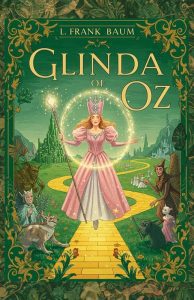
It was so beautiful in the country. It was the summer time. The wheat fields were golden, the oats were green, and the hay stood in great stacks in the green meadows. The stork paraded about among them on his long red legs, chattering away in Egyptian, the language he had learned from his lady mother.

All around the meadows and cornfields grew thick woods, and in the midst of the forest was a deep lake. Yes, it was beautiful, it was delightful in the country.

In a sunny spot stood a pleasant old farmhouse circled all about with deep canals; and from the walls down to the water’s edge grew great burdocks, so high that under the tallest of them a little child might stand upright. The spot was as wild as if it had been in the very center of the thick wood.

In this snug retreat sat a duck upon her nest, watching for her young brood to hatch; but the pleasure she had felt at first was almost gone; she had begun to think it a wearisome task, for the little ones were so long coming out of their shells, and she seldom had visitors. The other ducks liked much better to swim about in the canals than to climb the slippery banks and sit under the burdock leaves to have a gossip with her. It was a long time to stay so much by herself.

At length, however, one shell cracked, and soon another, and from each came a living creature that lifted its head and cried “Peep, peep.”

“Quack, quack!” said the mother; and then they all tried to say it, too, as well as they could, while they looked all about them on every side at the tall green leaves. Their mother allowed them to look about as much as they liked, because green is good for the eyes.

“What a great world it is, to be sure,” said the little ones, when they found how much more room they had than when they were in the eggshell.

“Is this all the world, do you imagine?” said the mother. “Wait till you have seen the garden. Far beyond that it stretches down to the pastor’s field, though I have never ventured to such a distance. Are you all out?” she continued, rising to look. “No, not all; the largest egg lies there yet, I declare. I wonder how long this

business is to last. I’m really beginning to be tired of it;” but for all that she sat down again.

“Well, and how are you to-day?” quacked an old duck who came to pay her a visit.

“There’s one egg that takes a deal of hatching. The shell is hard and will not break,” said the fond mother, who sat still upon her nest. “But just look at the others. Have I not a pretty family? Are they not the prettiest little ducklings you ever saw? They are the image of their father—the good for naught! He never comes to see me.”

“Let me see the egg that will not break,” said the old duck. “I’ve no doubt it’s a Guinea fowl’s egg. The same thing happened to me once, and a deal of trouble it gave me, for the young ones are afraid of the water. I quacked and clucked, but all to no purpose. Let me take a look at it. Yes, I am right; it’s a Guinea fowl, upon my word; so take my advice and leave it where it is. Come to the water and teach the other children to swim.”

“I think I will sit a little while longer,” said the mother. “I have sat so long, a day or two more won’t matter.”

“Very well, please yourself,” said the old duck, rising; and she went away.

At last the great egg broke, and the latest bird cried “Peep, peep,” as he crept forth from the shell. How big and ugly he was! The mother duck stared at him and did not know what to think. “Really,” she said, “this is an enormous duckling, and it is not at all like any of the others. I wonder if he will turn out to be a Guinea fowl. Well, we shall see when we get to the water—for into the water he must go, even if I have to push him in myself.”

On the next day the weather was delightful. The sun shone brightly on the green burdock leaves, and the mother duck took her whole family down to the water and jumped in with a splash. “Quack, quack!” cried she, and one after another the little ducklings jumped in. The water closed over their heads, but they came up again in an instant and swam about quite prettily, with their legs paddling under them as easily as possible; their legs went of their own accord; and the ugly gray-coat was also in the water, swimming with them.

“Oh,” said the mother, “that is not a Guinea fowl. See how well he uses his legs, and how erect he holds himself! He is my own child, and he is not so very ugly after all, if you look at him properly. Quack, quack! come with me now. I will take you into grand society and introduce you to the farmyard, but you must keep close to me or you may be trodden upon; and, above all, beware of the cat.”

When they reached the farmyard, there was a wretched riot going on; two families were fighting for an eel’s head, which, after all, was carried off by the cat. “See, children, that is the way of the world,” said the mother duck, whetting her beak, for she would have liked the eel’s head herself. “Come, now, use your legs, and let me see how well you can behave. You must bow your heads prettily to that old duck yonder; she is the highest born of them all and has Spanish blood; therefore she is well off. Don’t you see she has a red rag tied to her leg, which is something very grand and a great honor for a duck; it shows that every one is anxious not to lose her, and that she is to be noticed by both man and beast. Come, now, don’t turn in your toes; a well-bred duckling spreads his feet wide apart, just like his father and mother, in this way; now bend your necks and say ‘Quack!'”

The ducklings did as they were bade, but the other ducks stared, and said, “Look, here comes another brood—as if there were not enough of us already! And bless me, what a queer-looking object one of them is; we don’t want him here”; and then one flew out and bit him in the neck.

“Let him alone,” said the mother; “he is not doing any harm.”

“Yes, but he is so big and ugly. He’s a perfect fright,” said the spiteful duck, “and therefore he must be turned out. A little biting will do him good.”

“The others are very pretty children,” said the old duck with the rag on her leg, “all but that one. I wish his mother could smooth him up a bit; he is really ill-favored.”

“That is impossible, your grace,” replied the mother. “He is not pretty, but he has a very good disposition and swims as well as the others or even better. I think he will grow up pretty, and perhaps be smaller. He has remained too long in the egg, and therefore his figure is not properly formed;” and then she stroked his neck and smoothed the feathers, saying: “It is a drake, and therefore not of so much consequence. I think he will grow up strong and able to take care of himself.”

“The other ducklings are graceful enough,” said the old duck. “Now make yourself at home, and if you find an eel’s head you can bring it to me.”

And so they made themselves comfortable; but the poor duckling who had crept out of his shell last of all and looked so ugly was bitten and pushed and made fun of, not only by the ducks but by all the poultry.

Bless me, what a queer-looking object one of them is…

“He is too big,” they all said; and the turkey cock, who had been born into the world with spurs and fancied himself really an emperor, puffed himself out like a vessel in full sail and flew at the duckling. He became quite red in the head with passion, so that the poor little thing did not know where to go, and was quite miserable because he was so ugly as to be laughed at by the whole farmyard.

So it went on from day to day; it got worse and worse. The poor duckling was driven about by every one; even his brothers and sisters were unkind to him and would say, “Ah, you ugly creature, I wish the cat would get you” and his mother had been heard to say she wished he had never been born. The ducks pecked him, the chickens beat him, and the girl who fed the poultry pushed him with her feet. So at last he ran away, frightening the little birds in the hedge as he flew over the palings. “They are afraid because I am so ugly,” he said. So he flew still farther, until he came out on a large moor inhabited by wild ducks. Here he remained the whole night, feeling very sorrowful.

In the morning, when the wild ducks rose in the air, they stared at their new comrade. “What sort of a duck are you?” they all said, coming round him.

He bowed to them and was as polite as he could be, but he did not reply to their question. “You are exceedingly ugly,” said the wild ducks; “but that will not matter if you do not want to marry one of our family.”

Poor thing! he had no thoughts of marriage; all he wanted was permission to lie among the rushes and drink some of the water on the moor. After he had been on the moor two days, there came two wild geese, or rather goslings, for they had not been out of the egg long, which accounts for their impertinence. “Listen, friend,” said one of them to the duckling; “you are so ugly that we like you very well. Will you go with us and become a bird of passage? Not far from here is another moor, in which there are some wild geese, all of them unmarried. It is a chance for you to get a wife. You may make your fortune, ugly as you are.”

“Bang, bang,” sounded in the air, and the two wild geese fell dead among the rushes, and the water was tinged with blood. “Bang, bang,” echoed far and wide in the distance, and whole flocks of wild geese rose up from the rushes.

The sound continued from every direction, for the sportsmen surrounded the moor, and some were even seated on branches of trees, overlooking the rushes. The blue smoke from the guns rose like clouds over the dark trees, and as it

floated away across the water, a number of sporting dogs bounded in among the rushes, which bent beneath them wherever they went. How they terrified the poor duckling! He turned away his head to hide it under his wing, and at the same moment a large, terrible dog passed quite near him. His jaws were open, his tongue hung from his mouth, and his eyes glared fearfully. He thrust his nose close to the duckling, showing his sharp teeth, and then “splash, splash,” he went into the water, without touching him.

“Oh,” sighed the duckling, “how thankful I am for being so ugly; even a dog will not bite me.”

And so he lay quite still, while the shot rattled through the rushes, and gun after gun was fired over him. It was late in the day before all became quiet, but even then the poor young thing did not dare to move. He waited quietly for several hours and then, after looking carefully around him, hastened away from the moor as fast as he could. He ran over field and meadow till a storm arose, and he could hardly struggle against it.

Towards evening he reached a poor little cottage that seemed ready to fall, and only seemed to remain standing because it could not decide on which side to fall first. The storm continued so violent that the duckling could go no farther. He sat down by the cottage, and then he noticed that the door was not quite closed, in consequence of one of the hinges having given way. There was, therefore, a narrow opening near the bottom large enough for him to slip through, which he did very quietly, and got a shelter for the night. Here, in this cottage, lived a woman, a cat, and a hen. The cat, whom his mistress called “My little son,” was a great favorite; he could raise his back, and purr, and could even throw out sparks from his fur if it were stroked the wrong way. The hen had very short legs, so she was called “Chickie Short-legs.” She laid good eggs, and her mistress loved her as if she had been her own child. In the morning the strange visitor was discovered; the cat began to purr and the hen to cluck.

“What is that noise about?” said the old woman, looking around the room. But her sight was not very good; therefore when she saw the duckling she thought it must be a fat duck that had strayed from home. “Oh, what a prize!” she exclaimed. “I hope it is not a drake, for then I shall have some ducks’ eggs. I must wait and see.”

So the duckling was allowed to remain on trial for three weeks; but there were no eggs.

Now the cat was the master of the house, and the hen was the mistress; and they always said, “We and the world,” for they believed themselves to be half the world, and by far the better half, too. The duckling thought that others might hold a different opinion on the subject, but the hen would not listen to such doubts.

“Can you lay eggs?” she asked. “No.” “Then have the goodness to cease talking.” “Can you raise your back, or purr, or throw out sparks?” said the cat. “No.” “Then you have no right to express an opinion when sensible people are speaking.” So the duckling sat in a corner, feeling very low-spirited; but when the sunshine and the fresh air came into the room through the open door, he began to feel such a great longing for a swim that he could not help speaking of it.

“What an absurd idea!” said the hen. “You have nothing else to do; therefore you have foolish fancies. If you could purr or lay eggs, they would pass away.”

“But it is so delightful to swim about on the water,” said the duckling, “and so refreshing to feel it close over your head while you dive down to the bottom.”

“Delightful, indeed! it must be a queer sort of pleasure,” said the hen. “Why, you must be crazy! Ask the cat—he is the cleverest animal I know; ask him how he would like to swim about on the water, or to dive under it, for I will not speak of my own opinion. Ask our mistress, the old woman; there is no one in the world more clever than she is. Do you think she would relish swimming and letting the water close over her head?”

“I see you don’t understand me,” said the duckling.

“We don’t understand you? Who can understand you, I wonder? Do you consider yourself more clever than the cat or the old woman?—I will say nothing of myself. Don’t imagine such nonsense, child, and thank your good fortune that you have been so well received here. Are you not in a warm room and in society from which you may learn something? But you are a chatterer, and your company is not very agreeable. Believe me, I speak only for your good. I may tell you unpleasant truths, but that is a proof of my friendship. I advise you, therefore, to lay eggs and learn to purr as quickly as possible.”

“I believe I must go out into the world again,” said the duckling.

“Yes, do,” said the hen. So the duckling left the cottage and soon found water

on which it could swim and dive, but he was avoided by all other animals because of his ugly appearance.

Autumn came, and the leaves in the forest turned to orange and gold; then, as winter approached, the wind caught them as they fell and whirled them into the cold air. The clouds, heavy with hail and snowflakes, hung low in the sky, and the raven stood among the reeds, crying, “Croak, croak.” It made one shiver with cold to look at him. All this was very sad for the poor little duckling.

One evening, just as the sun was setting amid radiant clouds, there came a large flock of beautiful birds out of the bushes. The duckling had never seen any like them before. They were swans; and they curved their graceful necks, while their soft plumage shone with dazzling whiteness. They uttered a singular cry as they spread their glorious wings and flew away from those cold regions to warmer countries across the sea. They mounted higher and higher in the air, and the ugly little duckling had a strange sensation as he watched them. He whirled himself in the water like a wheel, stretched out his neck towards them, and uttered a cry so strange that it frightened even himself. Could he ever forget those beautiful, happy birds! And when at last they were out of his sight, he dived under the water and rose again almost beside himself with excitement. He knew not the names of these birds nor where they had flown, but he felt towards them as he had never felt towards any other bird in the world.

He was not envious of these beautiful creatures; it never occurred to him to wish to be as lovely as they. Poor ugly creature, how gladly he would have lived even with the ducks, had they only treated him kindly and given him encouragement.

The winter grew colder and colder; he was obliged to swim about on the water to keep it from freezing, but every night the space on which he swam became smaller and smaller. At length it froze so hard that the ice in the water crackled as he moved, and the duckling had to paddle with his legs as well as he could, to keep the space from closing up. He became exhausted at last and lay still and helpless, frozen fast in the ice.

Early in the morning a peasant who was passing by saw what had happened. He broke the ice in pieces with his wooden shoe and carried the duckling home to his wife. The warmth revived the poor little creature; but when the children wanted to play with him, the duckling thought they would do him some harm, so he started up in terror, fluttered into the milk pan, and splashed the milk about

the room. Then the woman clapped her hands, which frightened him still more. He flew first into the butter cask, then into the meal tub and out again. What a condition he was in! The woman screamed and struck at him with the tongs; the children laughed and screamed and tumbled over each other in their efforts to catch him, but luckily he escaped. The door stood open; the poor creature could just manage to slip out among the bushes and lie down quite exhausted in the newly fallen snow.

It would be very sad were I to relate all the misery and privations which the poor little duckling endured during the hard winter; but when it had passed he found himself lying one morning in a moor, amongst the rushes. He felt the warm sun shining and heard the lark singing and saw that all around was beautiful spring.

Then the young bird felt that his wings were strong, as he flapped them against his sides and rose high into the air. They bore him onwards until, before he well knew how it had happened, he found himself in a large garden. The apple trees were in full blossom, and the fragrant elders bent their long green branches down to the stream, which wound round a smooth lawn. Everything looked beautiful in the freshness of early spring. From a thicket close by came three beautiful white swans, rustling their feathers and swimming lightly over the smooth water. The duckling saw these lovely birds and felt more strangely unhappy than ever.

“I will fly to these royal birds,” he exclaimed, “and they will kill me because, ugly as I am, I dare to approach them. But it does not matter; better be killed by them than pecked by the ducks, beaten by the hens, pushed about by the maiden who feeds the poultry, or starved with hunger in the winter.”

Then he flew to the water and swam towards the beautiful swans. The moment they espied the stranger they rushed to meet him with outstretched wings.

“Kill me,” said the poor bird and he bent his head down to the surface of the water and awaited death.

But what did he see in the clear stream below? His own image—no longer a dark-gray bird, ugly and disagreeable to look at, but a graceful and beautiful swan.

To be born in a duck’s nest in a farmyard is of no consequence to a bird if it is

hatched from a swan’s egg. He now felt glad at having suffered sorrow and trouble, because it enabled him to enjoy so much better all the pleasure and happiness around him; for the great swans swam round the newcomer and stroked his neck with their beaks, as a welcome.

Into the garden presently came some little children and threw bread and cake into the water.

The new one is the most beautiful of all…

“See,” cried the youngest, “there is a new one;” and the rest were delighted, and ran to their father and mother, dancing and clapping their hands and shouting joyously, “There is another swan come; a new one has arrived.”

Then they threw more bread and cake into the water and said, “The new one is the most beautiful of all, he is so young and pretty.” And the old swans bowed their heads before him.

Then he felt quite ashamed and hid his head under his wing, for he did not know what to do, he was so happy—yet he was not at all proud. He had been persecuted and despised for his ugliness, and now he heard them say he was the most beautiful of all the birds. Even the elder tree bent down its boughs into the water before him, and the sun shone warm and bright. Then he rustled his feathers, curved his slender neck, and cried joyfully, from the depths of his heart, “I never dreamed of such happiness as this while I was the despised ugly duckling.”

LITTLE THUMBELINA

THERE was once a woman who wished very much to have a little child. She went to a fairy and said: “I should so very much like to have a little child. Can you tell me where I can find one?”

“Oh, that can be easily managed,” said the fairy. “Here is a barleycorn; it is not exactly of the same sort as those which grow in the farmers’ fields, and which the chickens eat. Put it into a flowerpot and see what will happen.”

“Thank you,” said the woman; and she gave the fairy twelve shillings, which was the price of the barleycorn. Then she went home and planted it, and there grew up a large, handsome flower, somewhat like a tulip in appearance, but with its leaves tightly closed, as if it were still a bud.

“It is a beautiful flower,” said the woman, and she kissed the red and golden- colored petals; and as she did so the flower opened, and she could see that it was a real tulip. But within the flower, upon the green velvet stamens, sat a very delicate and graceful little maiden. She was scarcely half as long as a thumb, and they gave her the name of Little Thumb, or Thumbelina, because she was so small.

A walnut shell, elegantly polished, served her for a cradle; her bed was formed of blue violet leaves, with a rose leaf for a counterpane. Here she slept at night, but during the day she amused herself on a table, where the peasant wife had placed a plate full of water.

Round this plate were wreaths of flowers with their stems in the water, and upon it floated a large tulip leaf, which served the little one for a boat. Here she sat and rowed herself from side to side, with two oars made of white horsehair. It was a very pretty sight. Thumbelina could also sing so softly and sweetly that nothing like her singing had ever before been heard.

One night, while she lay in her pretty bed, a large, ugly, wet toad crept through a broken pane of glass in the window and leaped right upon the table where she lay sleeping under her rose-leaf quilt.

 “What a pretty little wife this would make for my son,” said the toad, and she took up the walnut shell in which Thumbelina lay asleep, and jumped through the window with it, into the garden.

In the swampy margin of a broad stream in the garden lived the toad with her son. He was uglier even than his mother; and when he saw the pretty little maiden in her elegant bed, he could only cry “Croak, croak, croak.”

“Don’t speak so loud, or she will wake,” said the toad, “and then she might run away, for she is as light as swan’s-down. We will place her on one of the water-lily leaves out in the stream; it will be like an island to her, she is so light and small, and then she cannot escape; and while she is there we will make haste and prepare the stateroom under the marsh, in which you are to live when you are married.”

Far out in the stream grew a number of water lilies with broad green leaves which seemed to float on the top of the water. The largest of these leaves appeared farther off than the rest, and the old toad swam out to it with the walnut shell, in which Thumbelina still lay asleep.

The tiny creature woke very early in the morning and began to cry bitterly when she found where she was, for she could see nothing but water on every side of the large green leaf, and no way of reaching the land.

Meanwhile the old toad was very busy under the marsh, decking her room with rushes and yellow wildflowers, to make it look pretty for her new daughter- in-law. Then she swam out with her ugly son to the leaf on which she had placed poor Thumbelina. She wanted to bring the pretty bed, that she might put it in the bridal chamber to be ready for her. The old toad bowed low to her in the water and said, “Here is my son; he will be your husband, and you will live happily together in the marsh by the stream.”

“Croak, croak, croak,” was all her son could say for himself. So the toad took up the elegant little bed and swam away with it, leaving Thumbelina all alone on the green leaf, where she sat and wept. She could not bear to think of living with the old toad and having her ugly son for a husband. The little fishes who swam about in the water beneath had seen the toad and heard what she said, so now they lifted their heads above the water to look at the little maiden.

As soon as they caught sight of her they saw she was very pretty, and it vexed them to think that she must go and live with the ugly toads.

 “No, it must never be!” So they gathered together in the water, round the green stalk which held the leaf on which the little maiden stood, and gnawed it away at the root with their teeth. Then the leaf floated down the stream, carrying Thumbelina far away out of reach of land.

Thumbelina sailed past many towns, and the little birds in the bushes saw her and sang, “What a lovely little creature.” So the leaf swam away with her farther and farther, till it brought her to other lands. A graceful little white butterfly constantly fluttered round her and at last alighted on the leaf. The little maiden pleased him, and she was glad of it, for now the toad could not possibly reach her, and the country through which she sailed was beautiful, and the sun shone upon the water till it glittered like liquid gold. She took off her girdle and tied one end of it round the butterfly, fastening the other end of the ribbon to the leaf, which now glided on much faster than before, taking Thumbelina with it as she stood.

Presently a large cockchafer flew by. The moment he caught sight of her he seized her round her delicate waist with his claws and flew with her into a tree. The green leaf floated away on the brook, and the butterfly flew with it, for he was fastened to it and could not get away.

Oh, how frightened Thumbelina felt when the cockchafer flew with her to the tree! But especially was she sorry for the beautiful white butterfly which she had fastened to the leaf, for if he could not free himself he would die of hunger. But the cockchafer did not trouble himself at all about the matter. He seated himself by her side, on a large green leaf, gave her some honey from the flowers to eat, and told her she was very pretty, though not in the least like a cockchafer.

 Glided on much faster than before….

After a time all the cockchafers who lived in the tree came to pay Thumbelina a visit. They stared at her, and then the young lady cockchafers turned up their feelers and said, “She has only two legs! how ugly that looks.” “She has no feelers,” said another. “Her waist is quite slim. Pooh! she is like a human being.”

“Oh, she is ugly,” said all the lady cockchafers. The cockchafer who had run away with her believed all the others when they said she was ugly. He would have nothing more to say to her, and told her she might go where she liked. Then he flew down with her from the tree and placed her on a daisy, and she wept at the thought that she was so ugly that even the cockchafers would have nothing to say to her. And all the while she was really the loveliest creature that one could imagine, and as tender and delicate as a beautiful rose leaf.

During the whole summer poor little Thumbelina lived quite alone in the wide forest. She wove herself a bed with blades of grass and hung it up under a broad leaf, to protect herself from the rain. She sucked the honey from the flowers for food and drank the dew from their leaves every morning.

So passed away the summer and the autumn, and then came the winter—the long, cold winter. All the birds who had sung to her so sweetly had flown away, and the trees and the flowers had withered. The large shamrock under the shelter of which she had lived was now rolled together and shriveled up; nothing remained but a yellow, withered stalk. She felt dreadfully cold, for her clothes were torn, and she was herself so frail and delicate that she was nearly frozen to death. It began to snow, too; and the snowflakes, as they fell upon her, were like a whole shovelful falling upon one of us, for we are tall, but she was only an inch high. She wrapped herself in a dry leaf, but it cracked in the middle and could not keep her warm, and she shivered with cold.

Near the wood in which she had been living was a large cornfield, but the corn had been cut a long time; nothing remained but the bare, dry stubble, standing up out of the frozen ground. It was to her like struggling through a large wood.

Oh! how she shivered with the cold. She came at last to the door of a field mouse, who had a little den under the corn stubble. There dwelt the field mouse in warmth and comfort, with a whole roomful of corn, a kitchen, and a beautiful dining room. Poor Thumbelina stood before the door, just like a little beggar girl, and asked for a small piece of barleycorn, for she had been without a morsel to eat for two days.

“You poor little creature,” said the field mouse, for she was really a good old mouse, “come into my warm room and dine with me.”

She was pleased with Thumbelina, so she said, “You are quite welcome to stay with me all the winter, if you like; but you must keep my rooms clean and neat, and tell me stories, for I shall like to hear them very much.” And Thumbelina did all that the field mouse asked her, and found herself very comfortable.

“We shall have a visitor soon,” said the field mouse one day; “my neighbor pays me a visit once a week. He is better off than I am; he has large rooms, and wears a beautiful black velvet coat. If you could only have him for a husband, you would be well provided for indeed. But he is blind, so you must tell him some of your prettiest stories.”

Thumbelina did not feel at all interested about this neighbor, for he was a mole. However, he came and paid his visit, dressed in his black velvet coat.

“He is very rich and learned, and his house is twenty times larger than mine,” said the field mouse.

He was rich and learned, no doubt, but he always spoke slightingly of the sun and the pretty flowers, because he had never seen them. Thumbelina was obliged to sing to him, “Ladybird, ladybird, fly away home,” and many other pretty songs. And the mole fell in love with her because she had so sweet a voice; but he said nothing yet, for he was very prudent and cautious. A short time before, the mole had dug a long passage under the earth, which led from the dwelling of the field mouse to his own, and here she had permission to walk with Thumbelina whenever she liked. But he warned them not to be alarmed at the sight of a dead bird which lay in the passage. It was a perfect bird, with a beak and feathers, and could not have been dead long. It was lying just where the mole had made his passage. The mole took in his mouth a piece of phosphorescent wood, which glittered like fire in the dark. Then he went before them to light them through the long, dark passage. When they came to the spot where the dead bird lay, the mole pushed his broad nose through the ceiling, so that the earth gave way and the daylight shone into the passage.

In the middle of the floor lay a swallow, his beautiful wings pulled close to his sides, his feet and head drawn up under his feathers—the poor bird had evidently died of the cold. It made little Thumbelina very sad to see it, she did so love the little birds; all the summer they had sung and twittered for her so beautifully. But the mole pushed it aside with his crooked legs and said: “He will sing no more now. How miserable it must be to be born a little bird! I am thankful that none of my children will ever be birds, for they can do nothing but cry ‘Tweet, tweet,’ and must always die of hunger in the winter.”

“Yes, you may well say that, as a clever man!” exclaimed the field mouse. “What is the use of his twittering if, when winter comes, he must either starve or be frozen to death? Still, birds are very high bred.”

Thumbelina said nothing, but when the two others had turned their backs upon the bird, she stooped down and stroked aside the soft feathers which covered his head, and kissed the closed eyelids. “Perhaps this was the one who sang to me so sweetly in the summer,” she said; “and how much pleasure it gave me, you dear, pretty bird.”

The mole now stopped up the hole through which the daylight shone, and then accompanied the ladies home. But during the night Thumbelina could not sleep; so she got out of bed and wove a large, beautiful carpet of hay. She carried it to the dead bird and spread it over him, with some down from the flowers which she had found in the field mouse’s room. It was as soft as wool, and she spread some of it on each side of the bird, so that he might lie warmly in the cold earth.

“Farewell, pretty little bird,” said she, “farewell. Thank you for your delightful singing during the summer, when all the trees were green and the warm sun shone upon us.” Then she laid her head on the bird’s breast, but she was alarmed, for it seemed as if something inside the bird went “thump, thump.” It was the bird’s heart; he was not really dead, only benumbed with the cold, and the warmth had restored him to life. In autumn all the swallows fly away into warm countries; but if one happens to linger, the cold seizes it, and it becomes chilled and falls down as if dead. It remains where it fell, and the cold snow covers it.

Thumbelina trembled very much; she was quite frightened, for the bird was large, a great deal larger than herself (she was only an inch high). But she took courage, laid the wool more thickly over the poor swallow, and then took a leaf which she had used for her own counterpane and laid it over his head.

The next night she again stole out to see him. He was alive, but very weak; he could only open his eyes for a moment to look at Thumbelina, who stood by, holding a piece of decayed wood in her hand, for she had no other lantern. “Thank you, pretty little maiden,” said the sick swallow; “I have been so nicely warmed that I shall soon regain my strength and be able to fly about again in the warm sunshine.”

“Oh,” said she, “it is cold out of doors now; it snows and freezes. Stay in your warm bed; I will take care of you.”

She brought the swallow some water in a flower leaf, and after he had drunk, he told her that he had wounded one of his wings in a thornbush and could not fly as fast as the others, who were soon far away on their journey to warm countries. At last he had fallen to the earth, and could remember nothing more, nor how he came to be where she had found him.

All winter the swallow remained underground, and Thumbelina nursed him with care and love. She did not tell either the mole or the field mouse anything about it, for they did not like swallows. Very soon the springtime came, and the sun warmed the earth. Then the swallow bade farewell to Thumbelina, and she opened the hole in the ceiling which the mole had made. The sun shone in upon them so beautifully that the swallow asked her if she would go with him. She could sit on his back, he said, and he would fly away with her into the green woods. But she knew it would grieve the field mouse if she left her in that manner, so she said, “No, I cannot.”

“Farewell, then, farewell, you good, pretty little maiden,” said the swallow, and he flew out into the sunshine.

Thumbelina looked after him, and the tears rose in her eyes. She was very fond of the poor swallow.

“Tweet, tweet,” sang the bird, as he flew out into the green woods, and Thumbelina felt very sad. She was not allowed to go out into the warm sunshine. The corn which had been sowed in the field over the house of the field mouse had grown up high into the air and formed a thick wood to Thumbelina, who was only an inch in height.

Nothing must be wanting when you are the wife of the mole …

 “You are going to be married, little one,” said the field mouse. “My neighbor has asked for you. What good fortune for a poor child like you! Now we will prepare your wedding clothes. They must be woolen and linen. Nothing must be wanting when you are the wife of the mole.”

Thumbelina had to turn the spindle, and the field mouse hired four spiders, who were to weave day and night. Every evening the mole visited her and was continually speaking of the time when the summer would be over. Then he would keep his wedding day with Thumbelina; but now the heat of the sun was so great that it burned the earth and made it hard, like stone. As soon as the summer was over the wedding should take place. But Thumbelina was not at all pleased, for she did not like the tiresome mole.

Every morning when the sun rose and every evening when it went down she would creep out at the door, and as the wind blew aside the ears of corn so that she could see the blue sky, she thought how beautiful and bright it seemed out there and wished so much to see her dear friend, the swallow, again. But he never returned, for by this time he had flown far away into the lovely green forest.

When autumn arrived Thumbelina had her outfit quite ready, and the field mouse said to her, “In four weeks the wedding must take place.”

Then she wept and said she would not marry the disagreeable mole. “Nonsense,” replied the field mouse. “Now don’t be obstinate, or I shall bite

you with my white teeth. He is a very handsome mole; the queen herself does

not wear more beautiful velvets and furs. His kitchens and cellars are quite full. You ought to be very thankful for such good fortune.”

So the wedding day was fixed, on which the mole was to take her away to live with him, deep under the earth, and never again to see the warm sun, because he did not like it. The poor child was very unhappy at the thought of saying farewell to the beautiful sun, and as the field mouse had given her permission to stand at the door, she went to look at it once more.

“Farewell, bright sun,” she cried, stretching out her arm towards it; and then she walked a short distance from the house, for the corn had been cut, and only the dry stubble remained in the fields. “Farewell, farewell,” she repeated, twining her arm around a little red flower that grew just by her side. “Greet the little swallow from me, if you should see him again.”

 “Tweet, tweet,” sounded over her head suddenly. She looked up, and there was the swallow himself flying close by. As soon as he spied Thumbelina he was delighted. She told him how unwilling she was to marry the ugly mole, and to live always beneath the earth, nevermore to see the bright sun. And as she told him, she wept.

“Cold winter is coming,” said the swallow, “and I am going to fly away into warmer countries. Will you go with me? You can sit on my back and fasten yourself on with your sash. Then we can fly away from the ugly mole and his gloomy rooms—far away, over the mountains, into warmer countries, where the sun shines more brightly than here; where it is always summer, and the flowers bloom in greater beauty. Fly now with me, dear little one; you saved my life when I lay frozen in that dark, dreary passage.”

“Yes, I will go with you,” said Thumbelina; and she seated herself on the bird’s back, with her feet on his outstretched wings, and tied her girdle to one of his strongest feathers.

The swallow rose in the air and flew over forest and over sea—high above the highest mountains, covered with eternal snow. Thumbelina would have been frozen in the cold air, but she crept under the bird’s warm feathers, keeping her little head uncovered, so that she might admire the beautiful lands over which they passed. At length they reached the warm countries, where the sun shines brightly and the sky seems so much higher above the earth. Here on the hedges and by the wayside grew purple, green, and white grapes, lemons and oranges hung from trees in the fields, and the air was fragrant with myrtles and orange blossoms. Beautiful children ran along the country lanes, playing with large gay butterflies; and as the swallow flew farther and farther, every place appeared still more lovely.

At last they came to a blue lake, and by the side of it, shaded by trees of the deepest green, stood a palace of dazzling white marble, built in the olden times. Vines clustered round its lofty pillars, and at the top were many swallows’ nests, and one of these was the home of the swallow who carried Thumbelina.

“This is my house,” said the swallow; “but it would not do for you to live there—you would not be comfortable. You must choose for yourself one of those lovely flowers, and I will put you down upon it, and then you shall have everything that you can wish to make you happy.”

“That will be delightful,” she said, and clapped her little hands for joy.

A large marble pillar lay on the ground, which, in falling, had been broken into three pieces. Between these pieces grew the most beautiful large white flowers, so the swallow flew down with Thumbelina and placed her on one of the broad leaves. But how surprised she was to see in the middle of the flower a tiny little man, as white and transparent as if he had been made of crystal! He had a gold crown on his head, and delicate wings at his shoulders, and was not much larger than was she herself. He was the angel of the flower, for a tiny man and a tiny woman dwell in every flower, and this was the king of them all.

“Oh, how beautiful he is!” whispered Thumbelina to the swallow.

The little prince was at first quite frightened at the bird, who was like a giant compared to such a delicate little creature as himself; but when he saw Thumbelina he was delighted and thought her the prettiest little maiden he had ever seen. He took the gold crown from his head and placed it on hers, and asked her name and if she would be his wife and queen over all the flowers.

This certainly was a very different sort of husband from the son of the toad, or the mole with his black velvet and fur, so she said Yes to the handsome prince. Then all the flowers opened, and out of each came a little lady or a tiny lord, all so pretty it was quite a pleasure to look at them. Each of them brought Thumbelina a present; but the best gift was a pair of beautiful wings, which had belonged to a large white fly, and they fastened them to Thumbelina’s shoulders, so that she might fly from flower to flower.

Then there was much rejoicing, and the little swallow, who sat above them in his nest, was asked to sing a wedding song, which he did as well as he could; but in his heart he felt sad, for he was very fond of Thumbelina and would have liked never to part from her again.

“You must not be called Thumbelina any more,” said the spirit of the flowers to her. “It is an ugly name, and you are so very lovely. We will call you Maia.”

“Farewell, farewell,” said the swallow, with a heavy heart, as he left the warm countries, to fly back into Denmark. There he had a nest over the window of a house in which dwelt the writer of fairy tales. The swallow sang “Tweet, tweet,” and from his song came the whole story.

THE FIR TREE

FAR away in the forest, where the warm sun and the fresh air made a sweet resting place, grew a pretty little fir tree. The situation was all that could be desired; and yet the tree was not happy, it wished so much to be like its tall companions, the pines and firs which grew around it.

The sun shone, and the soft air fluttered its leaves, and the little peasant children passed by, prattling merrily; but the fir tree did not heed them.

Sometimes the children would bring a large basket of raspberries or strawberries, wreathed on straws, and seat themselves near the fir tree, and say, “Is it not a pretty little tree?” which made it feel even more unhappy than before.

And yet all this while the tree grew a notch or joint taller every year, for by the number of joints in the stem of a fir tree we can discover its age.

Still, as it grew, it complained: “Oh! how I wish I were as tall as the other trees; then I would spread out my branches on every side, and my crown would overlook the wide world around. I should have the birds building their nests on my boughs, and when the wind blew, I should bow with stately dignity, like my tall companions.”

So discontented was the tree, that it took no pleasure in the warm sunshine, the birds, or the rosy clouds that floated over it morning and evening.

Sometimes in winter, when the snow lay white and glittering on the ground, there was a little hare that would come springing along, and jump right over the little tree’s head; then how mortified it would feel.

Two winters passed; and when the third arrived, the tree had grown so tall that the hare was obliged to run round it. Yet it remained unsatisfied and would exclaim: “Oh! to grow, to grow; if I could but keep on growing tall and old! There is nothing else worth caring for in the world.”

In the autumn the woodcutters came, as usual, and cut down several of the tallest trees; and the young fir, which was now grown to a good, full height,

shuddered as the noble trees fell to the earth with a crash.

After the branches were lopped off, the trunks looked so slender and bare that they could scarcely be recognized. Then they were placed, one upon another, upon wagons and drawn by horses out of the forest. Where could they be going? What would become of them? The young fir tree wished very much to know.

So in the spring, when the swallows and the storks came, it asked: “Do you know where those trees were taken? Did you meet them?”

The swallows knew nothing; but the stork, after a little reflection, nodded his head and said: “Yes, I think I do. As I flew from Egypt, I met several new ships, and they had fine masts that smelt like fir. These must have been the trees; and I assure you they were stately; they sailed right gloriously!”

“Oh, how I wish I were tall enough to go on the sea,” said the fir tree. “Tell me what is this sea, and what does it look like?”

“It would take too much time to explain—a great deal too much,” said the stork, flying quickly away.

“Rejoice in thy youth,” said the sunbeam; “rejoice in thy fresh growth and in the young life that is in thee.”

And the wind kissed the tree, and the dew watered it with tears, but the fir tree regarded them not.

Christmas time drew near, and many young trees were cut down, some that were even smaller and younger than the fir tree, who enjoyed neither rest nor peace for longing to leave its forest home. These young trees, which were chosen for their beauty, kept their branches, and they, also, were laid on wagons and drawn by horses far away out of the forest.

“Where are they going?” asked the fir tree. “They are not taller than I am; indeed, one is not so tall. And why do they keep all their branches? Where are they going?”

“We know, we know,” sang the sparrows; “we have looked in at the windows of the houses in the town, and we know what is done with them. Oh! you cannot

think what honor and glory they receive. They are dressed up in the most splendid manner. We have seen them standing in the middle of a warm room, and adorned with all sorts of beautiful things—honey cakes, gilded apples, playthings, and many hundreds of wax tapers.”

“And then,” asked the fir tree, trembling in all its branches, “and then what happens?”

“We did not see any more,” said the sparrows; “but this was enough for us.” “I wonder whether anything so brilliant will ever happen to me,” thought the

fir tree. “It would be better even than crossing the sea. I long for it almost with

pain. Oh, when will Christmas be here? I am now as tall and well grown as those which were taken away last year. O that I were now laid on the wagon, or standing in the warm room with all that brightness and splendor around me! Something better and more beautiful is to come after, or the trees would not be so decked out. Yes, what follows will be grander and more splendid. What can it be? I am weary with longing. I scarcely know what it is that I feel.”

“Rejoice in our love,” said the air and the sunlight. “Enjoy thine own bright life in the fresh air.”

But the tree would not rejoice, though it grew taller every day, and winter and summer its dark-green foliage might be seen in the forest, while passers-by would say, “What a beautiful tree!”

A short time before the next Christmas the discontented fir tree was the first to fall. As the ax cut sharply through the stem and divided the pith, the tree fell with a groan to the earth, conscious of pain and faintness and forgetting all its dreams of happiness in sorrow at leaving its home in the forest. It knew that it should never again see its dear old companions the trees, nor the little bushes and many-colored flowers that had grown by its side; perhaps not even the birds. Nor was the journey at all pleasant.

The tree first recovered itself while being unpacked in the courtyard of a house, with several other trees; and it heard a man say: “We only want one, and this is the prettiest. This is beautiful!”

Then came two servants in grand livery and carried the fir tree into a large and beautiful apartment. Pictures hung on the walls, and near the tall tile stove stood great china vases with lions on the lids. There were rocking-chairs, silken

sofas, and large tables covered with pictures; and there were books, and playthings that had cost a hundred times a hundred dollars—at least so said the children.

Then the fir tree was placed in a large tub full of sand—but green baize hung all round it so that no one could know it was a tub—and it stood on a very handsome carpet. Oh, how the fir tree trembled! What was going to happen to him now? Some young ladies came, and the servants helped them to adorn the tree.

On one branch they hung little bags cut out of colored paper, and each bag was filled with sweetmeats. From other branches hung gilded apples and walnuts, as if they had grown there; and above and all around were hundreds of red, blue, and white tapers, which were fastened upon the branches. Dolls, exactly like real men and women, were placed under the green leaves,—the tree had never seen such things before,—and at the very top was fastened a glittering star made of gold tinsel. Oh, it was very beautiful. “This evening,” they all exclaimed, “how bright it will be!”

“O that the evening were come,” thought the tree, “and the tapers lighted! Then I shall know what else is going to happen. Will the trees of the forest come to see me? Will the sparrows peep in at the windows, I wonder, as they fly? Shall I grow faster here than in the forest, and shall I keep on all these ornaments during summer and winter?” But guessing was of very little use. His back ached with trying, and this pain is as bad for a slender fir tree as headache is for us.

At last the tapers were lighted, and then what a glistening blaze of splendor the tree presented! It trembled so with joy in all its branches that one of the candles fell among the green leaves and burned some of them. “Help! help!” exclaimed the young ladies; but no harm was done, for they quickly extinguished the fire.

After this the tree tried not to tremble at all, though the fire frightened him, he was so anxious not to hurt any of the beautiful ornaments, even while their brilliancy dazzled him.

And now the folding doors were thrown open, and a troop of children rushed in as if they intended to upset the tree, and were followed more slowly by their elders. For a moment the little ones stood silent with astonishment, and then they shouted for joy till the room rang; and they danced merrily round the tree while one present after another was taken from it.

“What are they doing? What will happen next?” thought the tree. At last the candles burned down to the branches and were put out. Then the children received permission to plunder the tree.

Oh, how they rushed upon it! There was such a riot that the branches cracked, and had it not been fastened with the glistening star to the ceiling, it must have been thrown down.

Then the children danced about with their pretty toys, and no one noticed the tree except the children’s maid, who came and peeped among the branches to see if an apple or a fig had been forgotten.

“A story, a story,” cried the children, pulling a little fat man towards the tree. “Now we shall be in the green shade,” said the man as he seated himself

under it, “and the tree will have the pleasure of hearing, also; but I shall only relate one story. What shall it be? Ivede-Avede or Humpty Dumpty, who fell downstairs, but soon got up again, and at last married a princess?”

“Ivede-Avede,” cried some; “Humpty Dumpty,” cried others; and there was a famous uproar. But the fir tree remained quite still and thought to himself: “Shall I have anything to do with all this? Ought I to make a noise, too?” but he had already amused them as much as they wished and they paid no attention to him.

Then the old man told them the story of Humpty Dumpty—how he fell downstairs, and was raised up again, and married a princess. And the children clapped their hands and cried, “Tell another, tell another,” for they wanted to hear the story of Ivede-Avede; but this time they had only “Humpty Dumpty.” After this the fir tree became quite silent and thoughtful. Never had the birds in the forest told such tales as that of Humpty Dumpty, who fell downstairs, and yet married a princess.

“Ah, yes! so it happens in the world,” thought the fir tree. He believed it all, because it was related by such a pleasant man.

“Ah, well!” he thought, “who knows? Perhaps I may fall down, too, and marry a princess;” and he looked forward joyfully to the next evening, expecting to be again decked out with lights and playthings, gold and fruit. “To-morrow I

will not tremble,” thought he; “I will enjoy all my splendor, and I shall hear the story of Humpty Dumpty again, and perhaps of Ivede-Avede.” And the tree remained quiet and thoughtful all night.

In the morning the servants and the housemaid came in. “Now,” thought the fir tree, “all my splendor is going to begin again.” But they dragged him out of the room and upstairs to the garret and threw him on the floor in a dark corner where no daylight shone, and there they left him. “What does this mean?” thought the tree. “What am I to do here? I can hear nothing in a place like this;” and he leaned against the wall and thought and thought.

And he had time enough to think, for days and nights passed and no one came near him; and when at last somebody did come, it was only to push away some large boxes in a corner. So the tree was completely hidden from sight, as if it had never existed.

Threw him on the floor…… and there they left him.

“It is winter now,” thought the tree; “the ground is hard and covered with snow, so that people cannot plant me. I shall be sheltered here, I dare say, until spring comes. How thoughtful and kind everybody is to me! Still, I wish this place were not so dark and so dreadfully lonely, with not even a little hare to look at. How pleasant it was out in the forest while the snow lay on the ground, when the hare would run by, yes, and jump over me, too, although I did not like it then. Oh! it is terribly lonely here.”

“Squeak, squeak,” said a little mouse, creeping cautiously towards the tree; then came another, and they both sniffed at the fir tree and crept in and out between the branches.

“Oh, it is very cold,” said the little mouse. “If it were not we should be very comfortable here, shouldn’t we, old fir tree?”

“I am not old,” said the fir tree. “There are many who are older than I am.” “Where do you come from?” asked the mice, who were full of curiosity; “and

what do you know? Have you seen the most beautiful places in the world, and

can you tell us all about them? And have you been in the storeroom, where cheeses lie on the shelf and hams hang from the ceiling? One can run about on tallow candles there; one can go in thin and come out fat.”

“I know nothing of that,” said the fir tree, “but I know the wood, where the

sun shines and the birds sing.” And then the tree told the little mice all about its youth. They had never heard such an account in their lives; and after they had listened to it attentively, they said: “What a number of things you have seen! You must have been very happy.”

“Happy!” exclaimed the fir tree; and then, as he reflected on what he had been telling them, he said, “Ah, yes! after all, those were happy days.” But when he went on and related all about Christmas Eve, and how he had been dressed up with cakes and lights, the mice said, “How happy you must have been, you old fir tree.”

“I am not old at all,” replied the tree; “I only came from the forest this winter.

I am now checked in my growth.”

“What splendid stories you can tell,” said the little mice. And the next night four other mice came with them to hear what the tree had to tell. The more he talked the more he remembered, and then he thought to himself: “Yes, those were happy days; but they may come again. Humpty Dumpty fell downstairs, and yet he married the princess. Perhaps I may marry a princess, too.” And the fir tree thought of the pretty little birch tree that grew in the forest; a real princess, a beautiful princess, she was to him.

“Who is Humpty Dumpty?” asked the little mice. And then the tree related the whole story; he could remember every single word. And the little mice were so delighted with it that they were ready to jump to the top of the tree. The next night a great many more mice made their appearance, and on Sunday two rats came with them; but the rats said it was not a pretty story at all, and the little mice were very sorry, for it made them also think less of it.

“Do you know only that one story?” asked the rats.

“Only that one,” replied the fir tree. “I heard it on the happiest evening in my life; but I did not know I was so happy at the time.”

“We think it is a very miserable story,” said the rats. “Don’t you know any story about bacon or tallow in the storeroom?”

“No,” replied the tree.

“Many thanks to you, then,” replied the rats, and they went their ways.

The little mice also kept away after this, and the tree sighed and said: “It was

very pleasant when the merry little mice sat round me and listened while I talked. Now that is all past, too. However, I shall consider myself happy when some one comes to take me out of this place.”

But would this ever happen? Yes; one morning people came to clear up the garret; the boxes were packed away, and the tree was pulled out of the corner and thrown roughly on the floor; then the servants dragged it out upon the staircase, where the daylight shone.

“Now life is beginning again,” said the tree, rejoicing in the sunshine and fresh air. Then it was carried downstairs and taken into the courtyard so quickly that it forgot to think of itself and could only look about, there was so much to be seen.

The court was close to a garden, where everything looked blooming. Fresh and fragrant roses hung over the little palings. The linden trees were in blossom, while swallows flew here and there, crying, “Twit, twit, twit, my mate is coming”; but it was not the fir tree they meant.

“Now I shall live,” cried the tree joyfully, spreading out its branches; but alas! they were all withered and yellow, and it lay in a corner among weeds and nettles. The star of gold paper still stuck in the top of the tree and glittered in the sunshine.

Two of the merry children who had danced round the tree at Christmas and had been so happy were playing in the same courtyard. The youngest saw the gilded star and ran and pulled it off the tree. “Look what is sticking to the ugly old fir tree,” said the child, treading on the branches till they crackled under his boots.

And the tree saw all the fresh, bright flowers in the garden and then looked at itself and wished it had remained in the dark corner of the garret. It thought of its fresh youth in the forest, of the merry Christmas evening, and of the little mice who had listened to the story of Humpty Dumpty.

“Past! past!” said the poor tree. “Oh, had I but enjoyed myself while I could have done so! but now it is too late.”

Then a lad came and chopped the tree into small pieces, till a large bundle lay in a heap on the ground. The pieces were placed in a fire, and they quickly blazed up brightly, while the tree sighed so deeply that each sigh was like a little

pistol shot. Then the children who were at play came and seated themselves in front of the fire, and looked at it and cried, “Pop, pop.” But at each “pop,” which was a deep sigh, the tree was thinking of a summer day in the forest or of some winter night there when the stars shone brightly, and of Christmas evening, and of Humpty Dumpty,—the only story it had ever heard or knew how to relate,— till at last it was consumed.

The boys still played in the garden, and the youngest wore on his breast the golden star with which the tree had been adorned during the happiest evening of its existence. Now all was past; the tree’s life was past and the story also past— for all stories must come to an end at some time or other.

LITTLE TUK

LITTLE TUK! An odd name, to be sure! However, it was not the little boy’s real name. His real name was Carl; but when he was so young that he could not speak plainly, he used to call himself Tuk. It would be hard to say why, for it is not at all like “Carl”; but the name does as well as any, if one only knows it.

Little Tuk was left at home to take care of his sister Gustava, who was much younger than himself; and he had also to learn his lesson. Here were two things to be done at the same time, and they did not at all suit each other. The poor boy sat with his sister in his lap, singing to her all the songs he knew, yet giving, now and then, a glance into his geography, which lay open beside him. By to-morrow morning he must know the names of all the towns in Seeland by heart, and be able to tell about them all that could be told.

His mother came at last, and took little Gustava in her arms. Tuk ran quickly to the window and read and read till he had almost read his eyes out—for it was growing dark, and his mother could not afford to buy candles.

“There goes the old washerwoman down the lane,” said the mother, as she looked out of the window. “She can hardly drag herself along, poor thing; and now she has to carry that heavy pail from the pump. Be a good boy, little Tuk, and run across to help the poor creature, will you not?” And little Tuk ran quickly and helped to bear the weight of the pail. But when he came back into the room, it was quite dark. Nothing was said about a candle, and it was of no use to wish for one; he must go to his little trundle-bed, which was made of an old settle.

There he lay, still thinking of the geography lesson, of Seeland, and of all that the master had said. He could not read the book again, as he should by rights have done, for want of a light. So he put the geography-book under his pillow. Somebody had once told him that would help him wonderfully to remember his lesson, but he had never yet found that one could depend upon it.

There he lay and thought and thought, till all at once he felt as though some one were gently sealing his mouth and eyes with a kiss. He slept and yet did not

sleep, for he seemed to see the old washerwoman’s mild, kind eyes fixed upon him, and to hear her say: “It would be a shame, indeed, for you not to know your lesson to-morrow, little Tuk. You helped me; now I will help you, and our Lord will help us both.”

All at once the leaves of the book began to rustle under little Tuk’s head, and he heard something crawling about under his pillow.

“Cluck, cluck, cluck!” cried a hen, as she crept towards him. (She came from the town of Kjöge.) “I’m a Kjöge hen,” she said. And then she told him how many inhabitants the little town contained, and about the battle that had once been fought there, and how it was now hardly worth mentioning, there were so many greater things.

All in a moment he was on horseback, and on he went, gallop, gallop!

Scratch, scratch! kribbley crabbley! and now a great wooden bird jumped down upon the bed. It was the popinjay from the shooting ground at Præstö. He had reckoned the number of inhabitants in Præstö, and found that there were as many as he had nails in his body. He was a proud bird. “Thorwaldsen lived in one corner of Præstö, close by me. Am I not a pretty bird, a merry popinjay?”

And now little Tuk no longer lay in bed. All in a moment he was on horseback, and on he went, gallop, gallop! A splendid knight, with a bright helmet and waving plume,—a knight of the olden time,—held him on his own horse; and on they rode together, through the wood of the ancient city of Vordingborg, and it was once again a great and busy town. The high towers of the king’s castle rose against the sky, and bright lights were seen gleaming through the windows. Within were music and merrymaking. King Waldemar was leading out the noble ladies of his court to dance with him.

Suddenly the morning dawned, the lamps grew pale, the sun rose, the outlines of the buildings faded away, and at last one high tower alone remained to mark the spot where the royal castle had stood. The vast city had shrunk into a poor, mean-looking little town. The schoolboys, coming out of school with their geography-books under their arms, said, “Two thousand inhabitants”; but that was a mere boast, for the town had not nearly so many.

And little Tuk lay in his bed. He knew not whether he had been dreaming or not, but again there was some one close by his side.

“Little Tuk! little Tuk!” cried a voice; it was the voice of a young sailor boy. “I am come to bring you greeting from Korsör. Korsör is a new town, a living town, with steamers and mail coaches. Once people used to call it a low, ugly place, but they do so no longer.

“‘I dwell by the seaside,’ says Korsör; ‘I have broad highroads and pleasure gardens; and I have given birth to a poet, a witty one, too, which is more than all poets are. I once thought of sending a ship all round the world; but I did not do it, though I might as well have done so. I dwell so pleasantly, close by the port; and I am fragrant with perfume, for the loveliest roses bloom round about me, close to my gates.'”

And little Tuk could smell the roses and see them and their fresh green leaves. But in a moment they had vanished; the green leaves spread and thickened—a perfect grove had grown up above the bright waters of the bay, and above the grove rose the two high-pointed towers of a glorious old church. From the side of the grass-grown hill gushed a fountain in rainbow-hued streams, with a merry, musical voice, and close beside it sat a king, wearing a gold crown upon his long dark hair. This was King Hroar of the springs; and hard by was the town of Roskilde (Hroar’s Fountain). And up the hill, on a broad highway, went all the kings and queens of Denmark, wearing golden crowns; hand in hand they passed on into the church, and the deep music of the organ mingled with the clear rippling of the fountain. For nearly all the kings and queens of Denmark lie buried in this beautiful church. And little Tuk saw and heard it all.

“Don’t forget the towns,” said King Hroar.

Then all vanished; though where it went he knew not. It seemed like turning the leaves of a book.

And now there stood before him an old peasant woman from Sorö, the quiet little town where grass grows in the very market place. Her green linen apron was thrown over her head and back, and the apron was very wet, as if it had been raining heavily.

“And so it has,” she said. And she told a great many pretty things from Holberg’s comedies, and recited ballads about Waldemar and Absalon; for Holberg had founded an academy in her native town.

All at once she cowered down and rocked her head as if she were a frog about to spring. “Koax!” cried she; “it is wet, it is always wet, and it is as still as the

grave in Sorö.” She had changed into a frog. “Koax!” and again she was an old woman. “One must dress according to the weather,” she said.

“It is wet! it is wet! My native town is like a bottle; one goes in at the cork, and by the cork one must come out. In old times we had the finest of fish; now we have fresh, rosy-cheeked boys at the bottom of the bottle. There they learn wisdom—Greek, Greek, and Hebrew! Koax!”

It sounded exactly as if frogs were croaking, or as if some one were walking over the great swamp with heavy boots. So tiresome was her tone, all on the same note, that little Tuk fell fast asleep; and a very good thing it was for him.

But even in sleep there came a dream, or whatever else it may be called. His little sister Gustava, with her blue eyes and flaxen ringlets, was grown into a tall, beautiful girl, who, though she had no wings, could fly; and away they now flew over Seeland—over its green woods and blue waters.

“Hark! Do you hear the cock crow, little Tuk? ‘Cock-a-doodle-do!’ The fowls are flying hither from Kjöge, and you shall have a farmyard, a great, great poultry yard of your own! You shall never suffer hunger or want. The golden goose, the bird of good omen, shall be yours; you shall become a rich and happy man. Your house shall rise up like King Waldemar’s towers and be richly decked with statues like those of Thorwaldsen at Præstö.

“Understand me well; your good name shall be borne round the world, like the ship that was to sail from Korsör, and at Roskilde you shall speak and give counsel wisely and well, little Tuk, like King Hroar; and when at last you shall lie in your peaceful grave you shall sleep as quietly—”

“As if I lay sleeping in Sorö,” said Tuk, and he woke. It was a bright morning, and he could not remember his dream, but it was not necessary that he should. One has no need to know what one will live to see.

And now he sprang quickly out of bed and sought his book, that had lain under his pillow. He read his lesson and found that he knew the towns perfectly well.

And the old washerwoman put her head in at the door and said, with a friendly nod: “Thank you, my good child, for yesterday’s help. May the Lord fulfill your brightest and most beautiful dreams! I know he will.”

Little Tuk had forgotten what he had dreamed, but it did not matter. There was One above who knew it all.


LITTLE IDA’S FLOWERS

MY POOR flowers are quite faded!” said little Ida. “Only yesterday evening they were so pretty, and now all the leaves are drooping. Why do they do that?” she asked of the student, who sat on the sofa. He was a great favorite with her, because he used to tell her the prettiest of stories and cut out the most amusing things in paper—hearts with little ladies dancing in them, and high castles with doors which one could open and shut. He was a merry student. “Why do the flowers look so wretched to-day?” asked she again, showing him a bouquet of faded flowers.

“Do you not know?” replied the student. “The flowers went to a ball last night, and are tired. That’s why they hang their heads.”

“What an idea,” exclaimed little Ida. “Flowers cannot dance!”

“Of course they can dance! When it is dark, and we are all gone to bed, they jump about as merrily as possible. They have a ball almost every night.”

“And can their children go to the ball?” asked Ida.

“Oh, yes,” said the student; “daisies and lilies of the valley, that are quite little.”

“And when is it that the prettiest flowers dance?”

“Have you not been to the large garden outside the town gate, in front of the castle where the king lives in summer—the garden that is so full of lovely flowers? You surely remember the swans which come swimming up when you give them crumbs of bread? Believe me, they have capital balls there.”

“I was out there only yesterday with my mother,” said Ida, “but there were no leaves on the trees, and I did not see a single flower. What has become of them? There were so many in the summer.”

“They are inside the palace now,” replied the student. “As soon as the king and all his court go back to the town, the flowers hasten out of the garden and

into the palace, where they have famous times. Oh, if you could but see them! The two most beautiful roses seat themselves on the throne and act king and queen. All the tall red cockscombs stand before them on either side and bow; they are the chamberlains. Then all the pretty flowers come, and there is a great ball. The blue violets represent the naval cadets; they dance with hyacinths and crocuses, who take the part of young ladies. The tulips and the tall tiger lilies are old ladies,—dowagers,—who see to it that the dancing is well done and that all things go on properly.”

“But,” asked little Ida, “is there no one there to harm the flowers for daring to dance in the king’s castle?”

“No one knows anything about it,” replied the student. “Once during the night, perhaps, the old steward of the castle does, to be sure, come in with his great bunch of keys to see that all is right; but the moment the flowers hear the clanking of the keys they stand stock-still or hide themselves behind the long silk window curtains. Then the old steward will say, ‘Do I not smell flowers here?’ but he can’t see them.”

“That is very funny,” exclaimed little Ida, clapping her hands with glee; “but should not I be able to see the flowers?”

“To be sure you can see them,” replied the student. “You have only to remember to peep in at the windows the next time you go to the palace. I did so this very day, and saw a long yellow lily lying on the sofa. She was a court lady.”

“Do the flowers in the Botanical Garden go to the ball? Can they go all that long distance?”

“Certainly,” said the student; “for the flowers can fly if they please. Have you not seen the beautiful red and yellow butterflies that look so much like flowers? They are in fact nothing else. They have flown off their stalks high into the air and flapped their little petals just as if they were wings, and thus they came to fly about. As a reward for always behaving well they have leave to fly about in the daytime, too, instead of sitting quietly on their stalks at home, till at last the flower petals have become real wings. That you have seen yourself.

“It may be, though, that the flowers in the Botanical Garden have never been in the king’s castle. They may not have heard what frolics take place there every night. But I’ll tell you; if, the next time you go to the garden, you whisper to one of the flowers that a great ball is to be given yonder in the castle, the news will

spread from flower to flower and they will all fly away. Then should the professor come to his garden there won’t be a flower there, and he will not be able to imagine what has become of them.”

“But how can one flower tell it to another? for I am sure the flowers cannot speak.”

“No; you are right there,” returned the student. “They cannot speak, but they can make signs. Have you ever noticed that when the wind blows a little the flowers nod to each other and move all their green leaves? They can make each other understand in this way just as well as we do by talking.”

“And does the professor understand their pantomime?” asked Ida.

“Oh, certainly; at least part of it. He came into his garden one morning and saw that a great stinging nettle was making signs with its leaves to a beautiful red carnation. It was saying, ‘You are so beautiful, and I love you with all my heart!’ But the professor doesn’t like that sort of thing, and he rapped the nettle on her leaves, which are her fingers; but she stung him, and since then he has never dared to touch a nettle.”

“Ha! ha!” laughed little Ida, “that is very funny.”

“How can one put such stuff into a child’s head?” said a tiresome councilor, who had come to pay a visit. He did not like the student and always used to scold when he saw him cutting out the droll pasteboard figures, such as a man hanging on a gibbet and holding a heart in his hand to show that he was a stealer of hearts, or an old witch riding on a broomstick and carrying her husband on the end of her nose. The councilor could not bear such jokes, and he would always say, as now: “How can any one put such notions into a child’s head? They are only foolish fancies.”

But to little Ida all that the student had told her was very entertaining, and she kept thinking it over. She was sure now that her pretty yesterday’s flowers hung their heads because they were tired, and that they were tired because they had been to the ball. So she took them to the table where stood her toys. Her doll lay sleeping, but Ida said to her, “You must get up, and be content to sleep to-night in the table drawer, for the poor flowers are ill and must have your bed to sleep in; then perhaps they will be well again by to-morrow.”

And she at once took the doll out, though the doll looked vexed at giving up

her cradle to the flowers.

Ida laid the flowers in the doll’s bed and drew the coverlet quite over them, telling them to lie still while she made some tea for them to drink, in order that they might be well next day. And she drew the curtains about the bed, that the sun might not shine into their eyes.

All the evening she thought of nothing but what the student had told her; and when she went to bed herself, she ran to the window where her mother’s tulips and hyacinths stood. She whispered to them, “I know very well that you are going to a ball to-night.” The flowers pretended not to understand and did not stir so much as a leaf, but that did not prevent Ida from knowing what she knew.

When she was in bed she lay for a long time thinking how delightful it must be to see the flower dance in the king’s castle, and said to herself, “I wonder if my flowers have really been there.” Then she fell asleep.


In the night she woke. She had been dreaming of the student and the flowers and the councilor, who told her they were making game of her. All was still in the room, the night lamp was burning on the table, and her father and mother were both asleep.

“I wonder if my flowers are still lying in Sophie’s bed,” she thought to herself. “How I should like to know!” She raised herself a little and looked towards the door, which stood half open; within lay the flowers and all her playthings. She listened, and it seemed to her that she heard some one playing upon the piano, but quite softly, and more sweetly than she had ever heard before.

“Now all the flowers are certainly dancing,” thought she. “Oh, how I should like to see them!” but she dared not get up for fear of waking her father and mother. “If they would only come in here!” But the flowers did not come, and the music went on so prettily that she could restrain herself no longer, and she crept out of her little bed, stole softly to the door, and peeped into the room. Oh, what a pretty sight it was!

On the floor all the flowers danced gracefully….

There was no night lamp in the room, still it was quite bright; the moon shone through the window down upon the floor, and it was almost like daylight. The hyacinths and tulips stood there in two rows. Not one was left on the window, where stood the empty flower pots. On the floor all the flowers danced gracefully, making all the turns, and holding each other by their long green leaves as they twirled around. At the piano sat a large yellow lily, which little Ida remembered to have seen in the summer, for she recollected that the student had said, “How like she is to Miss Laura,” and how every one had laughed at the remark. But now she really thought that the lily was very like the young lady. It had exactly her manner of playing—bending its long yellow face, now to one side and now to the other, and nodding its head to mark the time of the beautiful music.

A tall blue crocus now stepped forward, sprang upon the table on which lay Ida’s playthings, went straight to the doll’s cradle, and drew back the curtains. There lay the sick flowers; but they rose at once, greeted the other flowers, and made a sign that they would like to join in the dance. They did not look at all ill now.

Suddenly a heavy noise was heard, as of something falling from the table. Ida glanced that way and saw that it was the rod she had found on her bed on Shrove Tuesday, and that it seemed to wish to belong to the flowers. It was a pretty rod, for a wax figure that looked exactly like the councilor sat upon the head of it.

The rod began to dance, and the wax figure that was riding on it became long and great, like the councilor himself, and began to exclaim, “How can one put such stuff into a child’s head?” It was very funny to see, and little Ida could not help laughing, for the rod kept on dancing, and the councilor had to dance too,— there was no help for it,—whether he remained tall and big or became a little wax figure again. But the other flowers said a good word for him, especially those that had lain in the doll’s bed, so that at last the rod left it in peace.

At the same time there was a loud knocking inside the drawer where Sophie, Ida’s doll, lay with many other toys. She put out her head and asked in great astonishment: “Is there a ball here? Why has no one told me of it?” She sat down upon the table, expecting some of the flowers to ask her to dance with them; but as they did not, she let herself fall upon the floor so as to make a great noise; and then the flowers all came crowding about to ask if she were hurt, and they were very polite—especially those that had lain in her bed.

She was not at all hurt, and the flowers thanked her for the use of her pretty bed and took her into the middle of the room, where the moon shone, and danced with her, while the other flowers formed a circle around them. So now Sophie was pleased and said they might keep her bed, for she did not mind sleeping in the drawer the least in the world.

But the flowers replied: “We thank you most heartily for your kindness, but we shall not live long enough to need it; we shall be quite dead by to-morrow. But tell little Ida she is to bury us out in the garden near the canary bird’s grave; and then we shall wake again next summer and be even more beautiful than we have been this year.”

“Oh, no, you must not die,” said Sophie, kissing them as she spoke; and then a great company of flowers came dancing in. Ida could not imagine where they could have come from, unless from the king’s garden. Two beautiful roses led the way, wearing golden crowns; then followed wallflowers and pinks, who bowed to all present. They brought a band of music with them. Wild hyacinths and little white snowdrops jingled merry bells. It was a most remarkable orchestra. Following these were an immense number of flowers, all dancing— violets, daisies, lilies of the valley, and others which it was a delight to see.

At last all the happy flowers wished one another good night. Little Ida, too, crept back to bed, to dream of all that she had seen.

When she rose next morning she went at once to her little table to see if her flowers were there. She drew aside the curtains of her little bed; yes, there lay the flowers, but they were much more faded to-day than yesterday. Sophie too was in the drawer, but she looked very sleepy.

“Do you remember what you were to say to me?” asked Ida of her. But Sophie looked quite stupid and had not a word to say.

“You are not kind at all,” said Ida; “and yet all the flowers let you dance with them.”

Then she chose from her playthings a little pasteboard box with birds painted on it, and in it she laid the dead flowers.

“That shall be your pretty casket,” said she; “and when my cousins come to visit me, by and by, they shall help me to bury you in the garden, in order that next summer you may grow again and be still more beautiful.”

The two cousins were two merry boys, Gustave and Adolphe. Their father had given them each a new crossbow, which they brought with them to show to Ida. She told them of the poor flowers that were dead and were to be buried in the garden. So the two boys walked in front, with their bows slung across their shoulders, and little Ida followed, carrying the dead flowers in their pretty coffin. A little grave was dug for them in the garden. Ida first kissed the flowers and then laid them in the earth, and Adolphe and Gustave shot with their crossbows over the grave, for they had neither guns nor cannons.


THE STEADFAST TIN SOLDIER

THERE were once five and twenty tin soldiers. They were brothers, for they had all been made out of the same old tin spoon. They all shouldered their bayonets, held themselves upright, and looked straight before them. Their uniforms were very smart-looking—red and blue—and very splendid. The first thing they heard in the world, when the lid was taken off the box in which they lay, was the words “Tin soldiers!” These words were spoken by a little boy, who clapped his hands for joy. The soldiers had been given him because it was his birthday, and now he was putting them out upon the table.

Each was exactly like the rest to a hair, except one who had but one leg. He had been cast last of all, and there had not been quite enough tin to finish him; but he stood as firmly upon his one leg as the others upon their two, and it was he whose fortunes became so remarkable.

On the table where the tin soldiers had been set up were several other toys, but the one that attracted most attention was a pretty little paper castle. Through its tiny windows one could see straight into the hall. In front of the castle stood little trees, clustering round a small mirror which was meant to represent a transparent lake. Swans of wax swam upon its surface, and it reflected back their images.

All this was very pretty, but prettiest of all was a little lady who stood at the castle’s open door. She too was cut out of paper, but she wore a frock of the clearest gauze and a narrow blue ribbon over her shoulders, like a scarf, and in the middle of the ribbon was placed a shining tinsel rose. The little lady stretched out both her arms, for she was a dancer, and then she lifted one leg so high that the Soldier quite lost sight of it. He thought that, like himself, she had but one leg.

“That would be just the wife for me,” thought he, “if she were not too grand. But she lives in a castle, while I have only a box, and there are five and twenty of us in that. It would be no place for a lady. Still, I must try to make her acquaintance.” A snuffbox happened to be upon the table and he lay down at full length behind it, and here he could easily watch the dainty little lady, who still

remained standing on one leg without losing her balance.

When the evening came all the other tin soldiers were put away in their box, and the people in the house went to bed. Now the playthings began to play in their turn. They visited, fought battles, and gave balls. The tin soldiers rattled in the box, for they wished to join the rest, but they could not lift the lid. The nutcrackers turned somersaults, and the pencil jumped about in a most amusing way. There was such a din that the canary woke and began to speak—and in verse, too. The only ones who did not move from their places were the Tin Soldier and the Lady Dancer. She stood on tiptoe with outstretched arms, and he was just as persevering on his one leg; he never once turned away his eyes from her.

Twelve o’clock struck—crash! up sprang the lid of the snuffbox. There was no snuff in it, but a little black goblin. You see it was not a real snuffbox, but a jack-in-the-box.

“Tin Soldier,” said the Goblin, “keep thine eyes to thyself. Gaze not at what does not concern thee!”

But the Tin Soldier pretended not to hear.

“Only wait, then, till to-morrow,” remarked the Goblin.

Next morning, when the children got up, the Tin Soldier was placed on the window sill, and, whether it was the Goblin or the wind that did it, all at once the window flew open and the Tin Soldier fell head foremost from the third story to the street below. It was a tremendous fall! Over and over he turned in the air, till at last he rested, his cap and bayonet sticking fast between the paving stones, while his one leg stood upright in the air.

Away he sailed … down the gutter…

The maidservant and the little boy came down at once to look for him, but, though they nearly trod upon him, they could not manage to find him. If the Soldier had but once called “Here am I!” they might easily enough have heard him, but he did not think it becoming to cry out for help, being in uniform.

It now began to rain; faster and faster fell the drops, until there was a heavy shower; and when it was over, two street boys came by.

“Look you,” said one, “there lies a tin soldier. He must come out and sail in a

boat.”

So they made a boat out of an old newspaper and put the Tin Soldier in the middle of it, and away he sailed down the gutter, while the boys ran along by his side, clapping their hands.

Goodness! how the waves rocked that paper boat, and how fast the stream ran! The Tin Soldier became quite giddy, the boat veered round so quickly; still he moved not a muscle, but looked straight before him and held his bayonet tightly.

All at once the boat passed into a drain, and it became as dark as his own old home in the box. “Where am I going now?” thought he. “Yes, to be sure, it is all that Goblin’s doing. Ah! if the little lady were but sailing with me in the boat, I would not care if it were twice as dark.”

Just then a great water rat, that lived under the drain, darted suddenly out. “Have you a passport?” asked the rat. “Where is your passport?”

But the Tin Soldier kept silence and only held his bayonet with a firmer grasp.

The boat sailed on, but the rat followed. Whew! how he gnashed his teeth and cried to the sticks and straws: “Stop him! stop him! He hasn’t paid toll! He hasn’t shown his passport!”

But the stream grew stronger and stronger. Already the Tin Soldier could see daylight at the point where the tunnel ended; but at the same time he heard a rushing, roaring noise, at which a bolder man might have trembled. Think! just where the tunnel ended, the drain widened into a great sheet that fell into the mouth of a sewer. It was as perilous a situation for the Soldier as sailing down a mighty waterfall would be for us.

He was now so near it that he could not stop. The boat dashed on, and the Tin Soldier held himself so well that no one might say of him that he so much as winked an eye. Three or four times the boat whirled round and round; it was full of water to the brim and must certainly sink.

The Tin Soldier stood up to his neck in water; deeper and deeper sank the boat, softer and softer grew the paper; and now the water closed over the Soldier’s head. He thought of the pretty little dancer whom he should never see

again, and in his ears rang the words of the song:

Wild adventure, mortal danger, Be thy portion, valiant stranger.

The paper boat parted in the middle, and the Soldier was about to sink, when he was swallowed by a great fish.

Oh, how dark it was! darker even than in the drain, and so narrow; but the Tin Soldier retained his courage; there he lay at full length, shouldering his bayonet as before.

To and fro swam the fish, turning and twisting and making the strangest movements, till at last he became perfectly still.

Something like a flash of daylight passed through him, and a voice said, “Tin Soldier!” The fish had been caught, taken to market, sold and bought, and taken to the kitchen, where the cook had cut him with a large knife. She seized the Tin Soldier between her finger and thumb and took him to the room where the family sat, and where all were eager to see the celebrated man who had traveled in the maw of a fish; but the Tin Soldier remained unmoved. He was not at all proud.

They set him upon the table there. But how could so curious a thing happen? The Soldier was in the very same room in which he had been before. He saw the same children, the same toys stood upon the table, and among them the pretty dancing maiden, who still stood upon one leg. She too was steadfast. That touched the Tin Soldier’s heart. He could have wept tin tears, but that would not have been proper. He looked at her and she looked at him, but neither spoke a word.

And now one of the little boys took the Tin Soldier and threw him into the stove. He gave no reason for doing so, but no doubt the Goblin in the snuffbox had something to do with it.

The Tin Soldier stood now in a blaze of red light. The heat he felt was terrible, but whether it proceeded from the fire or from the love in his heart, he did not know. He saw that the colors were quite gone from his uniform, but whether that had happened on the journey or had been caused by grief, no one could say. He looked at the little lady, she looked at him, and he felt himself melting; still he stood firm as ever, with his bayonet on his shoulder. Then

suddenly the door flew open; the wind caught the Dancer, and she flew straight into the stove to the Tin Soldier, flashed up in a flame, and was gone! The Tin Soldier melted into a lump; and in the ashes the maid found him next day, in the shape of a little tin heart, while of the Dancer nothing remained save the tinsel rose, and that was burned as black as a coal.

SUNSHINE STORIES

AM going to tell a story,” said the Wind.

“I beg your pardon,” said the Rain, “but now it is my turn. Have you not been howling round the corner this long time, as hard as ever you could?”

“Is this the gratitude you owe me?” said the Wind; “I, who in honor of you turn inside out—yes, even break—all the umbrellas, when the people won’t have anything to do with you.”

“I will speak myself,” said the Sunshine. “Silence!” and the Sunshine said it with such glory and majesty that the weary Wind fell prostrate, and the Rain, beating against him, shook him, as she said:

“We won’t stand it! She is always breaking through—is Madame Sunshine. Let us not listen to her; what she has to say is not worth hearing.” And still the Sunshine began to talk, and this is what she said:

“A beautiful swan flew over the rolling, tossing waves of the ocean. Every one of its feathers shone like gold; and one feather drifted down to the great merchant vessel that, with sails all set, was sailing away.

“The feather fell upon the light curly hair of a young man, whose business it was to care for the goods in the ship—the supercargo he was called. The feather of the bird of fortune touched his forehead, became a pen in his hand, and brought him such luck that he soon became a wealthy merchant, rich enough to have bought for himself spurs of gold—rich enough to change a golden plate into a nobleman’s shield, on which,” said the Sunshine, “I shone.” 

“The swan flew farther, away and away, over the sunny green meadow, where the little shepherd boy, only seven years old, had lain down in the shade of the old tree, the only one there was in sight.

“In its flight the swan kissed one of the leaves of the tree, and falling into the boy’s hand, it was changed to three leaves—to ten—to a whole book; yes, and in the book he read about all the wonders of nature, about his native language, about faith and knowledge. At night he laid the book under his pillow, that he might not forget what he had been reading.

“The wonderful book led him also to the schoolroom, and thence everywhere, in search of knowledge. I have read his name among the names of learned men,” said the Sunshine. 

“The swan flew into the quiet, lonely forest, and rested awhile on the deep, dark lake where the lilies grow, where the wild apples are to be found on the shore, where the cuckoo and the wild pigeon have their homes.

“In the wood was a poor woman gathering firewood—branches and dry sticks that had fallen. She bore them on her back in a bundle, and in her arms she held her little child. She too saw the golden swan, the bird of fortune, as it rose from among the reeds on the shore. What was it that glittered so? A golden egg that was still quite warm. She laid it in her bosom, and the warmth remained. Surely there was life in the egg! She heard the gentle pecking inside the shell, but she thought it was her own heart that was beating.

“At home in her poor cottage she took out the egg. ‘Tick! tick!’ it said, as if it had been a gold watch, but it was not; it was an egg—a real, living egg.

“The egg cracked and opened, and a dear little baby swan, all feathered as with the purest gold, pushed out its tiny head. Around its neck were four rings, and as this woman had four boys—three at home, and this little one that was with her in the lonely wood—she understood at once that there was one for each boy. Just as she had taken them the little gold bird took flight.

“She kissed each ring, then made each of the children kiss one of the rings, laid it next the child’s heart awhile, then put it on his finger. I saw it all,” said the Sunshine, “and I saw what happened afterward.

The egg cracked and opened….

“One of the boys, while playing by a ditch, took a lump of clay in his hand,

then turned and twisted it till it took shape and was like Jason, who went in search of the Golden Fleece and found it.

“The second boy ran out upon the meadow, where stood the flowers—flowers of all imaginable colors. He gathered a handful and squeezed them so tightly that the juice flew into his eyes, and some of it wet the ring upon his hand. It cribbled and crawled in his brain and in his hands, and after many a day and many a year, people in the great city talked of the famous painter that he was.

“The third child held the ring in his teeth, and so tightly that it gave forth sound—the echo of a song in the depth of his heart. Then thoughts and feelings rose in beautiful sounds,—rose like singing swans,—plunged, too, like swans, into the deep, deep sea. He became a great musical composer, a master, of whom every country has the right to say, ‘He was mine, for he was the world’s.’

“And the fourth little one—yes, he was the ‘ugly duck’ of the family. They said he had the pip and must eat pepper and butter like a sick chicken, and that was what was given him; but of me he got a warm, sunny kiss,” said the Sunshine. “He had ten kisses for one. He was a poet and was first kissed, then buffeted all his life through.

“But he held what no one could take from him—the ring of fortune from Dame Fortune’s golden swan. His thoughts took wing and flew up and away like singing butterflies—emblems of an immortal life.”

“That was a dreadfully long story,” said the Wind.

“And so stupid and tiresome,” said the Rain. “Blow upon me, please, that I may revive a little.”

And while the Wind blew, the Sunshine said: “The swan of fortune flew over the lovely bay where the fishermen had set their nets. The very poorest one among them was wishing to marry—and marry he did.

“To him the swan brought a piece of amber. Amber draws things toward itself, and this piece drew hearts to the house where the fisherman lived with his bride. Amber is the most wonderful of incense, and there came a soft perfume, as from a holy place, a sweet breath from beautiful nature, that God has made. And the fisherman and his wife were happy and grateful in their peaceful home, content even in their poverty. And so their life became a real Sunshine Story.”

“I think we had better stop now,” said the Wind. “I am dreadfully bored. The

Sunshine has talked long enough.” “I think so, too,” said the Rain.

And what do we others who have heard the story say? We say, “Now the story’s done.”


THE DARNING-NEEDLE

THERE was once a Darning-needle who thought herself so fine that she came at last to believe that she was fit for embroidery.

“Mind now that you hold me fast,” she said to the Fingers that took her up. “Pray don’t lose me. If I should fall on the ground I should certainly be lost, I am so fine.”

“That’s more than you can tell,” said the Fingers, as they grasped her tightly by the waist.

“I come with a train, you see,” said the Darning-needle, as she drew her long thread after her; but there was no knot in the thread.

The Fingers pressed the point of the Needle upon an old pair of slippers, in which the upper leather had burst and must be sewed together. The slippers belonged to the cook.

“This is very coarse work!” said the Darning-needle. “I shall never get through alive. There, I’m breaking! I’m breaking!” and break she did. “Did I not say so?” said the Darning-needle. “I’m too delicate for such work as that.”

“Now it’s quite useless for sewing,” said the Fingers; but they still held her all the same, for the cook presently dropped some melted sealing wax upon the needle and then pinned her neckerchief in front with it.

“See, now I’m a breastpin,” said the Darning-needle. “I well knew that I should come to honor; when one is something, one always comes to something. Merit is sure to rise.” And at this she laughed, only inwardly, of course, for one can never see when a Darning-needle laughs. There she sat now, quite at her ease, and as proud as if she sat in a state carriage and gazed upon all about her.

“May I take the liberty to ask if you are made of gold?” she asked of the pin, her neighbor. “You have a splendid appearance and quite a remarkable head, though it is so little. You should do what you can to grow—of course it is not every one that can have sealing wax dropped upon her.”

And the Darning-needle drew herself up so proudly that she fell out of the neckerchief into the sink, which the cook was at that moment rinsing.

“Now I’m going to travel,” said the Darning-needle, “if only I don’t get lost.” But that was just what happened to her.

“I’m too delicate for this world,” she said, as she found herself in the gutter. “But I know who I am, and there is always some little pleasure in that!” It was thus that the Darning-needle kept up her proud bearing and lost none of her good humor. And now all sorts of things swam over her—chips and straws and scraps of old newspapers.

“Only see how they sail along,” said the Darning-needle to herself. “They little know what is under them, though it is I, and I sit firmly here. See! there goes a chip! It thinks of nothing in the world but itself—of nothing in the world but a chip! There floats a straw; see how it turns and twirls about. Do think of something besides yourself or you may easily run against a stone. There swims a bit of a newspaper. What’s written upon it is forgotten long ago, yet how it spreads itself out and gives itself airs! I sit patiently and quietly here! I know what I am, and I shall remain the same—always.”

One day there lay something beside her that glittered splendidly. She thought it must be a diamond, but it was really only a bit of broken glass from a bottle. As it shone so brightly the Darning-needle spoke to it, introducing herself as a breastpin.

“You are a diamond, I suppose,” she said. “Why, yes, something of the sort.”

So each believed the other to be some rare and costly trinket; and they began to converse together upon the world, saying how very conceited it was.

“Yes,” said the Darning-needle, “I have lived in a young lady’s box; and the young lady happened to be a cook. She had five fingers upon each of her hands, and anything more conceited and arrogant than those five fingers, I never saw. And yet they were only there that they might take me out of the box or put me back again.”

“Were they of high descent?” asked the Bit of Bottle. “Did they shine?”

“No, indeed,” replied the Darning-needle; “but they were none the less haughty. There were five brothers of them—all of the Finger family. And they held themselves so proudly side by side, though they were of quite different heights. The outermost, Thumbling he was called, was short and thick set; he generally stood out of the rank, a little in front of the others; he had only one joint in his back, and could only bow once; but he used to say that if he were cut off from a man, that man would be cut off from military service. Foreman, the second, put himself forward on all occasions, meddled with sweet and sour, pointed to sun and moon, and when the fingers wrote, it was he who pressed the pen. Middleman, the third of the brothers, could look over the others’ heads, and gave himself airs for that. Ringman, the fourth, went about with a gold belt about his waist; and little Playman, whom they called Peter Spielman, did nothing at all and was proud of that, I suppose. There was nothing to be heard but boasting, and that is why I took myself away.”

“And now we sit here together and shine,” said the Bit of Bottle.

At that very moment some water came rushing along the gutter, so that it overflowed and carried the glass diamond along with it.

“So he is off,” said the Darning-needle, “and I still remain. I am left here because I am too slender and genteel. But that’s my pride, and pride is honorable.” And proudly she sat, thinking many thoughts.

“I could almost believe I had been born of a sunbeam, I’m so fine. It seems as if the sunbeams were always trying to seek me under the water. Alas, I’m so delicate that even my own mother cannot find me. If I had my old eye still, which broke off, I think I should cry—but no, I would not; it’s not genteel to weep.”

One day a couple of street boys were paddling about in the gutter, hunting for old nails, pennies, and such like. It was dirty work, but they seemed to find great pleasure in it.

“Hullo!” cried one of them, as he pricked himself with the Darning-needle; “here’s a fellow for you!”

“I’m not a fellow! I’m a young lady!” said the Darning-needle, but no one heard it.

The sealing wax had worn off, and she had become quite black; “but black

makes one look slender, and is always becoming.” She thought herself finer even than before.

“There goes an eggshell sailing along,” said the boys; and they stuck the Darning-needle into the shell.

“A lady in black, and within white walls!” said the Darning-needle; “that is very striking. Now every one can see me. I hope I shall not be seasick, for then I shall break.”

But the fear was needless; she was not seasick, neither did she break. “Nothing is so good to prevent seasickness as to have a steel stomach and to

bear in mind that one is something a little more than an ordinary person. My

seasickness is all over now. The more genteel and honorable one is, the more one can endure.”

Crash went the eggshell, as a wagon rolled over both of them. It was a wonder that she did not break.

“Mercy, what a crushing weight!” said the Darning-needle. “I’m growing seasick, after all. I’m going to break!”

But she was not sick, and she did not break, though the wagon wheels rolled over her. She lay at full length in the road, and there let her lie.

THE LITTLE MATCH GIRL

IT was dreadfully cold; it was snowing fast, and was almost dark, as evening came on—the last evening of the year. In the cold and the darkness, there went along the street a poor little girl, bareheaded and with naked feet. When she left home she had slippers on, it is true; but they were much too large for her feet— slippers that her mother had used till then, and the poor little girl lost them in running across the street when two carriages were passing terribly fast. When she looked for them, one was not to be found, and a boy seized the other and ran away with it, saying he would use it for a cradle some day, when he had children of his own.

So on the little girl went with her bare feet, that were red and blue with cold. In an old apron that she wore were bundles of matches, and she carried a bundle also in her hand. No one had bought so much as a bunch all the long day, and no one had given her even a penny.

Poor little girl! Shivering with cold and hunger she crept along, a perfect picture of misery.

The snowflakes fell on her long flaxen hair, which hung in pretty curls about her throat; but she thought not of her beauty nor of the cold. Lights gleamed in every window, and there came to her the savory smell of roast goose, for it was New Year’s Eve. And it was this of which she thought.

In a corner formed by two houses, one of which projected beyond the other, she sat cowering down. She had drawn under her her little feet, but still she grew colder and colder; yet she dared not go home, for she had sold no matches and could not bring a penny of money. Her father would certainly beat her; and, besides, it was cold enough at home, for they had only the house-roof above them, and though the largest holes had been stopped with straw and rags, there were left many through which the cold wind could whistle.

Where the light fell upon the wall it became transparent.

And now her little hands were nearly frozen with cold. Alas! a single match

might do her good if she might only draw it from the bundle, rub it against the wall, and warm her fingers by it. So at last she drew one out. Whisht! How it blazed and burned! It gave out a warm, bright flame like a little candle, as she held her hands over it. A wonderful little light it was. It really seemed to the little girl as if she sat before a great iron stove with polished brass feet and brass shovel and tongs. So blessedly it burned that the little maiden stretched out her feet to warm them also. How comfortable she was! But lo! the flame went out, the stove vanished, and nothing remained but the little burned match in her hand.

She rubbed another match against the wall. It burned brightly, and where the light fell upon the wall it became transparent like a veil, so that she could see through it into the room. A snow-white cloth was spread upon the table, on which was a beautiful china dinner-service, while a roast goose, stuffed with apples and prunes, steamed famously and sent forth a most savory smell. And what was more delightful still, and wonderful, the goose jumped from the dish, with knife and fork still in its breast, and waddled along the floor straight to the little girl.

But the match went out then, and nothing was left to her but the thick, damp wall.

She lighted another match. And now she was under a most beautiful Christmas tree, larger and far more prettily trimmed than the one she had seen through the glass doors at the rich merchant’s. Hundreds of wax tapers were burning on the green branches, and gay figures, such as she had seen in shop windows, looked down upon her. The child stretched out her hands to them; then the match went out.

Still the lights of the Christmas tree rose higher and higher. She saw them now as stars in heaven, and one of them fell, forming a long trail of fire.

“Now some one is dying,” murmured the child softly; for her grandmother, the only person who had loved her, and who was now dead, had told her that whenever a star falls a soul mounts up to God.

She struck yet another match against the wall, and again it was light; and in the brightness there appeared before her the dear old grandmother, bright and radiant, yet sweet and mild, and happy as she had never looked on earth.

“Oh, grandmother,” cried the child, “take me with you. I know you will go away when the match burns out. You, too, will vanish, like the warm stove, the

splendid New Year’s feast, the beautiful Christmas tree.” And lest her grandmother should disappear, she rubbed the whole bundle of matches against the wall.

And the matches burned with such a brilliant light that it became brighter than noonday. Her grandmother had never looked so grand and beautiful. She took the little girl in her arms, and both flew together, joyously and gloriously, mounting higher and higher, far above the earth; and for them there was neither hunger, nor cold, nor care—they were with God.

But in the corner, at the dawn of day, sat the poor girl, leaning against the wall, with red cheeks and smiling mouth—frozen to death on the last evening of the old year. Stiff and cold she sat, with the matches, one bundle of which was burned.

“She wanted to warm herself, poor little thing,” people said. No one imagined what sweet visions she had had, or how gloriously she had gone with her grandmother to enter upon the joys of a new year.


THE LOVING PAIR

WHIPPING Top and a Ball lay close together in a drawer among other playthings. One day the Top said to the Ball, “Since we are living so much together, why should we not be lovers?”

But the Ball, being made of morocco leather, thought herself a very high-bred lady, and would hear nothing of such a proposal. On the next day the little boy to whom the playthings belonged came to the drawer; he painted the Top red and yellow, and drove a bright brass nail right through the head of it; it looked very smart indeed as it spun around after that.

“Look at me,” said he to the Ball. “What do you say to me now; why should we not make a match of it, and become man and wife? We suit each other so well!—you can jump and I can dance. There would not be a happier pair in the whole world!”

“Do you think so?” said the Ball. “Perhaps you do not know that my father and mother were morocco slippers, and that I have a Spanish cork in my body!”

“Yes, but then I am made of mahogany,” said the Top; “the Mayor himself turned me. He has a turning lathe of his own, and he took great pleasure in making me.”

“Can I trust you in this?” asked the Ball.

“May I never be whipped again, if what I tell you is not true,” returned the Top.

“You plead your cause well,” said the Ball; “but I am not free to listen to your proposal. I am as good as engaged to a swallow. As often as I fly up into the air, he puts his head out of his nest, and says, ‘Will you?’ In my heart I have said Yes to him, and that is almost the same as an engagement; but I’ll promise never to forget you.”

“A deal of good that will do me,” said the Top, and they left off speaking to each other.

Next day the Ball was taken out. The Top saw it fly like a bird into the air— so high that it passed quite out of sight. It came back again; but each time that it touched the earth, it sprang higher than before. This must have been either from its longing to mount higher, like the swallow, or because it had the Spanish cork in its body. On the ninth time the little Ball did not return. The boy sought and sought, but all in vain, for it was gone.

“I know very well where she is,” sighed the Top. “She is in the swallow’s nest, celebrating her wedding.”

The more the Top thought of this the more lovely the Ball became to him; that she could not be his bride seemed to make his love for her the greater. She had preferred another rather than himself, but he could not forget her. He twirled round and round, spinning and humming, but always thinking of the Ball, who grew more and more beautiful the more he thought of her. And thus several years passed,—it came to be an old love,—and now the Top was no longer young!

One day he was gilded all over; never in his life had he been half so handsome. He was now a golden top, and bravely he spun, humming all the time. But once he sprang too high—and was gone!

They looked everywhere for him,—even in the cellar,—but he was nowhere to be found. Where was he?

He had jumped into the dustbin, and lay among cabbage stalks, sweepings, dust, and all sorts of rubbish that had fallen from the gutter in the roof.

“Alas! my gay gilding will soon be spoiled here. What sort of trumpery can I have got among?” And then he peeped at a long cabbage stalk which lay much too near him, and at something strange and round, which appeared like an apple, but was not. It was an old Ball that must have lain for years in the gutter, and been soaked through and through with water.

“Thank goodness! at last I see an equal; one of my own sort, with whom I can talk,” said the Ball, looking earnestly at the gilded Top. “I am myself made of real morocco, sewed together by a young lady’s hands, and within my body is a Spanish cork; though no one would think it now. I was very near marrying the swallow, when by a sad chance I fell into the gutter on the roof. I have lain there five years, and I am now wet through and through. You may think what a wearisome situation it has been for a young lady like me.”

The Top made no reply. The more he thought of his old love, and the more he heard, the more sure he became that this was indeed she.

Then came the housemaid to empty the dustbin. “Hullo!” she cried; “why, here’s the gilt Top.” And so the Top was brought again to the playroom, to be used and honored as before, while nothing was again heard of the Ball.

And the Top never spoke again of his old love—the feeling must have passed away. And it is not strange, when the object of it has lain five years in a gutter, and been drenched through and through, and when one meets her again in a dustbin.


THE LEAPING MATCH

THE Flea, the Grasshopper, and the Frog once wanted to see which of them could jump the highest. They made a festival, and invited the whole world and every one else besides who liked to come and see the grand sight. Three famous jumpers they were, as all should say, when they met together in the room.

“I will give my daughter to him who shall jump highest,” said the King; “it would be too bad for you to have the jumping, and for us to offer no prize.”

The Flea was the first to come forward. He had most exquisite manners, and bowed to the company on every side; for he was of noble blood, and, besides, was accustomed to the society of man, and that, of course, had been an advantage to him.

Next came the Grasshopper. He was not quite so elegantly formed as the Flea, but he knew perfectly well how to conduct himself, and he wore the green uniform which belonged to him by right of birth. He said, moreover, that he came of a very ancient Egyptian family, and that in the house where he then lived he was much thought of.

The fact was that he had been just brought out of the fields and put in a card- house three stories high, and built on purpose for him, with the colored sides inwards, and doors and windows cut out of the Queen of Hearts. “And I sing so well,” said he, “that sixteen parlor-bred crickets, who have chirped from infancy and yet got no one to build them card-houses to live in, have fretted themselves thinner even than before, from sheer vexation on hearing me.”

It was thus that the Flea and the Grasshopper made the most of themselves, each thinking himself quite an equal match for the princess.

He made a sideways jump into the lap of the princess.

The Leapfrog said not a word; but people said that perhaps he thought the more; and the housedog who snuffed at him with his nose allowed that he was of good family. The old councilor, who had had three orders given him in vain for keeping quiet, asserted that the Leapfrog was a prophet, for that one could see on

his back whether the coming winter was to be severe or mild, which is more than one can see on the back of the man who writes the almanac.

“I say nothing for the present,” exclaimed the King; “yet I have my own opinion, for I observe everything.”

And now the match began. The Flea jumped so high that no one could see what had become of him; and so they insisted that he had not jumped at all— which was disgraceful after all the fuss he had made.

The Grasshopper jumped only half as high; but he leaped into the King’s face, who was disgusted by his rudeness.

The Leapfrog stood for a long time, as if lost in thought; people began to think he would not jump at all.

“I’m afraid he is ill!” said the dog and he went to snuff at him again; when lo! he suddenly made a sideways jump into the lap of the princess, who sat close by on a little golden stool.

“There is nothing higher than my daughter,” said the King; “therefore to bound into her lap is the highest jump that can be made. Only one of good understanding would ever have thought of that. Thus the Frog has shown that he has sense. He has brains in his head, that he has.”

And so he won the princess.

“I jumped the highest, for all that,” said the Flea; “but it’s all the same to me. The princess may have the stiff-legged, slimy creature, if she likes. In this world merit seldom meets its reward. Dullness and heaviness win the day. I am too light and airy for a stupid world.”

And so the Flea went into foreign service.

The Grasshopper sat without on a green bank and reflected on the world and its ways; and he too said, “Yes, dullness and heaviness win the day; a fine exterior is what people care for nowadays.” And then he began to sing in his own peculiar way—and it is from his song that we have taken this little piece of history, which may very possibly be all untrue, although it does stand printed here in black and white.


THE HAPPY FAMILY

THE largest green leaf in this country is certainly the burdock. Put one in front of your waist, and it is just like an apron; or lay it upon your head, and it is almost as good as an umbrella, it is so broad.

Burdock never grows singly; where you find one plant of the kind you may be sure that others grow in its immediate neighborhood. How magnificent they look!

And all this magnificence is food for snails—the great white snails, which grand people in olden times used to have dished up as fricassees, and of which, when they had eaten, they would say, “H’m, how nice!” for they really fancied them delicious. These snails lived on burdock leaves, and that was why burdock was planted.

Now there was an old estate where snails were no longer considered a delicacy. The snails had therefore died out, but the burdock still flourished. In all the alleys and in all the beds it had grown and grown, so that it could no longer be checked; the place had become a perfect forest of burdock.

Here and there stood an apple or plum tree to serve as a kind of token that there had been once a garden, but everything, from one end of the garden to the other, was burdock, and beneath the shade of the burdock lived the last two of the ancient snails.

They did not know themselves how old they were, but they well remembered the time when there were a great many of them, that they had descended from a family that came from foreign lands, and that this forest in which they lived had been planted for them and theirs. They had never been beyond the limits of the garden, but they knew that there was something outside their forest, called the castle, and that there one was boiled, and became black, and was then laid upon a silver dish—though what happened afterward they had never heard, nor could they exactly fancy how it felt to be cooked and laid on a silver dish. It was, no doubt, a fine thing, and exceedingly genteel.

Neither the cockchafer, nor the toad, nor the earthworm, all of whom they questioned on the matter, could give them the least information, for none of them had ever been cooked and served upon silver dishes.

The old white snails were the grandest race in the world; of this they were well aware. The forest had grown for their sake, and the castle or manor house too had been built expressly that in it they might be cooked and served.

Leading now a very quiet and happy life and having no children, they had adopted a little common snail, and had brought it up as their own child. But the little thing would not grow, for he was only a common snail, though his foster mother pretended to see a great improvement in him. She begged the father, since he could not perceive it, to feel the little snail’s shell, and to her great joy and his own, he found that his wife was right.

One day it rained very hard. “Listen!” said the Father Snail; “hear what a drumming there is on the burdock leaves—rum-dum-dum, rum-dum-dum!”

“There are drops, too,” said the Mother Snail; “they come trickling down the stalks. We shall presently find it very wet here. I’m glad we have such good houses, and that the youngster has his also. There has really been more done for us than for any other creatures. Every one must see that we are superior beings. We have houses from our very birth, and the burdock forest is planted on our account. I should like to know just how far it reaches, and what there is beyond.”

“There is nothing better than what we have here,” said the Father Snail. “I wish for nothing beyond.”

“And yet,” said the mother, “I should like to be taken to the castle, and boiled, and laid on a silver dish; that has been the destiny of all our ancestors, and we may be sure it is something quite out of the common way.”

“The castle has perhaps fallen to ruin,” said the Father Snail, “or it may be overgrown with burdock, so that its inmates are unable to come out. There is no hurry about the matter. You are always in such a desperate hurry, and the youngster there begins to take after you. He’s been creeping up that stem yonder these three days. It makes me quite dizzy to look at him.”

“But don’t scold him,” said the mother. “He creeps carefully. We old people have nothing else to live for, and he will be the joy of our old age. Have you thought how we can manage to find a wife for him? Do you not think that farther

into the forest there may be others of our own species?”

“I dare say there may be black snails,” said the old father, “black snails, without a house at all; and they are vulgar, though they think so much of themselves. But we can employ the black ants, who run about so much— hurrying to and fro as if they had all the business of the world on their hands. They will certainly be able to find a wife for our young gentleman.”

“I know the fairest of the fair,” said one of the ants; “but I’m afraid it would not do, for she’s a queen.”

“She’s none the worse for that,” said both the old snails. “Has she a house?” “She has a palace,” answered the ants; “the most splendid ant castle, with

seven hundred galleries.”

“Thank you!” said the Mother Snail. “Our boy shall not go to live in an ant hill. If you know of nothing better, we will employ the white gnats, who fly both in rain and sunshine and know all the ins and outs of the whole burdock forest.”

“We have found a wife for him,” said the gnats. “A hundred paces from here there sits, on a gooseberry bush, a little snail with a house. She is all alone and is old enough to marry. It is only a hundred human steps from here.”

“Then let her come to him,” said the old couple. “He has a whole forest of burdock, while she has only a bush.”

So they went and brought the little maiden snail. It took eight days to perform the journey, but that only showed her high breeding, and that she was of good family.

And then the wedding took place. Six glow-worms gave all the light they could, but in all other respects it was a very quiet affair. The old people could not bear the fatigue of frolic or festivity. The Mother Snail made a very touching little speech. The father was too much overcome to trust himself to say anything.

They gave the young couple the entire burdock forest, saying what they had always said, namely, that it was the finest inheritance in the world, and that if they led an upright and honorable life, and if their family should increase, without doubt both themselves and their children would one day be taken to the manor castle and be boiled black and served as a fricassee in a silver dish.

And after this the old couple crept into their houses and never came out again, but fell asleep. The young pair now ruled in the forest and had a numerous family. But when, as time went on, none of them were ever cooked or served on a silver dish, they concluded that the castle had fallen to ruin and that the world of human beings had died out; and as no one contradicted them, they must have been right.

And the rain continued to fall upon the burdock leaves solely to entertain them with its drumming, and the sun shone to light the forest for their especial benefit, and very happy they were—they and the whole snail family— inexpressibly happy!

THE GREENIES

ROSE TREE stood in the window. But a little while ago it had been green and fresh, and now it looked sickly—it was in poor health, no doubt. A whole regiment was quartered on it and was eating it up; yet, notwithstanding this seeming greediness, the regiment was a very decent and respectable one. It wore bright-green uniforms. I spoke to one of the “Greenies.” He was but three days old, and yet he was already a grandfather. What do you think he said? It is all true—he spoke of himself and of the rest of the regiment. Listen!

“We are the most wonderful creatures in the world. At a very early age we are engaged, and immediately we have the wedding. When the cold weather comes we lay our eggs, but the little ones lie sunny and warm. The wisest of the creatures, the ant,—we have the greatest respect for him!—understands us well. He appreciates us, you may be sure. He does not eat us up at once; he takes our eggs, lays them in the family ant hill on the ground floor—lays them, labeled and numbered, side by side, layer on layer, so that each day a new one may creep out of the egg. Then he puts us in a stable, pinches our hind legs, and milks us till we die. He has given us the prettiest of names—’little milch cow.’

“All creatures who, like the ant, are gifted with common sense call us by this pretty name. It is only human beings who do not. They give us another name, one that we feel to be a great affront—great enough to embitter our whole life. Could you not write a protest against it for us? Could you not rouse these human beings to a sense of the wrong they do us? They look at us so stupidly or, at times, with such envious eyes, just because we eat a rose leaf, while they themselves eat every created thing—whatever grows and is green. And oh, they give us the most humiliating of names! I will not even mention it. Ugh! I feel it to my very stomach. I cannot even pronounce it—at least not when I have my uniform on, and that I always wear.

“I was born on a rose leaf. I and all the regiment live on the rose tree. We live off it, in fact. But then it lives again in us, who belong to the higher order of created beings.

“The human beings do not like us. They pursue and murder us with soapsuds.

Oh, it is a horrid drink! I seem to smell it even now. You cannot think how dreadful it is to be washed when one was not made to be washed. Men! you who look at us with your severe, soapsud eyes, think a moment what our place in nature is: we are born upon the roses, we die in roses—our whole life is a rose poem. Do not, I beg you, give us a name which you yourselves think so despicable—the name I cannot bear to pronounce. If you wish to speak of us, call us ‘the ants’ milch cows—the rose-tree regiment—the little green things.'”

“And I, the man, stood looking at the tree and at the little Greenies (whose name I shall not mention, for I should not like to wound the feelings of the citizens of the rose tree), a large family with eggs and young ones; and I looked at the soapsuds I was going to wash them in, for I too had come with soap and water and murderous intentions. But now I will use it for soap bubbles. Look, how beautiful! Perhaps there lies in each a fairy tale, and the bubble grows large and radiant and looks as if there were a pearl lying inside it.

The bubble swayed and swung. It flew to the door and then burst, but the door opened wide, and there stood Dame Fairytale herself! And now she will tell you better than I can about (I will not say the name) the little green things of the rosebush.

“Plant lice!” said Dame Fairytale. One must call things by their right names. And if one may not do so always, one must at least have the privilege of doing so in a fairy tale.

OLE-LUK-OIE THE DREAM GOD

THERE is nobody in the whole world who knows so many stories as Ole-Luk- Oie, or who can relate them so nicely.

In the evening while the children are seated at the tea table or in their little chairs, very softly he comes up the stairs, for he walks in his socks. He opens the doors without the slightest noise and throws a small quantity of very fine dust in the little ones’ eyes (just enough to prevent them from keeping them open), and so they do not see him. Then he creeps behind them and blows softly upon their necks till their heads begin to droop.

But Ole-Luk-Oie does not wish to hurt them. He is very fond of children and only wants them to be quiet that he may tell them pretty stories, and he knows they never are quiet until they are in bed and asleep. Ole-Luk-Oie seats himself upon the bed as soon as they are asleep. He is nicely dressed; his coat is made of silken stuff, it is impossible to say of what color, for it changes from green to red and from red to blue as he turns from side to side. Under each arm he carries an umbrella. One of them, with pictures on the inside, he spreads over good children, and then they dream the most charming stories. But the other umbrella has no pictures, and this he holds over the naughty children, so that they sleep heavily and wake in the morning without having dreamed at all.

Now we shall hear how Ole-Luk-Oie came every night during a whole week to a little boy named Hjalmar, and what it was that he told him. There were seven stories, as there are seven days in the week.

MONDAY

“Now pay attention,” said Ole-Luk-Oie in the evening, when Hjalmar was in bed, “and I will decorate the room.”

Immediately all the flowers in the flowerpots became large trees with long branches reaching to the ceiling and stretching along the walls, so that the whole room was like a greenhouse. All the branches were loaded with flowers, each

flower as beautiful and as fragrant as a rose, and had any one tasted them he would have found them sweeter even than jam. The fruit glittered like gold, and there were cakes so full of plums that they were nearly bursting. It was incomparably beautiful.

At the same time sounded dismal moans from the table drawer in which lay Hjalmar’s schoolbooks.

“What can that be now?” said Ole-Luk-Oie, going to the table and pulling out the drawer.

It was a slate, in such distress because of a wrong figure in a sum that it had almost broken itself to pieces. The pencil pulled and tugged at its string as if it were a little dog that wanted to help but could not.

And then came a moan from Hjalmar’s copy book. Oh, it was quite terrible to hear! On each leaf stood a row of capital letters, every one having a small letter by its side. This formed a copy. Under these were other letters, which Hjalmar had written; they fancied they looked like the copy, but they were mistaken, for they were leaning on one side as if they intended to fall over the pencil lines.

“See, this is the way you should hold yourselves,” said the copy. “Look here, you should slope thus, with a graceful curve.”

“Oh, we are very willing to do so,” said Hjalmar’s letters, “but we cannot, we are so wretchedly made.”

“You must be scratched out, then,” said Ole-Luk-Oie.

“Oh, no!” they cried, and then they stood up so gracefully that it was quite a pleasure to look at them.

“Now we must give up our stories, and exercise these letters,” said Ole-Luk- Oie. “One, two—one, two—” So he drilled them till they stood up gracefully and looked as beautiful as a copy could look. But after Ole-Luk-Oie was gone, and Hjalmar looked at them in the morning, they were as wretched and awkward as ever.

TUESDAY

As soon as Hjalmar was in bed Ole-Luk-Oie touched with his little magic

wand all the furniture in the room, which immediately began to chatter. And each article talked only of itself.

Over the chest of drawers hung a large picture in a gilt frame, representing a landscape, with fine old trees, flowers in the grass, and a broad stream which flowed through the wood past several castles far out into the wild ocean.

Ole-Luk-Oie touched the picture with his magic wand, and immediately the birds began to sing, the branches of the trees rustled, and the clouds moved across the sky, casting their shadows on the landscape beneath them.

Then Ole-Luk-Oie lifted little Hjalmar up to the frame and placed his feet in the picture, on the high grass, and there he stood with the sun shining down upon him through the branches of the trees. He ran to the water and seated himself in a little boat which lay there, and which was painted red and white.

The sails glittered like silver, and six swans, each with a golden circlet round its neck and a bright, blue star on its forehead, drew the boat past the green wood, where the trees talked of robbers and witches, and the flowers of beautiful little elves and fairies whose histories the butterflies had related to them.

Brilliant fish with scales like silver and gold swam after the boat, sometimes making a spring and splashing the water round them; while birds, red and blue, small and great, flew after him in two long lines. The gnats danced round them, and the cockchafers cried “Buzz, buzz.” They all wanted to follow Hjalmar, and all had some story to tell him. It was a most delightful sail.

On the balconies stood princesses.

Sometimes the forests were thick and dark, sometimes like a beautiful garden gay with sunshine and flowers; he passed great palaces of glass and of marble, and on the balconies stood princesses, whose faces were those of little girls whom Hjalmar knew well and had often played with. One of the little girls held out her hand, in which was a heart made of sugar, more beautiful than any confectioner ever sold. As Hjalmar sailed by he caught hold of one side of the sugar heart and held it fast, and the princess held fast too, so that it broke in two pieces. Hjalmar had one piece and the princess the other, but Hjalmar’s was the larger.

At each castle stood little princes acting as sentinels. They presented arms and had golden swords and made it rain plums and tin soldiers, so that they must

have been real princes.

Hjalmar continued to sail, sometimes through woods, sometimes as it were through large halls, and then by large cities. At last he came to the town where his nurse lived, who had carried him in her arms when he was a very little boy and had always been kind to him. She nodded and beckoned to him and then sang the little verses she had herself composed and sent to him:

How many, many hours I think on thee,

My own dear Hjalmar, still my pride and joy!

How have I hung delighted over thee, Kissing thy rosy cheeks, my darling boy!

Thy first low accents it was mine to hear,

To-day my farewell words to thee shall fly.

Oh, may the Lord thy shield be ever near And fit thee for a mansion in the sky!

And all the birds sang the same tune, the flowers danced on their stems, and the old trees nodded as if Ole-Luk-Oie had been telling them stories, as well.

WEDNESDAY

How the rain did pour down! Hjalmar could hear it in his sleep, and when Ole-Luk-Oie opened the window the water flowed quite up to the window sill. It had the appearance of a large lake outside, and a beautiful ship lay close to the house.

“Wilt thou sail with me to-night, little Hjalmar?” said Ole-Luk-Oie. “Then we shall see foreign countries, and thou shalt return here in the morning.”

All in a moment there stood Hjalmar, in his best clothes, on the deck of the noble ship, and immediately the weather became fine.

They sailed through the streets, round by the church, while on every side rolled the wide, great sea.

They sailed till the land disappeared, and then they saw a flock of storks who had left their own country and were traveling to warmer climates. The storks flew one behind another and had already been a long, long time on the wing.

One of them seemed so tired that his wings could scarcely carry him. He was soon left very far behind. At length he sank lower and lower, with outstretched wings, flapping them in vain, till his feet touched the rigging of the ship, and he slid from the sails to the deck and stood before them. Then a sailor boy caught him and put him in the henhouse with the fowls, the ducks, and the turkeys, while the poor stork stood quite bewildered among them.

“Just look at that fellow,” said the chickens.

Then the turkey cock puffed himself out as large as he could and inquired who he was, and the ducks waddled backwards, crying, “Quack, quack!”

The stork told them all about warm Africa—of the pyramids and of the ostrich, which, like a wild horse, runs across the desert. But the ducks did not understand what he said, and quacked amongst themselves, “We are all of the same opinion; namely, that he is stupid.”

“Yes, to be sure, he is stupid,” said the turkey cock, and gobbled.

Then the stork remained quite silent and thought of his home in Africa. “Those are handsome thin legs of yours,” said the turkey cock. “What do they

cost a yard?”

“Quack, quack, quack,” grinned the ducks; but the stork pretended not to hear.

“You may as well laugh,” said the turkey, “for that remark was rather witty, but perhaps it was above you. Ah, ah, is he not clever? He will be a great amusement to us while he remains here.” And then he gobbled, and the ducks quacked: “Gobble, gobble”; “Quack, quack!”

What a terrible uproar they made while they were having such fun among themselves!

Then Hjalmar went to the henhouse and, opening the door, called to the stork. He hopped out on the deck. He had rested himself now, and he looked happy and seemed as if he nodded to Hjalmar as if to thank him. Then he spread his wings and flew away to warmer countries, while the hens clucked, the ducks quacked, and the turkey cock’s head turned quite scarlet.

“To-morrow you shall be made into soup,” said Hjalmar to the fowls; and then he awoke and found himself lying in his little bed.

It was a wonderful journey which Ole-Luk-Oie had made him take this night.

THURSDAY

“What do you think I have here?” said the Dream Man. “Do not be frightened, and you shall see a little mouse.” And then he held out his hand, in which lay a lovely little creature. “It has come to invite you to a wedding. Two little mice are going to be married to-night. They live under the floor of your mother’s storeroom, and that must be a fine dwelling place.”

“But how can I get through the little mouse-hole in the floor?” asked the little boy.

“Leave me to manage that,” said the Dream Man. “I will soon make you small enough.” And then he touched the boy with his magic wand, upon which he became smaller and smaller until at last he was no longer than a little finger. “Now you can borrow the dress of your tin soldier. I think it will just fit you. It looks well to wear a uniform when you go into company.”

“Yes, certainly,” said the boy, and in a moment he was dressed as neatly as the neatest of all tin soldiers.

“Will you be so good as to seat yourself in your mamma’s thimble,” said the little mouse, “that I may have the pleasure of drawing you to the wedding?”

“Will you really take so much trouble, young lady?” said he. And so in this way he rode to the mouse’s wedding.

First they went under the floor, and then through a long passage which was scarcely high enough to allow the thimble to drive under, and the whole passage was lit up with the light of rotten wood.

“Does it not smell delicious?” asked the mouse, as she drew him along. “The wall and the floor have been smeared with bacon rind; nothing could be nicer.”

Very soon they arrived at the bridal hall. On the right stood all the little lady mice, whispering and giggling as if they were making game of each other. To the left were the gentlemen mice, stroking their whiskers with their forepaws. And in the center of the hall could be seen the bridal pair, standing side by side in a hollow cheese rind and kissing each other while all eyes were upon them.

More and more friends kept coming, till the mice were in danger of treading each other to death; for the bridal pair now stood in the doorway, and none could pass in or out.

The room had been rubbed over with bacon rind like the passage, which was all the refreshment offered to the guests. But for dessert a pea was passed around, on which a mouse had bitten the first letters of the names of the betrothed pair. This was something quite uncommon. All the mice said it was a very beautiful wedding, and that they had been very agreeably entertained.

After this Hjalmar returned home. He had certainly been in grand society, but he had been obliged to creep under a room and to make himself small enough to wear the uniform of a tin soldier.

FRIDAY

“It is incredible how many old people there are who would be glad to have me at night,” said Ole-Luk-Oie, “especially those who have done something wrong.

“‘Good old Ole,’ say they to me, ‘we cannot close our eyes, and we lie awake the whole night and see all our evil deeds sitting on our beds like little imps and sprinkling us with scalding water. Will you come and drive them away, that we may have a good night’s rest?’ and then they sigh so deeply and say: ‘We would gladly pay you for it. Good night, Ole-Luk, the money lies in the window.’ But I never do anything for gold.”

“What shall we do to-night?” asked Hjalmar.

“I do not know whether you would care to go to another wedding,” replied Ole-Luk-Oie, “although it is quite a different affair from the one we saw last night. Your sister’s large doll, that is dressed like a man and is called Herman, intends to marry the doll Bertha. It is also the dolls’ birthday, and they will receive many presents.”

“Yes, I know that already,” said Hjalmar; “my sister always allows her dolls to keep their birthdays or to have a wedding when they require new clothes. That has happened already a hundred times, I am quite sure.”

“Yes, so it may; but to-night is the hundred-and-first wedding, and when that has taken place it must be the last; therefore this is to be extremely beautiful.

Only look.”

Hjalmar looked at the table, and there stood the little cardboard dolls’ house, with lights in all the windows, and drawn up before it were the tin soldiers, presenting arms.

The bridal pair were seated on the floor, leaning against the leg of the table, looking very thoughtful and with good reason. Then Ole-Luk-Oie, dressed up in grandmother’s black gown, married them.

As soon as the ceremony was concluded all the furniture in the room joined in singing a beautiful song which had been composed by the lead pencil, and which went to the melody of a military tattoo:

“Waft, gentle breeze, our kind farewell

To the tiny house where the bride folks dwell. With their skin of kid leather fitting so well, They are straight and upright as a tailor’s ell. Hurrah! hurrah! for beau and belle.

Let echo repeat our kind farewell.”

And now came the presents; but the bridal pair had nothing to eat, for love was to be their food.

“Shall we go to a country house, or travel?” asked the bridegroom.

They consulted the swallow, who had traveled so far, and the old hen in the yard, who had brought up five broods of chickens.

And the swallow talked to them of warm countries where the grapes hang in large clusters on the vines and the air is soft and mild, and about the mountains glowing with colors more beautiful than we can think of.

“But they have no red cabbage such as we have,” said the hen. “I was once in the country with my chickens for a whole summer. There was a large sand pit in which we could walk about and scratch as we liked. Then we got into a garden in which grew red cabbage. Oh, how nice it was! I cannot think of anything more delicious.”

“But one cabbage stalk is exactly like another,” said the swallow; “and here we often have bad weather.”

“Yes, but we are accustomed to it,” said the hen. “But it is so cold here, and freezes sometimes.”

“Cold weather is good for cabbages,” said the hen; “besides, we do have it warm here sometimes. Four years ago we had a summer that lasted more than five weeks, and it was so hot one could scarcely breathe. And then in this country we have no poisonous animals, and we are free from robbers. He must be a blockhead, who does not consider our country the finest of all lands. He ought not to be allowed to live here.” And then the hen wept very much and said: “I have also traveled. I once went twelve miles in a coop, and it was not pleasant traveling at all.”

“The hen is a sensible woman,” said the doll Bertha. “I don’t care for traveling over mountains, just to go up and come down again. No, let us go to the sand pit in front of the gate and then take a walk in the cabbage garden.”

And so they settled it.

Look at these … Chinese people …

SATURDAY

“Am I to hear any more stories?” asked little Hjalmar, as soon as Ole-Luk- Oie had sent him to sleep.

“We shall have no time this evening,” said he, spreading out his prettiest umbrella over the child. “Look at these Chinese people.” And then the whole umbrella appeared like a large china bowl, with blue trees and pointed bridges upon which stood little Chinamen nodding their heads.

“We must make all the world beautiful for to-morrow morning,” said Ole- Luk-Oie, “for it will be a holiday; it is Sunday. I must now go to the church steeple and see if the little sprites who live there have polished the bells so that they may sound sweetly; then I must go into the fields and see if the wind has blown the dust from the grass and the leaves; and the most difficult task of all which I have to do is to take down all the stars and brighten them up. I have to number them first before I put them in my apron, and also to number the places from which I take them, so that they may go back into the right holes, or else they would not remain and we should have a number of falling stars, for they would all tumble down one after another.”

“Hark ye, Mr. Luk-Oie!” said an old portrait which hung on the wall of Hjalmar’s bedroom. “Do you know me? I am Hjalmar’s great-grandfather. I thank you for telling the boy stories, but you must not confuse his ideas. The stars cannot be taken down from the sky and polished; they are spheres like our earth, which is a good thing for them.”

“Thank you, old great-grandfather,” said Ole-Luk-Oie. “I thank you. You may be the head of the family, as no doubt you are, and very old, but I am older still. I am an ancient heathen. The old Romans and Greeks named me the Dream God. I have visited the noblest houses,—yes, and I continue to do so,—still I know how to conduct myself both to high and low, and now you may tell the stories yourself”; and so Ole-Luk-Oie walked off, taking his umbrellas with him.

“Well, well, one is never to give an opinion, I suppose,” grumbled the portrait. And it woke Hjalmar.

SUNDAY

“Good evening,” said Ole-Luk-Oie.

Hjalmar nodded, and then sprang out of bed and turned his great- grandfather’s portrait to the wall so that it might not interrupt them as it had done yesterday. “Now,” said he, “you must tell me some stories about five green peas that lived in one pod, or of the chickseed that courted the chickweed, or of the Darning-needle who acted so proudly because she fancied herself an embroidery needle.”

“You may have too much of a good thing,” said Ole-Luk-Oie. “You know that I like best to show you something, so I will show you my brother. He is also called Ole-Luk-Oie, but he never visits any one but once, and when he does come he takes him away on his horse and tells him stories as they ride along.

“He knows only two stories. One of these is so wonderfully beautiful that no one in the world can imagine anything at all like it, but the other it would be impossible to describe.”

Then Ole-Luk-Oie lifted Hjalmar up to the window. “There, now you can see my brother, the other Ole-Luk-Oie; he is also called Death. You see he is not so bad as they represent him in picture books. There he is a skeleton, but here his coat is embroidered with silver, and he wears the splendid uniform of a hussar,

and a mantle of black velvet flies behind him over the horse. Look, how he gallops along.”

Hjalmar saw that as this Ole-Luk-Oie rode on he lifted up old and young and carried them away on his horse. Some he seated in front of him and some behind, but always inquired first, “How stands the record book?”

“Good,” they all answered.

“Yes, but let me see for myself,” he replied, and they were obliged to give him the books. Then all those who had “Very good” or “Exceedingly good” came in front of the horse and heard the beautiful story, while those who had “Middling” or “Fairly good” in their books were obliged to sit behind. They cried and wanted to jump down from the horse, but they could not get free, for they seemed fastened to the seat.

“Why, Death is a most splendid Luk-Oie,” said Hjalmar. “I am not in the least afraid of him.”

“You need have no fear of him,” said Ole-Luk-Oie; “but take care and keep a good conduct book.”

“Now I call that very instructive,” murmured the great-grandfather’s portrait. “It is useful sometimes to express an opinion.” So he was quite satisfied.

These are some of the doings and sayings of Ole-Luk-Oie. I hope he may visit you himself this evening and relate some more.

THE MONEY BOX

IN a nursery where a number of toys lay scattered about, a money box stood on the top of a very high wardrobe. It was made of clay in the shape of a pig and had been bought of the potter. In the back of the pig was a slit, and this slit had been enlarged with a knife so that dollars, or even crown pieces, might slip through—and indeed there were two in the box, besides a number of pence. The money-pig was stuffed so full that it could no longer rattle, which is the highest state of perfectness to which a money-pig can attain.

There he stood upon the cupboard, high and lofty, looking down upon everything else in the room. He knew very well that he had enough inside himself to buy up all the other toys, and this gave him a very good opinion of his own value.

The rest thought of this fact also, although they did not express it, there were so many other things to talk about. A large doll, still handsome (though rather old, for her neck had been mended) lay inside one of the drawers, which was partly open. She called out to the others, “Let us have a game at being men and women; that is something worth playing at.”

Upon this there was a great uproar; even the engravings which hung in frames on the wall turned round in their excitement and showed that they had a wrong side to them, although they had not the least intention of exposing themselves in this way or of objecting to the game.

It was late at night, but as the moon shone through the windows, they had light at a cheap rate. And as the game was now to begin, all were invited to take part in it, even the children’s wagon, which certainly belonged among the coarser playthings. “Each has its own value,” said the wagon; “we cannot all be noblemen; there must be some to do the work.”

The money-pig was the only one who received a written invitation. He stood so high that they were afraid he would not accept a verbal message. But in his reply he said if he had to take a part he must enjoy the sport from his own home; they were to arrange for him to do so. And so they did.

The little toy theater was therefore put up in such a way that the money-pig could look directly into it. Some wanted to begin with a comedy and afterwards to have a tea party and a discussion for mental improvement, but they began with the latter first.

The rocking-horse spoke of training and races; the wagon, of railways and steam power—for these subjects belonged to each of their professions, and it was right they should talk of them. The clock talked politics—”Tick, tick.” He professed to know what was the time of the day, but there was a whisper that he did not go correctly. The bamboo cane stood by, looking stiff and proud (he was vain of his brass ferrule and silver top), and on the sofa lay two worked cushions, pretty but stupid.

When the play at the little theater began, the rest sat and looked on; they were requested to applaud and stamp, or crack, whenever they felt gratified with what they saw. The riding whip said he never cracked for old people, only for the young—those who were not yet married. “I crack for everybody,” said the nutcracker.

“Yes, and a fine noise you make,” thought the audience as the play went on.

It was not worth much, but it was very well played, and all the actors turned their painted sides to the audience, for they were made to be seen only on one side. The acting was wonderful, excepting that sometimes the actors came out beyond the lamps, because the wires were a little too long.

The doll whose neck had been mended was so excited that the place in her neck burst, and the money-pig declared he must do something for one of the players as they had all pleased him so much. So he made up his mind to mention one of them in his will as the one to be buried with him in the family vault, whenever that event should happen.

They enjoyed the comedy so much that they gave up all thoughts of the tea party and only carried out their idea of intellectual amusement, which they called playing at men and women. And there was nothing wrong about it, for it was only play. All the while each one thought most of himself or of what the money- pig could be thinking. The money-pig’s thoughts were on (as he supposed) a very far-distant time—of making his will, and of his burial, and of when it might all come to pass.

Certainly sooner than he expected; for all at once down he came from the top

of the press, fell on the floor, and was broken to pieces. Then all the pennies hopped and danced about in the most amusing manner. The little ones twirled round like tops, and the large ones rolled away as far as they could, especially the one great silver crown piece, who had often wanted to go out into the world. And he had his wish as well as all the rest of the money. The pieces of the money-pig were thrown into the dustbin, and the next day there stood a new money-pig on the cupboard, but it had not a farthing inside it yet, and therefore, like the old one, could not rattle.

This was the beginning with him, and with us it shall be the end of our story.

ELDER-TREE MOTHER

THERE was once a little boy who had taken cold by going out and getting his feet wet. No one could think how he had managed to do so, for the weather was quite dry. His mother undressed him and put him to bed, and then she brought in the teapot to make him a good cup of elder tea, which is so warming.

At the same time the friendly old man who lived all alone at the top of the house came in at the door. He had neither wife nor child, but he was very fond of children and knew so many fairy tales and stories that it was a pleasure to hear him talk. “Now, if you drink your tea,” said the mother, “very likely you will have a story in the meantime.”

“But how did the little fellow get his feet wet?” asked he….

“Yes, if I could think of a new one to tell,” said the old man. “But how did the little fellow get his feet wet?” asked he.

“Ah,” said the mother, “that is what we cannot make out.” “Will you tell me a story?” asked the boy.

“Yes, if you can tell me exactly how deep the gutter is in the little street through which you go to school.”

“Just halfway up to my knee,” said the boy, promptly; “that is, if I stand in the deepest part.”

“It is easy to see how we got our feet wet,” said the old man. “Well, now I suppose I ought to tell a story, but really I don’t know any more.”

“You can make up one, I know,” said the boy. “Mother says that you can turn everything you look at into a story, and everything, even, that you touch.”

“Ah, but those tales and stories are worth nothing. The real ones come of themselves; they knock at my forehead and say, ‘Here we are!'”

“Won’t there be a knock soon?” asked the boy. And his mother laughed as she

put elder flowers in the teapot and poured boiling water over them. “Oh, do tell me a story.”

“Yes, if a story comes of itself, but tales and stories are very grand; they only come when it pleases them. Stop,” he cried all at once, “here we have it; look! there is a story in the teapot now.”

The little boy looked at the teapot and saw the lid raise itself gradually and long branches stretch out, even from the spout, in all directions till they became larger and larger, and there appeared a great elder tree covered with flowers white and fresh. It spread itself even to the bed and pushed the curtains aside, and oh, how fragrant the blossoms were!

In the midst of the tree sat a pleasant-looking old woman in a very strange dress. The dress was green, like the leaves of the elder tree, and was decorated with large white elder blossoms. It was not easy to tell whether the border was made of some kind of stuff or of real flowers.

“What is that woman’s name?” asked the boy.

“The Romans and Greeks called her a dryad,” said the old man, “but we do not understand that name; we have a better one for her in the quarter of the town where the sailors live. They call her Elder-flower Mother, and you must pay attention to her now, and listen while you look at the beautiful tree.

“Just such a large, blooming tree as this stands outside in the corner of a poor little yard, and under this tree, one bright sunny afternoon, sat two old people, a sailor and his wife. They had great-grandchildren, and would soon celebrate the golden wedding, which is the fiftieth anniversary of the wedding day in many countries, and the Elder Mother sat in the tree and looked as pleased as she does now.

“‘I know when the golden wedding is to be,’ said she, but they did not hear her; they were talking of olden times. ‘Do you remember,’ said the old sailor, ‘when we were quite little and used to run about and play in the very same yard where we are now sitting, and how we planted little twigs in one corner and made a garden?’

“‘Yes,’ said the old woman, ‘I remember it quite well; and how we watered the twigs, and one of them was a sprig of elder that took root and put forth green shoots, until in time it became the great tree under which we old people are now

seated.’

“‘To be sure,’ he replied, ‘and in that corner yonder stands the water butt in which I used to swim my boat that I had cut out all myself; and it sailed well too. But since then I have learned a very different kind of sailing.’

“‘Yes, but before that we went to school,’ said she, ‘and then we were prepared for confirmation. How we both cried on that day! But in the afternoon we went hand in hand up to the round tower and saw the view over Copenhagen and across the water; then we went to Fredericksburg, where the king and queen were sailing in their beautiful boat on the canals.’

“‘But I had to sail on a very different voyage elsewhere and be away from home for years on long voyages,’ said the old sailor.

“‘Ah yes, and I used to cry about you,’ said she, ‘for I thought you must be lying drowned at the bottom of the sea, with the waves sweeping over you. And many a time have I got up in the night to see if the weathercock had turned; it turned often enough, but you came not. How well I remember one day the rain was pouring down from the skies, and the man came to the house where I was in service to take away the dust. I went down to him with the dust box and stood for a moment at the door,—what shocking weather it was!—and while I stood there the postman came up and brought me a letter from you.

“‘How that letter had traveled about! I tore it open and read it. I laughed and wept at the same time, I was so happy. It said that you were in warm countries where the coffee berries grew, and what a beautiful country it was, and described many other wonderful things. And so I stood reading by the dustbin, with the rain pouring down, when all at once somebody came and clasped me round the waist.’

“‘Yes, and you gave him such a box on the ears that they tingled,’ said the old man.

“‘I did not know that it was you,’ she replied; ‘but you had arrived as quickly as your letter, and you looked so handsome, and, indeed, so you are still. You had a large yellow silk handkerchief in your pocket and a shiny hat on your head. You looked quite fine. And all the time what weather it was, and how dismal the street looked!’

“‘And then do you remember,’ said he, ‘when we were married, and our first

boy came, and then Marie, and Niels, and Peter, and Hans Christian?’

“‘Indeed I do,’ she replied; ‘and they are all grown up respectable men and women, whom every one likes.’

“‘And now their children have little ones,’ said the old sailor. ‘There are great- grandchildren for us, strong and healthy too. Was it not about this time of year that we were married?’

“‘Yes, and to-day is the golden-wedding day,’ said Elder-tree Mother, popping her head out just between the two old people; and they thought it was a neighbor nodding to them. Then they looked at each other and clasped their hands together. Presently came their children and grand*-children, who knew very well that it was the golden-wedding day. They had already wished them joy on that very morning, but the old people had forgotten it, although they remembered so well all that had happened many years before. And the elder tree smelled sweet, and the setting sun shone upon the faces of the old people till they looked quite ruddy. And the youngest of their grandchildren danced round them joyfully, and said they were going to have a feast in the evening, and there were to be hot potatoes. Then the Elder Mother nodded in the tree and cried ‘Hurrah!’ with all the rest.”

“But that is not a story,” said the little boy who had been listening.

“Not till you understand it,” said the old man. “But let us ask the Elder Mother to explain it.”

“It was not exactly a story,” said the Elder Mother, “but the story is coming now, and it is a true one. For out of truth the most wonderful stories grow, just as my beautiful elder bush has sprung out of the teapot.” And then she took the little boy out of bed and laid him on her bosom, and the blooming branches of elder closed over them so that they sat, as it were, in a leafy bower, and the bower flew with them through the air in the most delightful manner.

Then the Elder Mother all at once changed to a beautiful young maiden, but her dress was still of the same green stuff, ornamented with a border of white elder blossoms such as the Elder Mother had worn. In her bosom she wore a real elder flower, and a wreath of the same was entwined in her golden ringlets. Her large blue eyes were very beautiful to look at. She was of the same age as the boy, and they kissed each other and felt very happy.

They left the arbor together, hand in hand, and found themselves in a beautiful flower garden which belonged to their home. On the green lawn their father’s stick was tied up. There was life in this stick for the little ones, for no sooner did they place themselves upon it than the white knob changed into a pretty neighing head with a black, flowing mane, and four long, slender legs sprung forth. The creature was strong and spirited, and galloped with them round the grassplot.

“Hurrah! now we will ride many miles away,” said the boy; “we’ll ride to the nobleman’s estate, where we went last year.”

Then they rode round the grassplot again, and the little maiden, who, we know, was Elder-tree Mother, kept crying out: “Now we are in the country. Do you see the farmhouse, with a great baking oven standing out from the wall by the road-side like a gigantic egg? There is an elder spreading its branches over it, and a cock is marching about and scratching for the chickens. See how he struts!

“Now we are near the church. There it stands on the hill, shaded by the great oak trees, one of which is half dead. See, here we are at the blacksmith’s forge. How the fire burns! And the half-clad men are striking the hot iron with the hammer, so that the sparks fly about. Now then, away to the nobleman’s beautiful estate!” And the boy saw all that the little girl spoke of as she sat behind him on the stick, for it passed before him although they were only galloping round the grassplot. Then they played together in a side walk and raked up the earth to make a little garden. Then she took elder flowers out of her hair and planted them, and they grew just like those which he had heard the old people talking about, and which they had planted in their young days. They walked about hand in hand too, just as the old people had done when they were children, but they did not go up the round tower nor to Fredericksburg garden. No; but the little girl seized the boy round the waist, and they rode all over the whole country (sometimes it was spring, then summer; then autumn and winter followed), while thousands of images were presented to the boy’s eyes and heart, and the little girl constantly sang to him, “You must never forget all this.” And through their whole flight the elder tree sent forth the sweetest fragrance.

They passed roses and fresh beech trees, but the perfume of the elder tree was stronger than all, for its flowers hung round the little maiden’s heart, against which the boy so often leaned his head during their flight.

“It is beautiful here in the spring,” said the maiden, as they stood in a grove of

beech trees covered with fresh green leaves, while at their feet the sweet-scented thyme and blushing anemone lay spread amid the green grass in delicate bloom. “O that it were always spring in the fragrant beech groves!”

“Here it is delightful in summer,” said the maiden, as they passed old knights’ castles telling of days gone by and saw the high walls and pointed gables mirrored in the rivers beneath, where swans were sailing about and peeping into the cool green avenues. In the fields the corn waved to and fro like the sea. Red and yellow flowers grew amongst the ruins, and the hedges were covered with wild hops and blooming convolvulus. In the evening the moon rose round and full, and the haystacks in the meadows filled the air with their sweet scent. These were scenes never to be forgotten.

“It is lovely here also in autumn,” said the little maiden, and then the scene changed again. The sky appeared higher and more beautifully blue, while the forest glowed with colors of red, green, and gold. The hounds were off to the chase, and large flocks of wild birds flew screaming over the Huns’ graves, where the blackberry bushes twined round the old ruins. The dark blue sea was dotted with white sails, and in the barns sat old women, maidens, and children picking hops into a large tub. The young ones sang songs, and the old ones told fairy tales of wizards and witches. There could be nothing more pleasant than all this.

“Again,” said the maiden, “it is beautiful here in winter.” Then in a moment all the trees were covered with hoarfrost, so that they looked like white coral. The snow crackled beneath the feet as if every one had on new boots, and one shooting star after another fell from the sky. In warm rooms there could be seen the Christmas trees, decked out with presents and lighted up amid festivities and joy. In the country farmhouses could be heard the sound of a violin, and there were games for apples, so that even the poorest child could say, “It is beautiful in winter.”

And beautiful indeed were all the scenes which the maiden showed to the little boy, and always around them floated the fragrance of the elder blossom, and ever above them waved the red flag with the white cross, under which the old seaman had sailed. The boy—who had become a youth, and who had gone as a sailor out into the wide world and sailed to warm countries where the coffee grew, and to whom the little girl had given an elder blossom from her bosom for a keepsake, when she took leave of him—placed the flower in his hymn book; and when he opened it in foreign lands he always turned to the spot where this

flower of remembrance lay, and the more he looked at it the fresher it appeared. He could, as it were, breathe the homelike fragrance of the woods, and see the little girl looking at him from between the petals of the flower with her clear blue eyes, and hear her whispering, “It is beautiful here at home in spring and summer, in autumn and in winter,” while hundreds of these home scenes passed through his memory.

Many years had passed, and he was now an old man, seated with his old wife under an elder tree in full blossom. They were holding each other’s hands, just as the great-grandfather and grandmother had done, and spoke, as they did, of olden times and of the golden wedding. The little maiden with the blue eyes and with the elder blossoms in her hair sat in the tree and nodded to them and said, “To-day is the golden wedding.”

As she placed them on the heads of the old people, each flower became a golden crown.

And then she took two flowers out of her wreath and kissed them, and they shone first like silver and then like gold, and as she placed them on the heads of the old people, each flower became a golden crown. And there they sat like a king and queen under the sweet-scented tree, which still looked like an elder bush. Then he related to his old wife the story of the Elder-tree Mother, just as he had heard it told when he was a little boy, and they both fancied it very much like their own story, especially in parts which they liked the best.

“Well, and so it is,” said the little maiden in the tree. “Some call me Elder Mother, others a dryad, but my real name is Memory. It is I who sit in the tree as it grows and grows, and I can think of the past and relate many things. Let me see if you have still preserved the flower.”

Then the old man opened his hymn book, and there lay the elder flower, as fresh as if it had only just been placed there, and Memory nodded. And the two old people with the golden crowns on their heads sat in the red glow of the evening sunlight and closed their eyes, and—and—the story was ended.

The little boy lay in his bed and did not quite know whether he had been dreaming or listening to a story. The teapot stood on the table, but no elder bush grew out of it, and the old man who had really told the tale was on the threshold and just going out at the door.

“How beautiful it was,” said the little boy. “Mother, I have been to warm

countries.”

“I can quite believe it,” said his mother. “When any one drinks two full cups of elder-flower tea, he may well get into warm countries”; and then she covered him up, that he should not take cold. “You have slept well while I have been disputing with the old man as to whether it was a real story or a fairy legend.”

“And where is the Elder-tree Mother?” asked the boy.

“She is in the teapot,” said the mother, “and there she may stay.”


THE SNOW QUEEN

THE FIRST STORY

WHICH DESCRIBES A LOOKING-GLASS AND ITS BROKEN FRAGMENTS

YOU must attend to the beginning of this story, for when we get to the end we shall know more than we now do about a very wicked hobgoblin; he was one of the most mischievous of all sprites, for he was a real demon.

One day when he was in a merry mood he made a looking-glass which had the power of making everything good or beautiful that was reflected in it shrink almost to nothing, while everything that was worthless and bad was magnified so as to look ten times worse than it really was.

The most lovely landscapes appeared like boiled spinach, and all the people became hideous and looked as if they stood on their heads and had no bodies. Their countenances were so distorted that no one could recognize them, and even one freckle on the face appeared to spread over the whole of the nose and mouth. The demon said this was very amusing. When a good or holy thought passed through the mind of any one a wrinkle was seen in the mirror, and then how the demon laughed at his cunning invention.

All who went to the demon’s school—for he kept a school—talked everywhere of the wonders they had seen, and declared that people could now, for the first time, see what the world and its inhabitants were really like. They carried the glass about everywhere, till at last there was not a land nor a people who had not been looked at through this distorted mirror.

They wanted even to fly with it up to heaven to see the angels, but the higher they flew the more slippery the glass became, and they could scarcely hold it. At last it slipped from their hands, fell to the earth, and was broken into millions of pieces.

But now the looking-glass caused more unhappiness than ever, for some of

the fragments were not so large as a grain of sand, and they flew about the world into every country. And when one of these tiny atoms flew into a person’s eye it stuck there, unknown to himself, and from that moment he viewed everything the wrong way, and could see only the worst side of what he looked at, for even the smallest fragment retained the same power which had belonged to the whole mirror.

Some few persons even got a splinter of the looking-glass in their hearts, and this was terrible, for their hearts became cold and hard like a lump of ice. A few of the pieces were so large that they could be used as windowpanes; it would have been a sad thing indeed to look at our friends through them. Other pieces were made into spectacles, and this was dreadful, for those who wore them could see nothing either rightly or justly. At all this the wicked demon laughed till his sides shook, to see the mischief he had done. There are still a number of these little fragments of glass floating about in the air, and now you shall hear what happened with one of them.


SECOND STORY

A LITTLE BOY AND A LITTLE GIRL

In a large town full of houses and people there is not room for everybody to have even a little garden. Most people are obliged to content themselves with a few flowers in flowerpots.

In one of these large towns lived two poor children who had a garden somewhat larger and better than a few flowerpots. They were not brother and sister, but they loved each other almost as much as if they had been. Their parents lived opposite each other in two garrets where the roofs of neighboring houses nearly joined each other, and the water pipe ran between them. In each roof was a little window, so that any one could step across the gutter from one window to the other.

The parents of each of these children had a large wooden box in which they cultivated kitchen vegetables for their own use, and in each box was a little rosebush which grew luxuriantly.

After a while the parents decided to place these two boxes across the water pipe, so that they reached from one window to the other and looked like two banks of flowers. Sweet peas drooped over the boxes, and the rosebushes shot

forth long branches, which were trained about the windows and clustered together almost like a triumphal arch of leaves and flowers.

The boxes were very high, and the children knew they must not climb upon them without permission; but they often had leave to step out and sit upon their little stools under the rosebushes or play quietly together.

In winter all this pleasure came to an end, for the windows were sometimes quite frozen over. But they would warm copper pennies on the stove and hold the warm pennies against the frozen pane; then there would soon be a little round hole through which they could peep, and the soft, bright eyes of the little boy and girl would sparkle through the hole at each window as they looked at each other. Their names were Kay and Gerda. In summer they could be together with one jump from the window, but in winter they had to go up and down the long staircase and out through the snow before they could meet.

“See! there are the white bees swarming,” said Kay’s old grandmother one day when it was snowing.

“Have they a queen bee?” asked the little boy, for he knew that the real bees always had a queen.

“To be sure they have,” said the grandmother. “She is flying there where the swarm is thickest. She is the largest of them all and never remains on the earth, but flies up to the dark clouds. Often at midnight she flies through the streets of the town and breathes with her frosty breath upon the windows; then the ice freezes on the panes into wonderful forms that look like flowers and castles.”

“Yes, I have seen them,” said both the children; and they knew it must be true.

“Can the Snow Queen come in here?” asked the little girl.

“Only let her come,” said the boy. “I’ll put her on the warm stove, and then she’ll melt.”

The grandmother smoothed his hair and told him more stories.

That same evening when little Kay was at home, half undressed, he climbed upon a chair by the window and peeped out through the little round hole. A few flakes of snow were falling, and one of them, rather larger than the rest, alighted on the edge of one of the flower boxes. Strange to say, this snowflake grew

larger and larger till at last it took the form of a woman dressed in garments of white gauze, which looked like millions of starry snowflakes linked together. She was fair and beautiful, but made of ice—glittering, dazzling ice. Still, she was alive, and her eyes sparkled like bright stars, though there was neither peace nor rest in them. She nodded toward the window and waved her hand. The little boy was frightened and sprang from the chair, and at the same moment it seemed as if a large bird flew by the window.

On the following day there was a clear frost, and very soon came the spring. The sun shone; the young green leaves burst forth; the swallows built their nests; windows were opened, and the children sat once more in the garden on the roof, high above all the other rooms.

The children sat once more in the garden on the roof….

How beautifully the roses blossomed this summer! The little girl had learned a hymn in which roses were spoken of. She thought of their own roses, and she sang the hymn to the little boy, and he sang, too:

“Roses bloom and fade away;

The Christ-child shall abide alway. Blessed are we his face to see

And ever little children be.”

Then the little ones held each other by the hand, and kissed the roses, and looked at the bright sunshine, and spoke to it as if the Christ-child were really there. Those were glorious summer days. How beautiful and fresh it was out among the rosebushes, which seemed as if they would never leave off blooming.

One day Kay and Gerda sat looking at a book of pictures of animals and birds. Just then, as the clock in the church tower struck twelve, Kay said, “Oh, something has struck my heart!” and soon after, “There is certainly something in my eye.”

The little girl put her arm round his neck and looked into his eye, but she could see nothing.

“I believe it is gone,” he said. But it was not gone; it was one of those bits of the looking-glass,—that magic mirror of which we have spoken,—the ugly glass which made everything great and good appear small and ugly, while all that was wicked and bad became more visible, and every little fault could be plainly seen.

Poor little Kay had also received a small splinter in his heart, which very quickly turned to a lump of ice. He felt no more pain, but the glass was there still. “Why do you cry?” said he at last. “It makes you look ugly. There is nothing the matter with me now. Oh, fie!” he cried suddenly; “that rose is worm-eaten, and this one is quite crooked. After all, they are ugly roses, just like the box in which they stand.” And then he kicked the boxes with his foot and pulled off the two roses.

“Why, Kay, what are you doing?” cried the little girl; and then when he saw how grieved she was he tore off another rose and jumped through his own window, away from sweet little Gerda.

When afterward she brought out the picture book he said, “It is only fit for babies in long clothes,” and when grandmother told stories he would interrupt her with “but”; or sometimes when he could manage it he would get behind her chair, put on a pair of spectacles, and imitate her very cleverly to make the people laugh. By and by he began to mimic the speech and gait of persons in the street. All that was peculiar or disagreeable in a person he would imitate directly, and people said, “That boy will be very clever; he has a remarkable genius.” But it was the piece of glass in his eye and the coldness in his heart that made him act like this. He would even tease little Gerda, who loved him with all her heart.

His games too were quite different; they were not so childlike. One winter’s day, when it snowed, he brought out a burning glass, then, holding out the skirt of his blue coat, let the snowflakes fall upon it.

“Look in this glass, Gerda,” said he, and she saw how every flake of snow was magnified and looked like a beautiful flower or a glittering star.

“Is it not clever,” said Kay, “and much more interesting than looking at real flowers? There is not a single fault in it. The snowflakes are quite perfect till they begin to melt.”

Soon after, Kay made his appearance in large, thick gloves and with his sledge at his back. He called upstairs to Gerda, “I’ve got leave to go into the great square, where the other boys play and ride.” And away he went.

In the great square the boldest among the boys would often tie their sledges to the wagons of the country people and so get a ride. This was capital. But while they were all amusing themselves, and Kay with them, a great sledge came by; it was painted white, and in it sat some one wrapped in a rough white fur and wearing a white cap. The sledge drove twice round the square, and Kay fastened

his own little sledge to it, so that when it went away he went with it. It went faster and faster right through the next street, and the person who drove turned round and nodded pleasantly to Kay as if they were well acquainted with each other; but whenever Kay wished to loosen his little sledge the driver turned and nodded as if to signify that he was to stay, so Kay sat still, and they drove out through the town gate.

Then the snow began to fall so heavily that the little boy could not see a hand’s breadth before him, but still they drove on. He suddenly loosened the cord so that the large sledge might go on without him, but it was of no use; his little carriage held fast, and away they went like the wind. Then he called out loudly, but nobody heard him, while the snow beat upon him, and the sledge flew onward. Every now and then it gave a jump, as if they were going over hedges and ditches. The boy was frightened and tried to say a prayer, but he could remember nothing but the multiplication table.

The snowflakes became larger and larger, till they appeared like great white birds. All at once they sprang on one side, the great sledge stopped, and the person who had driven it rose up. The fur and the cap, which were made entirely of snow, fell off, and he saw a lady, tall and white; it was the Snow Queen.

“We have driven well,” said she; “but why do you tremble so? Here, creep into my warm fur.” Then she seated him beside her in the sledge, and as she wrapped the fur about him, he felt as if he were sinking into a snowdrift.

“Are you still cold?” she asked, as she kissed him on the forehead. The kiss was colder than ice; it went quite through to his heart, which was almost a lump of ice already. He felt as if he were going to die, but only for a moment—he soon seemed quite well and did not notice the cold all around him.

“My sledge! Don’t forget my sledge,” was his first thought, and then he looked and saw that it was bound fast to one of the white birds which flew behind him. The Snow Queen kissed little Kay again, and by this time he had forgotten little Gerda, his grandmother, and all at home.

“Now you must have no more kisses,” she said, “or I should kiss you to death.”

Kay looked at her. She was so beautiful, he could not imagine a more lovely face; she did not now seem to be made of ice as when he had seen her through his window and she had nodded to him.

In his eyes she was perfect, and he did not feel at all afraid. He told her he could do mental arithmetic as far as fractions, and that he knew the number of square miles and the number of inhabitants in the country. She smiled, and it occurred to him that she thought he did not yet know so very much.

He looked around the vast expanse as she flew higher and higher with him upon a black cloud, while the storm blew and howled as if it were singing songs of olden time. They flew over woods and lakes, over sea and land; below them roared the wild wind; wolves howled, and the snow crackled; over them flew the black, screaming crows, and above all shone the moon, clear and bright—and so Kay passed through the long, long winter’s night, and by day he slept at the feet of the Snow Queen.


THIRD STORY

THE ENCHANTED FLOWER GARDEN

But how fared little Gerda in Kay’s absence?

What had become of him no one knew, nor could any one give the slightest information, excepting the boys, who said that he had tied his sledge to another very large one, which had driven through the street and out at the town gate. No one knew where it went. Many tears were shed for him, and little Gerda wept bitterly for a long time. She said she knew he must be dead, that he was drowned in the river which flowed close by the school. The long winter days were very dreary. But at last spring came with warm sunshine.

“Kay is dead and gone,” said little Gerda. “I don’t believe it,” said the sunshine.

“He is dead and gone,” she said to the sparrows.

“We don’t believe it,” they replied, and at last little Gerda began to doubt it herself.

“I will put on my new red shoes,” she said one morning, “those that Kay has never seen, and then I will go down to the river and ask for him.”

It was quite early when she kissed her old grandmother, who was still asleep; then she put on her red shoes and went, quite alone, out of the town gate, toward the river.

“Is it true that you have taken my little playmate away from me?” she said to the river. “I will give you my red shoes if you will give him back to me.”

And it seemed as if the waves nodded to her in a strange manner. Then she took off her red shoes, which she liked better than anything else, and threw them both into the river, but they fell near the bank, and the little waves carried them back to land just as if the river would not take from her what she loved best, because it could not give her back little Kay.

But she thought the shoes had not been thrown out far enough. Then she crept into a boat that lay among the reeds, and threw the shoes again from the farther end of the boat into the water; but it was not fastened, and her movement sent it gliding away from the land. When she saw this she hastened to reach the end of the boat, but before she could do so it was more than a yard from the bank and drifting away faster than ever.

Little Gerda was very much frightened. She began to cry, but no one heard her except the sparrows, and they could not carry her to land, but they flew along by the shore and sang as if to comfort her: “Here we are! Here we are!”

The boat floated with the stream, and little Gerda sat quite still with only her stockings on her feet; the red shoes floated after her, but she could not reach them because the boat kept so much in advance.

There came a very old woman out of the house

The banks on either side of the river were very pretty. There were beautiful flowers, old trees, sloping fields in which cows and sheep were grazing, but not a human being to be seen.

“Perhaps the river will carry me to little Kay,” thought Gerda, and then she became more cheerful, and raised her head and looked at the beautiful green banks; and so the boat sailed on for hours. At length she came to a large cherry orchard, in which stood a small house with strange red and blue windows. It had also a thatched roof, and outside were two wooden soldiers that presented arms to her as she sailed past. Gerda called out to them, for she thought they were alive; but of course they did not answer, and as the boat drifted nearer to the shore she saw what they really were.

Then Gerda called still louder, and there came a very old woman out of the house, leaning on a crutch. She wore a large hat to shade her from the sun, and

on it were painted all sorts of pretty flowers.

“You poor little child,” said the old woman, “how did you manage to come this long, long distance into the wide world on such a rapid, rolling stream?” And then the old woman walked into the water, seized the boat with her crutch, drew it to land, and lifted little Gerda out. And Gerda was glad to feel herself again on dry ground, although she was rather afraid of the strange old woman.

“Come and tell me who you are,” said she, “and how you came here.”

Then Gerda told her everything, while the old woman shook her head and said, “Hem-hem”; and when Gerda had finished she asked the old woman if she had not seen little Kay. She told her he had not passed that way, but he very likely would come. She told Gerda not to be sorrowful, but to taste the cherries and look at the flowers; they were better than any picture book, for each of them could tell a story. Then she took Gerda by the hand, and led her into the little house, and closed the door. The windows were very high, and as the panes were red, blue, and yellow, the daylight shone through them in all sorts of singular colors. On the table stood some beautiful cherries, and Gerda had permission to eat as many as she would. While she was eating them the old woman combed out her long flaxen ringlets with a golden comb, and the glossy curls hung down on each side of the little round, pleasant face, which looked fresh and blooming as a rose.

“I have long been wishing for a dear little maiden like you,” said the old woman, “and now you must stay with me and see how happily we shall live together.” And while she went on combing little Gerda’s hair the child thought less and less about her adopted brother Kay, for the old woman was an enchantress, although she was not a wicked witch; she conjured only a little for her own amusement, and, now, because she wanted to keep Gerda. Therefore she went into the garden and stretched out her crutch toward all the rose trees, beautiful though they were, and they immediately sank into the dark earth, so that no one could tell where they had once stood. The old woman was afraid that if little Gerda saw roses, she would think of those at home and then remember little Kay and run away.

Then she took Gerda into the flower garden. How fragrant and beautiful it was! Every flower that could be thought of, for every season of the year, was here in full bloom; no picture book could have more beautiful colors. Gerda jumped for joy, and played till the sun went down behind the tall cherry trees;

then she slept in an elegant bed, with red silk pillows embroidered with colored violets, and she dreamed as pleasantly as a queen on her wedding day.

The next day, and for many days after, Gerda played with the flowers in the warm sunshine. She knew every flower, and yet, although there were so many of them, it seemed as if one were missing, but what it was she could not tell. One day, however, as she sat looking at the old woman’s hat with the painted flowers on it, she saw that the prettiest of them all was a rose. The old woman had forgotten to take it from her hat when she made all the roses sink into the earth. But it is difficult to keep the thoughts together in everything, and one little mistake upsets all our arrangements.

“What! are there no roses here?” cried Gerda, and she ran out into the garden and examined all the beds, and searched and searched. There was not one to be found. Then she sat down and wept, and her tears fell just on the place where one of the rose trees had sunk down. The warm tears moistened the earth, and the rose tree sprouted up at once, as blooming as when it had sunk; and Gerda embraced it, and kissed the roses, and thought of the beautiful roses at home, and, with them, of little Kay.

“Oh, how I have been detained!” said the little maiden. “I wanted to seek for little Kay. Do you know where he is?” she asked the roses; “do you think he is dead?”

And the roses answered: “No, he is not dead. We have been in the ground, where all the dead lie, but Kay is not there.”

“Thank you,” said little Gerda, and then she went to the other flowers and looked into their little cups and asked, “Do you know where little Kay is?” But each flower as it stood in the sunshine dreamed only of its own little fairy tale or history. Not one knew anything of Kay. Gerda heard many stories from the flowers, as she asked them one after another about him.

And then she ran to the other end of the garden. The door was fastened, but she pressed against the rusty latch, and it gave way. The door sprang open, and little Gerda ran out with bare feet into the wide world. She looked back three times, but no one seemed to be following her. At last she could run no longer, so she sat down to rest on a great stone, and when she looked around she saw that the summer was over and autumn very far advanced. She had known nothing of this in the beautiful garden where the sun shone and the flowers grew all the year round.

“Oh, how I have wasted my time!” said little Gerda. “It is autumn; I must not rest any longer,” and she rose to go on. But her little feet were wounded and sore, and everything around her looked cold and bleak. The long willow leaves were quite yellow, the dewdrops fell like water, leaf after leaf dropped from the trees; the sloe thorn alone still bore fruit, but the sloes were sour and set the teeth on edge. Oh, how dark and weary the whole world appeared!

FOURTH STORY

THE PRINCE AND PRINCESS

Gerda was obliged to rest again, and just opposite the place where she sat she saw a great crow come hopping toward her across the snow. He stood looking at her for some time, and then he wagged his head and said, “Caw, caw, good day, good day.” He pronounced the words as plainly as he could, because he meant to be kind to the little girl, and then he asked her where she was going all alone in the wide world.

The word “alone” Gerda understood very well and felt how much it expressed. So she told the crow the whole story of her life and adventures and asked him if he had seen little Kay.

The crow nodded his head very gravely and said, “Perhaps I have—it may be.”

“No! Do you really think you have?” cried little Gerda, and she kissed the crow and hugged him almost to death, with joy.

“Gently, gently,” said the crow. “I believe I know. I think it may be little Kay; but he has certainly forgotten you by this time, for the princess.”

“Does he live with a princess?” asked Gerda.

“Yes, listen,” replied the crow; “but it is so difficult to speak your language. If you understand the crows’ language, then I can explain it better. Do you?”

“No, I have never learned it,” said Gerda, “but my grandmother understands it, and used to speak it to me. I wish I had learned it.”

“It does not matter,” answered the crow. “I will explain as well as I can, although it will be very badly done”; and he told her what he had heard.

“In this kingdom where we now are,” said he, “there lives a princess who is so wonderfully clever that she has read all the newspapers in the world—and forgotten them too, although she is so clever.

“A short time ago, as she was sitting on her throne, which people say is not such an agreeable seat as is often supposed, she began to sing a song which commences with these words:

Why should I not be married?

‘Why not, indeed?’ said she, and so she determined to marry if she could find a husband who knew what to say when he was spoken to, and not one who could only look grand, for that was so tiresome. She assembled all her court ladies at the beat of the drum, and when they heard of her intentions they were very much pleased.

“‘We are so glad to hear of it,’ said they. ‘We were talking about it ourselves the other day.’

“You may believe that every word I tell you is true,” said the crow, “for I have a tame sweetheart who hops freely about the palace, and she told me all this.”

Of course his sweetheart was a crow, for “birds of a feather flock together,” and one crow always chooses another crow.

“Newspapers were published immediately with a border of hearts and the initials of the princess among them. They gave notice that every young man who was handsome was free to visit the castle and speak with the princess, and those who could reply loud enough to be heard when spoken to were to make themselves quite at home at the palace, and the one who spoke best would be chosen as a husband for the princess.

“Yes, yes, you may believe me. It is all as true as I sit here,” said the crow. “The people came in crowds. There was a great deal of crushing and running

about, but no one succeeded either on the first or the second day. They could all

speak very well while they were outside in the streets, but when they entered the palace gates and saw the guards in silver uniforms and the footmen in their golden livery on the staircase and the great halls lighted up, they became quite confused. And when they stood before the throne on which the princess sat they could do nothing but repeat the last words she had said, and she had no particular wish to hear her own words over again. It was just as if they had all taken something to make them sleepy while they were in the palace, for they did not recover themselves nor speak till they got back again into the street. There was a long procession of them, reaching from the town gate to the palace.

“I went myself to see them,” said the crow. “They were hungry and thirsty, for at the palace they did not even get a glass of water. Some of the wisest had taken a few slices of bread and butter with them, but they did not share it with their

neighbors; they thought if the others went in to the princess looking hungry, there would be a better chance for themselves.”

“But Kay! tell me about little Kay!” said Gerda. “Was he among the crowd?” “Stop a bit; we are just coming to him. It was on the third day that there came

marching cheerfully along to the palace a little personage without horses or

carriage, his eyes sparkling like yours. He had beautiful long hair, but his clothes were very poor.”

“That was Kay,” said Gerda, joyfully. “Oh, then I have found him!” and she clapped her hands.

“He had a little knapsack on his back,” added the crow.

“No, it must have been his sledge,” said Gerda, “for he went away with it.”

“It may have been so,” said the crow; “I did not look at it very closely. But I know from my tame sweetheart that he passed through the palace gates, saw the guards in their silver uniform and the servants in their liveries of gold on the stairs, but was not in the least embarrassed.

“‘It must be very tiresome to stand on the stairs,’ he said. ‘I prefer to go in.’ “The rooms were blazing with light; councilors and ambassadors walked

about with bare feet, carrying golden vessels; it was enough to make any one

feel serious. His boots creaked loudly as he walked, and yet he was not at all uneasy.”

“It must be Kay,” said Gerda; “I know he had new boots on. I heard them creak in grandmother’s room.”

“They really did creak,” said the crow, “yet he went boldly up to the princess herself, who was sitting on a pearl as large as a spinning wheel. And all the ladies of the court were present with their maids and all the cavaliers with their servants, and each of the maids had another maid to wait upon her, and the cavaliers’ servants had their own servants as well as each a page. They all stood in circles round the princess, and the nearer they stood to the door the prouder they looked. The servants’ pages, who always wore slippers, could hardly be looked at, they held themselves up so proudly by the door.”

“It must be quite awful,” said little Gerda; “but did Kay win the princess?”

“If I had not been a crow,” said he, “I would have married her myself, although I am engaged. He spoke as well as I do when I speak the crows’ language. I heard this from my tame sweetheart. He was quite free and agreeable and said he had not come to woo the princess, but to hear her wisdom. And he was as pleased with her as she was with him.”

“Oh, certainly that was Kay,” said Gerda; “he was so clever; he could work mental arithmetic and fractions. Oh, will you take me to the palace?”

“It is very easy to ask that,” replied the crow, “but how are we to manage it? However, I will speak about it to my tame sweetheart and ask her advice, for, I must tell you, it will be very difficult to gain permission for a little girl like you to enter the palace.”

“Oh, yes, but I shall gain permission easily,” said Gerda, “for when Kay hears that I am here he will come out and fetch me in immediately.”

“Wait for me here by the palings,” said the crow, wagging his head as he flew away.

It was late in the evening before the crow returned. “Caw, caw!” he said; “she sends you greeting, and here is a little roll which she took from the kitchen for you. There is plenty of bread there, and she thinks you must be hungry. It is not possible for you to enter the palace by the front entrance. The guards in silver uniform and the servants in gold livery would not allow it. But do not cry; we will manage to get you in. My sweetheart knows a little back staircase that leads to the sleeping apartments, and she knows where to find the key.”

Then they went into the garden, through the great avenue, where the leaves were falling one after another, and they could see the lights in the palace being put out in the same manner. And the crow led little Gerda to a back door which stood ajar. Oh! how her heart beat with anxiety and longing; it was as if she were going to do something wrong, and yet she only wanted to know where little Kay was.

“It must be he,” she thought, “with those clear eyes and that long hair.”

She could fancy she saw him smiling at her as he used to at home when they sat among the roses. He would certainly be glad to see her, and to hear what a long distance she had come for his sake, and to know how sorry they had all been at home because he did not come back. Oh, what joy and yet what fear she

felt!

They were now on the stairs, and in a small closet at the top a lamp was burning. In the middle of the floor stood the tame crow, turning her head from side to side and gazing at Gerda, who curtsied as her grandmother had taught her to do.

“My betrothed has spoken so very highly of you, my little lady,” said the tame crow. “Your story is very touching. If you will take the lamp, I will walk before you. We will go straight along this way; then we shall meet no one.”

“I feel as if somebody were behind us,” said Gerda, as something rushed by her like a shadow on the wall; and then it seemed to her that horses with flying manes and thin legs, hunters, ladies and gentlemen on horseback, glided by her like shadows.

“They are only dreams,” said the crow; “they are coming to carry the thoughts of the great people out hunting. All the better, for if their thoughts are out hunting, we shall be able to look at them in their beds more safely. I hope that when you rise to honor and favor you will show a grateful heart.”

“You may be quite sure of that,” said the crow from the forest.

They now came into the first hall, the walls of which were hung with rose- colored satin embroidered with artificial flowers. Here the dreams again flitted by them, but so quickly that Gerda could not distinguish the royal persons. Each hall appeared more splendid than the last. It was enough to bewilder one. At length they reached a bedroom. The ceiling was like a great palm tree, with glass leaves of the most costly crystal, and over the center of the floor two beds, each resembling a lily, hung from a stem of gold. One, in which the princess lay, was white; the other was red. And in this Gerda had to seek for little Kay.

She pushed one of the red leaves aside and saw a little brown neck. Oh, that must be Kay! She called his name loudly and held the lamp over him. The dreams rushed back into the room on horseback. He woke and turned his head round—it was not little Kay! The prince was only like him; still he was young and pretty. Out of her white-lily bed peeped the princess, and asked what was the matter. Little Gerda wept and told her story, and all that the crows had done to help her.

“You poor child,” said the prince and princess; then they praised the crows,

and said they were not angry with them for what they had done, but that it must not happen again, and that this time they should be rewarded.

“Would you like to have your freedom?” asked the princess, “or would you prefer to be raised to the position of court crows, with all that is left in the kitchen for yourselves?”

Then both the crows bowed and begged to have a fixed appointment; for they thought of their old age, and it would be so comfortable, they said, to feel that they had made provision for it.

The prince and princess themselves helped her into the coach.

And then the prince got out of his bed and gave it up to Gerda—he could not do more—and she lay down. She folded her little hands and thought, “How good everybody is to me, both men and animals”; then she closed her eyes and fell into a sweet sleep. All the dreams came flying back again to her, looking like angels now, and one of them drew a little sledge, on which sat Kay, who nodded to her. But all this was only a dream. It vanished as soon as she awoke.

The following day she was dressed from head to foot in silk and velvet and invited to stay at the palace for a few days and enjoy herself; but she only begged for a pair of boots and a little carriage and a horse to draw it, so that she might go out into the wide world to seek for Kay.

And she obtained not only boots but a muff, and was neatly dressed; and when she was ready to go, there at the door she found a coach made of pure gold with the coat of arms of the prince and princess shining upon it like a star, and the coachman, footman, and outriders all wearing golden crowns upon their heads. The prince and princess themselves helped her into the coach and wished her success.

The forest crow, who was now married, accompanied her for the first three miles; he sat by Gerda’s side, as he could not bear riding backwards. The tame crow stood in the doorway flapping her wings. She could not go with them, because she had been suffering from headache ever since the new appointment, no doubt from overeating. The coach was well stored with sweet cakes, and under the seat were fruit and gingerbread nuts.

“Farewell, farewell,” cried the prince and princess, and little Gerda wept, and the crow wept; and then, after a few miles, the crow also said farewell, and this

parting was even more sad. However he flew to a tree and stood flapping his black wings as long as he could see the coach, which glittered like a sunbeam.

FIFTH STORY

THE LITTLE ROBBER GIRL

The coach drove on through a thick forest, where it lighted up the way like a torch and dazzled the eyes of some robbers, who could not bear to let it pass them unmolested.

“It is gold! it is gold!” cried they, rushing forward and seizing the horses. Then they struck dead the little jockeys, the coachman, and the footman, and pulled little Gerda out of the carriage.

“She is plump and pretty. She has been fed with the kernels of nuts,” said the old robber woman, who had a long beard, and eyebrows that hung over her eyes. “She is as good as a fatted lamb; how nice she will taste!” and as she said this she drew forth a shining knife, that glittered horribly. “Oh!” screamed the old woman at the same moment, for her own daughter, who held her back, had bitten her in the ear. “You naughty girl,” said the mother, and now she had not time to kill Gerda.

“She shall play with me,” said the little robber girl. “She shall give me her muff and her pretty dress, and sleep with me in my bed.” And then she bit her mother again, and all the robbers laughed.

“I will have a ride in the coach,” said the little robber girl, and she would have her own way, for she was self-willed and obstinate.

She and Gerda seated themselves in the coach and drove away over stumps and stones, into the depths of the forest. The little robber girl was about the same size as Gerda, but stronger; she had broader shoulders and a darker skin; her eyes were quite black, and she had a mournful look. She clasped little Gerda round the waist and said:

“They shall not kill you as long as you don’t make me vexed with you. I suppose you are a princess.”

“No,” said Gerda; and then she told her all her history and how fond she was of little Kay.

The robber girl looked earnestly at her, nodded her head slightly, and said, “They shan’t kill you even if I do get angry with you, for I will do it myself.” And then she wiped Gerda’s eyes and put her own hands into the beautiful muff, which was so soft and warm.

The coach stopped in the courtyard of a robber’s castle, the walls of which were full of cracks from top to bottom. Ravens and crows flew in and out of the holes and crevices, while great bulldogs, each of which looked as if it could swallow a man, were jumping about; but they were not allowed to bark.

In the large old smoky hall a bright fire was burning on the stone floor. There was no chimney, so the smoke went up to the ceiling and found a way out for itself. Soup was boiling in a large cauldron, and hares and rabbits were roasting on the spit.

“You shall sleep with me and all my little animals to-night,” said the robber girl after they had had something to eat and drink. So she took Gerda to a corner of the hall where some straw and carpets were laid down. Above them, on laths and perches, were more than a hundred pigeons that all seemed to be asleep, although they moved slightly when the two little girls came near them. “These all belong to me,” said the robber girl, and she seized the nearest to her, held it by the feet, and shook it till it flapped its wings. “Kiss it,” cried she, flapping it in Gerda’s face.

“There sit the wood pigeons,” continued she, pointing to a number of laths and a cage which had been fixed into the walls, near one of the openings. “Both rascals would fly away directly, if they were not closely locked up. And here is my old sweetheart ‘Ba,'” and she dragged out a reindeer by the horn; he wore a bright copper ring round his neck and was tethered to the spot. “We are obliged to hold him tight too, else he would run away from us also. I tickle his neck every evening with my sharp knife, which frightens him very much.” And the robber girl drew a long knife from a chink in the wall and let it slide gently over the reindeer’s neck. The poor animal began to kick, and the little robber girl laughed and pulled down Gerda into bed with her.

“Will you have that knife with you while you are asleep?” asked Gerda, looking at it in great fright.

“I always sleep with the knife by me,” said the robber girl. “No one knows what may happen. But now tell me again all about little Kay, and why you went out into the world.”

Then Gerda repeated her story over again, while the wood pigeons in the cage over her cooed, and the other pigeons slept. The little robber girl put one arm across Gerda’s neck, and held the knife in the other, and was soon fast asleep and snoring. But Gerda could not close her eyes at all; she knew not whether she was to live or to die. The robbers sat round the fire, singing and drinking. It was a terrible sight for a little girl to witness.

Then the wood pigeons said: “Coo, coo, we have seen little Kay. A white fowl carried his sledge, and he sat in the carriage of the Snow Queen, which drove through the wood while we were lying in our nest. She blew upon us, and all the young ones died, excepting us two. Coo, coo.”

“What are you saying up there?” cried Gerda. “Where was the Snow Queen going? Do you know anything about it?”

“She was most likely traveling to Lapland, where there is always snow and ice. Ask the reindeer that is fastened up there with a rope.”

“Yes, there is always snow and ice,” said the reindeer, “and it is a glorious place; you can leap and run about freely on the sparkling icy plains. The Snow Queen has her summer tent there, but her strong castle is at the North Pole, on an island called Spitzbergen.”

“O Kay, little Kay!” sighed Gerda.

“Lie still,” said the robber girl, “or you shall feel my knife.”

In the morning Gerda told her all that the wood pigeons had said, and the little robber girl looked quite serious, and nodded her head and said: “That is all talk, that is all talk. Do you know where Lapland is?” she asked the reindeer.

“Who should know better than I do?” said the animal, while his eyes sparkled. “I was born and brought up there and used to run about the snow- covered plains.”

“Now listen,” said the robber girl; “all our men are gone away; only mother is here, and here she will stay; but at noon she always drinks out of a great bottle, and afterwards sleeps for a little while; and then I’ll do something for you.” She jumped out of bed, clasped her mother round the neck, and pulled her by the beard, crying, “My own little nanny goat, good morning!” And her mother pinched her nose till it was quite red; yet she did it all for love.

When the mother had gone to sleep the little robber maiden went to the reindeer and said: “I should like very much to tickle your neck a few times more with my knife, for it makes you look so funny, but never mind—I will untie your cord and set you free, so that you may run away to Lapland; but you must make good use of your legs and carry this little maiden to the castle of the Snow Queen, where her playfellow is. You have heard what she told me, for she spoke loud enough, and you were listening.”

The reindeer jumped for joy, and the little robber girl lifted Gerda on his back and had the forethought to tie her on and even to give her her own little cushion to sit upon.

“Here are your fur boots for you,” said she, “for it will be very cold; but I must keep the muff, it is so pretty. However, you shall not be frozen for the want of it; here are my mother’s large warm mittens; they will reach up to your elbows. Let me put them on. There, now your hands look just like my mother’s.”

But Gerda wept for joy.

“I don’t like to see you fret,” said the little robber girl. “You ought to look quite happy now. And here are two loaves and a ham, so that you need not starve.”

These were fastened upon the reindeer, and then the little robber maiden opened the door, coaxed in all the great dogs, cut the string with which the reindeer was fastened, with her sharp knife, and said, “Now run, but mind you take good care of the little girl.” And Gerda stretched out her hand, with the great mitten on it, toward the little robber girl and said “Farewell,” and away flew the reindeer over stumps and stones, through the great forest, over marshes and plains, as quickly as he could. The wolves howled and the ravens screamed, while up in the sky quivered red lights like flames of fire. “There are my old northern lights,” said the reindeer; “see how they flash!” And he ran on day and night still faster and faster, but the loaves and the ham were all eaten by the time they reached Lapland.

SIXTH STORY

THE LAPLAND WOMAN AND THE FINLAND WOMAN

They stopped at a little hut; it was very mean looking. The roof sloped nearly down to the ground, and the door was so low that the family had to creep in on

their hands and knees when they went in and out. There was no one at home but an old Lapland woman who was dressing fish by the light of a train-oil lamp.

The reindeer told her all about Gerda’s story after having first told his own, which seemed to him the most important. But Gerda was so pinched with the cold that she could not speak.

“Oh, you poor things,” said the Lapland woman, “you have a long way to go yet. You must travel more than a hundred miles farther, to Finland. The Snow Queen lives there now, and she burns Bengal lights every evening. I will write a few words on a dried stockfish, for I have no paper, and you can take it from me to the Finland woman who lives there. She can give you better information than I can.”

So when Gerda was warmed and had taken something to eat and drink, the woman wrote a few words on the dried fish and told Gerda to take great care of it. Then she tied her again on the back of the reindeer, and he sprang high into the air and set off at full speed. Flash, flash, went the beautiful blue northern lights the whole night long.

And at length they reached Finland and knocked at the chimney of the Finland woman’s hut, for it had no door above the ground. They crept in, but it was so terribly hot inside that the woman wore scarcely any clothes. She was small and very dirty looking. She loosened little Gerda’s dress and took off the fur boots and the mittens, or Gerda would have been unable to bear the heat; and then she placed a piece of ice on the reindeer’s head and read what was written on the dried fish. After she had read it three times she knew it by heart, so she popped the fish into the soup saucepan, as she knew it was good to eat, and she never wasted anything.

The reindeer told his own story first and then little Gerda’s, and the Finlander twinkled with her clever eyes, but said nothing.

“You are so clever,” said the reindeer; “I know you can tie all the winds of the world with a piece of twine. If a sailor unties one knot, he has a fair wind; when he unties the second, it blows hard; but if the third and fourth are loosened, then comes a storm which will root up whole forests. Cannot you give this little maiden something which will make her as strong as twelve men, to overcome the Snow Queen?”

“The power of twelve men!” said the Finland woman. “That would be of very

little use.” But she went to a shelf and took down and unrolled a large skin on which were inscribed wonderful characters, and she read till the perspiration ran down from her forehead.

But the reindeer begged so hard for little Gerda, and Gerda looked at the Finland woman with such tender, tearful eyes, that her own eyes began to twinkle again. She drew the reindeer into a corner and whispered to him while she laid a fresh piece of ice on his head: “Little Kay is really with the Snow Queen, but he finds everything there so much to his taste and his liking that he believes it is the finest place in the world; and this is because he has a piece of broken glass in his heart and a little splinter of glass in his eye. These must be taken out, or he will never be a human being again, and the Snow Queen will retain her power over him.”

“But can you not give little Gerda something to help her to conquer this power?”

“I can give her no greater power than she has already,” said the woman; “don’t you see how strong that is? how men and animals are obliged to serve her, and how well she has gotten through the world, barefooted as she is? She cannot receive any power from me greater than she now has, which consists in her own purity and innocence of heart. If she cannot herself obtain access to the Snow Queen and remove the glass fragments from little Kay, we can do nothing to help her. Two miles from here the Snow Queen’s garden begins. You can carry the little girl so far, and set her down by the large bush which stands in the snow, covered with red berries. Do not stay gossiping, but come back here as quickly as you can.” Then the Finland woman lifted little Gerda upon the reindeer, and he ran away with her as quickly as he could.

“Oh, I have forgotten my boots and my mittens,” cried little Gerda, as soon as she felt the cutting cold; but the reindeer dared not stop, so he ran on till he reached the bush with the red berries. Here he set Gerda down, and he kissed her, and the great bright tears trickled over the animal’s cheeks; then he left her and ran back as fast as he could.

There stood poor Gerda, without shoes, without gloves, in the midst of cold, dreary, ice-bound Finland. She ran forward as quickly as she could, when a whole regiment of snowflakes came round her. They did not, however, fall from the sky, which was quite clear and glittered with the northern lights. The snowflakes ran along the ground, and the nearer they came to her the larger they

appeared. Gerda remembered how large and beautiful they looked through the burning glass. But these were really larger and much more terrible, for they were alive and were the guards of the Snow Queen and had the strangest shapes. Some were like great porcupines, others like twisted serpents with their heads stretching out, and some few were like little fat bears with their hair bristled; but all were dazzlingly white, and all were living snowflakes.

Little Gerda repeated the Lord’s Prayer, and the cold was so great that she could see her own breath come out of her mouth like steam, as she uttered the words. The steam appeared to increase as she continued her prayer, till it took the shape of little angels, who grew larger the moment they touched the earth. They all wore helmets on their heads and carried spears and shields. Their number continued to increase more and more, and by the time Gerda had finished her prayers a whole legion stood round her. They thrust their spears into the terrible snowflakes so that they shivered into a hundred pieces, and little Gerda could go forward with courage and safety. The angels stroked her hands and feet, so that she felt the cold less as she hastened on to the Snow Queen’s castle.

But now we must see what Kay is doing. In truth he thought not of little Gerda, and least of all that she could be standing at the front of the palace.

SEVENTH STORY

OF THE PALACE OF THE SNOW QUEEN AND WHAT HAPPENED THERE AT LAST

The walls of the palace were formed of drifted snow, and the windows and doors of cutting winds. There were more than a hundred rooms in it, all as if they had been formed of snow blown together. The largest of them extended for several miles. They were all lighted up by the vivid light of the aurora, and were so large and empty, so icy cold and glittering!

There were no amusements here; not even a little bear’s ball, when the storm might have been the music, and the bears could have danced on their hind legs and shown their good manners. There were no pleasant games of snapdragon, or touch, nor even a gossip over the tea table for the young-lady foxes. Empty, vast, and cold were the halls of the Snow Queen.

The flickering flames of the northern lights could be plainly seen, whether

they rose high or low in the heavens, from every part of the castle. In the midst of this empty, endless hall of snow was a frozen lake, broken on its surface into a thousand forms; each piece resembled another, because each was in itself perfect as a work of art, and in the center of this lake sat the Snow Queen when she was at home. She called the lake “The Mirror of Reason,” and said that it was the best, and indeed the only one, in the world.

In the center of the lake sat the Snow Queen

Little Kay was quite blue with cold,—indeed, almost black,—but he did not feel it; for the Snow Queen had kissed away the icy shiverings, and his heart was already a lump of ice. He dragged some sharp, flat pieces of ice to and fro and placed them together in all kinds of positions, as if he wished to make something out of them—just as we try to form various figures with little tablets of wood, which we call a “Chinese puzzle.” Kay’s figures were very artistic; it was the icy game of reason at which he played, and in his eyes the figures were very remarkable and of the highest importance; this opinion was owing to the splinter of glass still sticking in his eye. He composed many complete figures, forming different words, but there was one word he never could manage to form, although he wished it very much. It was the word “Eternity.”

The Snow Queen had said to him, “When you can find out this, you shall be your own master, and I will give you the whole world and a new pair of skates.” But he could not accomplish it.

“Now I must hasten away to warmer countries,” said the Snow Queen. “I will go and look into the black craters of the tops of the burning mountains, Etna and Vesuvius, as they are called. I shall make them look white, which will be good for them and for the lemons and the grapes.” And away flew the Snow Queen, leaving little Kay quite alone in the great hall which was so many miles in length. He sat and looked at his pieces of ice and was thinking so deeply and sat so still that any one might have supposed he was frozen.

Just at this moment it happened that little Gerda came through the great door of the castle. Cutting winds were raging around her, but she offered up a prayer, and the winds sank down as if they were going to sleep. On she went till she came to the large, empty hall and caught sight of Kay. She knew him directly; she flew to him and threw her arms around his neck and held him fast while she exclaimed, “Kay, dear little Kay, I have found you at last!”

But he sat quite still, stiff and cold.

Then little Gerda wept hot tears, which fell on his breast, and penetrated into his heart, and thawed the lump of ice, and washed away the little piece of glass which had stuck there. Then he looked at her, and she sang:

“Roses bloom and fade away,

But we the Christ-child see alway.”

Then Kay burst into tears. He wept so that the splinter of glass swam out of his eye. Then he recognized Gerda and said joyfully, “Gerda, dear little Gerda, where have you been all this time, and where have I been?” And he looked all around him and said, “How cold it is, and how large and empty it all looks,” and he clung to Gerda, and she laughed and wept for joy.

It was so pleasing to see them that even the pieces of ice danced, and when they were tired and went to lie down they formed themselves into the letters of the word which the Snow Queen had said he must find out before he could be his own master and have the whole world and a pair of new skates.

Gerda kissed his cheeks, and they became blooming; and she kissed his eyes till they shone like her own; she kissed his hands and feet, and he became quite healthy and cheerful. The Snow Queen might come home now when she pleased, for there stood his certainty of freedom, in the word she wanted, written in shining letters of ice.

Then they took each other by the hand and went forth from the great palace of ice. They spoke of the grandmother and of the roses on the roof, and as they went on the winds were at rest, and the sun burst forth. When they arrived at the bush with red berries, there stood the reindeer waiting for them, and he had brought another young reindeer with him, whose udders were full, and the children drank her warm milk and kissed her on the mouth.

They carried Kay and Gerda first to the Finland woman, where they warmed themselves thoroughly in the hot room and had directions about their journey home. Next they went to the Lapland woman, who had made some new clothes for them and put their sleighs in order. Both the reindeer ran by their side and followed them as far as the boundaries of the country, where the first green leaves were budding. And here they took leave of the two reindeer and the Lapland woman, and all said farewell.

Then birds began to twitter, and the forest too was full of green young leaves, and out of it came a beautiful horse, which Gerda remembered, for it was one

which had drawn the golden coach. A young girl was riding upon it, with a shining red cap on her head and pistols in her belt. It was the little robber maiden, who had got tired of staying at home; she was going first to the north, and if that did not suit her, she meant to try some other part of the world. She knew Gerda directly, and Gerda remembered her; it was a joyful meeting.

“You are a fine fellow to go gadding about in this way,” said she to little Kay. “I should like to know whether you deserve that any one should go to the end of the world to find you.”

But Gerda patted her cheeks and asked after the prince and princess. “They are gone to foreign countries,” said the robber girl.

“And the crow?” asked Gerda.

“Oh, the crow is dead,” she replied. “His tame sweetheart is now a widow and wears a bit of black worsted round her leg. She mourns very pitifully, but it is all stuff. But now tell me how you managed to get him back.”

Then Gerda and Kay told her all about it.

“Snip, snap, snurre! it’s all right at last,” said the robber girl.

She took both their hands and promised that if ever she should pass through the town, she would call and pay them a visit. And then she rode away into the wide world.

But Gerda and Kay went hand in hand toward home, and as they advanced, spring appeared more lovely with its green verdure and its beautiful flowers. Very soon they recognized the large town where they lived, and the tall steeples of the churches in which the sweet bells were ringing a merry peal, as they entered it and found their way to their grandmother’s door.

They went upstairs into the little room, where all looked just as it used to do. The old clock was going “Tick, tick,” and the hands pointed to the time of day, but as they passed through the door into the room they perceived that they were both grown up and become a man and woman. The roses out on the roof were in full bloom and peeped in at the window, and there stood the little chairs on which they had sat when children, and Kay and Gerda seated themselves each on their own chair and held each other by the hand, while the cold, empty grandeur of the Snow Queen’s palace vanished from their memories like a painful dream.

The grandmother sat in God’s bright sunshine, and she read aloud from the Bible, “Except ye become as little children, ye shall in no wise enter into the kingdom of God.” And Kay and Gerda looked into each other’s eyes and all at once understood the words of the old song:

Roses bloom and fade away,

But we the Christ-child see alway.

And they both sat there, grown up, yet children at heart, and it was summer— warm, beautiful summer.


THE ROSES AND THE SPARROWS

IT really appeared as if something very important were going on by the duck pond, but this was not the case.

A few minutes before, all the ducks had been resting on the water or standing on their heads—for that they can do—and then they all swam in a bustle to the shore. The traces of their feet could be seen on the wet earth, and far and wide could be heard their quacking. The water, so lately clear and bright as a mirror, was in quite a commotion.

But a moment before, every tree and bush near the old farmhouse—and even the house itself with the holes in the roof and the swallows’ nests and, above all, the beautiful rosebush covered with roses—had been clearly reflected in the water. The rosebush on the wall hung over the water, which resembled a picture only that everything appeared upside down, but when the water was set in motion all vanished, and the picture disappeared.

Two feathers, dropped by the fluttering ducks, floated to and fro on the water. All at once they took a start as if the wind were coming, but it did not come, so they were obliged to lie still, as the water became again quiet and at rest. The roses could once more behold their own reflections. They were very beautiful, but they knew it not, for no one had told them. The sun shone between the delicate leaves, and the sweet fragrance spread itself, carrying happiness everywhere.

“How beautiful is our existence!” said one of the roses. “I feel as if I should like to kiss the sun, it is so bright and warm. I should like to kiss the roses too, our images in the water, and the pretty birds there in their nests. There are some birds too in the nest above us; they stretch out their heads and cry ‘Tweet, tweet,’ very faintly. They have no feathers yet, such as their father and mother have. Both above us and below us we have good neighbors. How beautiful is our life!”

The young birds above and the young ones below were the same; they were sparrows, and their nest was reflected in the water. Their parents were sparrows also, and they had taken possession of an empty swallow’s nest of the year

before, occupying it now as if it were their own.

“Are those ducks’ children that are swimming about? asked the young sparrows, as they spied the feathers on the water.

“If you must ask questions, pray ask sensible ones,” said the mother. “Can you not see that these are feathers, the living stuff for clothes, which I wear and which you will wear soon, only ours are much finer? I should like, however, to have them up here in the nest, they would make it so warm. I am rather curious to know why the ducks were so alarmed just now. It could not be from fear of us, certainly, though I did say ‘tweet’ rather loudly. The thick-headed roses really ought to know, but they are very ignorant; they only look at one another and smell. I am heartily tired of such neighbors.”

“Listen to the sweet little birds above us,” said the roses; “they are trying to sing. They cannot manage it yet, but it will be done in time. What a pleasure it will be, and how nice to have such lively neighbors!”

Suddenly two horses came prancing along to drink at the water. A peasant boy rode on one of them; he had a broad-brimmed black hat on, but had taken off the most of his clothes, that he might ride into the deepest part of the pond; he whistled like a bird, and while passing the rosebush he plucked a rose and placed it in his hat and then rode on thinking himself very fine. The other roses looked at their sister and asked each other where she could be going, but they did not know.

“I should like for once to go out into the world,” said one, “although it is very lovely here in our home of green leaves. The sun shines warmly by day, and in the night we can see that heaven is more beautiful still, as it sparkles through the holes in the sky.”

She meant the stars, for she knew no better.

“We make the house very lively,” said the mother sparrow, “and people say that a swallow’s nest brings luck, therefore they are pleased to see us; but as to our neighbors, a rosebush on the wall produces damp. It will most likely be removed, and perhaps corn will grow here instead of it. Roses are good for nothing but to be looked at and smelt, or perhaps one may chance to be stuck in a hat. I have heard from my mother that they fall off every year. The farmer’s wife preserves them by laying them in salt, and then they receive a French name which I neither can nor will pronounce; then they are sprinkled on the fire to

produce a pleasant smell. Such you see is their life. They are only formed to please the eye and the nose. Now you know all about them.”

As the evening approached, the gnats played about in the warm air beneath the rosy clouds, and the nightingale came and sang to the roses that the beautiful was like sunshine to the world, and that the beautiful lives forever. The roses thought that the nightingale was singing of herself, which any one indeed could easily suppose; they never imagined that her song could refer to them. But it was a joy to them, and they wondered to themselves whether all the little sparrows in the nest would become nightingales.

“We understood that bird’s song very well,” said the young sparrows, “but one word was not clear. What is the beautiful?

“Oh, nothing of any consequence,” replied the mother sparrow. “It is something relating to appearances over yonder at the nobleman’s house. The pigeons have a house of their own, and every day they have corn and peas spread for them. I have dined there with them sometimes, and so shall you by and by, for I believe the old maxim—’Tell me what company you keep, and I will tell you what you are.’ Well, over at the noble house there are two birds with green throats and crests on their heads. They can spread out their tails like large wheels, and they reflect so many beautiful colors that it dazzles the eyes to look at them. These birds are called peacocks, and they belong to the beautiful; but if only a few of their feathers were plucked off, they would not appear better than we do. I would myself have plucked some out had they not been so large.”

“I will pluck them,” squeaked the youngest sparrow, who had as yet no feathers of his own.

In the cottage dwelt two young married people, who loved each other very much and were industrious and active so that everything looked neat and pretty around them. Early on Sunday mornings the young wife came out, gathered a handful of the most beautiful roses, and put them in a glass of water, which she placed on a side table.

“I see now that it is Sunday,” said the husband, as he kissed his little wife. Then they sat down and read in their hymn books, holding each other’s hands, while the sun shone down upon the young couple and upon the fresh roses in the glass.

“This sight is really too wearisome,” said the mother sparrow, who from her

nest could look into the room; and she flew away.

The same thing occurred the next Sunday; and indeed every Sunday fresh roses were gathered and placed in a glass, but the rose tree continued to bloom in all its beauty. After a while the young sparrows were fledged and wanted to fly, but the mother would not allow it, and so they were obliged to remain in the nest for the present, while she flew away alone. It so happened that some boys had fastened a snare made of horsehair to the branch of a tree, and before she was aware, her leg became entangled in the horsehair so tightly as almost to cut it through. What pain and terror she felt! The boys ran up quickly and seized her, not in a very gentle manner.

“It is only a sparrow,” they said. However they did not let her fly, but took her home with them, and every time she cried they tapped her on the beak.

In the farmyard they met an old man who knew how to make soap for shaving and washing, in cakes or in balls. When he saw the sparrow which the boys had brought home and which they said they did not know what to do with, he said, “Shall we make it beautiful?”

A cold shudder passed over the sparrow when she heard this. The old man then took a shell containing a quantity of glittering gold leaf from a box full of beautiful colors and told the youngsters to fetch the white of an egg, with which he besmeared the sparrow all over and then laid the gold leaf upon it, so that the mother sparrow was now gilded from head to tail. She thought not of her appearance, but trembled in every limb. Then the soap maker tore a little piece out of the red lining of his jacket, cut notches in it, so that it looked like a cock’scomb, and stuck it on the bird’s head.

“Now you shall see gold-jacket fly,” said the old man, and he released the sparrow, which flew away in deadly terror with the sunlight shining upon her. How she did glitter! All the sparrows, and even a crow, who is a knowing old boy, were startled at the sight, yet they all followed it to discover what foreign bird it could be. Driven by anguish and terror, she flew homeward almost ready to sink to the earth for want of strength. The flock of birds that were following increased and some even tried to peck her.

“Look at him! look at him!” they all cried. “Look at him! look at him!” cried the young ones as their mother approached the nest, for they did not know her. “That must be a young peacock, for he glitters in all colors. It quite hurts one’s eyes to look at him, as mother told us; ‘tweet,’ this is the beautiful.” And then

they pecked the bird with their little beaks so that she was quite unable to get into the nest and was too much exhausted even to say “tweet,” much less “I am your mother.” So the other birds fell upon the sparrow and pulled out feather after feather till she sank bleeding into the rosebush.

“You poor creature,” said the roses, “be at rest. We will hide you; lean your little head against us.”

The sparrow spread out her wings once more, then drew them in close about her and lay dead among the roses, her fresh and lovely neighbors.

“Tweet,” sounded from the nest; “where can our mother be staying? It is quite unaccountable. Can this be a trick of hers to show us that we are now to take care of ourselves? She has left us the house as an inheritance, but as it cannot belong to us all when we have families, who is to have it?”

“It won’t do for you all to stay with me when I increase my household with a wife and children,” remarked the youngest.

“I shall have more wives and children than you,” said the second. “But I am the eldest,” cried a third.

Then they all became angry, beat each other with their wings, pecked with their beaks, till one after another bounced out of the nest. There they lay in a rage, holding their heads on one side and twinkling the eye that looked upward. This was their way of looking sulky.

They could all fly a little, and by practice they soon learned to do so much better. At length they agreed upon a sign by which they might be able to recognize each other in case they should meet in the world after they had separated. This sign was to be the cry of “tweet, tweet,” and a scratching on the ground three times with the left foot.

The youngster who was left behind in the nest spread himself out as broad as ever he could; he was the householder now. But his glory did not last long, for during that night red flames of fire burst through the windows of the cottage, seized the thatched roof, and blazed up frightfully. The whole house was burned, and the sparrow perished with it, while the young couple fortunately escaped

with their lives.

When the sun rose again, and all nature looked refreshed as after a quiet sleep, nothing remained of the cottage but a few blackened, charred beams leaning against the chimney, that now was the only master of the place. Thick smoke still rose from the ruins, but outside on the wall the rosebush remained unhurt, blooming and fresh as ever, while each flower and each spray was mirrored in the clear water beneath.

“How beautifully the roses are blooming on the walls of that ruined cottage,” said a passer-by. “A more lovely picture could scarcely be imagined. I must have it.”

And the speaker took out of his pocket a little book full of white leaves of paper (for he was an artist), and with a pencil he made a sketch of the smoking ruins, the blackened rafters, and the chimney that overhung them and which seemed more and more to totter; and quite in the foreground stood the large, blooming rosebush, which added beauty to the picture; indeed, it was for the sake of the roses that the sketch had been made. Later in the day two of the sparrows who had been born there came by.

“Where is the house?” they asked. “Where is the nest? Tweet, tweet; all is burned down, and our strong brother with it. That is all he got by keeping the nest. The roses have escaped famously; they look as well as ever, with their rosy cheeks; they do not trouble themselves about their neighbors’ misfortunes. I won’t speak to them. And really, in my opinion, the place looks very ugly”; so they flew away.

On a fine, bright, sunny day in autumn, so bright that any one might have supposed it was still the middle of summer, a number of pigeons were hopping about in the nicely kept courtyard of the nobleman’s house, in front of the great steps. Some were black, others white, and some of various colors, and their plumage glittered in the sunshine. An old mother pigeon said to her young ones, “Place yourselves in groups! place yourselves in groups! it has a much better appearance.”

“What are those little gray creatures which are running about behind us?” asked an old pigeon with red and green round her eyes. “Little gray ones, little gray ones,” she cried.

“They are sparrows—good little creatures enough. We have always had the

character of being very good-natured, so we allow them to pick up some corn with us; they do not interrupt our conversation, and they draw back their left foot so prettily.”

Sure enough, so they did, three times each, and with the left foot too, and said “tweet,” by which we recognize them as the sparrows that were brought up in the nest on the house that was burned down.

“The food here is very good,” said the sparrows; while the pigeons strutted round each other, puffed out their throats, and formed their own opinions on what they observed.

“Do you see the pouter pigeon?” asked one pigeon of another. “Do you see how he swallows the peas? He takes too much and always chooses the best of everything. Coo-oo, coo-oo. How the ugly, spiteful creature erects his crest.” And all their eyes sparkled with malice. “Place yourselves in groups, place yourselves in groups. Little gray coats, little gray coats. Coo-oo, coo-oo.”

So they went on, and it will be the same a thousand years hence.

The sparrows feasted bravely and listened attentively; they even stood in ranks like the pigeons, but it did not suit them. So having satisfied their hunger, they left the pigeons passing their own opinions upon them to each other and slipped through the garden railings. The door of a room in the house, leading into the garden, stood open, and one of them, feeling brave after his good dinner, hopped upon the threshold crying, “Tweet, I can venture so far.”

“Tweet,” said another, “I can venture that, and a great deal more,” and into the room he hopped.

The first followed, and, seeing no one there, the third became courageous and flew right across the room, saying: “Venture everything, or do not venture at all. This is a wonderful place—a man’s nest, I suppose; and look! what can this be?”

Just in front of the sparrows stood the ruins of the burned cottage; roses were blooming over it, and their reflection appeared in the water beneath, and the black, charred beams rested against the tottering chimney. How could it be? How came the cottage and the roses in a room in the nobleman’s house? And then the sparrows tried to fly over the roses and the chimney, but they only struck themselves against a flat wall. It was a picture—a large, beautiful picture which the artist had painted from the little sketch he had made.

“Tweet,” said the sparrows, “it is really nothing, after all; it only looks like reality. Tweet, I suppose that is the beautiful. Can you understand it? I cannot.”

Then some persons entered the room and the sparrows flew away. Days and years passed. The pigeons had often “coo-oo-d”—we must not say quarreled, though perhaps they did, the naughty things! The sparrows had suffered from cold in the winter and lived gloriously in summer. They were all betrothed, or married, or whatever you like to call it. They had little ones, and each considered its own brood the wisest and the prettiest.

One flew in this direction and another in that, and when they met they recognized each other by saying “tweet” and three times drawing back the left foot. The eldest remained single; she had no nest nor young ones. Her great wish was to see a large town, so she flew to Copenhagen.

Close by the castle, and by the canal, in which swam many ships laden with apples and pottery, there was to be seen a great house. The windows were broader below than at the top, and when the sparrows peeped through they saw a room that looked to them like a tulip with beautiful colors of every shade. Within the tulip were white figures of human beings, made of marble—some few of plaster, but this is the same thing to a sparrow. Upon the roof stood a metal chariot and horses, and the goddess of victory, also of metal, was seated in the chariot driving the horses.

It was Thorwaldsen’s museum. “How it shines and glitters,” said the maiden sparrow. “This must be the beautiful,—tweet,—only this is larger than a peacock.” She remembered what her mother had told them in her childhood, that the peacock was one of the greatest examples of the beautiful. She flew down into the courtyard, where everything also was very grand. The walls were painted to represent palm branches, and in the midst of the court stood a large, blooming rose tree, spreading its young, sweet, rose-covered branches over a grave. Thither the maiden sparrow flew, for she saw many others of her own kind.

“Tweet,” said she, drawing back her foot three times. She had, during the years that had passed, often made the usual greeting to the sparrows she met, but without receiving any acknowledgment; for friends who are once separated do not meet every day. This manner of greeting was become a habit to her, and to- day two old sparrows and a young one returned the greeting.

“Tweet,” they replied and drew back the left foot three times. They were two

old sparrows out of the nest, and a young one belonging to the family. “Ah, good day; how do you do? To think of our meeting here! This is a very grand place, but there is not much to eat; this is the beautiful. Tweet!”

A great many people now came out of the side rooms, in which the marble statues stood, and approached the grave where rested the remains of the great master who carved them. As they stood round Thorwaldsen’s grave, each face had a reflected glory, and some few gathered up the fallen rose leaves to preserve them. They had all come from afar; one from mighty England, others from Germany and France. One very handsome lady plucked a rose and concealed it in her bosom. Then the sparrows thought that the roses ruled in this place, and that the whole house had been built for them—which seemed really too much honor; but as all the people showed their love for the roses, the sparrows thought they would not remain behindhand in paying their respects.

“Tweet,” they said, and swept the ground with their tails, and glanced with one eye at the roses. They had not looked at them very long, however, before they felt convinced that they were old acquaintances, and so they actually were. The artist who had sketched the rosebush and the ruins of the cottage had since then received permission to transplant the bush and had given it to the architect, for more beautiful roses had never been seen. The architect had planted it on the grave of Thorwaldsen, where it continued to bloom, the image of the beautiful, scattering its fragrant, rosy leaves to be gathered and carried away into distant lands in memory of the spot on which they fell.

“Have you obtained a situation in town?” then asked the sparrows of the roses.

The roses nodded. They recognized their little brown neighbors and were rejoiced to see them again.

“It is very delightful,” said the roses, “to live here and to blossom, to meet old friends, and to see cheerful faces every day. It is as if each day were a holiday.”

“Tweet,” said the sparrows to each other. “Yes, these really are our old neighbors. We remember their origin near the pond. Tweet! how they have risen, to be sure. Some people seem to get on while they are asleep. Ah! there’s a withered leaf. I can see it quite plainly.”

And they pecked at the leaf till it fell, but the rosebush continued fresher and greener than ever. The roses bloomed in the sunshine on Thorwaldsen’s grave

and thus became linked with his immortal name.

THE OLD HOUSE

VERY old house once stood in a street with several others that were quite new and clean. One could read the date of its erection, which had been carved on one of the beams and surrounded by scrolls formed of tulips and hop tendrils; by this date it could be seen that the old house was nearly three hundred years old. Entire verses too were written over the windows in old-fashioned letters, and grotesque faces, curiously carved, grinned at you from under the cornices. One story projected a long way over the other, and under the roof ran a leaden gutter with a dragon’s head at the end. The rain was intended to pour out at the dragon’s mouth, but it ran out of his body instead, for there was a hole in the gutter.

All the other houses in the street were new and well built, with large windowpanes and smooth walls. Any one might see they had nothing to do with the old house. Perhaps they thought: “How long will that heap of rubbish remain here, to be a disgrace to the whole street? The parapet projects so far forward that no one can see out of our windows what is going on in that direction. The stairs are as broad as the staircase of a castle and as steep as if they led to a church tower. The iron railing looks like the gate of a cemetery, and there are brass knobs upon it. It is really too ridiculous.”

Opposite to the old house were more nice new houses, which had just the same opinion as their neighbors.

At the window of one of them sat a little boy with fresh, rosy cheeks and clear, sparkling eyes, who was very fond of the old house in sunshine or in moonlight. He would sit and look at the wall, from which the plaster had in some places fallen off, and fancy all sorts of scenes which had been in former times— how the street must have looked when the houses had all gable roofs, open staircases, and gutters with dragons at the spout. He could even see soldiers walking about with halberds. Certainly it was a very good house to look at for amusement.

An old man lived in it who wore knee breeches, a coat with large brass buttons, and a wig which any one could see was a real one. Every morning there came an old man to clean the rooms and to wait upon him, otherwise the old

man in the knee breeches would have been quite alone in the house. Sometimes he came to one of the windows and looked out; then the little boy nodded to him, and the old man nodded back again, till they became acquainted, and were friends, although they had never spoken to each other; but that was of no consequence.

The little boy one day heard his parents say, “The old man is very well off, but he must be terribly lonely.” So the next Sunday morning the little boy wrapped something in a paper, and took it to the door of the old house, and said to the attendant who waited upon the old man: “Will you please to give this from me to the gentleman who lives here? I have two tin soldiers, and this is one of them, and he shall have it, because I know he is terribly lonely.”

The old attendant nodded and looked very much pleased, and then he carried the tin soldier into the house.

Afterwards he was sent over to ask the little boy if he would not like to pay a visit himself. His parents gave him permission, and so it was that he gained admission to the old house.

The brass knobs on the railings shone more brightly than ever, as if they had been polished on account of his visit; and on the doors were carved trumpeters standing in tulips, and it seemed as if they were blowing with all their might, their cheeks were so puffed out: “Tanta-ra-ra, the little boy is coming. Tanta-ra- ra, the little boy is coming.”

Then the door opened. All round the hall hung old portraits of knights in armor and ladies in silk gowns; and the armor rattled, and the silk dresses rustled. Then came a staircase which went up a long way, and then came down a little way and led to a balcony which was in a very ruinous state. There were large holes and long cracks, out of which grew grass and leaves; indeed the whole balcony, the courtyard, and the walls were so overgrown with green that they looked like a garden.

In the balcony stood flowerpots on which were heads having asses’ ears, but the flowers in them grew just as they pleased. In one pot, pinks were growing all over the sides,—at least the green leaves were,—shooting forth stalk and stem and saying as plainly as they could speak, “The air has fanned me, the sun has kissed me, and I am promised a little flower for next Sunday—really for next Sunday!”

Then they entered a room in which the walls were covered with leather, and the leather had golden flowers stamped upon it.

“Gilding wears out with time and bad weather, But leather endures; there’s nothing like leather,”

said the walls. Chairs handsomely carved, with elbows on each side and with very high backs, stood in the room; and as they creaked they seemed to say: “Sit down. Oh dear! how I am creaking; I shall certainly have the gout like the old cupboard. Gout in my back, ugh!”

And then the little boy entered the room where the old man sat.

“Thank you for the tin soldier, my little friend,” said the old man, “and thank you also for coming to see me.”

“Thanks, thanks”—or “Creak, creak”—said all the furniture.

There was so much furniture that the pieces stood in each other’s way to get a sight of the little boy. On the wall near the center of the room hung the picture of a beautiful lady, young and gay, dressed in the fashion of the olden times, with powdered hair and a full, stiff skirt. She said neither “thanks” nor “creak,” but she looked down upon the little boy with her mild eyes, and he said to the old man,

“Where did you get that picture?”

“From the shop opposite,” he replied. “Many portraits hang there. No one seems to know any of them or to trouble himself about them. The persons they represent have been dead and buried long since. But I knew this lady many years ago, and she has been dead nearly half a century.”

“Thank you for the tin soldier, my little friend,” said the old man….

Under a glass beneath the picture hung a nosegay of withered flowers, which were, no doubt, half a century old too, at least they appeared so.

And the pendulum of the old clock went to and fro, and the hands turned round, and as time passed on everything in the room grew older, but no one seemed to notice it.

“They say at home,” said the little boy, “that you are very lonely.”

“Oh,” replied the old man, “I have pleasant thoughts of all that is past recalled by memory, and now you too are come to visit me, and that is very pleasant.”

Then he took from the bookcase a book full of pictures representing long processions of wonderful coaches such as are never seen at the present time, soldiers like the knave of clubs, and citizens with waving banners. The tailors had a flag with a pair of scissors supported by two lions, and on the shoemakers’ flag there were not boots but an eagle with two heads, for the shoemakers must have everything arranged so that they can say, “This is a pair.” What a picture book it was! And then the old man went into another room to fetch apples and nuts. It was very pleasant, certainly, to be in that old house.

“I cannot endure it,” said the tin soldier, who stood on a shelf; “it is so lonely and dull here. I have been accustomed to live in a family, and I cannot get used to this life. I cannot bear it. The whole day is long enough, but the evening is longer. It is not here as it was in your house opposite, when your father and mother talked so cheerfully together, while you and all the dear children made such a delightful noise. Do you think he gets any kisses? Do you think he ever has friendly looks or a Christmas tree? He will have nothing now but the grave. Oh! I cannot bear it.”

“You must not look on the sorrowful side so much,” said the little boy. “I think everything in this house is beautiful, and all the old, pleasant thoughts come back here to pay visits.”

“Ah, but I never see any, and I don’t know them,” said the tin soldier; “and I cannot bear it.”

“You must bear it,” said the little boy. Then the old man came back with a pleasant face, and brought with him beautiful preserved fruits as well as apples and nuts, and the little boy thought no more of the tin soldier.

How happy and delighted the little boy was! And after he returned home, and while days and weeks passed, a great deal of nodding took place from one house to the other, and then the little boy went to pay another visit. The carved trumpeters blew: “Tanta-ra-ra, there is the little boy. Tanta-ra-ra.” The swords and armor on the old knights’ pictures rattled, the silk dresses rustled, the leather repeated its rhyme, and the old chairs that had the gout in their backs cried “Creak”; it was all exactly like the first time, for in that house one day and one hour were just like another.

“I cannot bear it any longer,” said the tin soldier; “I have wept tears of tin, it is so melancholy here. Let me go to the wars and lose an arm or a leg; that would be some change. I cannot bear it. Now I know what it is to have visits from one’s old recollections and all they bring with them. I have had visits from mine, and you may believe me it is not altogether pleasant. I was very nearly jumping from the shelf. I saw you all in your house opposite, as if you were really present.

“It was Sunday morning, and you children stood round the table, singing the hymn that you sing every morning. You were standing quietly with your hands folded, and your father and mother were looking just as serious, when the door opened, and your little sister Maria, who is not two years old, was brought into the room. You know she always dances when she hears music and singing of any sort, so she began to dance immediately, although she ought not to have done so; but she could not get into the right time because the tune was so slow, so she stood first on one foot and then on the other and bent her head very low, but it would not suit the music. You all stood looking grave, although it was very difficult to do so, but I laughed so to myself that I fell down from the table and got a bruise, which is still there. I know it was not right to laugh. So all this, and everything else that I have seen, keeps running in my head, and these must be the old recollections that bring so many thoughts with them. Tell me whether you still sing on Sundays, and tell me about your little sister Maria, and how my old comrade is, the other tin soldier. Ah, really he must be very happy. I cannot endure this life.”

“You are given away,” said the little boy; “you must stay. Don’t you see that?” Then the old man came in with a box containing many curious things to show him. Rouge-pots, scent-boxes, and old cards so large and so richly gilded that none are ever seen like them in these days. And there were smaller boxes to look at, and the piano was opened, and inside the lid were painted landscapes. But when the old man played, the piano sounded quite out of tune. Then he looked at the picture he had bought at the broker’s, and his eyes sparkled brightly as he nodded at it and said, “Ah, she could sing that tune.”

“I will go to the wars! I will go to the wars!” cried the tin soldier as loud as he could, and threw himself down on the floor. Where could he have fallen? The old man searched, and the little boy searched, but he was gone and could not be found. “I shall find him again,” said the old man. But he did not find him; the tin soldier had fallen through a crack between the boards and lay there now as in an open grave.

The day went by, and the little boy returned home; the week passed, and many more weeks. It was winter, and the windows were quite frozen, so that the little boy was obliged to breathe on the panes and rub a hole to peep through at the old house. Snowdrifts were lying in all the scrolls and on the inscriptions, and the steps were covered with snow as if no one were at home. And indeed nobody was at home, for the old man was dead.

In the evening the old man was to be taken to the country to be buried there in his own grave; so they carried him away. No one followed him, for all his friends were dead, and the little boy kissed his hand to his old friend as he saw him borne away.

A few days after, there was an auction at the old house, and from his window the little boy saw the people carrying away the pictures of old knights and ladies, the flowerpots with the long ears, the old chairs, and the cupboards. Some were taken one way, some another. Her portrait, which had been bought at the picture dealer’s, went back again to his shop, and there it remained, for no one seemed to know her or to care for the old picture.

In the spring they began to pull the house itself down; people called it complete rubbish. From the street could be seen the room in which the walls were covered with leather, ragged and torn, and the green in the balcony hung straggling over the beams; they pulled it down quickly, for it looked ready to fall, and at last it was cleared away altogether. “What a good riddance,” said the neighbors’ houses.

Afterward a fine new house was built, farther back from the road. It had lofty windows and smooth walls, but in front, on the spot where the old house really stood, a little garden was planted, and wild vines grew up over the neighboring walls. In front of the garden were large iron railings and a great gate which looked very stately. People used to stop and peep through the railings. The sparrows assembled in dozens upon the wild vines and chattered all together as loud as they could, but not about the old house. None of them could remember it, for many years had passed by; so many, indeed, that the little boy was now a man, and a really good man too, and his parents were very proud of him. He had just married and had come with his young wife to reside in the new house with the garden in front of it, and now he stood there by her side while she planted a field flower that she thought very pretty. She was planting it herself with her little hands and pressing down the earth with her fingers. “Oh, dear, what was that?” she exclaimed as something pricked her. Out of the soft earth something

was sticking up.

It was—only think!—it was really the tin soldier, the very same which had been lost up in the old man’s room and had been hidden among old wood and rubbish for a long time till it sank into the earth, where it must have been for many years. And the young wife wiped the soldier, first with a green leaf and then with her fine pocket handkerchief, that smelt of a beautiful perfume. And the tin soldier felt as if he were recovering from a fainting fit.

“Let me see him,” said the young man, and then he smiled and shook his head and said, “It can scarcely be the same, but it reminds me of something that happened to one of my tin soldiers when I was a little boy.” And then he told his wife about the old house and the old man and of the tin soldier which he had sent across because he thought the old man was lonely. And he related the story so clearly that tears came into the eyes of the young wife for the old house and the old man.

“It is very likely that this is really the same soldier,” said she, “and I will take care of him and always remember what you have told me; but some day you must show me the old man’s grave.”

“I don’t know where it is,” he replied; “no one knows. All his friends are dead. No one took care of him or tended his grave, and I was only a little boy.”

“Oh, how dreadfully lonely he must have been,” said she.

“Yes, terribly lonely,” cried the tin soldier; “still it is delightful not to be forgotten.”

“Delightful indeed!” cried a voice quite near to them. No one but the tin soldier saw that it came from a rag of the leather which hung in tatters. It had lost all its gilding and looked like wet earth, but it had an opinion, and it spoke it thus:

“Gilding wears out with time and bad weather, But leather endures; there’s nothing like leather.”

But the tin soldier did not believe any such thing.

THE CONCEITED APPLE BRANCH

IT WAS the month of May. The wind still blew cold, but from bush and tree, field and flower, came the welcome sound, “Spring is come.”

Wild flowers in profusion covered the hedges. Under the little apple tree Spring seemed busy, and he told his tale from one of the branches, which hung fresh and blooming and covered with delicate pink blossoms that were just ready to open.

The branch well knew how beautiful it was; this knowledge exists as much in the leaf as in the blood. I was therefore not surprised when a nobleman’s carriage, in which sat the young countess, stopped in the road just by. The apple branch, she said, was a most lovely object, an emblem of spring in its most charming aspect. The branch was broken off for her, and she held it in her delicate hand and sheltered it with her silk parasol.

Then they drove to the castle, in which were lofty halls and splendid drawing- rooms. Pure white curtains fluttered before the open windows, and beautiful flowers stood in transparent vases. In one of them, which looked as if it had been cut out of newly fallen snow, the apple branch was placed among some fresh light twigs of beech. It was a charming sight. And the branch became proud, which was very much like human nature.

People of every description entered the room, and according to their position in society so dared they to express their admiration. Some few said nothing, others expressed too much, and the apple branch very soon got to understand that there was as much difference in the characters of human beings as in those of plants and flowers. Some are all for pomp and parade, others have a great deal to do to maintain their own importance, while the rest might be spared without much loss to society. So thought the apple branch as he stood before the open window, from which he could see out over gardens and fields, where there were flowers and plants enough for him to think and reflect upon—some rich and beautiful, some poor and humble indeed.

“Poor despised herbs,” said the apple branch; “there is really a difference

between them and such as I am. How unhappy they must be if they can feel as those in my position do! There is a difference indeed, and so there ought to be, or we should all be equals.”

And the apple branch looked with a sort of pity upon them, especially on a certain little flower that is found in fields and in ditches. No one bound these flowers together in a nosegay, they were too common,—they were even known to grow between the paving stones, shooting up everywhere like bad weeds,— and they bore the very ugly name of “dog flowers,” or “dandelions.”

“Poor despised plants,” said the apple bough, “it is not your fault that you are so ugly and that you have such an ugly name, but it is with plants as with men— there must be a difference.”

“A difference!” cried the sunbeam as he kissed the blooming apple branch and then kissed the yellow dandelion out in the fields. All were brothers, and the sunbeam kissed them—the poor flowers as well as the rich.

The apple bough had never thought of the boundless love of God which extends over all the works of creation, over everything which lives and moves and has its being in Him. He had never thought of the good and beautiful which are so often hidden, but can never remain forgotten by Him, not only among the lower creation, but also among men. The sunbeam, the ray of light, knew better.

“You do not see very far nor very clearly,” he said to the apple branch. “Which is the despised plant you so specially pity?”

“The dandelion,” he replied. “No one ever places it in a nosegay; it is trodden under foot, there are so many of them; and when they run to seed they have flowers like wool, which fly away in little pieces over the roads and cling to the dresses of the people; they are only weeds—but of course there must be weeds. Oh, I am really very thankful that I was not made like one of these flowers.”

There came presently across the fields a whole group of children, the youngest of whom was so small that he had to be carried by the others; and when he was seated on the grass, among the yellow flowers, he laughed aloud with joy, kicked out his little legs, rolled about, plucked the yellow flowers and kissed them in childlike innocence.

The elder children broke off the flowers with long stems, bent the stalks one round the other to form links, and made first a chain for the neck, then one to go

across the shoulders and hang down to the waist, and at last a wreath to wear about the head; so that they looked quite splendid in their garlands of green stems and golden flowers. But the eldest among them gathered carefully the faded flowers, on the stem of which were grouped together the seeds, in the form of a white, feathery coronal.

These loose, airy wool-flowers are very beautiful, and look like fine, snowy feathers or down. The children held them to their mouths and tried to blow away the whole coronal with one puff of the breath. They had been told by their grandmothers that whoever did so would be sure to have new clothes before the end of the year. The despised flower was by this raised to the position of a prophet, or foreteller of events.

“Do you see,” said the sunbeam, “do you see the beauty of these flowers? Do you see their powers of giving pleasure?”

“Yes, to children,” said the apple bough.

By and by an old woman came into the field and, with a blunt knife without a handle, began to dig round the roots of some of the dandelion plants and pull them up. With some she intended to make tea for herself, but the rest she was going to sell to the chemist and obtain money.

“But beauty is of higher value than all this,” said the apple-tree branch; “only the chosen ones can be admitted into the realms of the beautiful. There is a difference between plants, just as there is a difference between men.”

Then the sunbeam spoke of the boundless love of God as seen in creation and over all that lives, and of the equal distribution of His gifts, both in time and in eternity.

“That is your opinion,” said the apple bough.

Then some people came into the room and among them the young countess— the lady who had placed the apple bough in the transparent vase, so pleasantly beneath the rays of sunlight. She carried in her hand something that seemed like a flower. The object was hidden by two or three great leaves which covered it like a shield so that no draft or gust of wind could injure it, and it was carried more carefully than the apple branch had ever been.

Very cautiously the large leaves were removed, and there appeared the feathery seed crown of the despised yellow dandelion. This was what the lady

had so carefully plucked and carried home so safely covered, so that not one of the delicate feathery arrows of which its mistlike shape was so lightly formed should flutter away. She now drew it forth quite uninjured and wondered at its beautiful form, its airy lightness and singular construction so soon to be blown away by the wind.

“See,” she exclaimed, “how wonderfully God has made this little flower. I will paint it in a picture with the apple branch. Every one admires the beauty of the apple bough, but this humble flower has been endowed by Heaven with another kind of loveliness, and although they differ in appearance both are children of the realms of beauty.”

Then the sunbeam kissed both the lowly flower and the blooming apple branch, upon whose leaves appeared a rosy blush.


NOTES

LITTLE TUK

PAGE 21. Seeland: one of the islands of Denmark, the country in which little Tuk lived.

PAGE 22. Kjöge (ke ẽ gĕh): a town about which Tuk was to learn.

PAGE 24. Præstö (præs´tẽ): another town about which Tuk was to learn.

popinjay (pŏp´ĭn jāy): an image of a parrot.

Thorwaldsen (tôr vȧl sen): one of the greatest of modern sculptors. Supposed to have been a native of Denmark.

Vordingborg (vōr´dĭng bŏrk): in ancient times this was a place of great importance. Now it is an insignificant town; only a single lonely tower remains where once a noble castle stood.

PAGE 25. Korsör (kôr´sor): before the time of steamers this used to be called the most tiresome town in Denmark. Travelers had to wait for a favorable wind. The poet mentioned in the story was Baggeson.

PAGE 26. Roskilde (rôs gĕl lẽ): once the capital of Denmark.

PAGE 27. Sorö (so´rẽ): a very quiet little town, in a beautiful situation, surrounded by forests and lakes. Holberg, one of Denmark’s greatest poets, founded a celebrated academy here. Other noted poets also had their homes here, and taught in the academy.

LITTLE THUMBELINA

PAGE 88. Decaying wood sometimes gives out a faint light called

phosphorescence.

SUNSHINE STORIES

PAGE 106. For the story of the Golden Fleece, see Kingsley’s “Greek Heroes.”

OLE-LUK-OIE, THE DREAM GOD


PAGE 145. Ole-Luk-Oie (ō´le loo͝k´oi): the Danish name for the sandman.

ELDER-TREE MOTHER

PAGE 179. Copenhagen (kō pĕn hā´gĕn): the capital of Denmark.

Fredericksburg   (frĕd´ẽr   ĭcks   bûrg):   twenty-one   miles   from Copenhagen; the summer residence of the royal family.

THE SNOW QUEEN

FOURTH STORY

THE PRINCE AND PRINCESS

PAGE 217. Children have a kind of language, or gibberish, which is sometimes called crows’ language. It is formed by adding letters or syllables to every word.